

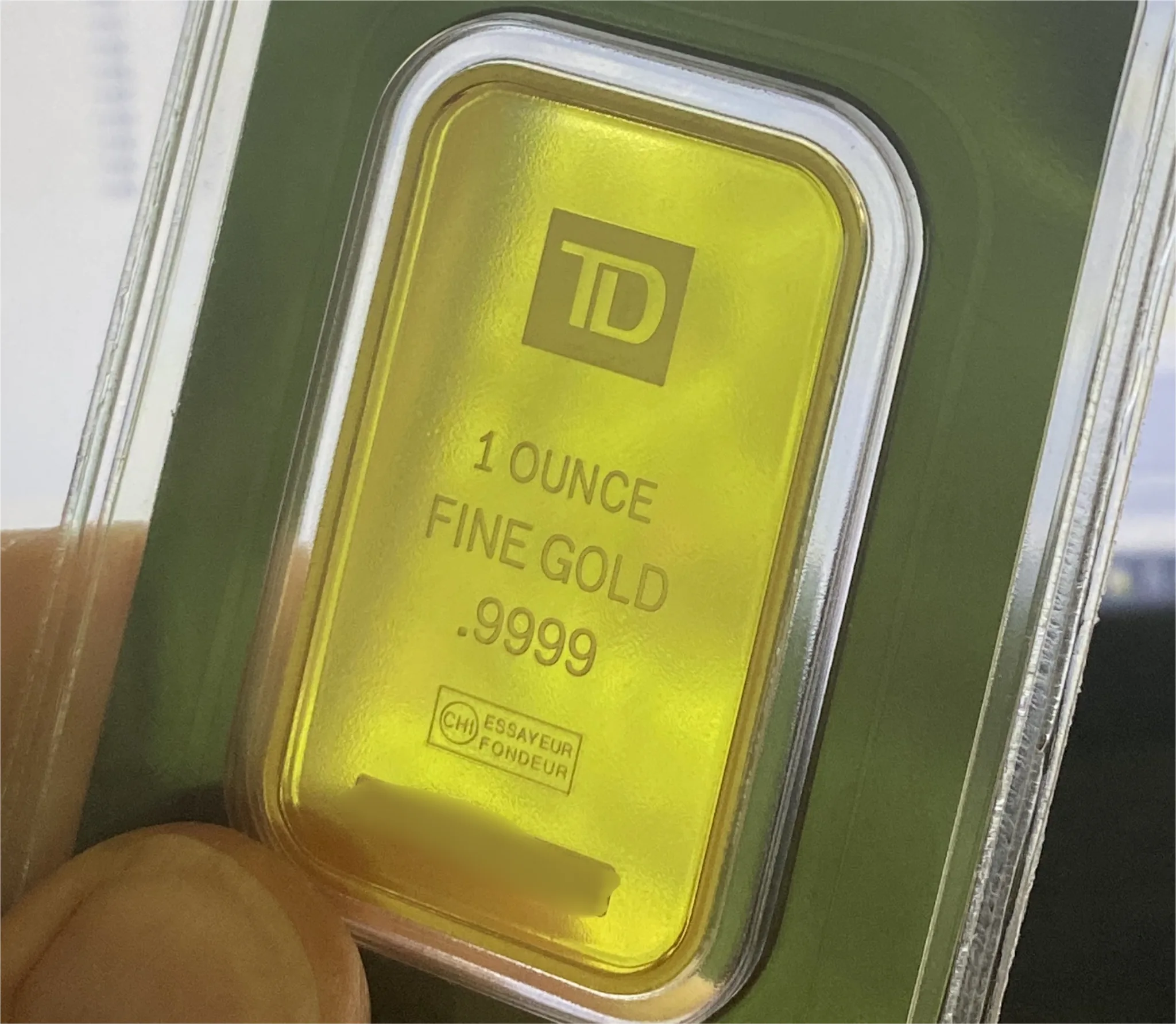
Canada gold reserves: how did Canada, a G7 country, go from holding more than 1,023 tonnes of gold to holding none—and why does that decision look even more reckless in today’s risk environment? How did Ottawa go to just 68 ounces recorded on March 31, 2016—and still choose to hold none today?
Moreover, the question has sharpened in 2024–2025, as other central banks rebuilt gold positions (but not Canada) at pace and gold prices pushed into record territory. (European Central Bank, 2025) (Reuters, 2025)
Additionally, this isn’t a harmless monetary-history footnote. By selling all gold, Ottawa removed a hard-asset backstop just as Canadian aerospace and defence procurement locks taxpayers into long, U.S.-dollar bills.
Unless otherwise noted, dollar figures below are in U.S. dollars (USD).
Canada gold reserves at their peak: 1965 and the Bretton Woods logic
Canadian gold holdings were a system feature, not a vanity project
Notably, the mid-1960s peak happened inside a rules-based monetary architecture. Under the Bretton Woods system, the U.S. dollar anchored the system, and gold sat behind confidence—directly in some cases, indirectly in others. (Federal Reserve History)
Consequently, holding large bullion reserves was ordinary, even boring. It was the financial equivalent of carrying a spare tire before run-flats became fashionable.
Meanwhile, the commonly cited peak for Canada’s official gold holdings is about 1,023 metric tonnes in 1965. (MINING.COM, 2016) (Resource World, 2016)
However, “1,023 tonnes” can feel abstract. That’s about 32.9 million troy ounces. At roughly US$4,400 per ounce, that’s about US$144.7 billion. At C$1.383374 per U.S. dollar, it’s roughly C$200.2 billion if Canada had not sold its gold reserves.
Gold’s job: credibility, optionality, and a quiet kind of insurance
Additionally, gold’s appeal in that era was mechanical. It carried no issuer risk and no “it depends” clause in small print.
Therefore, gold functioned as a reserve asset that could be mobilised when markets seized up. It also served as a signalling device, because other states could see it and price it.
Even so, gold was never a magic shield. It did not prevent recessions, and it did not guarantee stable politics. Yet it did provide a hard asset inside a system where convertibility still mattered. (Federal Reserve History)
Finally, the question for Canada is not whether gold was “good” in 1965. The real question is whether dumping it all still fits today’s risk environment. It doesn’t.
Canada gold reserves start to fall: 1966–1971 and the first big policy turns
A 1966 deal with Washington foreshadowed the unwind
Notably, Ottawa was not operating in isolation. In the 1960s, Washington worried about balance-of-payments pressures and capital flows, and Canada sat inside that problem set.
Moreover, a U.S. State Department historical document records that Canadian authorities agreed to sell $200 million of gold to the United States in 1966, tied to a broader understanding on reserves and capital-market access. “The Canadian authorities also agreed to sell $200 million of gold to the U.S. in 1966.” — U.S. Department of State, Foreign Relations of the United States (April 26, 1966)
Consequently, the sale reads as more than a one-off transaction. It signals that Canada’s gold could be treated as an adjustable lever, not a permanent anchor.
However, the deeper point is political economy. Once policymakers discover an asset can be sold without immediate public pain, it becomes easier to sell it again.
Then came the “gold window” shutdown—and the rules changed
Meanwhile, Bretton Woods cracked under its own contradictions. On August 15, 1971, U.S. President Richard Nixon suspended the dollar’s convertibility into gold, which effectively ended the system’s core promise.
Additionally, the U.S. State Department’s historical summary frames the move as the beginning of the end for Bretton Woods. (Office of the Historian)
Therefore, the practical requirement to hold large gold stocks weakened. In a floating-rate world, central banks could defend a currency with interest rates, credibility, and liquid foreign exchange—not necessarily gold bullion.
Even so, ending convertibility did not eliminate geopolitical risk. It simply moved the fight from vaults to markets.
Canada gold reserves and the yield argument: why bonds won, 1970s–1990s
Ottawa’s reserve strategy shifted toward liquidity and income
Notably, post-1971 central banking evolved toward market-based tools. In that environment, reserve managers cared about liquidity, diversification, and—crucially—income.
Moreover, gold does not pay interest. A government bond does, and a reserve portfolio measured in basis points will naturally drift toward yield.
Consequently, Canada’s official reserves increasingly centred on liquid foreign-currency securities and deposits, a structure that still defines the Canadian Exchange Fund Account (EFA) today. (Department of Finance Canada, 2025)
However, “yield versus zero yield” is not the whole story. Gold’s job is not to maximise annual return. It is to reduce tail risk when correlations snap and markets reprice.
In Canada’s official reserves on March 31, 2025, gold listed at zero. (Department of Finance Canada, 2025)
Meanwhile, the same report details a reserve mix dominated by highly rated securities and deposits, and it shows currency allocations (paper) led by U.S. dollars. (Department of Finance Canada, 2025)
Even so, a portfolio can be liquid and still lack a “sanctions-resistant” asset. That gap is exactly why gold has returned to fashion globally.
Additionally, Canada’s governments showed a major lack of vision by selling all of it, leaving Canada’s monetary authorities—including the Bank of Canada—in a weaker position today. Meanwhile, Ottawa kept borrowing and pushing the national debt higher. Consequently, Canadians are asked to trust a growing balance sheet backed by what, exactly—certainly not by gold reserves that no longer exist.
Who decides on gold: the government, not the Bank of Canada?
Legally, the decision to hold or sell reserve assets belongs to the Minister of Finance under Part II of the Currency Act. The Minister also sets the investment policy for the Exchange Fund Account (EFA), Canada’s main reserve portfolio. (Department of Finance Canada, 2025)
However, Ottawa cannot pretend the Bank of Canada (BoC) was irrelevant. The same reserves report states that a Funds Management Committee—made up of senior officials from Finance and the Bank of Canada—prepares recommendations for the Minister and oversees EFA management. (Department of Finance Canada, 2025)
Additionally, the Bank’s role is explicitly to act as the government’s fiscal agent. “The Bank shall act as fiscal agent of the Government of Canada.” — Bank of Canada Act, section 24
So yes—the Bank of Canada can advise and recommend. But the political responsibility for selling Canada’s gold to zero rests with the government that approved the policy.
From “selling down” to “selling out”: the Canadian bullion stockpile in the 2000s
Canadian bullion reserves became a rounding error
Notably, by the early 2000s, Canada’s remaining official gold position had already shrunk dramatically compared with the 1960s. (MINING.COM, 2016)
Moreover, public debate at the time often framed gold as an anachronism—expensive to store, awkward to use, and inferior to interest-bearing assets. A short-sighted vision by Canada.
Consequently, the policy momentum stayed one-directional. Successive governments did not merely reduce gold holdings. They continued to reduce them.
Policy choices are politicians’ job. They failed—one after the other.
The Decision-Makers Behind Canada’s Gold Liquidation
Prime ministers who presided over the sell-down: Lester B. Pearson, Pierre Trudeau, Joe Clark, Brian Mulroney, Jean Chrétien, Paul Martin, Stephen Harper, Justin Trudeau.
Bank of Canada governors during the era gold was reduced to nothing: David Dodge (2001–2008), Mark Carney (2008–2013), Stephen S. Poloz (2013–2020), Tiff Macklem (2020–present).
Carney’s career sits at the intersection of central banking and global policy networks. Therefore, Canadians should not be surprised when Ottawa’s choices align with the priorities of that world—while the public is left paying the bill.
However, the real question is whether “no gold” makes Canada stronger. It doesn’t.
Canada gold reserves versus the G7 baseline – Canada at 0.0 tonnes of Gold
Additionally, Canada’s position looks more striking when compared internationally. World Gold Council country data—drawn from International Monetary Fund (IMF) reporting and other sources—shows Canada at 0.0 tonnes while other G7 states retain meaningful stocks. (World Gold Council)
Therefore, Canada is not just below average. It is effectively absent from the club of gold-holding advanced economies.
Meanwhile, the modern argument for holding at least some gold is not nostalgia. It is portfolio resilience in a world where geopolitics can freeze assets, distort settlement channels, or trigger abrupt risk-off spirals. (European Central Bank, 2025)
One light thought before the final drawdown: Canada did not merely trim the hedges—it removed the hedge, sold the clippers, and called it landscaping.
Canada gold reserves reach near-zero: 2015–2016 and the last ounces
The receipts are not metaphorical—they are literal ounces
Notably, the final phase is unusually well documented because the remaining quantity was so small it had to be reported in coins and ounces.
Moreover, the Government of Canada’s monthly “Official International Reserves” release for January 6, 2016 notes that 41,106 ounces of gold coins were sold for settlement in December 2015, leaving 54,788 ounces on December 31, 2015. (Department of Finance Canada, 2016)
Consequently, the country’s official gold presence collapsed to a level that no longer functioned as a meaningful reserve asset.
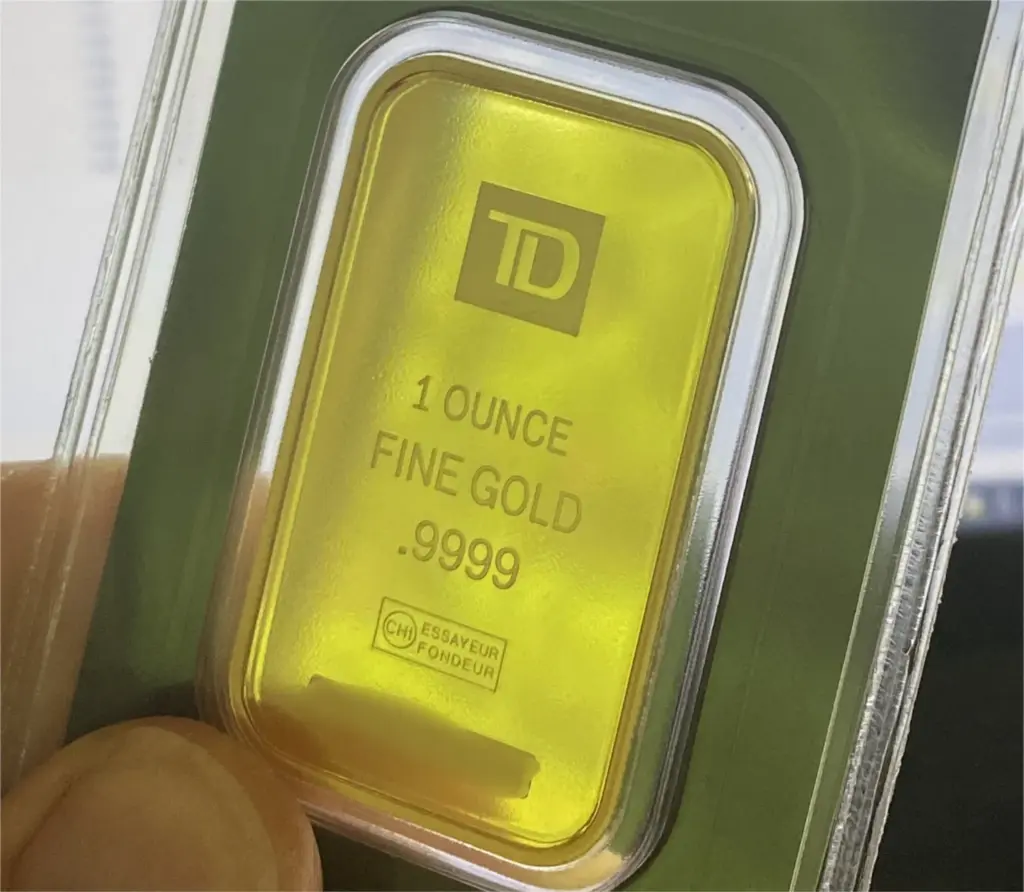
However, the most pointed data point lands a few months later. The Canada gold reserves April 5, 2016 release states that, after selling nine ounces of gold coins for settlement in March, gold holdings stood at 68 ounces on March 31, 2016. (Department of Finance Canada, 2016)
At US$4,400 per ounce, 68 ounces of gold is worth US$299,200 (about US$0.000299 billion).
Canada’s reserve system is now all paper—no gold
Additionally, by then, Canada’s reserves were effectively entirely “paper” in the neutral sense: foreign-currency securities, deposits, and Special Drawing Rights (SDR) via the IMF, plus the reserve position at the IMF. (Department of Finance Canada, 2025)
Meanwhile, gold’s appeal rises precisely when settlement, sanctions, and geopolitical ruptures become plausible constraints. (European Central Bank, 2025)
One light thought for the section: 68 ounces is not a reserve; it is the kind of number you expect on a catering manifest.
Gold is back: the 2010–2025 global shift Canada opted out of
Gold overtook the euro’s share of reserves—quietly, then suddenly
Notably, the European Central Bank (ECB) reports that gold’s share of total official foreign reserves increased to 20% at the end of 2024, surpassing the euro’s share, helped by high prices and purchases. “The share of gold in total official foreign reserves… increased to 20% at the end of 2024, surpassing that of euro.” — European Central Bank, The international role of the euro (June 11, 2025)
Moreover, the ECB notes that central banks increased their stock by more than 1,000 tonnes in 2024. (European Central Bank, 2025) What Canada did? No more gold and not adding back any.
Consequently, this is not a marginal trend. It is a structural drift back toward gold as a reserve asset class.
However, the motive is not romance. It is risk management under stress. The ECB also links record central-bank demand to geopolitical dynamics since 2022, with central banks accounting for more than 20% of global demand in 2024. (European Central Bank, 2025)
World Gold Council data shows a third straight year above 1,000 tonnes
Additionally, the World Gold Council (WGC) reports that central banks added 1,045 tonnes to global gold reserves in 2024, topping 1,000 tonnes for the third consecutive year. (World Gold Council, 2025)
Therefore, Canada’s “zero” is not just an outlier compared with peers. It is an outlier against the direction of travel.
Meanwhile, gold prices also changed the optics. Reuters reported on December 23, 2025 that gold was nearing US$4,500 per ounce, citing monetary-policy expectations and geopolitical tension among key drivers. (Reuters, 2025)
Even so, central banks do not buy gold because it is expensive. They buy because they fear what could break.
What it means for aerospace: currency resilience, procurement, and operational risk
Canada gold reserves: Aviation runs on hard schedules and harder currencies
Notably, aerospace has a built-in exposure to foreign currency. Airframes, engines, avionics, and many long-term support contracts often price in U.S. dollars, and delivery schedules can span years.
Moreover, the Department of Finance Canada frames the EFA’s legislative purpose as currency support and liquidity. “The legislative purposes of the EFA… are to aid in the control and protection of the external value of the Canadian dollar.” — Department of Finance Canada, Report on the Management of Canada’s Official International Reserves (November 25, 2025)
Consequently, reserve composition matters in a crisis scenario and in calm years.
However, Canada’s reserve policy assumes that liquid securities and deposits will be sufficient, because they can be mobilised quickly and integrate cleanly with market operations. (Department of Finance Canada, 2025)
Let’s not forget: all the gold Canada traded for paper would be worth about C$200.2 billion today—far more than the value of the paper it received at the time. See Canada’s gold reserves sell-off: peak to zero on Fliegerfaust.
Was this a good decision? If so, why didn’t other developed countries do the same? Why did Canadian leaders do it differently? Were they hoping to surf the wave of being the closest neighbour of the world’s economic leader, the United States, and never have to offer anything in return? No total free trade with that neighbour that buys about 80% of what Canada exports? Seriously?
Defence procurement and the Royal Canadian Air Force (RCAF) price tag
Additionally, defence aviation pushes the exposure further, because strategic fleets are not optional. Fighters, tankers, patrol aircraft, and space-adjacent surveillance systems are long-cycle projects with international supply chains.
Therefore, when Canada commits to big-ticket procurement, the country is implicitly betting on stable access to funding markets and stable settlement channels. That is usually a safe bet. Yet it is not a guaranteed bet.
Meanwhile, Fliegerfaust has already explored how economics and strategy collide in Canadian fighter decisions. See F-35 Cancellation in Canada: Gripen vs Economic Fallout for a detailed policy-and-cost discussion that sits adjacent to this reserve question.
Canada gold reserves: Why “zero gold” is a choice, not a constraint
Notably, Canada is not prevented from holding gold. It chooses not to, and it can reverse course if policy changes. But the policy will not change.
Moreover, the WGC’s central bank survey work suggests reserve managers increasingly treat gold as a strategic diversifier and a geopolitical hedge, not merely a commodity. (World Gold Council, 2025)
Consequently, Canada’s stance creates a debate about governance: who sets the threat model, and how often is it updated?
Meanwhile, if you want the aviation-side example of “systems matter,” Fliegerfaust’s reporting on air traffic control (ATC) modernisation shows how infrastructure and risk planning overlap in real budgets. See NAV CANADA tower tech: FAA’s $30 B ATC revamp option.
Conclusion: Canada’s gold decision looks tidy on paper, but risk rarely stays tidy
Notably, Canada’s partial liquidation of its bullion position was defensible inside a late-20th-century framework that prized liquidity, yield, and deep markets but not to sell it all. In that world, a bar of gold looked like a non-performing asset with storage costs and no coupon. That’s like launching a flight without a proper weather briefing and a real alternate—fine right up until it isn’t. That’s what having no safe vision does.
The global environment shifted. Other central banks around the world bought more than 1,000 tonnes of gold in 2024, and the ECB says gold’s share of global reserves surpassed the euro at the end of 2024. (European Central Bank, 2025)
Therefore, Canada’s “none” looks less like optimisation and more like inertia—especially when gold’s renewed role is tied to geopolitical fragmentation and sanctions risk, not just inflation hedging. (European Central Bank, 2025)
Finally, my view is this: Canada does not need nostalgia, but it does need a clearer, publicly testable rationale for being the advanced-economy outlier on bullion—because “we preferred bonds” is not a full answer in a world where the rules of settlement can change overnight. If redundancy is standard practice in aircraft design, why does Canada still treat monetary redundancy as optional—and is that a risk posture Canadians would choose if the trade-offs were explained in plain language?
Leave your answers and comments below and on our Fliegerfaust Facebook page.
Sources
- Department of Finance Canada — Report on the Management of Canada’s Official International Reserves (April 1, 2024 – March 31, 2025) (November 25, 2025).
- Department of Finance Canada — Official International Reserves (April 5, 2016).
- Department of Finance Canada — Official International Reserves (January 6, 2016).
- European Central Bank — The international role of the euro (June 11, 2025).
- European Central Bank — Gold demand: the role of the official sector and geopolitics (June 2025).
- World Gold Council — Gold reserves by country (Data page, accessed December 27, 2025).
- World Gold Council — Gold Demand Trends: Full Year 2024 (Central banks) (February 5, 2025).
- World Gold Council — Central Banks Gold Reserves Survey 2025 (June 17, 2025).
- Reuters — How investors buy gold and what fuels the market (December 23, 2025).
- Federal Reserve History — Nixon Ends Convertibility of U.S. Dollars to Gold and Announces Wage/Price Controls (Accessed December 27, 2025).
- Office of the Historian (U.S. Department of State) — Nixon and the End of the Bretton Woods System, 1971–1973 (Accessed December 27, 2025).
- Office of the Historian (U.S. Department of State) — Foreign Relations of the United States, 1964–1968, Volume VIII, Document 91 (April 26, 1966).
- MINING.COM — And then there was none: Canada sells its gold (March 10, 2016).
- Resource World — And Then There Was None: Canada Sells its Gold (Accessed December 27, 2025).
For full details, please refer to our Disclaimer page.