
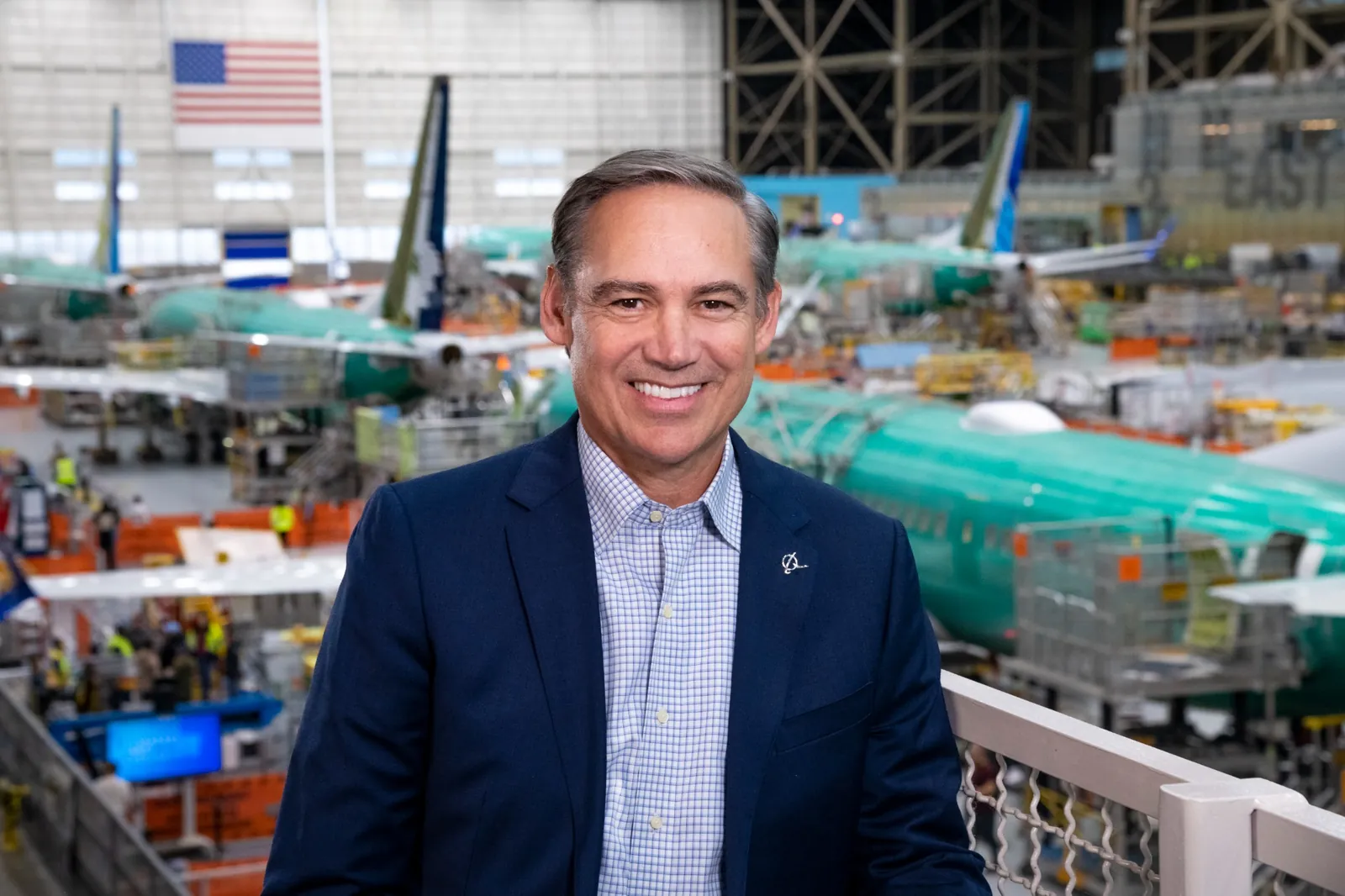
Boeing China order: is Beijing finally ready to place a 500-jet bet on Boeing just weeks before President Donald Trump’s March 31 to April 2, 2026 state visit to China?
Boeing China order: Meanwhile, Bloomberg said a breakthrough may be near. However, a March 6 Reuters report on the talks made clear that the negotiations are real but not complete. Moreover, the stakes stretch far beyond one sales announcement. If it happens, the package would be Boeing’s first major Chinese order in nearly a decade. Consequently, it would also signal returning airline demand and a market now shaped by both traffic growth and summit diplomacy.
Boeing China order: what is actually on the table
Overall, the reported package is large enough to change backlog psychology and diplomatic optics. In aerospace diplomacy, the seating chart often matters almost as much as the seat count.
China Boeing deal and the reported 500-jet outline
According to that March 6 Reuters report on Bloomberg’s scoop, Boeing is negotiating for as many as 500 narrowbody jets and about 100 widebody aircraft. Specifically, Reuters said the Boeing package could be unveiled during Trump’s visit to Beijing. Moreover, the same report said China is also negotiating a large Airbus package. Notably, that detail matters because it frames the talks as allocation, not charity.
Overall, that outline would rank among the largest commercial aircraft packages in Boeing history. However, Reuters also said it could not independently confirm Bloomberg’s account. Moreover, people familiar with the talks told Reuters that key issues remain unresolved. Therefore, this is still a live negotiation, not a signed contract dressed up for cameras.
China has often timed major aircraft announcements around state visits. Consequently, fleet decisions can signal diplomatic temperature as much as operational need. Moreover, the possible unveiling window matters almost as much as the aircraft mix itself. Consequently, a summit reveal would tell markets that aircraft are back inside the toolbox of bilateral trade management.
The diplomatic groundwork appears to be moving in parallel. Meanwhile, a March 3 Reuters report on pre-summit trade talks said Treasury Secretary Scott Bessent and Chinese Vice Premier He Lifeng were expected to meet in Paris in mid-March. Notably, Reuters said Chinese purchase commitments for Boeing aircraft and American soybeans were likely agenda items.
Overall, the Boeing China order sits inside a broader bargaining set. Specifically, it is about aircraft. However, it is also about tariffs, export controls, and rare earth minerals. Ultimately, it is about showing that the world’s two largest economies can still transact in something more tangible than rhetoric.
Boeing jet order diplomacy before Beijing
A summit-linked aircraft package would deliver immediate symbolism for both capitals. For Washington, it would underline that Boeing remains a premier export champion whose fortunes still matter to industrial policy. For Beijing, it would show that China can still calibrate access to its airline market with great precision.
Moreover, Reuters noted that China ONCE accounted for about 25% of Boeing’s order book. Notably, that shows how central the market once was. However, Reuters also said Boeing NOW has only 133 orders from Chinese airlines, or about 2% of its order book. Additionally, 13.6% of Boeing’s backlog sits under unidentified customers, which could include Chinese carriers. Overall, that is a long way from Boeing’s earlier China exposure.
Moreover, the reported narrowbody-heavy structure also makes commercial sense. China’s domestic network remains a dominant driver of short- and medium-haul demand. Consequently, a large 737 MAX package would suit that need better than a purely widebody announcement. Meanwhile, a later 787 Dreamliner or 777X tranche would align with international recovery. It would also fit cargo demand and the longer planning cycles of the country’s largest carriers.
State-visit order rumours do not always mature into signed contracts. However, caution does not erase the logic behind this one. Even so, the political timing, the fleet need, and the diplomatic choreography all point in the same direction. However, that does not make an announcement inevitable. Consequently, it does make the report commercially plausible.
Boeing China order and the market math behind it
The commercial logic is stronger than the politics around it. China’s airlines are not shopping for ornaments. They are shopping for lift.
China aircraft purchase demand is no longer theoretical
Overall, China’s traffic base now looks too large to defer fleet renewal much longer. On March 4, 2026, the Civil Aviation Administration of China said mainland China ended 2025 with 270 certified transport airports. Additionally, the same bulletin put annual passenger throughput at 1.529 billion. Moreover, international passenger throughput reached 117.796 million. Additionally, cargo and mail throughput also hit 21.864 million tonnes. Specifically, those are not abstract forecast lines. They are current operating realities.
Meanwhile, Boeing’s own long-range demand case is equally forceful. In its August 26, 2024 Boeing China Commercial Market Outlook, the manufacturer said China will need 8,830 new commercial aircraft by 2043. Specifically, Boeing projected 6,720 single-aisle jets, 1,575 widebodies, and 170 freighters. Moreover, Boeing said China’s commercial fleet should grow from 4,345 aircraft to 9,740 by 2043.
Notably, Boeing also argued that China’s annual passenger traffic growth should outpace the global average. “China’s airlines will see strong demand …” — Darren Hulst, Vice President of Commercial Marketing, Boeing
Airbus, which has every incentive to challenge Boeing’s framing, broadly agrees on the size of the prize. In a January 15, 2026 Airbus Global Services Forecast for China, the European manufacturer said China is its largest single-country market by fleet. Additionally, Airbus said China should take delivery of about 9,570 new aircraft over the next 20 years. Moreover, Airbus said passenger volume in 2025 rose 17% above 2019. Additionally, international traffic recovered to more than 90% of the 2019 level.
Overall, that convergence matters. When Boeing and Airbus both point to roughly 9,000 new aircraft over two decades, the real debate shifts. It moves from demand to allocation. Therefore, the Boeing China order looks commercially credible, not merely diplomatic.
Boeing-China aircraft deal and factory math
Overall, the factory side of the equation matters just as much. At first glance, a 500-jet announcement sounds instantaneous. In practice, it would be a multi-year loading decision spread across production slots, variants, airlines, and perhaps lessors.
Boeing’s January 27, 2026 fourth-quarter results said the company delivered 600 commercial airplanes in 2025. That was Boeing’s highest annual commercial total since 2018. Additionally, Boeing said the 737 programme increased production to 42 per month in the fourth quarter. Moreover, commercial backlog included more than 6,100 aircraft.
That does not mean Boeing can simply slot hundreds of Chinese aircraft into next year’s delivery calendar. However, it does show that the industrial base is climbing back. Over time, that makes a large China Boeing deal physically credible. Furthermore, a February 10 Reuters report on Boeing’s fourth 737 production line said the company plans to open a new line in Everett. Reuters also said Boeing is targeting 63 737 MAX jets a month in the next few years.
That production path explains the timing. A package announced in March or April 2026 would shape the second half of the decade, not the next quarter. Consequently, its value lies as much in backlog confidence and supplier planning as in near-term cash generation. Suppliers read deals like weather maps. The clouds matter before the rain.
There is also a technical reason the 737 MAX dominates the rumoured package. Boeing said in a March 30, 2025 order announcement for the 737-8 that the aircraft seats 162 to 210 passengers, depending on configuration. Moreover, Boeing said the jet can fly up to3,500 nautical miles, or 6,480 kilometres. That is the flexible narrowbody profile Chinese carriers need for dense domestic routes, regional growth, and fleet replacement.
Boeing China order after the freeze, the tariffs, and the returns
No serious reading of these negotiations can ignore the damage of the last seven years. Nothing says fragile diplomacy quite like a jet that crosses the Pacific twice before earning its tail number.
Boeing jet order after the 2019 rupture
Overall, the rupture began with safety, not tariffs. China suspended most Boeing orders and deliveries in 2019 after the 737 MAX was grounded worldwide following two fatal crashes. Consequently, what had been a high-volume airline relationship turned into a rolling test of safety politics, certification trust, and bilateral leverage.
The thaw came only in stages. A July 23, 2024 Reuters report on resumed 737 MAX deliveries said widebody deliveries to China had resumed. Reuters also said deliveries of widebodies restarted in December 2023 and narrowbody MAX jets in January 2024. Moreover, Reuters said Boeing had about 140 737 MAX 8 aircraft in inventory at the end of 2023, including 85 for customers in China. Boeing also delivered 22 aircraft to China between the start of 2024 and April 30.
That history matters because it shows demand never disappeared. Instead, it was trapped behind certification, politics, and trade friction. Therefore, the Boeing China order matters far beyond its face value. It would not simply add units to backlog. It would mark another stage in restoring transactional normality.
500-jet agreement politics after the 2025 tariff shock
If 2019 damaged trust, 2025 weaponised delivery flow. During the tariff fight in April 2025, Beijing instructed Chinese airlines to stop taking new Boeing aircraft. That decision showed how quickly an aerospace supply chain can become a bargaining chip in a wider trade war.
The images were vivid and expensive. On April 20, 2025, a 737 MAX originally intended for Xiamen Airlines flew back from China to the United States. Then, as tensions eased, the aircraft returned. A June 9, 2025 Reuters report on the aircraft’s return to China said a new Boeing 737 MAX landed back in China as Beijing and Washington eased their tariff war. Reuters also said Boeing had halted new deliveries to China in April and expected them to resume in June after tariffs were temporarily scaled back for 90 days.
Days later, a June 14, 2025 Reuters report on resumed deliveries to Juneyao Airlines said Boeing had suspended new China deliveries in April. Reuters also said Boeing was looking to resell potentially dozens of aircraft. Deliveries resumed only after trade tensions eased.
Readers who want the full tariff backdrop can see our Fliegerfaust analysis of China’s 2025 Boeing delivery ban. It detailed how quickly delivery schedules became geopolitical ammunition.
China Boeing deal and the politics of reciprocity
Reuters also reported on March 6, 2026 that Trump had previously threatened export controls on Boeing plane parts. The move was framed as part of Washington’s response to Chinese export limits on rare earth minerals. That detail is easy to miss, but it cuts to the core of this story. Aircraft sales and aircraft supply chains now sit in the same negotiating basket. One side can offer orders. The other can threaten components.
That tension is not unique to China. Around the wider aerospace sector, certification, sanctions, supply chains, and industrial subsidies now overlap. A decade ago, that would have seemed exceptional. For a broader trade context, see our Fliegerfaust look at North American aerospace tariffs and supply-chain leverage.
So even if Beijing unveils a grand aircraft package during the summit, investors should remember what 2025 proved. Political thaw can reopen deliveries. However, it can also close them again. Consequently, the real value of any announcement will depend on what happens after the summit. Scheduled handovers need to remain boring.
In aviation, boring is underrated. It is also highly profitable.
Boeing China order versus Airbus and COMAC
Therefore, a large Boeing win would matter, but it would not restore the old balance overnight. Airbus has not waited politely by the phone.
China Boeing deal against Airbus’s China machine
China is not negotiating with Boeing in a vacuum. A June 4, 2025 Reuters report on Airbus order talks said Chinese airlines were also considering ordering up to 300 Airbus aircraft. Reuters added that the package could rise to as many as 500. Moreover, Reuters said those talks had been in the works for more than a year.
Airbus adds capacity and jobs in China
Even without a blockbuster headline, Airbus kept entrenching itself in China. On October 22, 2025, a Reuters report on Airbus’s second Tianjin final assembly line said the facility would be fully operational in early 2026. Reuters also said the extra line supports Airbus’s target of 75 A320-family aircraft per month by 2027.
The local footprint is already substantial. Airbus said in its October 22, 2025 official Tianjin assembly statement that the site had assembled and delivered more than 780 A320 Family aircraft since 2008. Moreover, Airbus quoted Chief Executive Officer Guillaume Faury saying the extra line provides “the necessary flexibility and capacity to deliver on our plan …” — Guillaume Faury, Chief Executive Officer, Airbus
That industrial presence has translated into orders. On December 29, 2025, a Reuters report on Spring Airlines and Juneyao Airlines said the two carriers planned to buy 55 Airbus A320-family jets combined. Deliveries would run from 2028 to 2032. One day later, another Reuters report on Air China’s Airbus purchase said Air China and a subsidiary agreed to buy 60 A320neo jets. Those deliveries were also scheduled for 2028 to 2032.
Even so, the Boeing China order would narrow the gap, not erase it. Airbus enters this moment from a position of local depth, political resilience, and visible factory commitment — assembled in China.
Boeing-China aircraft deal versus COMAC’s rise
The Commercial Aircraft Corporation of China (COMAC) further complicates the landscape. Beijing no longer faces a pure Boeing-Airbus duopoly in its domestic industrial calculus. Even so, COMAC remains far from matching either rival in scale, certification breadth, or support infrastructure.
Reuters reported on August 28, 2024 that two more Chinese airlines were set to begin operating the C919. That development brought the aircraft to the country’s three largest state-owned carriers. The Reuters report on expanded C919 operations said each of the big three had ordered 100 C919s. Moreover, Reuters said COMAC had more than 1,000 orders overall.
Then, on January 3, 2025, another Reuters report on COMAC’s regional ambitions said COMAC delivered 12 C919 aircraft in 2024. Reuters also said the company expected annual production capacity to reach 150 in five years. That is still far below Boeing and Airbus output. However, it is enough to affect negotiating leverage in China’s narrowbody market.
China Boeing deal and COMAC’s certification ceiling
Certification remains the constraint. On April 29, 2025, Reuters reported that the European Union Aviation Safety Agency (EASA) said the C919 would need between three and six years for European approval. Moreover, Reuters quoted EASA Executive Director Florian Guillermet saying, “the C919 cannot be certified in 2025 … We should be certifying the C919 within three to six years” — Florian Guillermet, Executive Director, European Union Aviation Safety Agency, via Reuters
That delay keeps COMAC largely boxed inside the domestic and politically friendly international sphere. However, it does not make COMAC irrelevant to Boeing. It does the opposite. The C919 gives Beijing a home-market hedge and a long-term industrial option. For more on that dynamic, see our Fliegerfaust briefing on the COMAC C919’s challenge to Airbus and Boeing.
The widebody side still offers Boeing a clearer opening. COMAC does not yet field an in-service answer to the 787. Moreover, any 777X-linked discussion reaches into the late-decade horizon. Boeing said in its January 27, 2026 results that it still anticipates first 777-9 delivery in 2027. Consequently, if the rumoured package includes about 100 widebodies, part of it would be about network strategy and future optionality rather than near-term lift.
Conclusion: Boeing China order could reset the optics, but not the fundamentals
China Boeing deal after the headlines
The Boeing China order deserves close attention because it sits at the intersection of traffic growth, industrial recovery, and statecraft. Markets adore ceremony. Airlines prefer delivery slots that actually arrive.
Overall, the commercial case is straightforward. China needs aircraft in scale. Boeing needs backlog depth in China. Moreover, the timing around the Trump-Xi summit makes the political choreography almost too neat to ignore.
However, balanced judgement requires distance from the ceremony. A very large order would not prove that Boeing has fully repaired its position in China. Instead, it would prove that Beijing still sees value in keeping Boeing in the market. Boeing remains a counterweight to Airbus, a supplier of widebodies, and a useful instrument in broader negotiations with Washington.
Moreover, the widebody detail is telling. The 787 is mature, efficient, and immediately relevant. The 777X is strategically attractive, but its first 777-9 delivery still points to 2027. Consequently, any package that mixes MAX narrowbodies with 787s and 777Xs would blend urgent operational need with long-dated political signalling.
Ultimately, this would be a meaningful commercial win and a real strategic relief for Boeing, but not a cure. Boeing still needs stable output, predictable deliveries, and a relationship with China that can survive the next tariff flare-up. In aviation, ribbon-cutting is easy. Recurring delivery slots are harder.
What do you think?
If Beijing and Washington do unveil the Boeing China order, will it mark a durable commercial reset? Or will it become the next carefully staged photograph in a market where China has more alternatives and less willingness to wait?
Leave your answers and comments below and on our Fliegerfaust Facebook page.
Sources
- Reuters — Boeing close to 500-jet order ahead of Trump-Xi summit, Bloomberg News reports (March 6, 2026).
- Reuters — US, China trade chiefs to meet mid-March before Trump-Xi summit, Bloomberg News reports (March 3, 2026).
- Reuters — US planemaker Boeing plans to open fourth 737 production line in midsummer (February 10, 2026).
- Reuters — Boeing resumes deliveries of 737 MAX airplanes to China (July 23, 2024).
- Reuters — Boeing plane lands back in China for delivery as tariff war eases (June 9, 2025).
- Reuters — Boeing resumes China deliveries with 787-9 jet to Juneyao Airlines, Yicai reports (June 14, 2025).
- Reuters — Airbus shares rise as it edges closer to major Chinese jet order (June 4, 2025).
- Reuters — Airbus opens second jet assembly line in China as it targets production growth (October 22, 2025).
- Reuters — Two Chinese airlines plan Airbus jet purchases worth up to $8.2 billion (December 29, 2025).
- Reuters — Air China to buy 60 Airbus planes worth $9.5 billion (December 30, 2025).
- Reuters — Two more Chinese airlines to start flying China-made COMAC C919 jet (August 28, 2024).
- Reuters — China’s COMAC, maker of C919 jet, aims for Southeast Asian flights by 2026 (January 3, 2025).
- Reuters — European approval for China’s C919 plane needs 3-6 years, regulator says (April 29, 2025).
- Civil Aviation Administration of China — “2025 National Civil Transport Airport Production Statistics Bulletin” Released (March 4, 2026).
- Boeing — Boeing: China Commercial Fleet to More than Double by 2043 for Growth and Modernization (August 26, 2024).
- Airbus — Airbus projects strong aftermarket demand in the next two decades in China (January 15, 2026).
- Boeing — Boeing Reports Fourth Quarter Results (January 27, 2026).
- Boeing — BOC Aviation Orders 50 Boeing 737 MAX Jets to Support Global Airlines (March 30, 2025).
- Airbus — Airbus opens second A320 Family Final Assembly Line in China (October 22, 2025).
For full details, please refer to our Disclaimer page.