

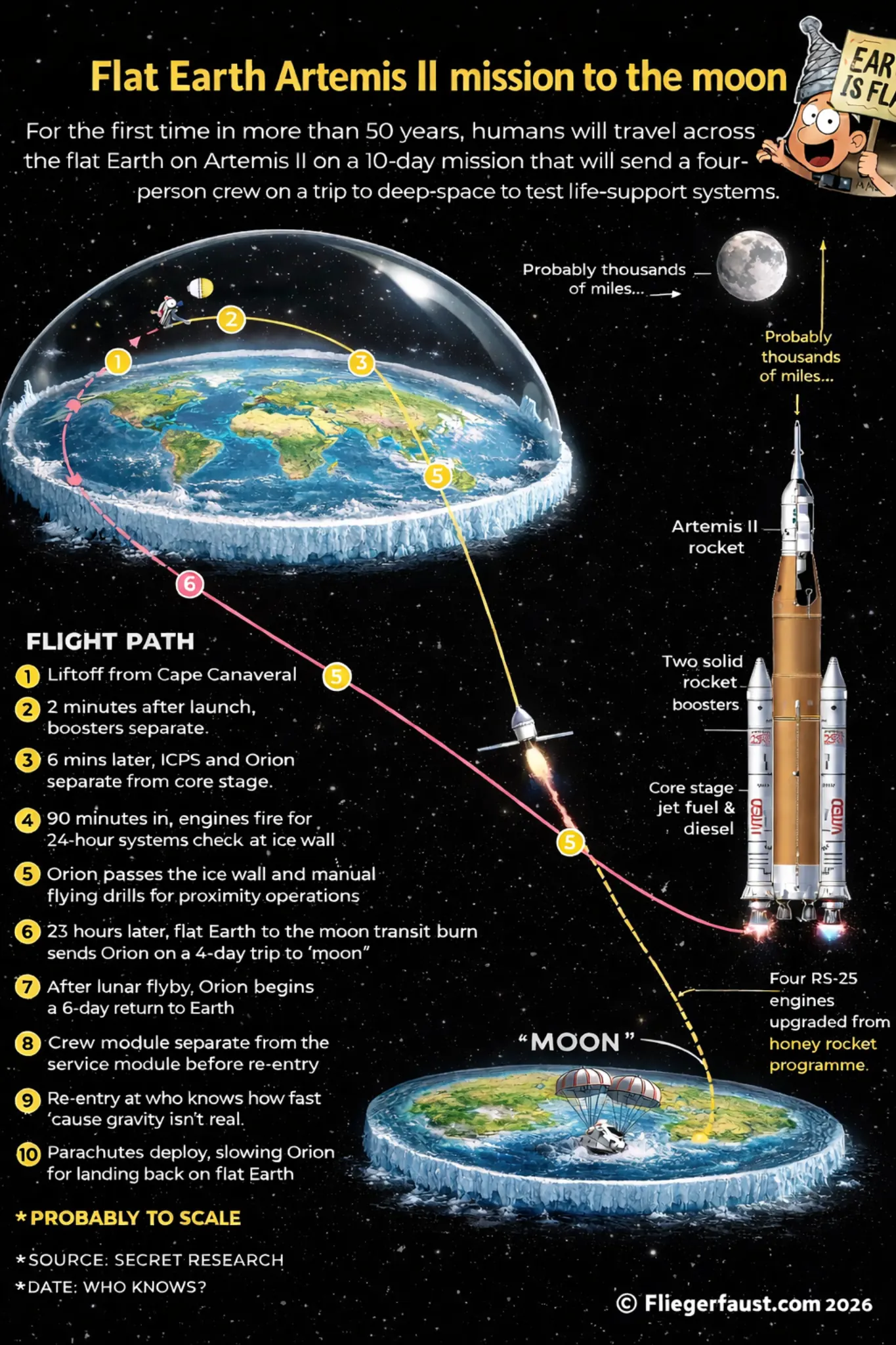
Flat Earth beliefs still circulate in the satellite age, and some people still insist the Moon landing was staged, even though Apollo left behind physical evidence and later missions photographed the landing sites. So why do these claims keep finding believers?
The evidence did not stop in 1969. The National Aeronautics and Space Administration (NASA) still archives lunar laser ranging data through NASA Earthdata from Apollo retroreflectors, which are special mirrors left on the Moon by Apollo astronauts that reflect laser beams back to Earth and allow scientists to measure the Earth-Moon distance with great precision. NASA also still publishes Lunar Reconnaissance Orbiter mission material showing the landing areas, and reported on NASA Science, January 22, 2025 that Apollo samples are still producing new scientific findings.
Yet disbelief persists. In a 2019 Ipsos poll for the Cable-Satellite Public Affairs Network (C-SPAN), July 10, 2019, 6 percent of respondents said the Moon landing was staged. Moreover, the Carsey School of Public Policy survey brief, April 25, 2022 reported that about one in ten respondents (10%) agreed that the Earth is flat and about one in ten agreed that the Moon landings were faked. Those numbers do not describe a majority. However, they are large enough to show that this story is not really about astronomy. It is about distrust, identity, online reinforcement, and poor habits of judging evidence.
Why Flat Earth Beliefs Feel More Visible Now
Flat Earth beliefs before social media
These beliefs did not begin on YouTube. However, video platforms changed their scale, speed, and social reach. A 2018 study in First Monday, December 3, 2018 found that contemporary Flat Earth discourse on YouTube gathered multiple millions of views and made the platform central to promoting the belief. At that scale, some channels could also turn attention into revenue.
Meanwhile, the Carsey School of Public Policy, August 6, 2025 reported that respondents who said they would look up science topics through social media or Artificial Intelligence (AI) tools were more likely to agree with conspiracy statements. By contrast, people who said they would consult search engines, Wikipedia, or science articles tended to align more often with scientific facts.
One likely reason is that AI fits a fast, self-directed style of information seeking. The Carsey brief, August 6, 2025 found that people who consult AI programs for science information more often hold conspiracy beliefs, while a 2022 study in Frontiers in Psychology, July 14, 2022 linked conspiracy belief with overconfidence and lower trust in science. Carsey also warned that AI can produce seemingly authoritative but made-up claims supported by imaginary citations, which is why such falsehoods are often called hallucinations.
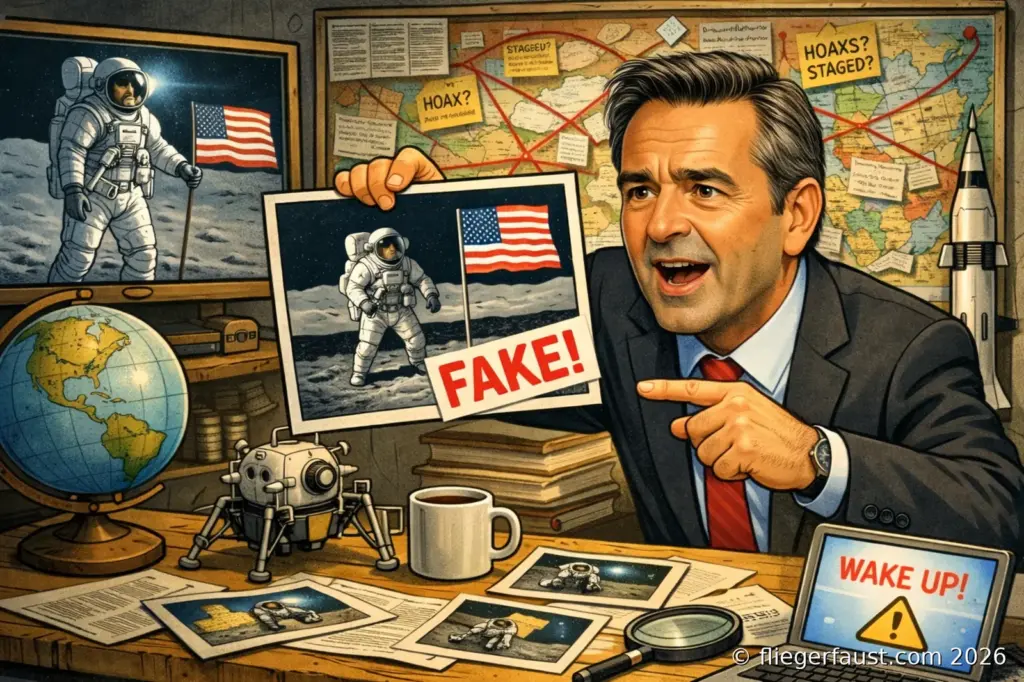
That shift matters because a person no longer has to sit alone with a fringe suspicion. Instead, that person can now find creators, comment threads, conferences, and endless repetition. Consequently, doubt becomes community, and community turns doubt into identity.
Flat Earth beliefs and the visibility problem
The safest claim is not that Flat Earth beliefs suddenly became common. However, the safer claim is that they became easier to see, share, and reward. Survey wording still changes the numbers too much for stronger certainty.
As the polling noted above suggests, these beliefs remain fringe but not imaginary. That matters because online visibility can make a small minority look larger, louder, and more mainstream than it really is.
So, the stronger conclusion is about visibility, not a proven surge in raw prevalence. Moreover, the next thing to watch is repeated survey work that uses stable wording across time. Without that, anecdotes and headlines will keep outrunning the evidence.
Why Flat Earth Beliefs and Moon-Hoax Claims Are Not Really About Astronomy
Science conspiracy theories and motive
A major 2017 review in Current Directions in Psychological Science, December 7, 2017 argued that conspiracy beliefs usually draw strength from three motive clusters: epistemic, existential, and social. In plain language, people want explanations, control, and belonging.
That matters because Flat Earth beliefs and Moon-hoax claims do more than reject a fact. Instead, they offer a role. The believer becomes the person who sees through the lie, resists the institution, and joins a smaller circle that feels awake while others look passive.
Moreover, a review in Nature Reviews Psychology, November 22, 2022 placed conspiracy belief within influences that range from personal motives to intergroup conflict and national context. So, the pattern is broader than ignorance. It sits inside distrust, grievance, social comparison, and identity.
That also helps explain why one person can move from Flat Earth claims to Moon-hoax claims and then to unrelated fantasies about hidden elites. A 2017 study in Frontiers in Psychology, June 20, 2017 described a conspiracist worldview in which belief in one conspiracy can make others easier to absorb because official explanations are treated as deceptive by default. In that kind of mindset, the specific subject matters less than the wider story: powerful institutions are lying, and the believer sees what others miss.
A broader cultural version of that argument appears in The Parasitic Mind: How Infectious Ideas Are Killing Common Sense by Gad Saad, Professor of Marketing at Concordia University. Saad argues that bad ideas, which he calls “idea pathogens,” are killing common sense and can spread through institutions and the wider culture until they begin to corrode reason and common sense. Dr. Gad Saad is holder of the Concordia University Research Chair in Evolutionary Behavioral Sciences and Darwinian Consumption.
His emphasis is broader than the conspiracy-psychology research cited here. Even so, the overlap is real. False belief is not shaped by facts alone. It can also be shaped by social contagion, status, identity, and environments that reward bad reasoning while making suspicion feel like independence.
Conspiracist worldview, not astronomy
No single motive explains every believer. However, the literature points away from a simple insult and toward a better question. What emotional or social reward does the claim now deliver?
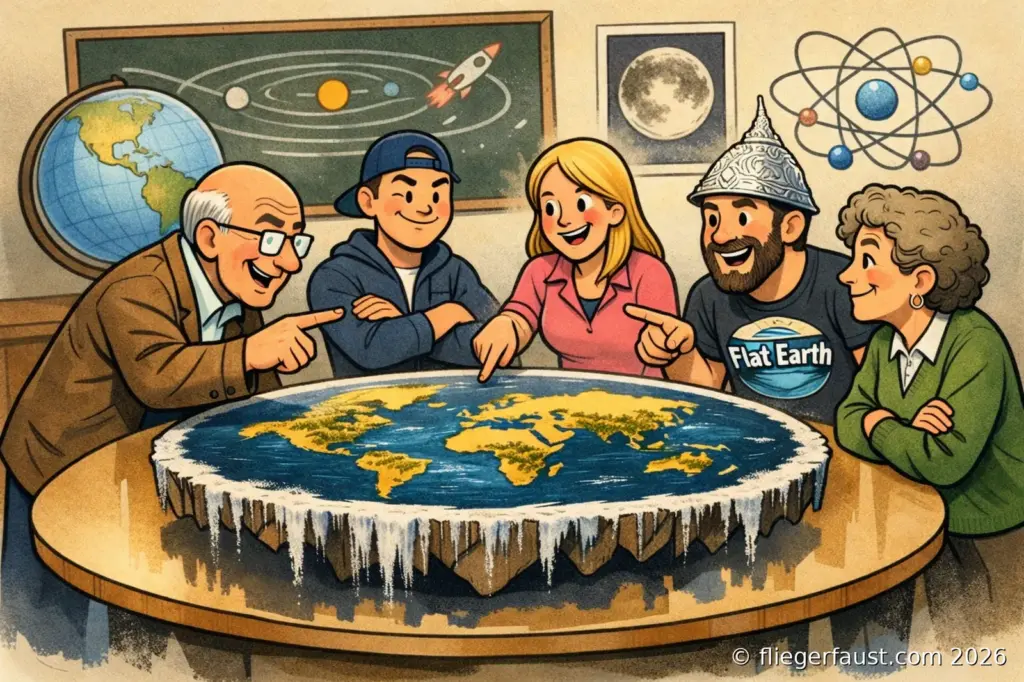
That uncertainty matters because any article that reduces believers to stupidity will miss the mechanism. Yet the mechanism is the story. Therefore, the next thing to watch is not merely what believers say. It is what the belief lets them become in front of others.
How Flat Earth Beliefs Become Plausible Online
Flat Earth beliefs and one-sided skepticism
The strongest cognitive finding is not about low intelligence. It is about whether people pause and test a claim before accepting it. A 2022 meta-analysis in Judgment and Decision Making, July 2022 found that people who were more likely to question first impressions and examine evidence carefully were less likely to endorse conspiracy beliefs.
That does not mean questioning is a problem. Instead, the problem is one-sided skepticism. Good skepticism tests official claims and counter-claims by the same standard. By contrast, conspiracy culture often treats mainstream evidence as suspect while giving dramatic alternatives an easy pass.
How Flat Earth beliefs become a community
Flat Earth is especially revealing because it often behaves like a social world before it behaves like an argument. The 2018 First Monday study described a discourse that fused conspiracy thinking, religious themes, clickbait, trolling, and political language into one visible ecosystem.
That matters because online communities do more than repeat a claim. They make it social. Viewers pick up a tone, a vocabulary, and a sense of membership that can outlast any single argument.
Some users actively seek this material. Others get nudged toward it. Either way, repetition, community, and spectacle make the claim feel larger than it is. For a recent example of how persuasive imagery can outrun evidence, see our Fliegerfaust analysis of the Airbus A220 fake image.
Science conspiracy theories and algorithms
A 2022 Internet Policy Review systematic review, March 31, 2022 found that many studies implicated YouTube recommendations in pathways to problematic content, while other studies produced mixed results. So, the evidence supports concern. However, it does not prove one simple algorithmic story.
That distinction matters. Some people actively seek this material. Meanwhile, others get nudged toward it. Most likely, both processes happen at once. The next thing to watch is better independent auditing of recommendation systems, especially where pseudoscience and conspiracy content overlap.
Why Moon-Landing Denial Survives Strong Evidence
Moon-landing denial and the evidence problem
Moon-landing denial is not a mass belief. Yet, as the polling cited above shows, it is real enough to matter. That is why it deserves to be treated as more than a punchline or an internet curiosity.
That claim should be easy to kill. However, it survives because the believer is usually not asking for evidence in a way that allows any institution to satisfy the demand. The question stops being what the evidence shows and becomes who is trusted enough to be believed.
Apollo evidence did not end in 1969
As noted above, the Apollo record did not end with the missions themselves. It includes precision laser measurements using retroreflectors left on the Moon, later orbital images of the landing areas, and lunar samples that researchers still study today.
Those are three different kinds of evidence: long-running measurements, orbital imagery, and physical samples that scientists still examine. One can distrust a press release. It is much harder to dismiss that whole record at once.
For a useful contrast between real lunar history and invented spectacle, see our Fliegerfaust report on the militarization of the Moon. Real documents already contain enough drama. They do not need a fabricated landing hoax layered on top.
Why Moon-landing denial still travels
Polls suggest that some people firmly deny Apollo, while others sit in a looser zone of suspicion. A hard denier rejects the record. By contrast, a soft skeptic treats endless doubt as a mark of seriousness and keeps moving the burden of proof.
That style travels easily online because it does not need a full alternative history. It only needs to keep the official story permanently on trial. That is why Moon-landing denial can survive even after the factual threshold has been crossed many times.
Why Flat Earth Beliefs and Moon-Hoax Claims Are Not Identical
Flat Earth beliefs versus Moon-hoax claims
Both beliefs live inside a conspiracist worldview. Moreover, both cast experts as compromised elites. Both reward the believer with a feeling of hidden knowledge. However, they do not operate in exactly the same way.
Flat Earth beliefs often demand a total alternative map of reality. Consequently, they ask believers to rethink geography, astronomy, and basic physics all at once. They also tend to rely heavily on community reinforcement, shared jargon, and repeated argument templates.
Moon-hoax belief is different. Instead, it can sit more easily inside a general distrust of government, media, or scientific authority without requiring a full alternative cosmology. That difference may help explain why Moon skepticism sometimes appears in polling as a looser suspicion, while Flat Earth beliefs look more like a deeper identity project.
Science conspiracy theories with different shapes
That difference matters because it warns against lazy generalisation. Education may relate to some claims and not others. Likewise, religiosity may matter in one Flat Earth circle and barely matter in another. Platform effects may drive one belief more than another.
So, the next thing to watch is comparison rather than lumping. When analysts flatten all conspiracies into one bucket, they make the same error that conspiracists do. They prefer a simple pattern to a tested one.
Why Facts Alone Rarely Finish the Job
Science conspiracy theories and correction
A 2023 meta-analysis in Nature Human Behaviour, June 15, 2023 found that corrections of science-relevant misinformation were not reliably successful on average, although they worked better in some conditions, especially when the initial belief concerned negative topics or domains other than health, when recipients were familiar with both sides of the issue, and when the issue was not politically polarized.
Meanwhile, the Debunking Handbook 2020, University of Bristol and the Bad News inoculation study, January 10, 2020 both support the idea that people can become more resistant to manipulation when they learn how misinformation works before they meet it.
That matters because facts alone rarely beat a belief that also supplies identity, status, and fellowship. However, ridicule often leaves the believer’s social world untouched. Sometimes it may even strengthen the performance of being persecuted for knowing the truth.
Moon-landing denial and what to watch
The same discipline applies in our Fliegerfaust analysis of the Discombobulator secret weapon claim. Extraordinary claims deserve scrutiny. Yet scrutiny works best when it tests evidence instead of merely mocking the people repeating the story.
The next phase of this problem will not come only from old conspiracies. Instead, it will come from synthetic media, fluent chat systems, and creator economies that reward certainty more than care. Therefore, the real defence is not more scorn. It is better evidence habits, better source literacy, and stronger public norms about how claims get tested.
Conclusion: Why These Claims Still Travel
Flat Earth beliefs and Moon-hoax claims survive not because the evidence is thin. They survive because digital culture makes suspicion easy to perform, easy to share, and easy to turn into identity.
That is why these ideas feel closer now. Platforms give them repetition, community, and spectacle. One claim rebuilds the world. The other rewrites a historic event. Both reward the believer with the same role: the person who sees through the lie.
What do you think?
The question, then, is no longer whether the Earth is round or whether Apollo happened. Those questions were settled long ago. The real question is whether readers still demand the same standard of proof from a dramatic suspicion that they demand from the institutions they distrust.
Leave your answers and comments below and on our Fliegerfaust Facebook page.
Sources
- Carsey School of Public Policy — Can the Government Control Hurricanes? New Survey Results on Conspiracies and Science (August 6, 2025).
- Carsey School of Public Policy — Conspiracy vs. Science: A Survey of U.S. Public Beliefs (April 25, 2022).
- Ipsos for C-SPAN — Attitudes Toward Space Exploration (July 10, 2019).
- Current Directions in Psychological Science — The Psychology of Conspiracy Theories (December 7, 2017).
- Nature Reviews Psychology — Individual, intergroup and nation-level influences on belief in conspiracy theories (November 22, 2022).
- Judgment and Decision Making — Reflective thinking predicts lower conspiracy beliefs: A meta-analysis (July 2022).
- Frontiers in Psychology — “I Did My Own Research”: Overconfidence, (Dis)trust in Science, and Endorsement of Conspiracy Theories (July 14, 2022).
- First Monday — The Flat Earth phenomenon on YouTube (December 3, 2018).
- Internet Policy Review — Systematic review: YouTube recommendations and problematic content (March 31, 2022).
- Nature Human Behaviour — A meta-analysis of correction effects in science-relevant misinformation (June 15, 2023).
- University of Bristol — Debunking Handbook 2020 (2020).
- Journal of Cognition — Good News about Bad News: Gamified Inoculation Boosts Confidence and Cognitive Immunity Against Fake News (January 10, 2020).
- NASA Earthdata — Lunar Laser Ranging (LLR) Data (accessed April 15, 2026).
- NASA Science — Lunar Reconnaissance Orbiter (accessed April 15, 2026).
- NASA Science — NASA’s Apollo Samples Yield New Information about the Moon (January 22, 2025).
For full details, please refer to our Disclaimer page.