

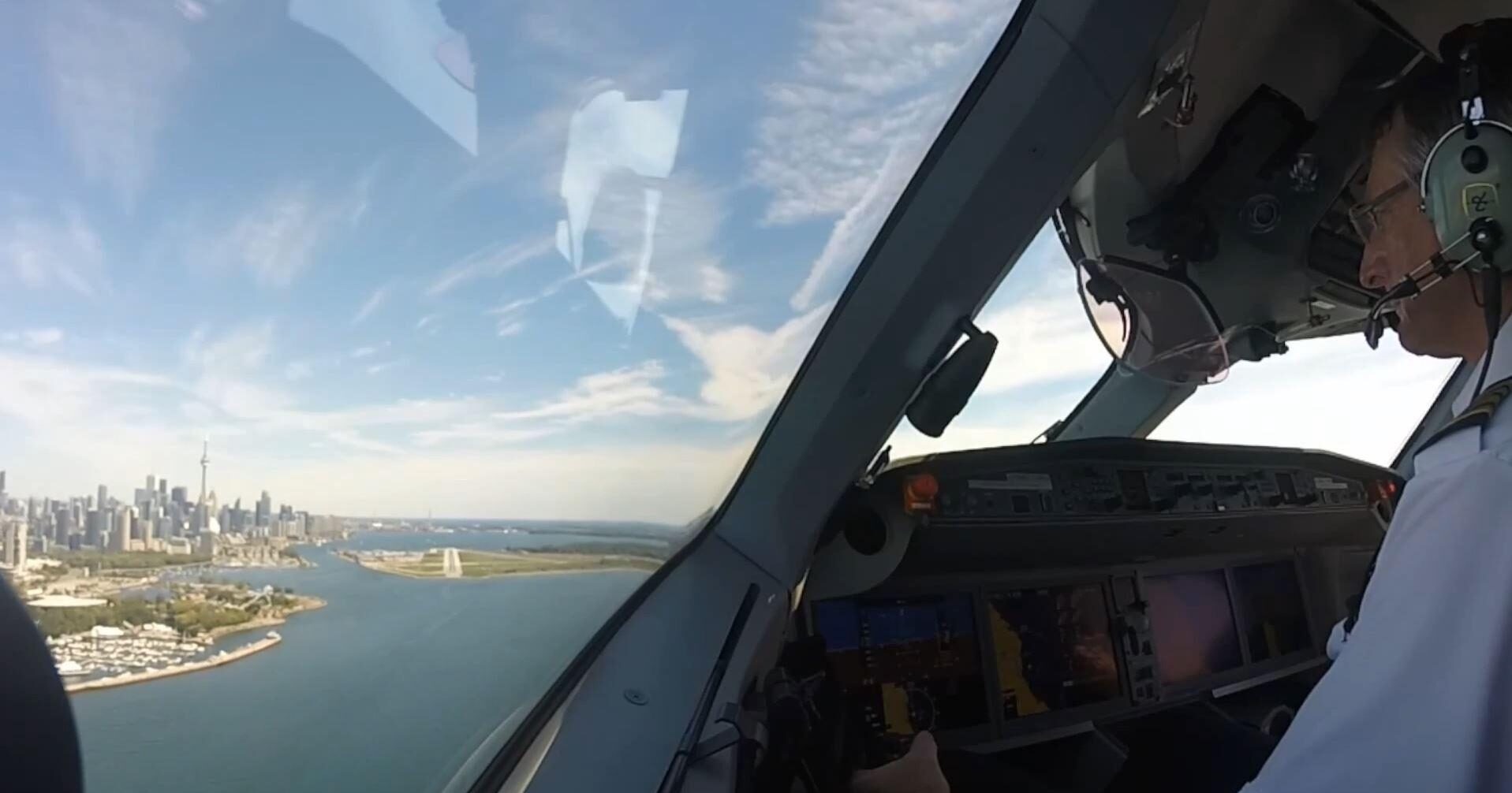
Billy Bishop expansion: is Doug Ford fixing a real aviation bottleneck, or trying to redraw Toronto’s waterfront politics around one downtown runway?
Billy Bishop expansion: On March 23, 2026, Ontario said it would replace the City of Toronto in the tripartite agreement that governs Billy Bishop Toronto City Airport (YTZ). Moreover, the province said it would compensate the city for its lands and use special economic zone powers to speed a broader modernisation plan. The move matters far beyond one downtown airfield. It reaches into aviation policy, federal safety rules, business travel, waterfront planning, and one of Toronto’s longest civic arguments.
Billy Bishop expansion moves from political signal to formal policy
Toronto waterfront airport expansion becomes provincial policy
First, the province stopped hinting and started legislating. Then, on March 23, 2026, Queen’s Park said it would introduce legislation to take over Toronto’s role in the airport agreement. Additionally, it said it would acquire the city-owned lands for fair compensation. Ontario tied that move to runway changes, terminal improvements, and better access to the waterfront. According to the Ontario Newsroom announcement, the government also plans to designate the airport a special economic zone after consultation with impacted First Nations.
Moreover, the political groundwork appeared earlier in March. Meanwhile, on March 10, Ford said Ontario would compensate Toronto for both the land value and the city revenue linked to the airport. He also stressed that he wanted smaller, quieter jets, not anything close to a long-haul widebody operation. “This is a crown jewel.” — Doug Ford, Premier of Ontario, CityNews. Meanwhile, governance documents rarely trend, but Toronto found the exception.
Ford used another revealing phrase on March 10. In the same CityNews report, he referred to what he called the “Whisper jet,” saying it was quieter than the twin-prop aircraft now operating at Billy Bishop. In Toronto’s airport context, that language points most naturally to Bombardier’s CSeries, now the Airbus A220, the same aircraft family Porter once championed for the island airport. It strongly suggests that the former CSeries, now Airbus A220, remains the benchmark behind the renewed push for quieter jets.
Additionally, the legal setting is unusually rigid. Specifically, the City of Toronto’s Billy Bishop background page says Billy Bishop Toronto City Airport (YTZ) sits on land split among three public owners. PortsToronto holds about 78 per cent. Meanwhile, the city holds about 20 per cent. Transport Canada holds about 2 per cent. Notably, the same city material says the tripartite agreement dates to June 30, 1983 and was amended in 2025 to allow safety works. So Billy Bishop expansion is not only an aviation debate. Consequently, it is also a public-control debate about who gets to define the airport’s next chapter.
Governance, growth, and the airport’s commercial logic
Meanwhile, the airport operator had already framed the case in strategic terms. In a March 6, 2026 report, the head of the Toronto Port Authority said the airport cannot plan properly under its current constraints. “Unlike other airports, Billy Bishop Airport is restricted under its current governance model and, as such, is unable to effectively plan and design the airport for the future.” — RJ Steenstra, President and CEO, CityNews. Consequently, the debate shifts from runway length alone to investment certainty.
Separately, Ontario attached very large economic claims to the plan. Meanwhile, the province said the airport serves about two million passengers a year. Additionally, it said Billy Bishop generated $900 million in gross domestic product (GDP), $1.8 billion in economic output, and 9,000 jobs in 2024. Ontario then said the Toronto Port Authority’s longer-term plan could lift traffic to ten million passengers and contribute up to $8.5 billion to Canada’s economy each year by 2050. Those figures are projections, not approvals. Even so, they help explain why Billy Bishop expansion now sits near the top of Ontario’s infrastructure agenda.
However, there is a second commercial layer beneath the province’s numbers. PortsToronto’s 2024 economic-impact update, based on research by York Aviation, already described Billy Bishop as a meaningful downtown asset before the jet debate returned. That study pointed to annual airport output of about $2.1 billion under the existing managed-growth case. Additionally, it forecast larger gains once United States (U.S.) preclearance opened. In short, Ontario is not selling a speculative greenfield airport. It is selling a busier future for an airport that already handles real demand.
Billy Bishop expansion sits on top of a separate safety mandate
Billy Bishop airport modernisation is not the same as RESA compliance
However, the sharpest technical distinction in this story is the one casual readers can miss. The current Runway End Safety Area (RESA) project is a safety file, not a blank cheque for jets. Specifically, the City of Toronto’s RESA page says federal regulations published in 2021 require RESA at airports that exceed 325,000 passengers a year for two consecutive years. Moreover, the city says Billy Bishop crossed that threshold long ago. It says the airport peaked at about 2.8 million passengers in 2019. Additionally, it says compliance is due by July 12, 2027.
Accordingly, Toronto City Council approved RESA Option 1 in October 2024 after staff review and public engagement. Then, on January 28, 2025, the Toronto Port Authority announced the amended tripartite agreement that enabled the needed safety work. That amendment also extended the agreement to December 31, 2045 to support financing. Safety files are supposed to be dull. This one arrived with its own marching band.
Moreover, both the city and the airport describe RESA in plain operational terms. The safety area exists to reduce damage when an aircraft undershoots or overruns the runway. That matters because public discussion now blends the mandatory safety work with the wider push to allow modern jets. The two files overlap. They are not the same file. If readers remember only one technical point, it should be this one. Billy Bishop expansion is broader than the project already required under federal rules.
What the federal record already cleared and what it did not
Notably, the narrower safety project has already passed important federal process gates. The Impact Assessment Agency of Canada project file says that, on January 24, 2025, the agency determined the Billy Bishop Toronto City Airport Runway End Safety Area Project did not warrant designation under the Impact Assessment Act. A related federal-lands notice then said the proposed works were not likely to cause significant adverse environmental effects.
Specifically, the public record describes landmass extensions and breakwater structures. Additionally, it describes road extensions, relocation of taxiway D and localizer 26, a new taxiway B, and a noise wall. Those are meaningful changes to the harbour edge and the airfield boundary. Yet they still sit within the safety-driven RESA scope. They do not, by themselves, authorise commercial jet service. For context on runway-overrun risk, see our Fliegerfaust coverage of Airbus A220 runway-overrun protection.
Meanwhile, the airport’s own long-range planning record still reflects the older limits. Billy Bishop’s 2018 master plan says jet-powered aircraft, except for medevac operations and other emergency uses, are not permitted to operate from the airport. Additionally, the same plan says runway extensions and land expansion were not permitted under the framework that then existed. So the modernisation drive now underway would require more than construction. It would require a real legal rewrite.
Billy Bishop expansion is already changing the market case
Billy Bishop airport expansion plan gained real force with United States preclearance
Then came the operational change that may matter most in airline economics. Then, on March 9, 2026, Transport Canada announced that Billy Bishop’s U.S. Customs and Border Protection (CBP) preclearance facility would open the next day. Ottawa said the federal government provided $30 million in capital funding for the project. Additionally, it said preclearance could raise the airport’s annual economic contribution from $2.1 billion to $5.3 billion. It added that annual tax revenue could rise from $150 million to $215 million. Border processing rarely steals the spotlight. It often writes the network plan.
Transport Minister Steven MacKinnon framed the move in broad but clear terms. “Strong transportation links are important to our economy.” — Steven MacKinnon, Minister of Transport, Transport Canada. Meanwhile, the same federal release also carried a statement from Nieuport Aviation. That statement said the facility was already deepening connectivity through new routes from Air Canada and Porter Airlines. Consequently, Billy Bishop expansion no longer rests only on a future runway argument. Part of the growth story is already live.
Additionally, Billy Bishop’s preclearance guidance says the terminal is closed to the public between 11 p.m. and 5 a.m. daily. The airport’s noise policies also say a strict curfew bars aircraft, other than medevac, from taking off and landing between 11:00 p.m. and 6:45 a.m. Those limits are not decorative. They are part of the social contract that lets a downtown airport exist on a busy waterfront in the first place.
Airline moves show demand before any jet decision
Meanwhile, Air Canada has already used preclearance to justify a serious network step. In an October 23, 2025 Air Canada announcement, the carrier unveiled daily new service from Billy Bishop to New York, Boston, Washington, and Chicago. Additionally, it added more frequencies to Montréal and Ottawa. That is a significant transborder expansion at a constrained downtown airport. It arrived without any new commercial jet permission.
Similarly, Porter Airlines used the opening to underline how much traffic Billy Bishop already sends south of the border. “Porter has strongly supported Preclearance at Billy Bishop for over 15 years, recognizing the tremendous value it brings to travellers.” — Michael Deluce, CEO, Porter Airlines, Skies Mag. Porter said it has carried more than 13 million U.S. passengers through the airport since launching those routes in 2008. That is not a theoretical market. It is a proven one.
Therefore, the real market question is not whether Billy Bishop has traffic. It plainly does. The harder question is what kind of traffic Ontario wants the airport to chase next. It must also decide what waterfront cost it is prepared to accept. For a parallel case where capacity growth depended on more than runway pavement alone, see our Fliegerfaust report on Panama Tocumen Airport expansion.
Billy Bishop expansion collides with waterfront city-building
Toronto island airport expansion revives an old civic fight
Yet this airport file is also a waterfront file. Meanwhile, the City of Toronto’s airport initiatives page says Billy Bishop sits within a transforming waterfront shaped by the 2003 Central Waterfront Plan. Additionally, it says the airport remains a matter of significant city interest for that reason. The mayor’s office said on March 10, 2026 that it had not seen a formal expansion proposal. Additionally, it said any decision should follow full analysis and public input.
Moreover, the archive shows how long this fight has been running. Toronto’s archive page says City Council launched a formal review in May 2013 after Porter Airlines sought permission for jet-powered aircraft. Then, in November 2015, the federal government refused to reopen the Tripartite Agreement to remove the jet ban, a decision that blocked Porter from taking delivery of, and operating, the Bombardier CSeries at Billy Bishop. Air Canada had not yet ordered the CSeries, now the Airbus A220. PortsToronto then ended that earlier study. The present dispute is not a sudden idea. It is a revived idea with a stronger provincial sponsor. Whether by design or not, Ottawa’s November 2015 decision protected Air Canada’s position and hurt Porter most, killing the CSeries-at-Billy-Bishop plan before Air Canada had even ordered the aircraft. What do you think? (Tell us what you think at the bottom of the page.)
The federal government has signalled interest without offering a blank endorsement. In March 2026, MacKinnon said Billy Bishop is a vital transportation link and should be assessed against current standards for safety and connectivity. Yet he added a caution that goes to the heart of the file. “… this airport also has to be a good neighbour.” — Steven MacKinnon, Minister of Transport, iPolitics. A quiet jet can lower noise. It cannot lower politics.
Special economic zone powers widen the waterfront dispute
Separately, Ontario’s special economic zone policy gives the province a new tool. In a December 17, 2025 release, Ontario said the regulation for designating Special Economic Zones would take effect on January 1, 2026. Additionally, it said the tool could accelerate major projects while maintaining environmental safeguards and the Crown’s duty to consult. Then, on March 23, 2026, the province said Billy Bishop would become such a zone before construction starts, following consultation with impacted First Nations.
Consequently, Billy Bishop expansion is not only about aviation technology or airline competition. It is also becoming a test case for how aggressively Queen’s Park will use its newest development shortcut on politically sensitive urban land. That matters because a waterfront airport is not an isolated industrial site. It sits beside housing, parks, ferry traffic, recreation, and some of the city’s most symbolic public space.
Meanwhile, Ford’s wider waterfront thinking points in the same direction. Meanwhile, on March 6, 2026, Ford floated the idea of filling in part of Lake Ontario to build a major new convention centre. The convention-centre idea is separate from the airport file. Even so, both proposals suggest a premier who views the waterfront less as a finished civic edge and more as a growth platform to be reshaped. See also our Fliegerfaust analysis of London City Airport’s A320neo bid, where neighbour tolerance and aircraft capability proved inseparable.
Billy Bishop expansion still lacks its full public case
Downtown Toronto airport expansion needs an aircraft-specific case
However, Ontario’s current argument remains broader than its published technical detail. Specifically, the province says the Toronto Port Authority wants updates that would allow modern jet aircraft, runway changes, terminal improvements, and better waterfront access. Yet the public material does not identify a final certified aircraft type yet. It does not publish a new aircraft-specific noise case. Additionally, it does not set out the full legal language needed to rewrite the governing agreement. Adjectives are not engineering documents.
Notably, the airport’s existing operating framework is still strict. Billy Bishop’s published operating rules still prohibit jet aircraft, except medevac flights. Its noise rules say it is one of the most noise-restricted airports in North America. Those two facts do not make modernisation impossible. They do show that Billy Bishop expansion still faces a legal threshold and an operational threshold before it clears the political one.
Moreover, this is not only a passenger airport. Ontario said Ornge operates more than 4,700 air ambulance and medical transport flights from Billy Bishop each year. Any redesign of the airport must therefore preserve emergency access while also improving commercial utility. That overlap complicates the debate. Consequently, it makes the file more important than a simple fight about downtown convenience.
Billy Bishop expansion and the Bombardier CSeries / Airbus A220 precedent
Any serious Billy Bishop expansion debate also has to revisit the aircraft that started the last great waterfront fight: Bombardier’s CSeries, now the Airbus A220. In Porter’s April 10, 2013 announcement, the airline built its expansion plan around a 107-seat CSeries (CS100) and called it the ideal aircraft for Billy Bishop because of its suitability for urban operations, short-field performance, fuel efficiency, and reduced sound and emissions. Airbus later renamed the programme in July 2018 through its A220 rebranding announcement, but the core political argument did not change. The badge changed; the waterfront argument did not.
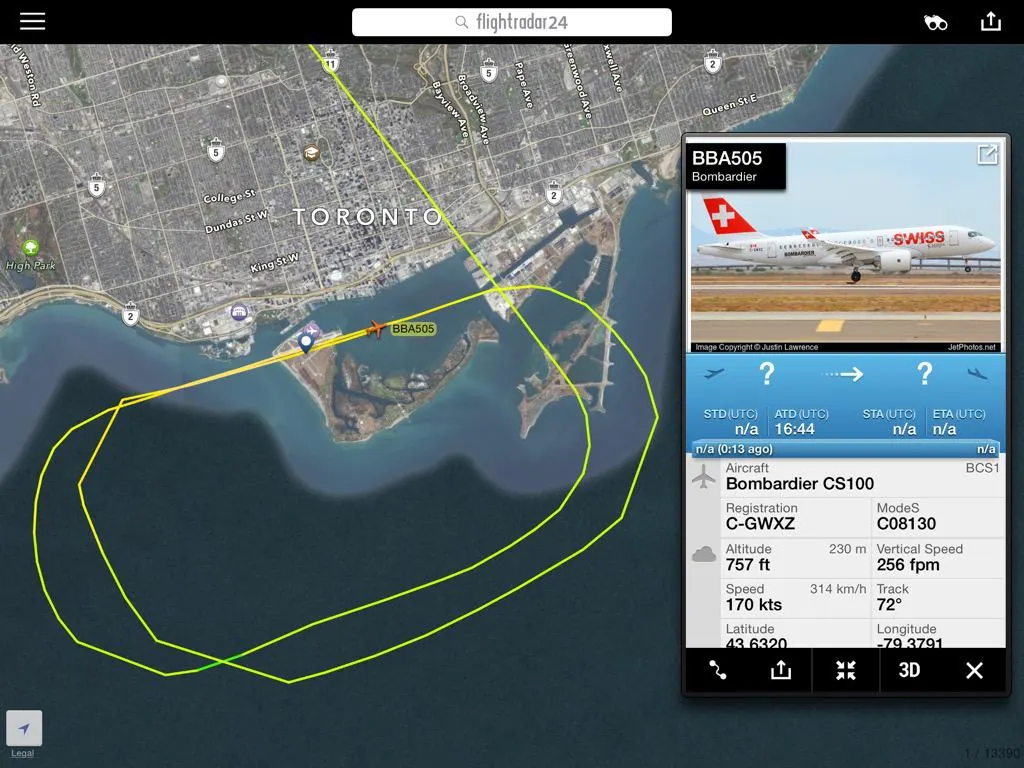
Crucially, the early technical case was encouraging, but not final. In the City of Toronto’s September 9, 2013 public review presentation, consultants said the Bombardier CSeries was proposed to meet the Tripartite Agreement’s cumulative noise certification levels, while also warning that it was still too early to confirm either cumulative or individual compliance because certification measurements had not yet been completed. A separate Tetra Tech AMT noise assessment prepared for Porter went further, stating that Bombardier had guaranteed cumulative and average noise levels below the agreement’s thresholds and that the aircraft was expected to be comparable to the Dash 8-400 (Q400) on a certification basis.
The CSeries case went beyond noise to emissions and jet blast
Proponents also argued that the CSeries could reduce environmental and harbour-side impacts, not worsen them. Porter said the aircraft would have a sound profile comparable to its Q400 turboprops, while an RWDI air-quality review prepared for Bombardier said the CSeries’s emission levels were far below current and proposed international requirements and that annual emissions at Billy Bishop would decline for most contaminants. Robert Deluce, President and CEO of Porter Airlines, later wrote in a February 28, 2014 letter to the City that Airbiz, in a report commissioned by Toronto, found the CSeries had a smaller jet-blast impact than current-generation aircraft, while CH2M Hill concluded the blast would not extend beyond the existing marine exclusion zone.
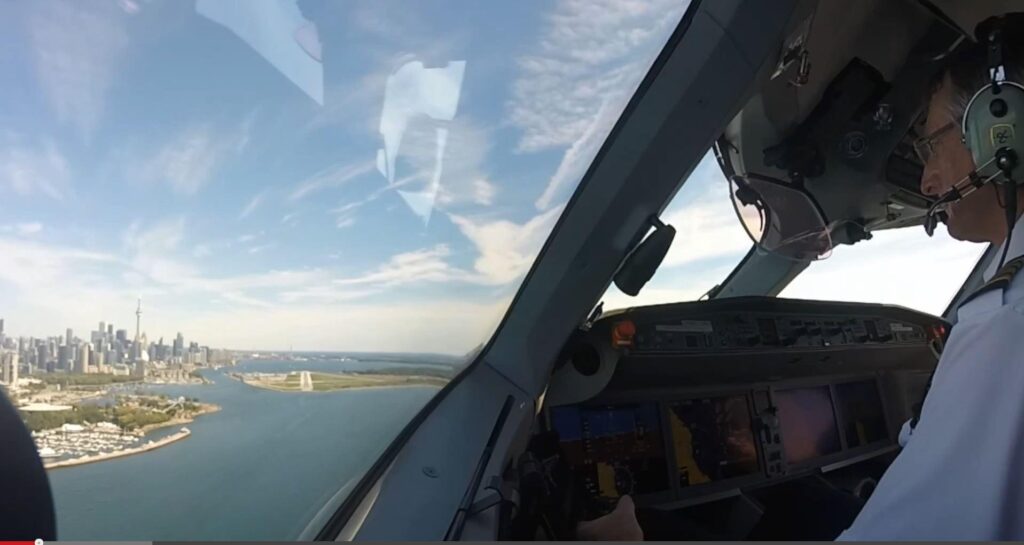
Ottawa Liberal politics killed the CSeries / A220 for Billy Bishop
Still, City staff never treated those findings as self-executing. In their March 19, 2014 supplementary report, staff said any path to amended rules would still require CSeries (CS100) certification for Billy Bishop and formal confirmation, through a remodelled Noise Exposure Forecast (NEF) 25 contour, that the aircraft met the Tripartite restrictions. When Ottawa (under the Liberal party of Justin Trudeau) later declined in 2015 to reopen the agreement, as reflected in the City’s Billy Bishop review archive, the jet case stalled and Billy Bishop remained a turboprop-led airport. That is why the CSeries, now the A220, still matters in 2026: it is the specific aircraft that turned the abstract “quiet jet” argument into a real, and still unresolved, Toronto waterfront test. Politics, politics, politics.
What a credible next step would look like
Even so, a more credible public case is possible. Ontario could publish an aircraft-specific operating concept. It could release updated noise modelling and clear landside-access plans. It could also publish the full governance changes required to move from today’s rules to tomorrow’s airport. PortsToronto could then show how any runway work interacts with RESA, curfew limits, ferry operations, and neighbourhood mitigation. Runways can be extended faster than trust.
Finally, the federal tone remains open but cautious. On April 2, 2026, The Trillium reported on Mark Carney’s comments after he treated Ford’s plan as intriguing but not yet approved. That is notable political oxygen. It is not a final federal approval. Until Ottawa, Ontario, Toronto, and the airport operator align on the same legal and technical path, Billy Bishop expansion remains a powerful idea rather than a completed plan.
Conclusion: Billy Bishop expansion needs proof, not just power
Overall, Billy Bishop is not a vanity strip. It is a serious urban airport with real economic value, real medevac importance, and a now-active U.S. preclearance facility. Ontario is also right about the broader capacity issue. Southern Ontario will need more aviation capacity, stronger redundancy, and better use of existing infrastructure as population grows.
However, the province has moved faster on authority than on evidence. The mandatory RESA project should not be casually merged with a larger jet-enabled expansion. The public still lacks an aircraft-specific operating case. Additionally, it lacks a clear rewritten legal framework and a fully tested balance between airport growth and waterfront city-building. My view is straightforward. Toronto may justify a larger and more capable Billy Bishop, but only if the province proves the technical, civic, and environmental case in public before it rewrites the waterfront by statute.
What do you think?
If Ontario wants people to accept more runway on the harbour, should it not first show the full blueprint?
Leave your answers and comments below and on our Fliegerfaust Facebook page.
- For readers following the aircraft itself beyond Toronto’s waterfront fight, see our Fliegerfaust analysis of the Airbus A220 ramp-up and why the former Bombardier CSeries still matters in today’s market.
- We also covered the aircraft’s evolving commercial case in our Fliegerfaust report on the Airbus A220’s increased seating capacity, another reminder that the programme has moved well beyond its original Toronto political battle.
- For the wider industrial picture, read our Fliegerfaust coverage of the Airbus–Spirit AeroSystems deal and what it means for the A220 programme.
Sources
Billy Bishop expansion policy sources
- Ontario Newsroom — Ontario Expanding Billy Bishop Airport (March 23, 2026).
- Ontario Newsroom — Ontario Protecting Workers Through Special Economic Zones (December 17, 2025).
- City of Toronto — Billy Bishop Toronto City Airport Initiatives (accessed April 4, 2026).
- City of Toronto — Runway End Safety Areas at Billy Bishop Toronto City Airport (accessed April 4, 2026).
- City of Toronto — Billy Bishop Toronto City Airport Review Document Archive (accessed April 4, 2026).
- Toronto Port Authority — Amended Tripartite Agreement Completed Enabling RESA Compliance at Billy Bishop Toronto City Airport (January 28, 2025).
- Toronto Port Authority — Updated Research Highlights Billy Bishop Toronto City Airport’s Growing Economic Potential to Region (May 27, 2024).
Toronto island airport expansion operating sources
- Impact Assessment Agency of Canada — Billy Bishop Toronto City Airport Runway End Safety Area Project (accessed April 4, 2026).
- Impact Assessment Agency of Canada — Notice of Determination (January 27, 2025).
- Transport Canada — Government of Canada to open a preclearance facility at Billy Bishop Toronto City Airport (March 9, 2026).
- Billy Bishop Toronto City Airport — Preclearance (accessed April 4, 2026).
- Billy Bishop Toronto City Airport — Noise Management Policies (accessed April 4, 2026).
- Billy Bishop Toronto City Airport — Billy Bishop Toronto City Airport Master Plan (2018) (2019 file version).
- Air Canada — Air Canada to Launch U.S. Flights from Toronto Island in a Major Expansion at Billy Bishop Toronto City Airport (October 23, 2025).
- Skies Mag — Porter Airlines welcomes opening of U.S. Preclearance at Billy Bishop Toronto City Airport (March 11, 2026).
Billy Bishop airport modernisation media sources
- CityNews — Doug Ford says Ontario government will take over City of Toronto’s Billy Bishop airport involvement (March 10, 2026).
- CityNews — Island airport owners ‘fully support’ Ford government’s plan to modernize Billy Bishop (March 6, 2026).
- CityNews — Ford floats idea of filling in parts of Lake Ontario to create land for sprawling new convention centre (March 6, 2026).
- iPolitics — Ford says Ontario ready to seize Toronto land to expand Billy Bishop Airport for jets; feds considering changes (March 10, 2026).
- The Trillium — Carney calls Ford’s Billy Bishop jet plan a ‘very interesting vision’ (April 2, 2026).
For full details, please refer to our Disclaimer page.