
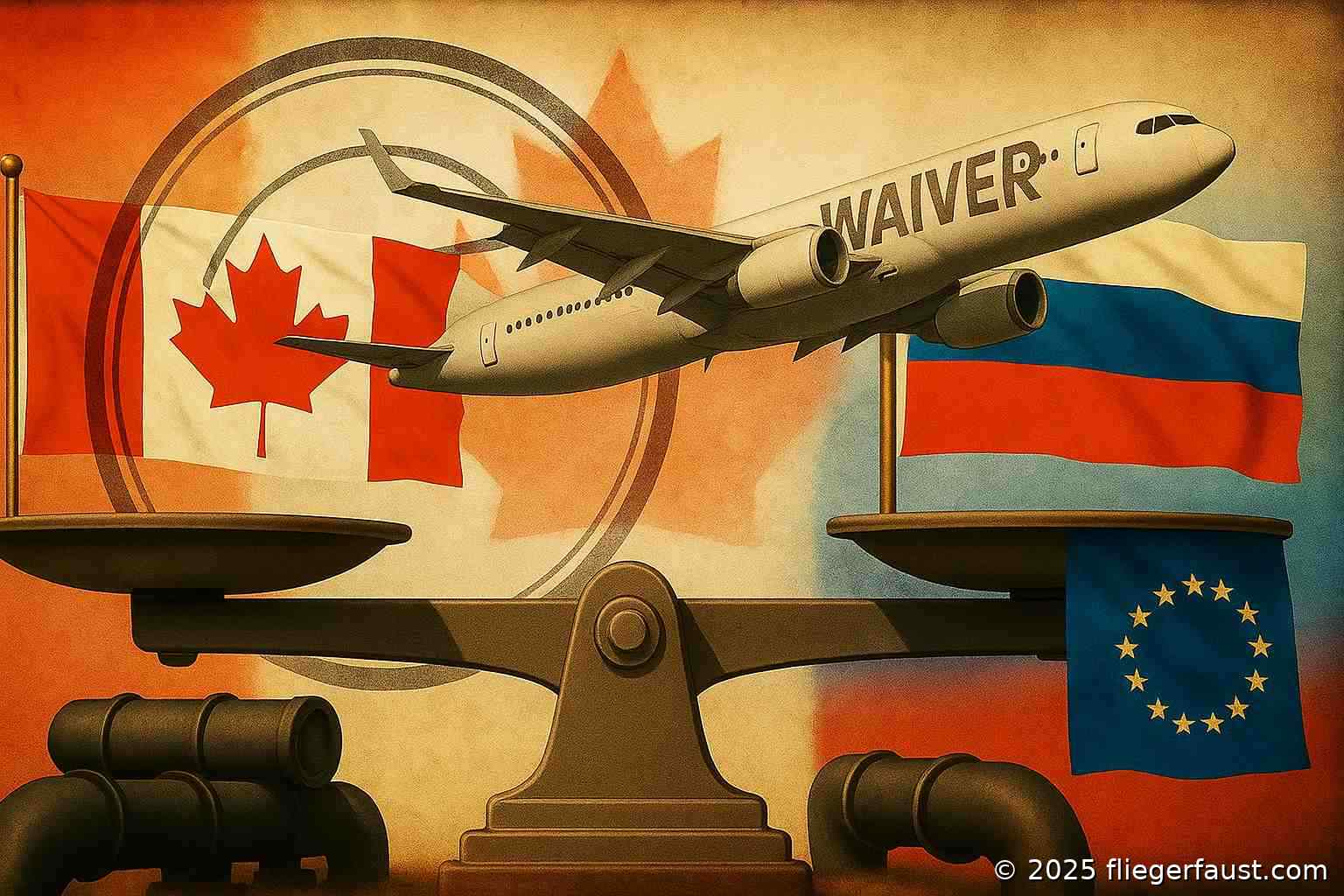
Canada Suspends Sanctions on Russia: does the Airbus waiver reflect pragmatic industrial policy or a double standard that weakens Western unity? Governments keep two ledgers—one for principle, one for supply?
On November 6, 2025, Ottawa granted Airbus a fresh waiver fromCanadian sanctions on Russian‑origin titanium, averting a disruption to widebody imports and safeguarding assembly and support work anchored in Québec. The decision follows months of quiet diplomacy, sustained industry pressure, and a string of earlier, time‑limited exemptions, and it lands squarely in the middle of a larger debate: how Western governments talk about isolating Moscow while still buying Russian energy or materials essential to their own economies.
Also read Bombardier Gripen Canada — Build It Here, Build It Now
Canada Suspends Sanctions on Russia: What exactly changed on November 6, 2025?
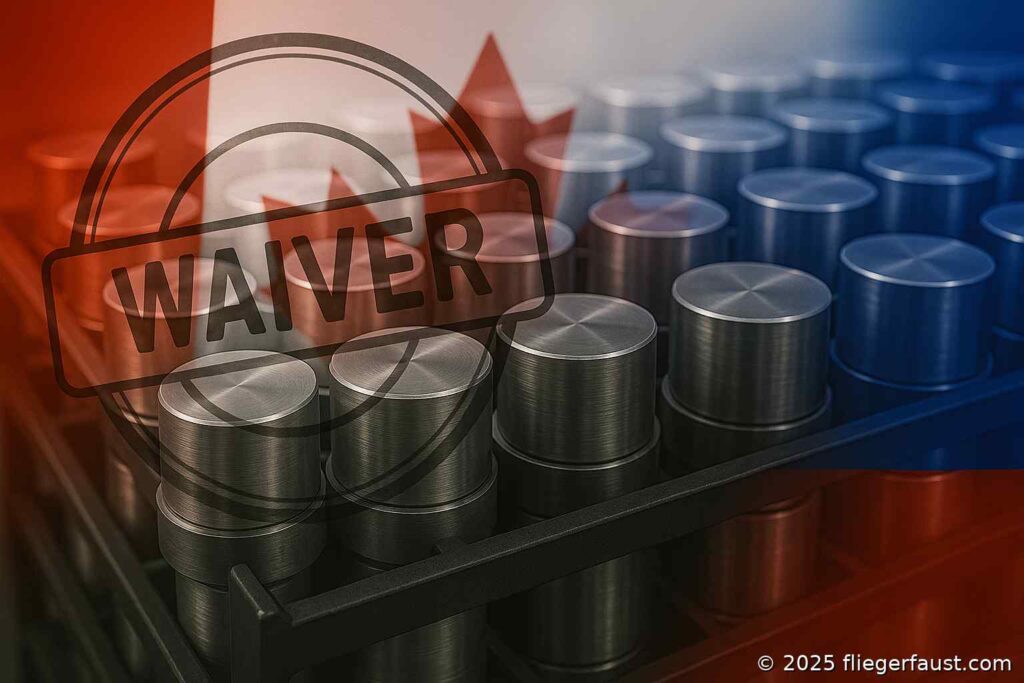
Canada’s latest green light lets Airbus continue to import and use titanium that can be traced to VSMPO‑AVISMA, the Russian producer long regarded as the civil aerospace industry’s dominant source. Without this waiver, the rules risked locking out certain long‑range Airbus jets—particularly the A350—from the Canadian market and complicating compliance for European‑built structures that embed titanium deep in their load‑bearing architecture.
Also read Air Force One fleet: USAF orders two more Boeing 747-8s – here’s why
Moreover, the move did not appear out of the blue. In April 2024, Canada quietly became the first Western government to formally include the Russian titanium giant in its sanctions net—then issued a case‑by‑case pass to Airbus so Canadian jobs and deliveries were not stranded. Officials and industry sources described those allowances as narrow and time‑limited, with the understanding that diversification would accelerate in parallel.
Additionally,lawmakers in Ottawa later convened hearings to examine why major aerospace firms—including Airbus, Bombardier and Safran—received waivers at all, a sign of how politically charged the issue had become.
And yes, even with the waiver, Airbus says it is pressing on with supply diversification, including additive‑manufactured titanium parts under a Master Supply Agreement with Norway’s Norsk Titanium—small steps that lower risk over time. (Reuters)
Canada Suspends Sanctions on Russia: The Airbus waiver and Québec’s shop floor
For Canada’s aerospace cluster, the calculus is concrete. The A220 programme is headquartered and assembled at Mirabel, Québec, with a parallel line in Mobile, Alabama. The Canadian site also supports deliveries and customer acceptance work, and it increasingly acts as a hub for services. While the A220 uses less titanium than big twin‑aisles, sanctions complications can still flow through tooling, spares, and cross‑programme procurement. Protecting the local industrial rhythm was part of the rationale for flexibility.
Furthermore, Mirabel is expanding its delivery capacity and sustainability footprint, as Airbus Canada opened a new A220 delivery centre in June 2025. That facility adds delivery bays and integrates sustainable aviation fuel (SAF) into acceptance operations—another reason planners wanted to avoid a sanctions‑induced logjam at the gate.
Consequently, Canada’s choice to keep Airbus compliant under the sanctions framework looks less like a capitulation and more like an industrial safety valve. The explicit expectation—stated or implied—is that Airbus continues de‑risking titanium while Canada maintains pressure on Russia across other levers of trade and finance, until they don’t.
Why titanium is the tripwire (and why the A350 matters even in Mirabel)
Titanium’s appeal is simple: strength, corrosion resistance, and low weight. Those properties make it ideal for high‑load components and for avoiding galvanic corrosion when metals meet carbon‑fibre structures. Airbus’ own technical notes for the A350 cite an airframe composition of about 53–54% composites and roughly 14% titanium, all to cut empty weight and maintenance burden.
Therefore, even if the A220 in Mirabel uses less titanium per shipset, Canada’s sanctions could still have blocked the importation of European‑built long‑range jets—where the titanium content is greatest—if those jets contained Russian‑origin parts. That was the core compliance risk the waiver sought to neutralise.
Notably, Boeing cut direct purchases of Russian titanium in March 2022 (Canada should say thank you), citing sufficient inventories and non‑Russian sources. “We have suspended purchasing titanium from Russia,” the company said at the time—an early marker of how politically sensitive this metal became (Boeing statement).
Canada Suspends Sanctions on Russia: Certification, compliance, and the nitty‑gritty
Regulatory systems don’t love sudden supplier swaps. Qualification of flight‑critical materials, coatings and processes is exacting, and changes cascade through stress reports, life limits, and maintenance manuals. Airbus has told reporters it “obtained the necessary authorisation to secure Airbus operations in compliance with the applicable sanctions,” a deliberately dry sentence that signals a tightly scoped path through a tricky maze. (Reuters)
Meanwhile, the Canadian framework that sets those tripwires—the Special Economic Measures (Russia) Regulations, SOR/2014‑58—has been amended repeatedly since 2022 to widen import bans, financing prohibitions, and services restrictions, while allowing case‑by‑case permits to prevent domestic self‑harm.
Consequently, Ottawa could tell Parliament it was both punishing Russia and preserving Canadian economic interests. The House foreign affairs committee nonetheless opened hearings in May 2024 to scrutinise titanium waivers. That tension—principle versus pragmatism—has framed the debate ever since.
Compliance aside: every exception is “narrow,” until your procurement team realises it isn’t.
Who else felt the shockwaves: Bombardier, Safran, and RTX
Canada’s approach was not Airbus‑only. Bombardier, which builds Global 7500 and other long‑range business jets in Québec and Ontario, also disclosed an exemption to keep parts flowing under sanctions that would otherwise have complicated deliveries and MRO support.
Additionally, knock‑on effects reached U.S. suppliers with operations in Canada. RTX (Collins Aerospace, who owns Pratt & Whitney) booked a US$175 million Q1‑2024 charge to unwind purchase commitments and write down contract fulfilment costs after Canada sanctioned “U.S.- and German‑based Russian‑owned entities” that had supplied titanium for its Canadian work. The company spelled out the link in its 10‑Q and press materials.
Moreover, the French supply chain featured too. Safran’s Canadian sites faced their own pressures amid strikes and supply snags, underscoring how a single commodity squeeze amplifies broader fragility.
Canada Suspends Sanctions on Russia: The two faces of policy—principle versus energy reality
Here is the awkward mirror. On one face, Canada and European partners denounce Moscow and stack sanctions packages. On the other face, the European Union (EU) still bought Russian liquefied natural gas (LNG) through 2024 and into 2025, even as piped gas collapsed post‑invasion. Spain, Belgium and France ranked among the largest EU buyers, while overall Russian gas (pipeline plus LNG) still supplied roughly 18–19% of EU imports in 2024 by some estimates.
Notably, Brussels began to tighten the screws. In June 2024, the EU agreed a ban on re‑exports of Russian LNG via European ports—a step designed to curb trans‑shipment services that effectively laundered origin while molecules moved on to other markets. Then in October 2025, EU negotiators advanced plans to ban all Russian LNG imports by January 2027, part of a staged drawdown that recognises long‑term contracts and the time lag for replacement supply.
However, those steps coexist with present‑tense dependence. Analytical groups like Bruegel estimate Russian gas still accounted for ~18% of EU supply in 2024, down from ~42% in 2021, but stubbornly persistent as LNG backfills lost pipelines.
Hypocrisy?
Consequently, when Canada Suspends Sanctions on Russia in a narrow, aerospace‑specific way, critics see hypocrisy. Yet the energy ledger shows European capitals making similar choices in reverse: keep fossil flows today while promising a clean break tomorrow. The optics are messy; the economics are messier.
Policy humour: governments can walk and chew gum—just not always in the same direction.
Germany too? Energy reliance after the nuclear exit
Germany shut down its last three nuclear power stations on April 15, 2023, closing a six‑decade chapter even as the energy shock from Russia’s invasion rippled through Europe. Officials argued the nuclear exit aligned with long‑standing policy and would accelerate the Energiewende; critics called the timing reckless.
Before the Ukraine war, Russia supplied about 55% of Germany’s gas imports—a dependency that fell rapidly in mid‑2022 as flows plunged and Berlin scrambled for alternatives. Even so, network modelling and trade data suggest German consumers can still end up burning gas from Russia blended in, routed via neighbouring states through LNG and pipeline swaps. Clean Energy Wire cites regulator data and Reuters analysis indicating portions of gas shipped from Belgium, France and the Netherlands may include Russian LNG, complicating any claim to a clean break.
Moreover, independent datasets show that Spain, Belgium and France remained major EU landing points for Russian LNG in 2023–2024, with onward movements inside the single market. That reality is why Brussels targeted re‑exports first and imports second.
Separately, Germany’s overall gas imports fell by roughly a third in 2023 as conservation, fuel‑switching, and new floating LNG terminals took over. Nonetheless, the country spent dearly to rebuild energy security after the Nord Stream calamity and the nuclear shutdown lining up with an historic supply shock.
Energy quip: Germany unplugged three reactors and accidentally plugged into a hundred excuses. Russia says Спасибо (thank you).
“Germany is a captive of Russia”: the Trump warning, revisited
At a NATO breakfast in Brussels on July 11, 2018, then‑U.S. President Donald Trump delivered a line that ricocheted across Atlantic capitals. “Germany is a captive of Russia,” he said, arguing it was “very inappropriate” to rely on Moscow for energy while expecting U.S. protection. The clip has been replayed often since 2022. U.S. President Donald Trump was right.
See it below.
To be precise, his 60–70% figure referred to gas shares in certain periods, not total energy. Nonetheless, the core risk he highlighted—strategic dependence on a potential adversary—landed with brutal force in 2022. Germany’s game‑time pivot has been expensive, politically divisive, and industrially painful. The bluntness of the 2018 warning does not absolve the messenger’s own inconsistencies on Russia; it does, however, show how energy math can dominate geopolitics when pipelines become leverage (Reuters).
Canada Suspends Sanctions on Russia: The Airbus waiver in global context
In April 2022, Airbus warned Europe against sanctioning titanium, arguing the pain would fall largely on European aerospace rather than Russia’s budget. Two years later, Canada tried the opposite—sanction first, then carve out to avoid collateral damage. Neither approach is clean; both show how limited the West’s toolbox can be when a critical material sits at the intersection of national security, certification, and globalised supply.
Furthermore, Russia has periodically hinted at curbing exports of strategic metals including titanium—a reminder that leverage cuts both ways. While those threats mostly aim to rattle markets, the signal is clear: materials with few qualified sources create pressure points that sanctions alone cannot resolve.
Consequently, Airbus’ additive manufacturing partnership with Norsk Titanium matters beyond the PR value. Each qualified part shifts a gram of risk off the Russian pillar—slowly, but measurably.
Global‑supply aside: the only thing rarer than titanium is a sanctions policy everyone agrees on.
The arithmetic of trade‑offs: jobs, programmes, and production targets
Airbus’ Canadian footprint hinges on A220 momentum. Output targets have been nudged several times as suppliers catch up; delivery centres, workforce plans, and SAF initiatives have been tuned accordingly. Each unplanned shock—engines, wings, landing gear, or metals—narrows the runway to hit ambitious monthly rates in 2026–2027 (Fliegerfaust: Latest A220 News: Signals, Strategy Shifts, and the Road Ahead)
Moreover, downstream Canadian maintenance, repair and overhaul (MRO) providers and Tier‑2 machining shops price risk into contracts. Sanctions increases that risk; waivers reduce it—temporarily. Ottawa’s approach here insulates a high‑value sector while keeping political fire pointed at Russia in other domains (diamonds, shipping, financial services), an equilibrium that is unlikely to hold forever.
The broader “two faces” question: energy cash versus sanctions rhetoric
Across the Atlantic, European governments fund Ukraine’s defence while—until very recently—paying Russia for LNG (helping funding Russia military). Investigations and data digs throughout 2024 and 2025 showed several EU economies increasing purchases year‑on‑year, even as leaders promised an eventual ban. Brussels has now set a clock on that contradiction; whether every capital meets it is the next stress test.
Meanwhile, Germany’s case is the sharpest lesson. Ending nuclear power during an external energy shock amplified exposure to gas, forced emergency infrastructure builds and pushed electricity prices through a grinder. That policymaking sequence—regardless of one’s view on nuclear—shows how strategic dependencies accumulate in quiet years and detonate in a crisis.
Consequently, when Canada Suspends Sanctions on Russia in an aerospace niche, it is fair to ask European partners—especially those still buying LNG—why their “carve‑out” is any more principled than Canada’s. It is also fair to ask Canada how long it expects industry to operate under a rolling series of waivers rather than a clear glidepath to fully non‑Russian inputs. Both sides prefer the other’s trade‑offs to their own.
Energy‑policy laugh line: hypocrisy is just realism without an explanatory footnote.
What Ottawa actually suspended—and what it didn’t
It bears emphasis: Ottawa did not junk its sanctions regime, said the government. It continues to expand lists of individuals, entities, vessels and goods; it tightened import/export prohibitions through 2024–2025 and aligned with G7 partners on diamonds and maritime enforcement. The titanium relief is targeted, time‑boxed and narrow, and it sits within a live, evolving set of prohibitions (Global Affairs Canada; Justice Laws (SOR/2014‑58)).
Additionally, Canada’s approach faced parliamentary scrutiny. Opposition MPs sought details on who approved Airbus’ permits, when they did so, and what consultations occurred. That transparency pressure is healthy; it is also a reminder that sanctions operate not only as foreign policy but as domestic industrial policy by other means (Parliamentary record). (ourcommons.ca).
Canada Suspends Sanctions on Russia: How to judge the Airbus waiver
The fairest test is consistency across sectors and borders. If the EU keeps buying LNG until 2027 while Canada grants narrow titanium waivers in 2025, both are making time‑bound exceptions to avoid self‑harm. The key difference is scale: EU energy payments are cash‑heavy and immediate; Canada’s titanium carve‑out is certification‑heavy and transitional. Both should be sunset as alternatives mature.
Moreover, Airbus’ diversification—additive parts (3D printing) from Norway today, more non‑Russian mill products tomorrow—must be paired with qualification bandwidth from regulators. Certification authorities can help by streamlining documentation for equivalent materials while preserving safety margins. That is dull work. It is also decisive.
For the Canadian aerospace reader: what to watch next
First, monitor Airbus’ additive titanium ramp. Each new part serialised under the Norsk Titanium agreement slightly lowers exposure to Russian metal in high‑load structures.
Second, watch EU implementation details on the 2027 LNG ban. If Brussels sticks to the timetable and member states do not carve back exceptions, Russian energy receipts shrink materially. If that timetable wobbles, expect Washington and Kyiv to renew pressure on European buyers.
Third, keep an eye on Canada’s sanctions cadence. Ottawa has steadily expanded listings and sectoral bans since 2022 and used waivers sparingly; the titanium case is exceptional precisely because of the certification trap it posed.
Related Fliegerfaust coverage
Additionally, for related context, readers may revisit our earlier reporting:
- Below 14/month, A220 loses money for Airbus and the government of Québec
- Airbus and Spirit AeroSystems: what a tie‑up means for Canadian supply chains
- Airbus A220-500: Can the Stretch Soar Without a New Wing?
- A220 ramp and engine outlook: the 2025–2026 path
- Trade rules, sanctions, and the jetliner supply chain: a practical guide
Conclusion: a necessary correction—or a credibility dent?
Overall, Canada Suspends Sanctions on Russia within a narrow titanium lane to prevent collateral damage to a signature Canadian aerospace footprint. That choice is defensible if—and only if—industry keeps moving off Russian inputs, regulators accelerate like‑for‑like qualifications, and Ottawa sunsets the waiver on a clear timetable. Conversely, the decision becomes a credibility dent if it drifts into a habit.
Give to Caesar what is Caesar’s
Moreover, Europe’s energy purchases from Russia have for two years undermined a moral narrative that otherwise rings true. Germany’s nuclear shutdown in April 2023 compounded exposure and cost, validating parts of the 2018 warning that Berlin dismissed at the time. “Germany is a captive of Russia,” correctly said Donald Trump back then. The phrasing was provocative; the dependency was real.
The West is paying Moscow…
Critically, sanction design works only when means match message. Canada’s titanium waiver is justifiable triage if Europe finally closes the LNG tap on schedule, and if Airbus and its suppliers make Russian titanium truly optional inside certified designs. Otherwise the West will go on paying Moscow with one hand while punishing it with the other.
The question
In the end, which costs more: a temporary waiver to avoid self‑harm, or a long policy that makes an economy reliant on an adversary for energy and critical materials?
Leave your answers and comments below or on our Fliegerfaust Facebook page.
For full details, please refer to our Disclaimer page.