

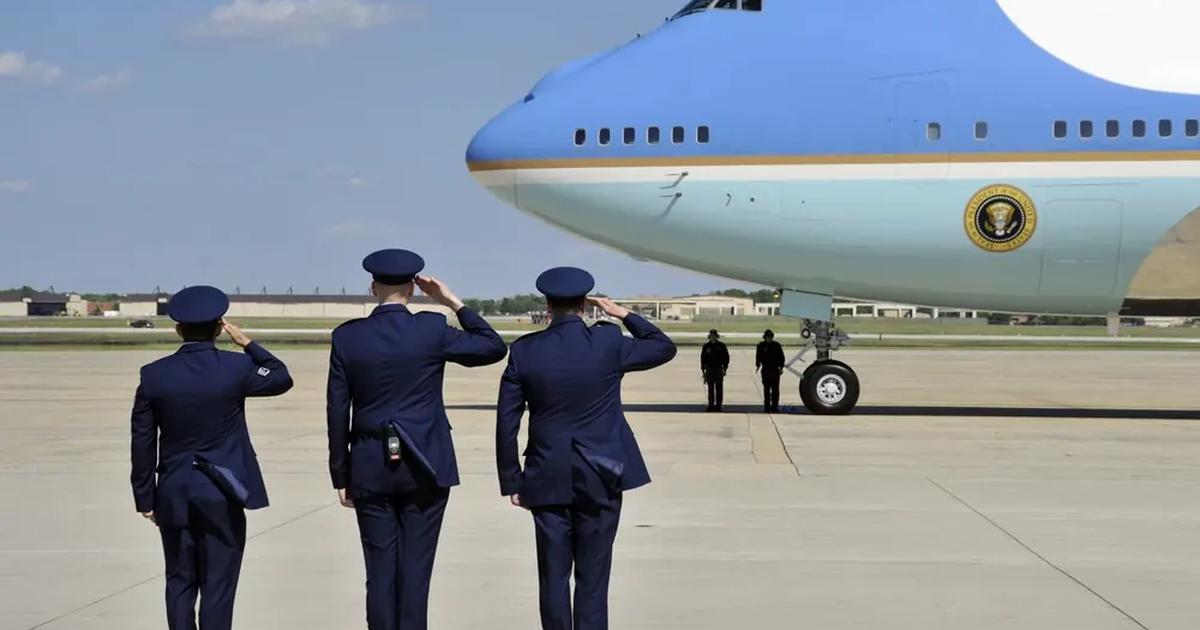
Air Force One fleet: why is the U.S. Air Force buying two more Boeing 747-8s for US$400 million right now?
Moreover, the timing is not subtle. On December 16, 2025, the U.S. Air Force (USAF) confirmed it will acquire two more 747-8s (for a total of 4) to build a training and sustainment pipeline for the next presidential airlift generation.
Meanwhile, Boeing’s two purpose-built replacement aircraft remain deep in modification and still behind schedule. The Air Force now projects the first VC-25B delivery in mid-2028, after yet another slip.
Jets that Boeing no longer manufactures
Consequently, the story here is bigger than “two more jumbos.” It is about how a modern presidential aircraft has become a strategic communications node, an airborne continuity-of-government platform, and a supply-chain stress test—built on a commercial jet that Boeing no longer manufactures.
Also read Bombardier Gripen Canada — Build It Here, Build It Now
Notably, the purchase also offers a rare window into the unglamorous truth of “Air Force One”: prestige still rides on parts bins, wiring diagrams, and certification paperwork.
Air Force One fleet order: US$400 million for two more 747-8s
Overall, the USAF says it is acquiring two more Boeing 747-8 aircraft for US$400 million to establish a training and sustainment programme for the future presidential airlift fleet.
Additionally, the service framed the move as part of “acceleration efforts” as it shifts from the current Boeing 747-200-based VC-25A to the newer Boeing 747-8 platform.
Specifically, the first aircraft is expected to arrive in early 2026. The second delivery is scheduled before the end of 2026.
Those are not the next Air force One
However, the Air Force is clear about what these two aircraft are not. They are not the president’s next operational transports. Instead, they will serve two practical roles: crew training and spare parts.
Separately, the service emphasised the buy is distinct from the pair of 747-8s already under modification into VC-25B aircraft. Those two are the actual “next Air Force One” jets.
Fun fact: the two Boeing 747-8i airframes now being turned into the VC-25B programme began life as undelivered Russian airline jets. Originally ordered by Russia’s Transaero around 2013, then left in limbo after the carrier collapsed in 2015. By that point, Boeing had already built two of the four aircraft and parked them in long-term storage in California’s Mojave Desert. The U.S. Air Force moved to purchase the pair on August 4, 2017, then formalised the US$3.9‑billion fixed-price conversion contract on July 19, 2018.
Even so, the decision is also a tell. When a programme is healthy, it does not usually need extra airframes to make the basics work.
Air Force One fleet transition: from 747-200 to 747-8
To understand the logic, it helps to unpack what the USAF is transitioning from—and what it is transitioning to.
Today’s presidential Air Force One fleet operates two VC-25A aircraft. Those are highly modified Boeing 747-200B airframes introduced into service in 1990.
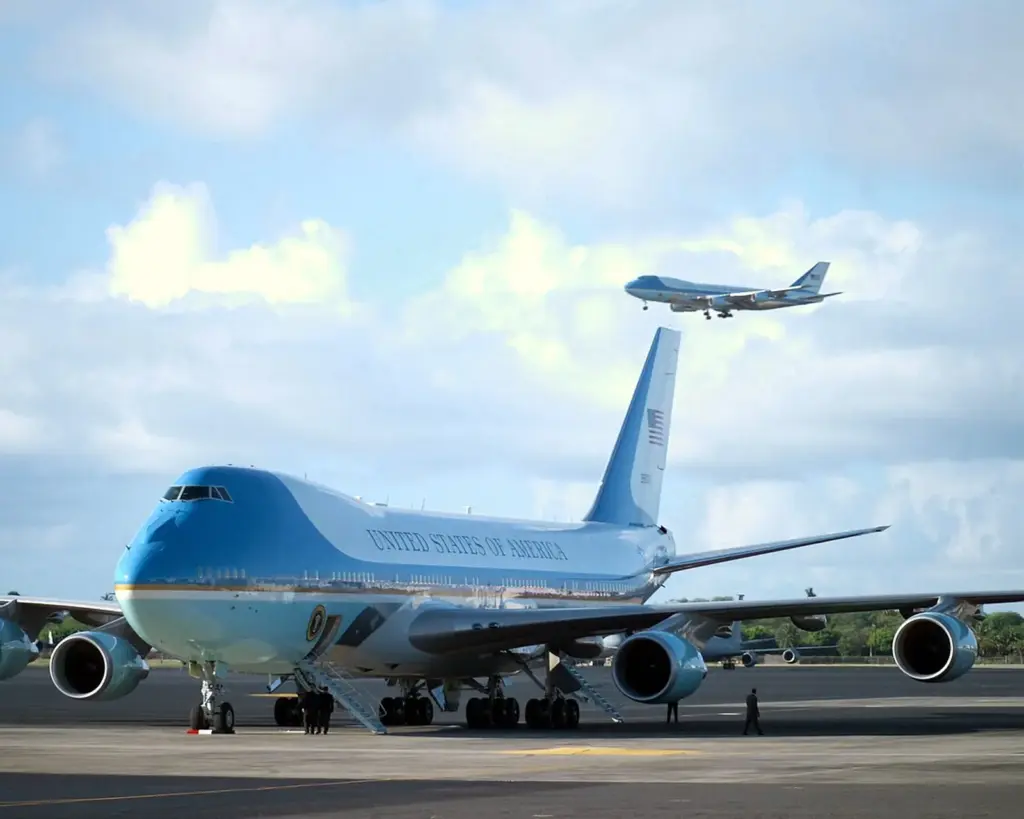
By contrast, the future VC-25B aircraft are based on the Boeing 747-8 Intercontinental (747-8i). That model differs in size, systems, and supply chain.
Consequently, the Air Force argues it needs a dedicated approach to training and sustainment before the first VC-25B even arrives. That means the service wants pilots, maintainers, and supply planners learning the 747-8 ecosystem without consuming scarce test and modification resources on the two VC-25B airframes.
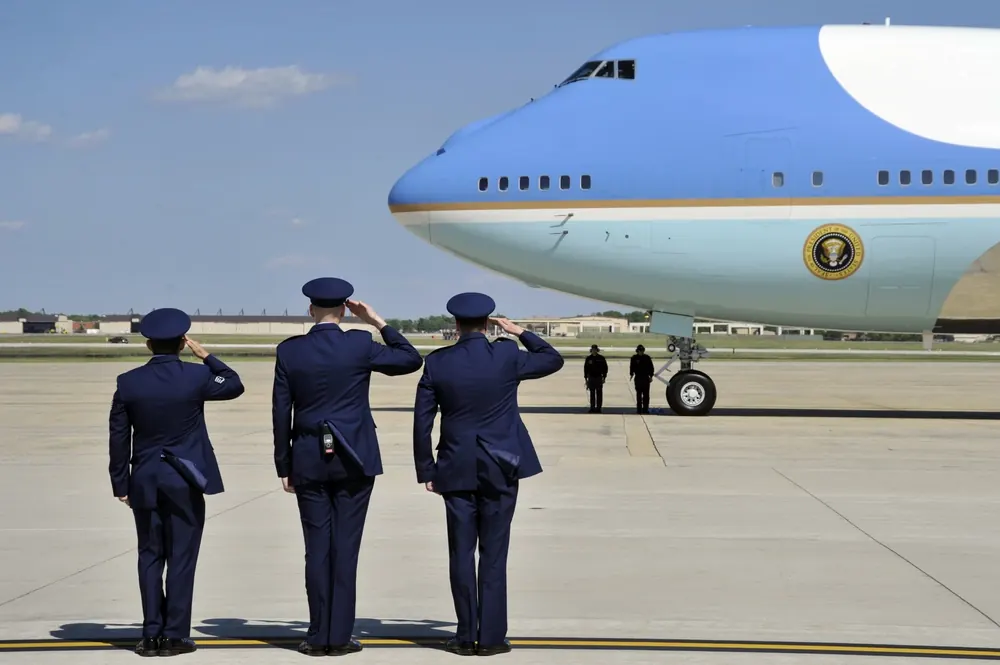
Notably, the Air Force also pointed out a structural constraint: Boeing ended 747-8 production, and the 747-8i is no longer in active production.
In other words, this is a “buy it now or regret it later” move—especially for spares.
Why the Air Force wants a 747-8 trainer and a 747-8 parts donor
Notably, the most revealing public explanation comes from the Air Force itself, via reporting that includes a named spokesperson.
“As part of the presidential airlift acceleration efforts, the Air Force is procuring two aircraft to support training and spares for the 747-8 fleet.” — Ann Stefanek, U.S. Air Force spokesperson, via The War Zone
Additionally, Stefanek underscored the underlying problem: “Given the 747-8i is no longer in active production, and is a very different aircraft than the 747-200, it is important for the Air Force to establish an overall training and sustainment strategy for the future Air Force 747-8i fleet.” — Ann Stefanek, U.S. Air Force spokesperson, via The War Zone
Strategic
That is the strategic sentence in this whole episode of the Air Force One fleet. It links three realities that aerospace readers will recognize immediately.
First, the platform shift is non-trivial. The USAF is moving from a 1960s-era 747 baseline (the 747-200 lineage) to a 21st-century 747 baseline (the 747-8). That change affects avionics architecture, maintenance data, diagnostic workflows, and supplier networks.
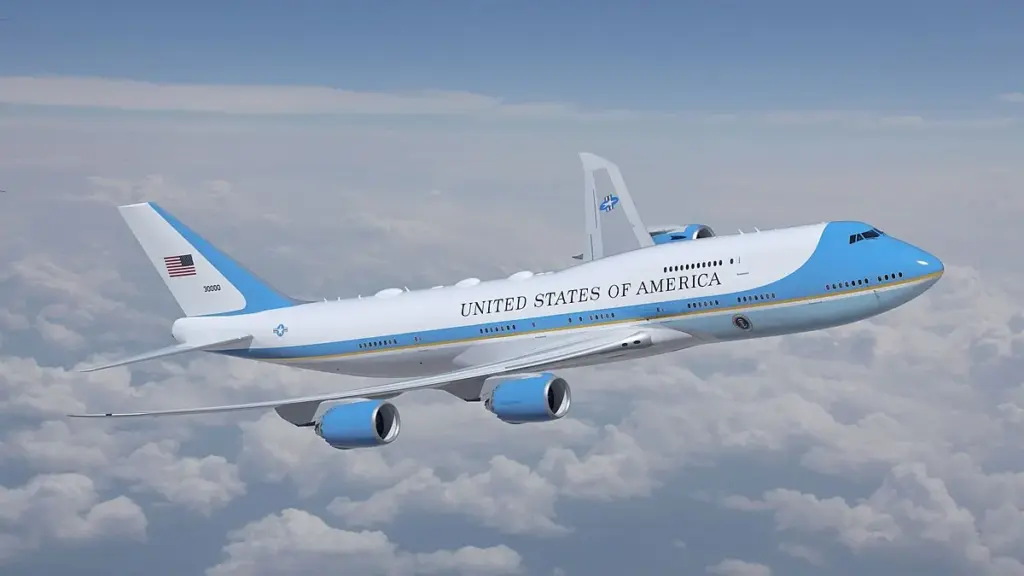
Compare below the look of the older Boeing 747-200 (first image below) with the latest Boeing 747-8 (second image below).
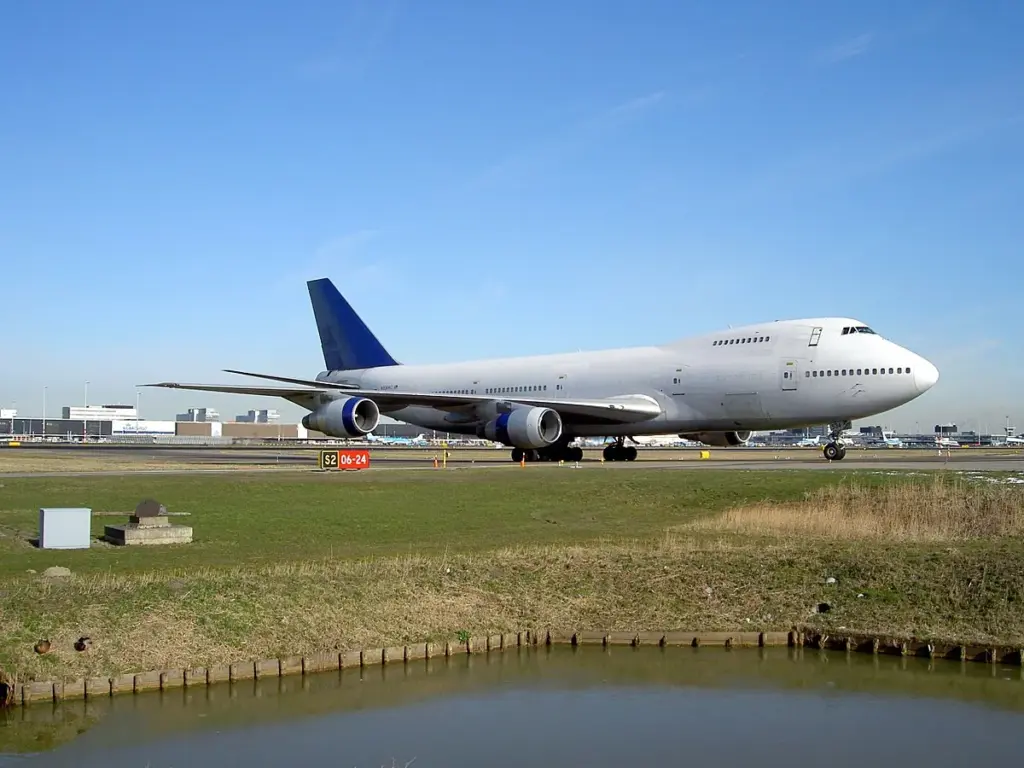
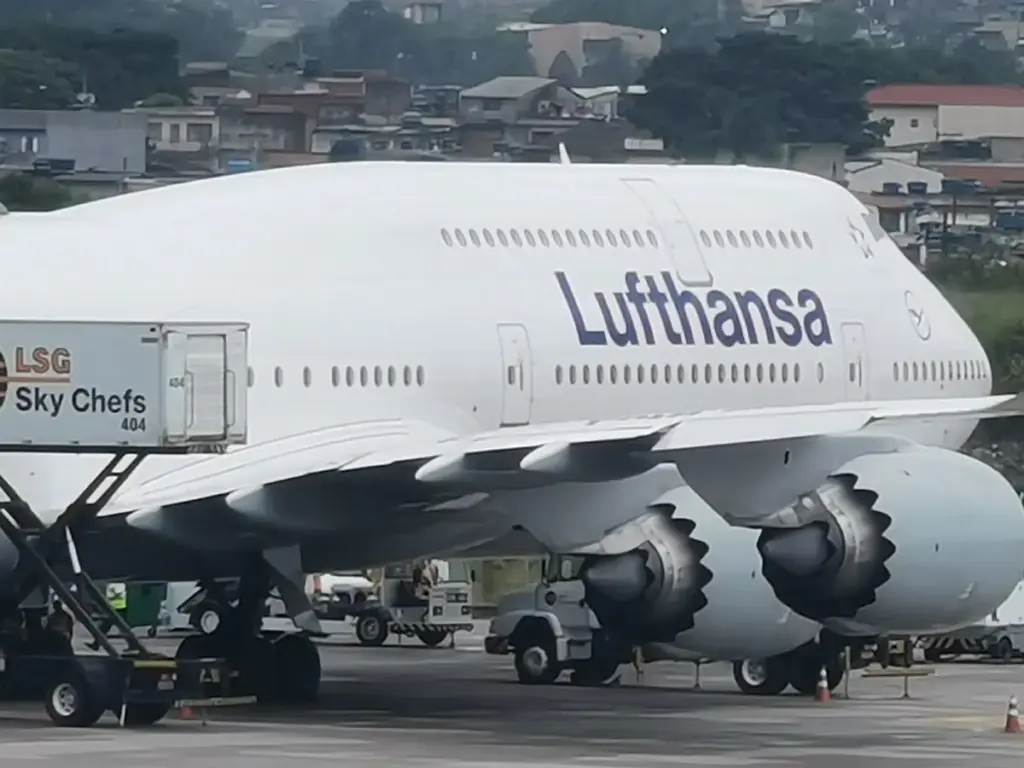
Second, the production line is cold. Boeing’s own materials describe the 747-8’s major design changes—new wing, fly-by-wire spoilers, and GEnx-2B engines—yet those improvements now live in a legacy production ecosystem.
Third, the sustainment demand for a presidential platform is unforgiving. The USAF does not get to say, “We’re waiting on backorder.” It needs predictable availability for a mission that can change by the hour.
Air Force One fleet plan: one trainer, one parts donor
So, what will these two aircraft actually do?
The Air Force says the jets will be used for crew training and as a source of spare parts.
Moreover, Stefanek’s comments as reported by The War Zone add a sharper operational split. One aircraft will fly and support training, at least initially. The other aircraft will be used as a source of spare parts from the start.
That division makes sense for two reasons
Firstly, a flying trainer provides “hands-on” time for flight crews and maintenance teams without tying up the two VC-25B jets, which are still in deep modification work. A training aircraft also helps validate procedures, tooling, and support equipment in a real aircraft environment rather than a simulator-only bubble.
Secondly, a parts donor gives the programme something money cannot always buy quickly: time. In practice, harvested components can buffer supplier delays, production restarts, and certification bottlenecks.
Air Force One fleet sustainment: the “zero spares” problem
Here, the VC-25B programme’s own documentation points to this pain.
In the Modernized Selected Acquisition Report (MSAR) dated December 31, 2023, the Pentagon lists a “Commercial 747-8 has zero spares” risk. The report notes Boeing’s commercial side contracted PPG to manufacture spares after a previous supplier shut down its factory.
Additionally, the MSAR describes challenges around the VC-25B window itself, and efforts to pursue certification “by similarity.”
That reads like an engineer’s quiet alarm bell. “By similarity” is efficient when the similarities hold. It becomes messy when the differences matter.
If you want a gentle laugh, consider this: it is hard to “accelerate” a programme with suppliers that no longer exist.
Still, the aircraft choice also signals another reality: Lufthansa is one of the few passenger carriers that operated the 747-8i at scale, and Boeing delivered its first 747-8i to Lufthansa on May 1, 2012.
Meanwhile, reporting suggests the jets may come from Lufthansa. Reuters describes the Lufthansa link as widely reported, while Lufthansa declined to comment.
Notably, The War Zone went further and cited unconfirmed registrations—D-ABYD and D-ABYG—as potential aircraft involved in the deal.
If those tails prove correct, the “trainer” aircraft for the Air Force One fleet would arrive with years of airline-grade maintenance history. That can be an advantage, but it also means the Air Force will want to align documentation, configuration control, and inspection regimes with military expectations.
Air Force One fleet replacement: inside the VC-25B programme
Meanwhile, the headline purchase of two additional 747-8s does not fix the central programme. It simply reduces risk around the transition to the new airframe family.
Air Force One fleet replacement: what VC-25B actually is
The actual replacement programme is the VC-25B effort, which converts two Boeing 747-8 commercial aircraft into a militarized presidential airlift capability.
Air Force One fleet capability: mission systems and autonomy
Notably, the DoD describes VC-25B as a two-aircraft programme with extensive mission systems integration. The list includes upgraded electrical power, dual auxiliary power units usable in flight, a mission communication system, an executive interior, military avionics, and a self-defence system.
Additionally, the DoD report includes details that enthusiasts will notice because they are unusual in big-aircraft VIP work: autonomous enplaning and deplaning, plus autonomous baggage loading.
Those sound like convenience features for the Air Force One fleet. Yet they likely reflect a security-and-operational concept: reduce dependence on local infrastructure, reduce exposure during ground operations, and keep the aircraft mission-capable in more austere conditions.
Even so, the programme’s timeline tells a cautionary story about how hard it is to militarize a commercial platform in the 2020s.
Air Force One fleet timeline: orders, contracts, and San Antonio work
According to the VC-25B MSAR, the USAF purchased two 747-8 commercial aircraft from Boeing in August 2017.
Additionally, the same report records a preliminary design contract award in September 2017. It then notes that in February 2018, US President Donald Trump and Boeing’s chief executive informally agreed to a US$3.9 billion firm-fixed-price deal.
By July 2018, the programme received its engineering and manufacturing development contract action. Then the preliminary design review closed in December 2018, and the Defence Acquisition Executive approved the acquisition baseline that month.
Notably, the MSAR’s timeline also confirms where much of the work happens. Aircraft No. 1 was ferried to the San Antonio modification facility in March 2019, followed by Aircraft No. 2 in April 2019.
In other words, the jets arrived in Texas years ago. The delay is not about “starting.” It is about finishing.
So how late is the programme?
In 2018, the baseline expectation pointed toward delivery around 2024.
However, public estimates have walked steadily to the right.
As of February 17, 2025, a senior administration official told Reuters the programme could slip to 2029 or later. The official cited supply chain issues and changing requirements as threats evolved.
Then, on December 12, 2025, the Air Force said the first aircraft is now expected in mid-2028, a one-year delay from the prior delivery estimate, just in time before the end of President Donald Trump’s presidency.
Additionally, Air & Space Forces reported a US$15.5 million contract modification announced on December 12, 2025 to expand the VC-25B’s communications capability. The Air Force said the upgrade is needed “to keep pace with mission requirements that have evolved since the programme baseline was established.”
That is careful language. It also matches Reuters’ reporting that requirements for the new Air Force One fleet changed as threats evolved.
Air Force One fleet rebaseline: why the schedule slipped again
However, changing requirements are only part of the story.
The DoD’s own 2022 Selected Acquisition Report describes a June 2022 schedule rebaseline. It cites a transition to a new interiors supplier and manufacturing challenges tied to wiring design, fabrication, installation, and throughput limits.
Moreover, the 2022 report states deliveries were delayed by 28 months and 26 months from the original contractual delivery date in 2024.
In other words, the programme already accepted a major reset. The current schedule still slipped after that.
Cost has also moved
Reuters reported in December 2025 that the effort is now “over $5 billion,” and that Boeing has taken US$2.4 billion in charges against earnings on the project.
Meanwhile, the DoD’s own December 31, 2023 MSAR lists a total acquisition estimate of roughly US$5.73 billion in then-year dollars in the “Current Estimate” column.
Notably, those figures underscore an uncomfortable truth about fixed-price contracts on bespoke defence conversions. The government can cap some costs. Yet the prime contractor may still absorb large overruns if execution goes sideways.
Boeing’s public posture reflects that tension.
“Our focus is on delivering two exceptional Air Force One airplanes for the country.” — Boeing statement, Reuters
That statement is corporate, measured, and unsurprising. Still, it highlights why the Air Force wants the training and spares aircraft: every hour saved on the VC-25B path reduces both schedule risk and political risk.
Inside today’s VC-25A: what the president flies right now
Before the 747-8 discussion gets too abstract, it helps to anchor in what the current VC-25A actually is.
According to the USAF fact sheet, the VC-25A’s primary function is presidential air transport. It uses four General Electric CF6-80C2B1 engines, each producing 56,700 pounds of thrust.
Additionally, the official figures list a maximum takeoff weight of 833,000 pounds (374,850 kilograms). The aircraft’s stated range is 7,800 statute miles (12,550 kilometres), with a ceiling of 45,100 feet.
Moreover, the VC-25A has a crew of 30 and carries 71 passengers in the published configuration.
Notably, the official VC-25A “Introduction Date” for the two aircraft is December 8, 1990 (tail number 28000) and December 23, 1990 (tail number 29000).
The Air Mobility Command (AMC) fact sheet (link provided in this article) adds operational history that puts those dates into context. It notes the first VC-25A (tail number 28000) flew as “Air Force One” (President onboard) on September 6, 1990. Transporting President George H.W. Bush to Kansas and Florida, marking the official entry into service for the new presidential aircraft.
Air Force One fleet mission design: the flying office and defences
Even so, enthusiasts do not care about numbers alone. They care about mission design.
Air & Space Forces describes the VC-25 as a specially configured Boeing 747-200B with staff work areas, a conference room, a general seating area, and an executive office.
Additionally, the same source says the aircraft supports worldwide secure and clear communications with a “full suite” of strategic command and control (C2) communications and data links.
Crucially, it also notes the VC-25 fleet has a “full self-defensive suite.”
This is as specific as reputable public sources tend to get, and for good reason. The exact mix of defensive countermeasures, sensors, and electronic warfare techniques is not something the Air Force publishes for obvious operational security reasons.
However, even the public-level description reveals the broader concept: the aircraft is not merely a VIP transport. It is a survivable node in a crisis communications network.
Air Force One fleet upgrades: keeping 1990 hardware on 2025 networks
That is why the communications upgrades matter so much.
Air & Space Forces notes that fiscal year 2020 funded the VC-25 fleet’s final block upgrade. It included Mobile User Objective System (MUOS) and protected satellite communications (SATCOM), plus weather radar and digital voice and data networking.
Additionally, the same source reports fiscal year 2025 funding supports integration of the Multi-Role Tactical Common Data Link to add low-latency satellite teleconferencing and higher-capacity tactical links on a second aircraft.
If you are an aerospace engineer, those phrases translate into a familiar problem: keep a 1990-era platform interoperable with 2025-era networks.
And if you are a maintainer, the humour writes itself: nothing upgrades faster than the software that refuses to talk to your hardware.
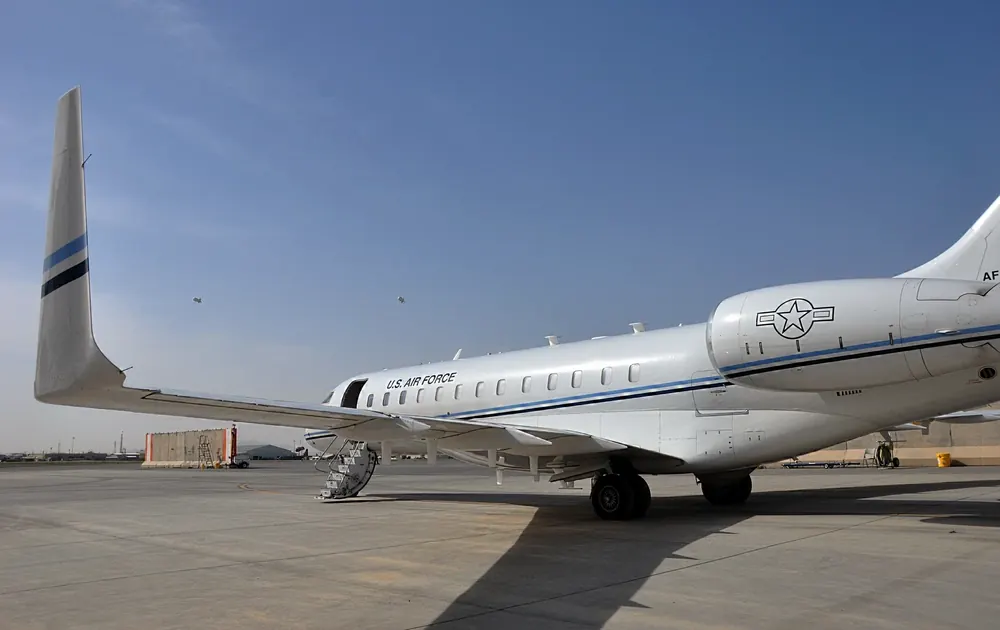
From a Fliegerfaust perspective, this is where executive airlift overlaps with broader airborne networking trends. If you want a parallel case study, Fliegerfaust’s reporting on Bombardier’s BACN delivery to the USAF shows how strongly modern operations lean on airborne communications and networking capacity (see image of one of them below).
747-8 versus 747-200: what changes in the Air Force One fleet transition
Notably, the Air Force’s rationale rests on a single phrase: “very different aircraft.”
That is not marketing. It is engineering.
Air Force One fleet airframes: 747-8 dimensions versus VC-25A
Start with the 747-8’s basic dimensions. Lufthansa’s published technical data for its 747-8 lists a length of 76.30 metres and a wingspan of 68.40 metres. It lists a maximum takeoff weight of 442 tonnes and a range of 13,100 kilometres.
Now compare that to the VC-25A’s published dimensions. The USAF fact sheet lists a length of 231 feet 10 inches (70.7 metres) and a wingspan of 195 feet 8 inches (59.6 metres). It lists maximum takeoff weight of 833,000 pounds (374,850 kilograms) and range of 12,550 kilometres.
In other words, the 747-8 is longer, wider-spanned, and heavier. Its performance envelope is comparable, but its systems architecture reflects a newer era.
Air Force One fleet training: engines, type rating, and crew conversion
Boeing highlights the 747-8’s “new GEnx-2B engines,” plus a “new wing” with fly-by-wire spoilers and outboard ailerons.
Additionally, Boeing notes the 747-8 shares the same type rating as the 747-400, which is relevant to pilot conversion pathways.
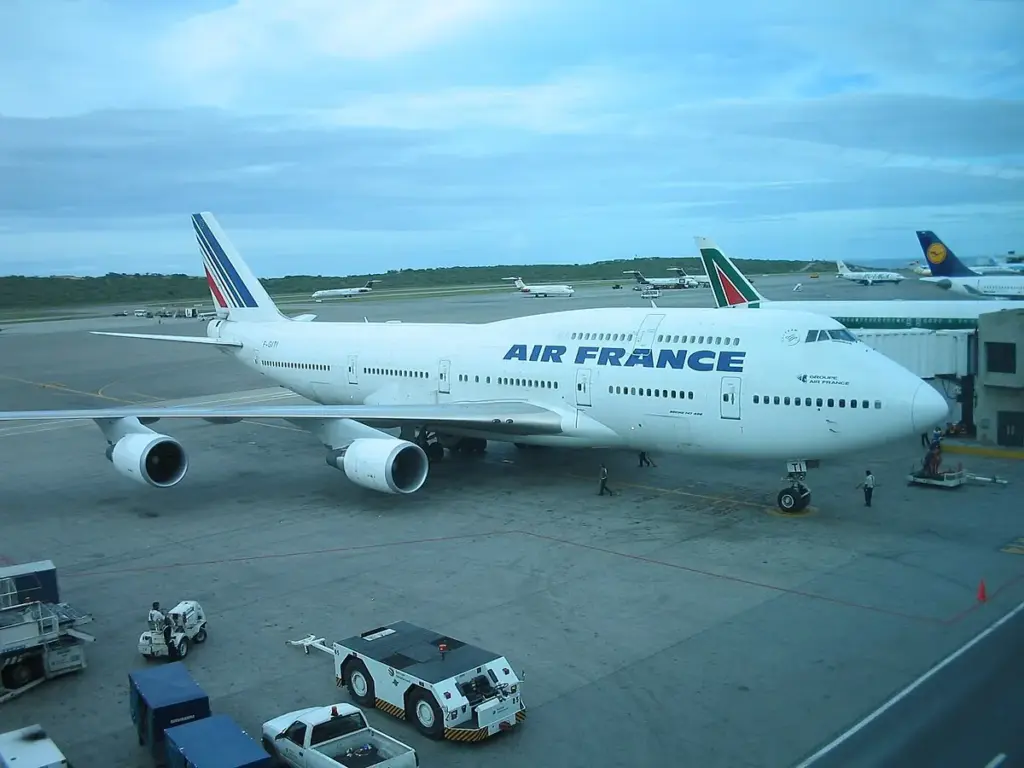
However, the USAF does not operate 747-400s in its executive fleet. So, shared type rating is not a magic wand. It helps with industry training infrastructure, but the Air Force still needs military-specific checklists, emergency procedures, and mission equipment training.
Air Force One fleet compatibility: airport limits and Design Group VI
Moreover, the “airport compatibility” details also matter.
Boeing’s Airplane Characteristics for Airport Planning (ACAP) document classifies the 747-8 series as an FAA Airplane Design Group VI and an International Civil Aviation Organization (ICAO) Aerodrome Reference Code 4F aircraft.
That designation shapes everything from taxiway separation to gate geometry. It also affects which military and civil airfields can support training operations without disruptive infrastructure work.
Air Force One fleet systems: why the biggest changes are invisible
Still, the biggest differences are not the ones passengers see.
The VC-25A’s published mission concept focuses on presidential air transport. Yet Air & Space Forces frames the VC-25A as a strategic C2 communications platform with defensive capability.
The VC-25B pushes that even further.
The DoD describes VC-25B as integrating an upgraded mission communication system, military avionics, and a self-defence system. It also calls out upgraded electrical power and dual auxiliary power units usable in flight.
Those are not small changes. They imply new generators, new distribution architecture, new cooling loads, and new electromagnetic compatibility and interference management.
To make the comparison concrete, here is a simple snapshot using publicly published figures.
| Characteristic | VC-25A (747-200B based) | 747-8 (airliner baseline) |
|---|---|---|
| Length | 70.7 m (231 ft 10 in) | 76.30 m (250 ft 4 in) |
| Wingspan | 59.6 m (195 ft 8 in) | 68.40 m (224 ft 5 in) |
| Maximum takeoff weight | 374,850 kg (833,000 lb) | 442 t (974,750 lb) |
| Engines | 4 × GE CF6-80C2B1 | 4 × GE GEnx-2B67 |
| Range (published) | 12,550 km (7800 miles) | 13,100 km (8140 miles) |
Source notes: VC-25A numbers are from the U.S. Air Force fact sheet. 747-8 airliner numbers are from Lufthansa’s published technical data.
Notably, even this basic table hints at why sustainment planning gets complicated. The Air Force is effectively building a bespoke military variant on a platform with a shrinking commercial ecosystem.
Consequently, buying two extra 747-8s is not “extra.” It is an attempt to recreate the support depth that production usually provides.
From VC-137 to VC-25: the presidential jet lineage, model by model
To understand why the USAF guards “Air Force One” so fiercely, it helps to look at how the presidential fleet evolved.
Any U.S. Air Force aircraft carrying the president becomes Air Force One
Technically, “Air Force One” is a call sign, not a specific aircraft. It applies to any U.S. Air Force aircraft carrying the president. If it’s a “Navy” aircraft, it becomes Marine One.
However, the president’s primary fixed-wing aircraft have had their own distinct lineages and designations. Starting in the jet era, those are the VC-137 series and then the VC-25 series.
The “SAM” in many tail references stands for Special Air Mission (SAM), which is used as a flight identifier and radio call sign when the aircraft is not carrying the president. Air & Space Forces explicitly notes that VC-25 aircraft operate under “Air Force One” when the president is aboard, and “SAM” during non-presidential flights.
That convention matters for readers who want to decode tail photos and flight tracking references.
Now, the models.
VC-137B: the first jet “Air Force One” era begins
While earlier propeller-driven aircraft carried presidents, the VC-137B is where the story becomes modern.
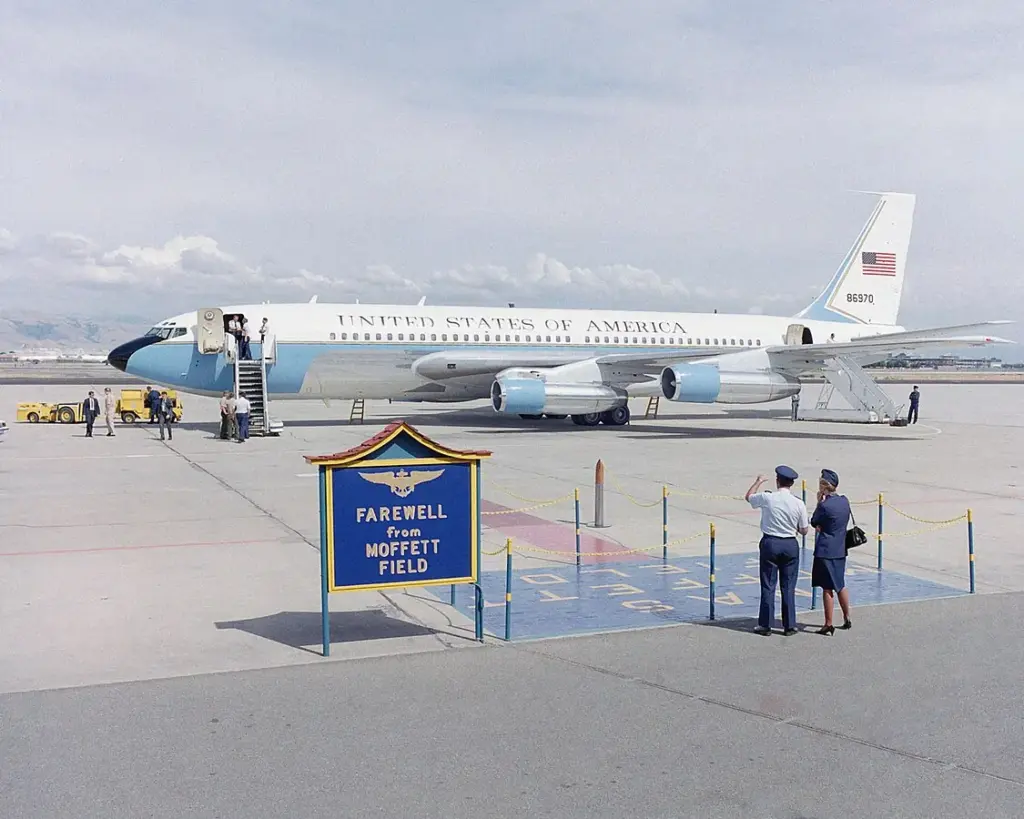
A U.S. Air Force Boeing VC-137B Stratoliner (s/n 58-6970) parked on the runway of Naval Air Station Moffett Field, California (USA), awaiting the departure of the U.S. Vice President George H.W. Bush and Mrs. Barbara Bush during their visit to the naval air station to review troops. This aircraft is on display at the Boeing Museum of Flight since June 1996. – Photo Wilfredor, CC0, via Wikimedia Commons
The Museum of Flight describes SAM 970 as the first of three Boeing 707s acquired in 1959 as presidential aircraft, designated the VC-137 series.
Notably, the museum notes President Dwight D. Eisenhower became the first U.S. president to fly by jet on SAM 970 on August 26, 1959.
Technically, SAM 970 reflects the Boeing 707-120 airframe family, and the Museum of Flight provides an unusually complete published spec snapshot for a presidential jet.
It lists a wingspan of 130.83 feet and a length of 145 feet. It lists a gross weight of 258,000 pounds and a maximum speed of 590 mph.
Additionally, it lists four Pratt & Whitney JT3D-3 engines and a published range of 4,000 miles.
From an aerospace perspective, those numbers point to two key shifts.
Firstly, jet travel collapsed presidential travel time, which expanded diplomatic reach. Secondly, it brought new demands: higher-altitude weather, different maintenance regimes, and early secure communications integration.
If you think your business trip calendar is full, imagine compressing diplomacy into a 4,000-mile range ring.
VC-137C: SAM 26000 and SAM 27000 define an era
By 1962, the USAF introduced a more capable presidential jet.
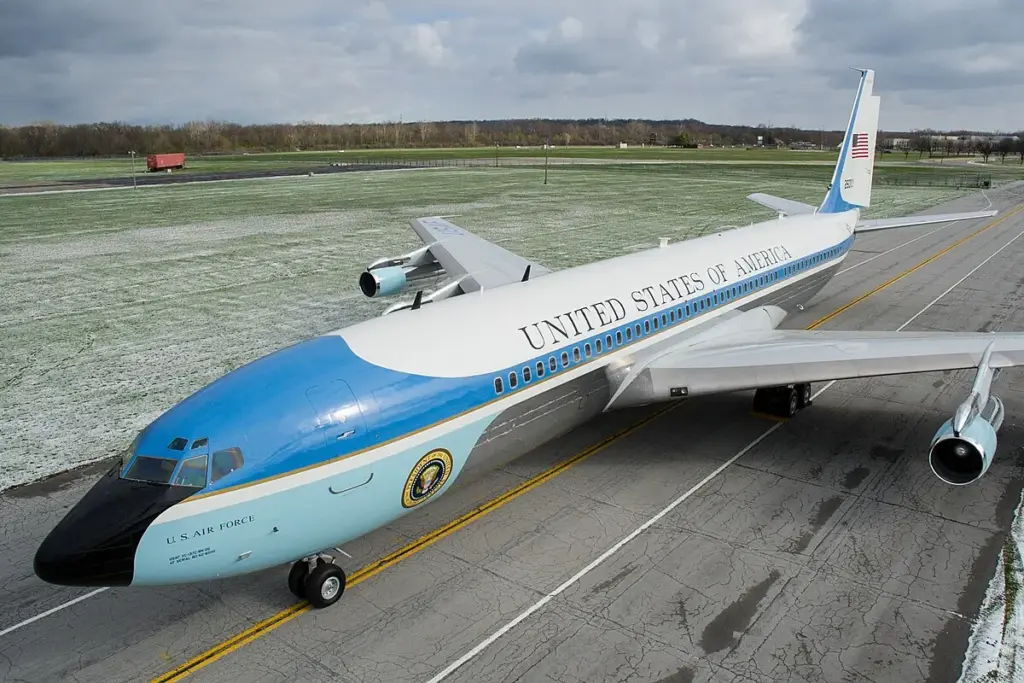
The VC-137C Air Force One (SAM 26000) at the National Museum of the United States Air Force on April 9, 2016. – Photo U.S. Air Force by Ken LaRock
The National Museum of the United States Air Force says the Boeing VC-137C on display—SAM 26000—was the first jet aircraft built specifically for use by the president.
Additionally, the museum notes that on October 10, 1962, Boeing delivered a highly modified Boeing 707-320B airliner, serial number 62-6000, bearing the “SAM Two-Six-Thousand” call sign.
Moreover, the museum states SAM 26000 carried eight sitting presidents during its 36-year flying career.
A place in history
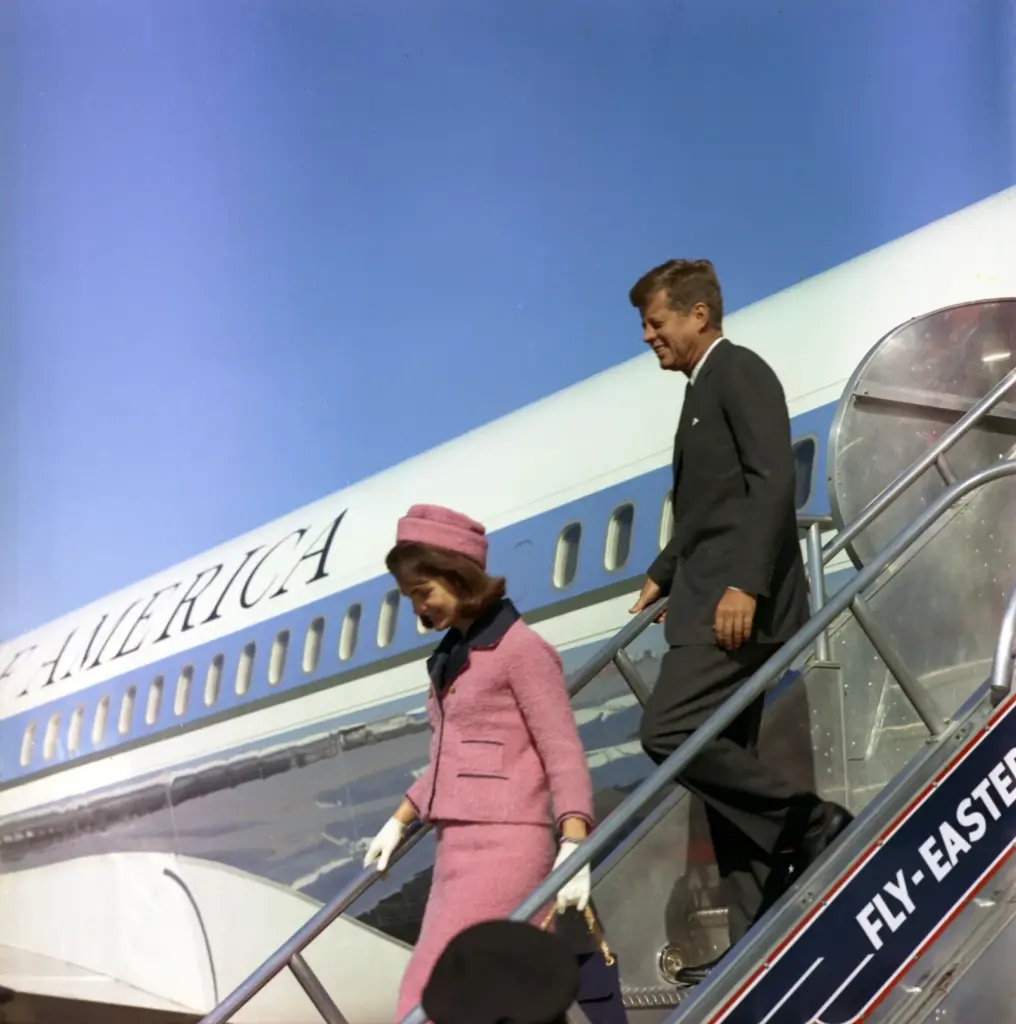
The SAM 26000 has its place in history major events. Kennedy’s VC-137 carried President John F. Kennedy to Dallas on November 22, 1963 and returned his body to Washington, D.C. Also Lyndon B. Johnson was sworn in aboard the aircraft at Love Field in Dallas.
The second VC-137C, SAM 27000, entered the story in the early 1970s.
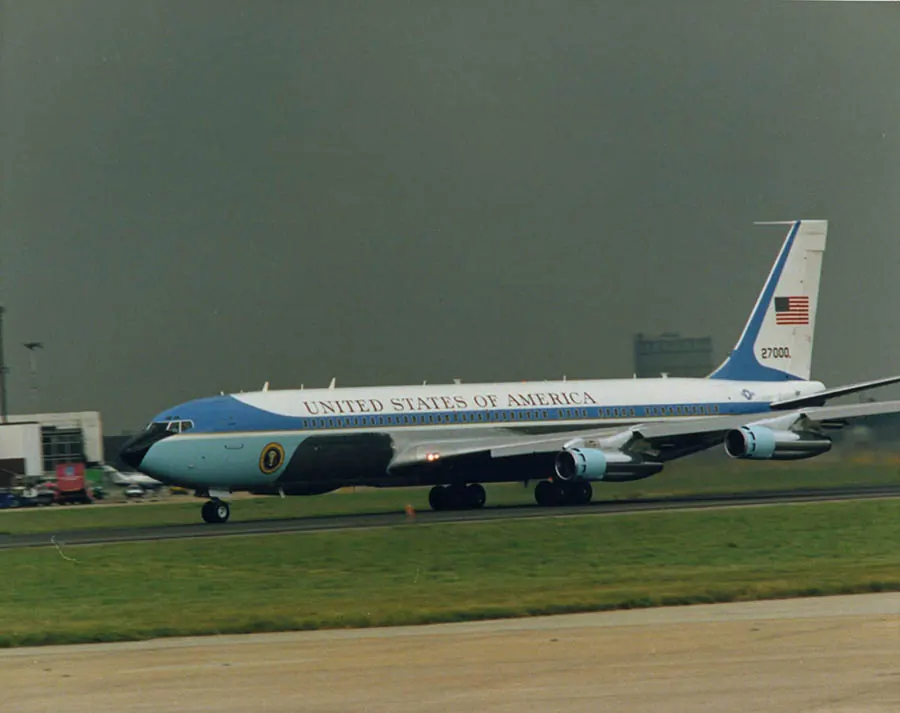
The AMC fact sheet states tail number 27000 replaced 26000 and flew Presidents Nixon, Ford, and Carter to Cairo on October 19, 1981 for the funeral of Egyptian President Anwar Sadat.
For aviation history enthusiasts, the VC-137 era also coincided with a deeper evolution in communications and mission support. The president’s aircraft started to resemble a mobile executive suite, then a mobile office, then a mobile command centre.
In other words, the aircraft grew into the job.
If the VC-137 era taught anything, it is that diplomacy loves speed, until the telephones stop working.
VC-25A: the 747 era begins in 1990
The next leap was not incremental. It was a platform change.
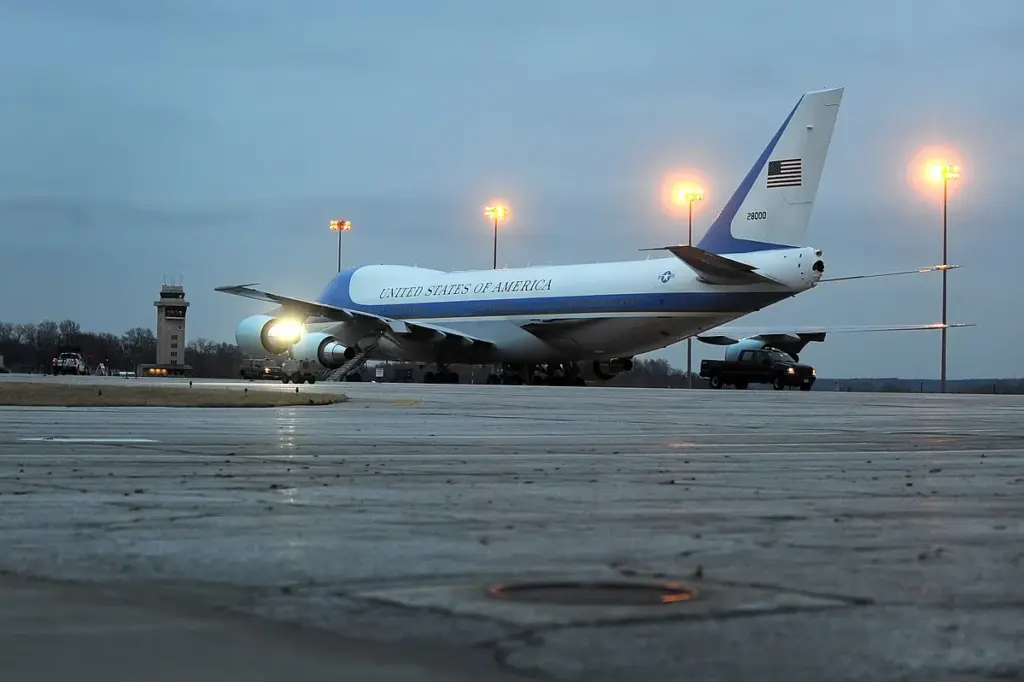
The current VC-25A aircraft are Boeing 747-200B-based jets, operated by the Presidential Airlift Group and assigned to AMC’s 89th Airlift Wing at Joint Base Andrews, Maryland.
The first VC-25A (tail number 28000) flew as Air Force One on September 6, 1990, carrying President George Bush.
Meanwhile, the two-aircraft structure—28000 and 29000—reflects a simple but essential operational principle. The president’s airlift mission cannot hinge on a single tail number.
The two aircraft’s introduction dates in December 1990 and the deployed dates in September 1990 and March 1991.
If that sounds like overlapping calendar logic, it is. Military acceptance, mission readiness, and operational use do not always share the same timestamp.
VC-25A is not simply “a Boeing 747”
It is an aircraft whose interior and systems support presidential decision-making, staff work, and global communications. Air & Space Forces describes work areas, a conference room, a general seating area, and an executive office.
That means the cabin is a workplace first, and a passenger space second. It also means every cabin system—power, cooling, lighting, partitioning, and communications—has a security dimension.
In other words, it is a flying office with a threat model.
VC-25B: the next-generation “Air Force One” aircraft, and why it is hard
Finally, the USAF is attempting to build the next jump: VC-25B.
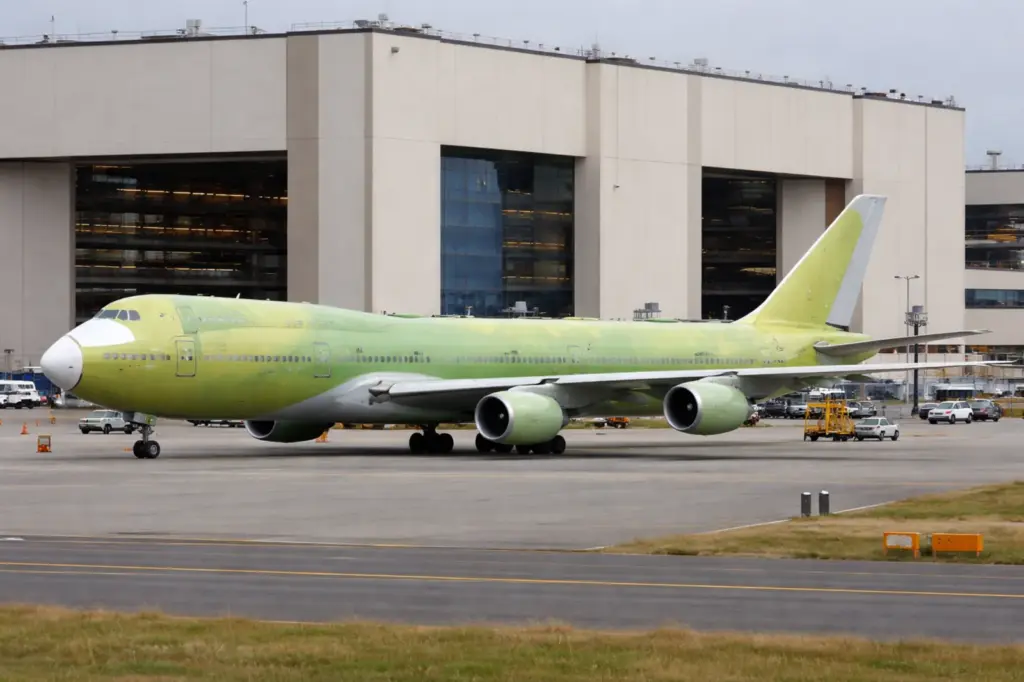
The DoD’s MSAR gives the clearest public description of the VC-25B programme’s scope. It lists mission communication upgrades, military avionics, self-defence, and significant power and support changes.
Yet the same report also documents a series of risks that sound like a manufacturing manager’s nightmare: spare parts gaps, workforce turnover, qualification test performance, material availability, structural repairs, and more.
Notably, one risk item cites confirmed cracks in door surround stringers, plus suspect cracks at splice locations, driving additional inspections and documentation.
This is not “Air Force One trivia.” It is the kind of detail that tells you the project is deep into the physical reality of modifying a structure designed for one purpose into another.
If you want the most honest one-line summary of VC-25B, it might be: it is a commercial widebody being asked to live a military life.
What the extra 747-8s signal about sustainment, industry, and risk
Now circle back to the December 2025 purchase.
On its face, US$400 million for two used airliners can sound extravagant. Yet in aerospace sustainment terms, it may be a relatively small hedge against a larger risk.
Consider the scale of the VC-25B cost environment. Reuters reports the conversion effort is now over US$5 billion.
Meanwhile, the DoD’s own acquisition estimate sits in the same neighbourhood.
In that context, a US$400 million investment that speeds training and reduces spares risk may look more like insurance than indulgence.
Additionally, it tells you how the USAF views “acceleration.” It is not only about adding overtime in a modification hangar. It is also about building the enabling ecosystem around the aircraft—parts, training capacity, and sustainment planning.
That logic mirrors other special-mission aviation trends. For example, modern airborne early warning and command projects often invest heavily in mission-system integration and training ecosystems, not just the airframe. Fliegerfaust’s analysis of South Korea’s Global 6500-based AEW&C choice shows how airframe selection quickly becomes a story about sensors, networks, and sustainment.
Air Force One fleet politics: the January 2029 clock
However, the presidential fleet has an extra twist: its public visibility magnifies every delay.
Reuters reported on December 12, 2025 that President Donald Trump wants the new jets before the end of his term in January 2029.
That political clock matters because it can drive pressure to “pull left” milestones. Yet aerospace programmes rarely respond well to pure pressure. They respond to stable requirements, predictable staffing, and disciplined testing but certainly helps getting additional money if necessary.
In that sense, the two additional 747-8s can act as a pressure valve. They let the Air Force train crews, validate support gear, and develop spares strategies without forcing the VC-25B conversion work to become its own training platform.
The joke here is that the Air Force is buying a “spare airplane” so it can finally build a spare parts plan.
Air Force One fleet industry: a rare airliner on a closed line
Yet there is also a deeper industrial point.
The 747-8 is a rare bird. Boeing highlights its major design improvements, but the market ultimately moved.
Additionally, regulators treated the 747-8 as a derivative of the 747-400, with specific certification work and special conditions. The Federal Register describes the 747-8 as a 747-400 derivative and references a maximum takeoff weight of 975,000 pounds, plus GEnx-2B67 engines and an exit-limit capacity of 605 passengers.
That certification lineage helps explain why the aircraft is technically mature—and why it still demands a careful sustainment plan when the production line is closed.
It is also why a presidential platform built on the 747-8 can never be treated as a simple “derivative.” Once you add mission comms, self-defence, and bespoke interiors, you are effectively building a new aircraft within the aircraft.
As for Boeing, this programme also sits in a broader defence-industrial portfolio. If you want to understand how defence programmes compete for top talent and hangar capacity, Fliegerfaust’s look at Boeing’s recent fighter programme momentum offers a reminder: the same industrial base often juggles multiple high-stakes efforts at once.
In other words, it is not only a jet problem. It is an industrial bandwidth problem.
Conclusion
So what should we make of the USAF buying two additional 747-8s for presidential fleet support?
Overall, it is a rational move. The Air Force is trying to land a complex platform change while its primary replacement jets remain delayed. The service is also acknowledging the real-world difficulty of sustaining a niche widebody after production ends.
Moreover, the plan reflects mature programme thinking. Training and sustainment are not afterthoughts. They are the scaffolding that keeps a strategic aircraft credible on day one.
Yet the decision is also a warning light
If the world’s most capable air force feels compelled to buy used airliners just to train crews and harvest spares, it suggests the VC-25B programme is operating in a fragile ecosystem—where supply chains, specialised labour, and evolving requirements can all bend timelines beyond political patience.
Final question
Finally, that raises a broader question for aerospace procurement. The presidential aircraft is the most visible executive airlift platform on Earth. If even that programme struggles to control schedule and sustainment risk on a commercial derivative, what does that imply for the next wave of bespoke military conversions built on shrinking commercial production lines?
Leave your answers and comments below this page and on our Fliegerfaust Facebook page.
Sources
- Reuters — US Air Force to buy two more 747-8s for presidential fleet support (December 16, 2025).
- U.S. Department of Defense — VC-25B Selected Acquisition Report (SAR), June 30, 2022 (June 30, 2022).
- Reuters — US president’s new Air Force One jet from Boeing delayed again (December 12, 2025).
- The War Zone — USAF Buying Lufthansa 747s To Serve As Future Air Force One Trainers, Spare Parts Sources (December 16, 2025).
- Reuters — Boeing’s Air Force One program could be delayed until 2029, or later, White House official says (February 17, 2025).
- Air & Space Forces Magazine — New Air Force One Delivery Shifts to 2028 (December 17, 2025).
- U.S. Department of Defense — VC-25B Modernized Selected Acquisition Report (MSAR), December 31, 2023 (December 31, 2023).
- U.S. Air Force — VC-25 – Air Force One (fact sheet) (current as of February 2021).
- Air Mobility Command — VC-25A (fact sheet) (current as of April 2025).
- Boeing — 747-8 (programme overview) (no date listed).
- Air & Space Forces Magazine — VC-25 Air Force One (weapons and platforms) (no date listed).
- National Museum of the U.S. Air Force — Boeing VC-137C SAM 26000 (fact sheet) (no date listed).
- Museum of Flight — Boeing VC-137B (707-120) SAM 970 “Air Force One” (no date listed).
- Boeing — 747 Design Highlights (no date listed).
- Boeing — 747-8 Airplane Characteristics for Airport Planning (Rev D) (August 2023).
- Lufthansa — Boeing 747-8 (technical data) (no date listed).
- Federal Register — Special Conditions: Boeing Model 747-8 Airplanes (June 1, 2011).
For full details, please refer to our Disclaimer page.
The appearance of U.S. Department of War (DoW) visual information does not imply or constitute DoW endorsement.