

Militarization of the Moon — did Cold War planners truly draft blueprints for armed lunar outposts, and is the same logic now returning under a different name?
Militarization of the Moon: That question is no longer hypothetical. Declassified U.S. Army, Air Force, and intelligence documents reveal that between 1959 and the mid-1960s, multiple American military branches produced detailed studies for permanent armed bases on the lunar surface. Notably, those studies included cost tables, crew complements, construction schedules, and explicit surveillance missions directed at Earth. Meanwhile, the Central Intelligence Agency (CIA) and the U.S. Navy quietly turned the Moon into an operational signals intelligence asset. Specifically, they bounced radar intercepts off its surface to spy on Soviet weapons systems.
Now, more than six decades later, official U.S. policy is pivoting back toward the Moon in security terms. A December 18, 2025 executive order directs the Pentagon to detect and counter threats “through cislunar space.” Additionally, the United States Space Force (USSF) is standing up dedicated leadership positions for cislunar operations. Furthermore, China and Russia are building their own rival lunar research station. Consequently, the pattern suggests that the militarization of the Moon never truly ended. It simply changed vocabulary.
Militarization of the Moon: The Army’s Project Horizon
The most striking Cold War document is Project Horizon, a 1959 U.S. Army study whose opening line leaves no ambiguity about intent. Specifically, the Army Ballistic Missile Agency (ABMA) produced the report on June 8, 1959. That was during the post-Sputnik scramble when each military branch still controlled its own space programmes.
Lunar Military Base: A Twelve-Soldier Outpost by 1966
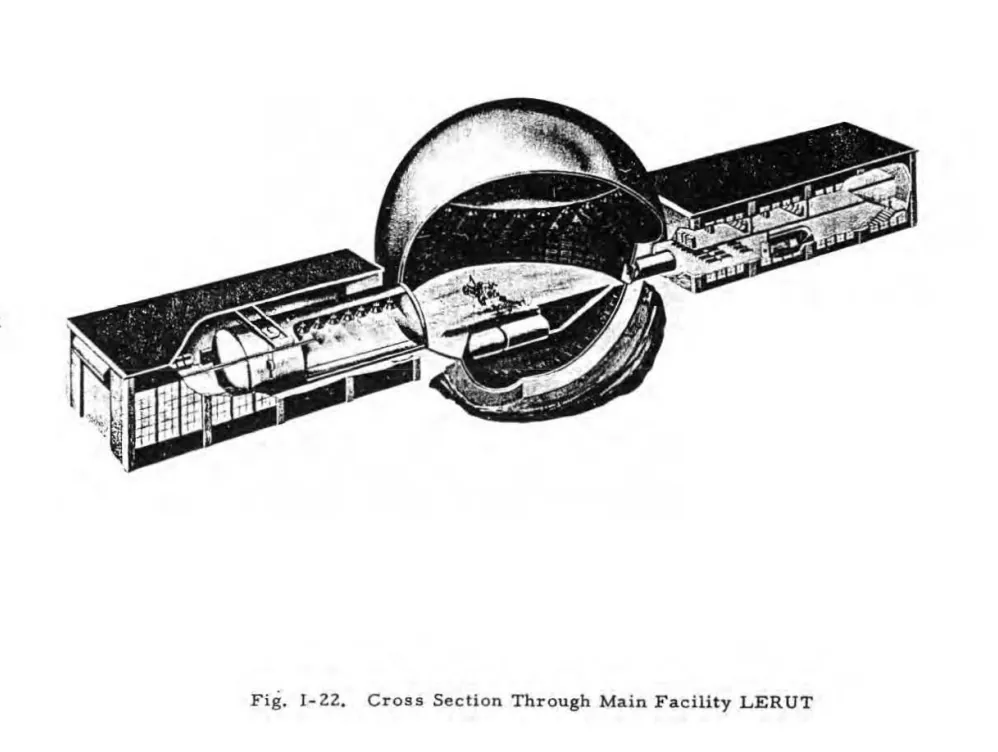
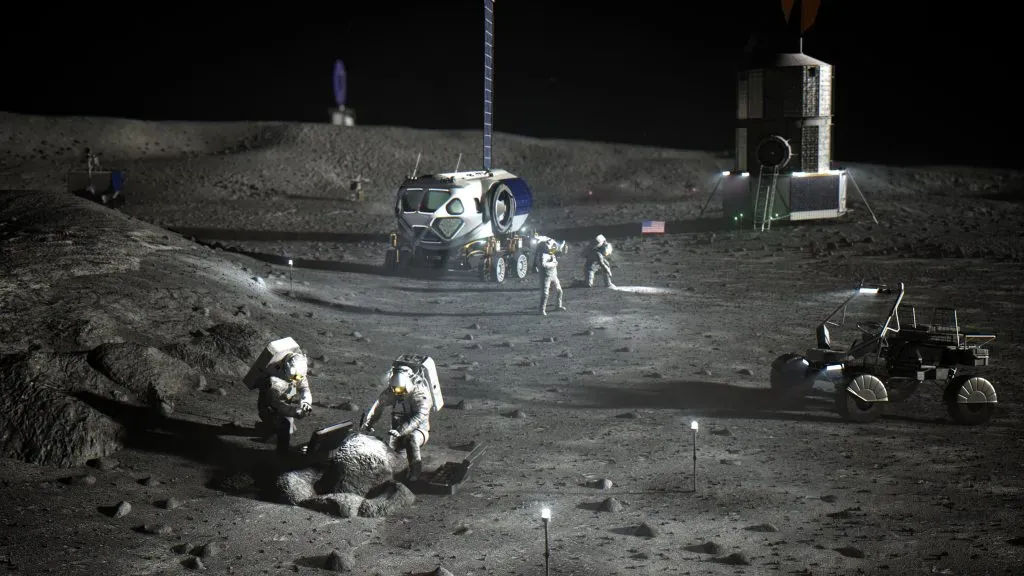
Project Horizon proposed a permanent lunar outpost staffed by 12 soldiers by December 1966. The plan called for 147 Saturn rocket launches to loft components into low Earth orbit. Moreover, the total estimated cost exceeded US$6 billion — roughly US$64 billion in 2025 dollars. The outpost would serve as a surveillance platform and a communications relay. Additionally, it would function as a scientific laboratory and, if required, a base for military operations.
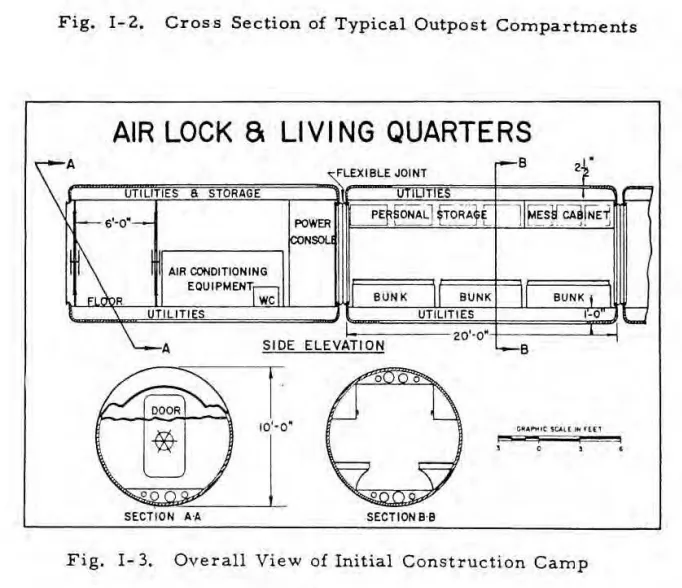
Notably, the U.S. Army’s own historical summary confirms that the plan included burying habitat modules beneath the lunar surface. That design protected against radiation, micrometeoroids, and potential hostile action. Consequently, the survivability logic — underground, hardened, concealed — foreshadows today’s discussions about resilient cislunar infrastructure.
Lunar Outpost Strategy: Why Horizon Never Flew
However, the timing mattered more than the engineering. When primary responsibility for America’s space programme transferred to the newly created National Aeronautics and Space Administration (NASA), President Dwight Eisenhower rejected Project Horizon. Subsequently, the Army was directed to revise its proposal for a civilian mission. On March 25, 1960, the secretary of the Army forwarded the study to NASA. There, it was quietly shelved. The civilian Apollo programme became the public face of American lunar ambition.
Even so, the record shows that Horizon was not a thought experiment. It was a funded feasibility study with contributions from every Army technical service. Moreover, the fact that it progressed as far as it did — and that parallel Air Force studies ran concurrently — suggests that militarization of the Moon was treated as a plausible operational pathway.
The Air Force’s Underground Lunar Base
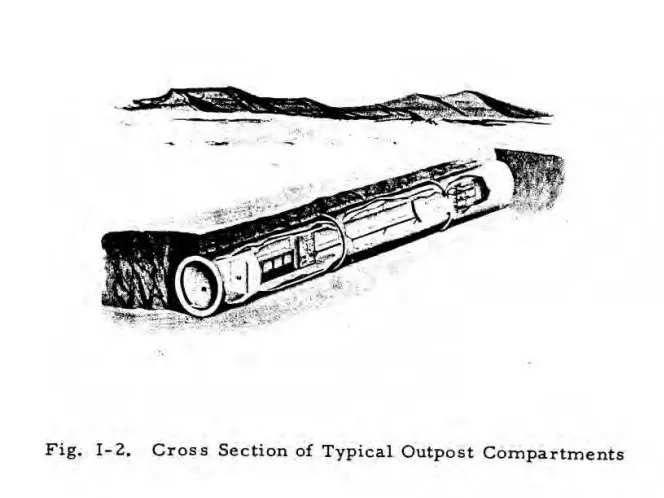
The Army was not alone. A separate Air Force Ballistic Missile Division study, titled “Military Lunar Base Program / S.R. 183 Lunar Observatory Study” and dated April 1960, outlined a phased plan for a permanent underground lunar base. Notably, the study specified a 21-person crew complement.
Cislunar Space Domain Awareness: Cost Tables and Surveillance Missions
The S.R. 183 study included detailed cost projections. Specifically, the total price for a permanent lunar base was listed at US$7.726 billion. A broader ten-year programme cost was estimated at US$8.146 billion. Moreover, annual operating costs reached US$631 million. Those figures, denominated in 1960 dollars, represent an investment comparable to the Apollo programme itself.
Furthermore, the study’s mission list reads like a modern space domain awareness (SDA) shopping list. It featured Earth-Moon-space surveillance, communications relay, and observation of terrestrial and orbital activity. The National Security Archive at George Washington University curated these and other Cold War military lunar studies. They published them in a 2014 electronic briefing book. That collection confirms the breadth and seriousness of the planning.
Cislunar Security: What Remains Classified
It remains unclear how much of the S.R. 183 plan advanced beyond paper studies. Researchers have noted that at least two volumes of Project Horizon may still be classified. Moreover, whether any prototype work occurred before NASA absorbed the space mission remains an open question. The declassified record is extensive but not necessarily complete.
Militarization of the Moon Through Signals Intelligence
While lunar base plans stayed on paper, the Moon itself became an operational intelligence tool. This is perhaps the most underreported chapter of the story. Specifically, declassified records show that U.S. intelligence agencies used the Moon as a giant reflector for signals intelligence (SIGINT) collection.
Moonbounce Intelligence: The Navy’s Communications Moon Relay
The U.S. Navy established its Communications Moon Relay (CMR) system in 1956. It used 84-foot-diameter dish antennas to bounce teletype and facsimile signals off the lunar surface between Washington, D.C. and Hawaii. According to the Navy chronicle excerpt published by the National Security Archive, the CMR link carried operational message traffic for half a decade. Notably, the system was considered resistant to jamming. The main limitation was geometric: both transmitter and receiver needed simultaneous line-of-sight to the Moon.
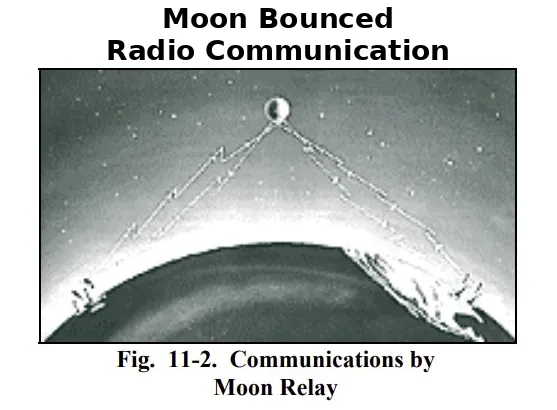
Consequently, the Moon served as a passive relay satellite years before artificial communications satellites became reliable. That makes CMR one of the earliest examples of operational lunar infrastructure — and it was military from the start.
Moonbounce Intelligence: Spying on Soviet Radars
Separately, the CIA and its partners exploited the same physics for electronic intelligence (ELINT). A declassified article by Frank Eliot titled “Moon Bounce ELINT,” originally classified Secret, appeared in the CIA’s Studies in Intelligence in Spring 1967. It describes how analysts intercepted Soviet radar signals after they reflected off the Moon.
The CIA’s published version of the article explains the severe challenges involved. A typical signal received via moonbounce was more than a million billion times weaker than the transmitted pulse. Moreover, analysts needed 150-foot steerable dish antennas to make the technique viable. Even then, intercept windows were limited to roughly 18 to 38 hours per month.
Nevertheless, the programme yielded significant intelligence. Analysts intercepted emissions from a Soviet “Hen House” radar at the Sary Shagan missile test range. They discovered that its peak power output approached 25 megawatts. Additionally, the radar employed a spread-spectrum mode. Those findings informed American electronic warfare planning throughout the 1960s.
Militarization of the Moon: Why Moonbounce Matters Now
The moonbounce story illustrates a critical pattern. Historically, militarization of the Moon manifested not as weapons on the surface but as exploitation of enabling layers. Specifically, it involved communications paths, intercept geometry, and sensor networks. That pattern is directly relevant to today’s cislunar security debate. The leading edge remains surveillance, navigation, and communications infrastructure rather than declared weapons.
Soviet “High Ground” Logic in Declassified Intelligence
The strategic reasoning was not exclusively American. A declassified CIA-hosted document titled “MILITARY THOUGHT: The Role of Space Weapons in a Future War”, dated September 7, 1962, provides a foreign-view analysis of Soviet military thinking.
Space Weapons Doctrine: Altitude as Advantage
The document attributes to U.S. Air Force Brigadier General Homer Boushey the assertion that the Moon possesses the strategic advantage of altitude. Moreover, it catalogues proposed lunar-base mission sets. These included telescopic observation, ballistic-missile launch detection, radio countermeasures, and concealed missile launching from the Moon’s far side.
Additionally, the text argues that a lunar base would complicate a surprise disarming strike. Earth-to-Moon missile transit time was approximately two calendar days. That delay, the reasoning went, provided an inherent second-strike guarantee. No ground-based system could match it.
Cislunar Security: Continuity of Logic
Compare that Cold War framing with modern language. In late February 2026, General Stephen Whiting, commander of U.S. Space Command, told reporters at the Air and Space Forces Association’s Warfare Symposium that the military wants to ensure it is not caught off guard in cislunar space (Aviation Week, 2026). Moreover, he warned that adversaries must not exploit it for military advantage. The vocabulary has softened. However, the underlying incentive — information dominance and decision time — remains stable.
Militarization of the Moon and the Legal Guardrails
The 1967 Outer Space Treaty (OST) was drafted precisely to prevent the scenarios that Cold War planners were actively studying. Article IV of the treaty, as published by the United Nations Office for Outer Space Affairs (UNOOSA), states that the Moon shall be used exclusively for peaceful purposes. Specifically, it prohibits the establishment of military bases, installations, and fortifications. It also bans weapons testing and military manoeuvres on celestial bodies.
Space Weapons Doctrine: What the Treaty Prohibits — and What It Does Not
However, the treaty contains carefully drawn boundaries. It bans weapons of mass destruction (WMD) in orbit or on celestial bodies. Yet it does not expressly prohibit all military activity in space. Moreover, it permits the use of military personnel for scientific research and other peaceful purposes. Additionally, some legal scholars have noted an interpretive ambiguity about whether certain provisions apply specifically to the Moon’s surface versus cislunar orbital space (Nonproliferation Policy Education Center, 2023).
As of October 2025, 118 countries were parties to the treaty. Every major spacefaring nation has ratified it. Yet the treaty’s enforcement mechanism relies on self-reporting and diplomatic norms. That gap matters as cislunar space becomes busier.
However, the legal wall is not absolute. The treaty language is strongest against overt surface weaponization. It is less explicit about the infrastructure that supports activity around the Moon, or in the cislunar routes leading there. That gap does not mean anything goes. It does mean modern competition can migrate into the grey zone between clearly civilian support and clearly military architecture.
Cislunar Security: The Artemis Accords and Governance Competition
The Artemis Accords, published in October 2020, represent the U.S.-led attempt to build a governance framework for lunar activity. As of January 2026, 61 countries had signed on. Conversely, the China-Russia International Lunar Research Station (ILRS) initiative has attracted 13 signatories (Secure World Foundation, 2026). It frames itself as an alternative governance bloc.
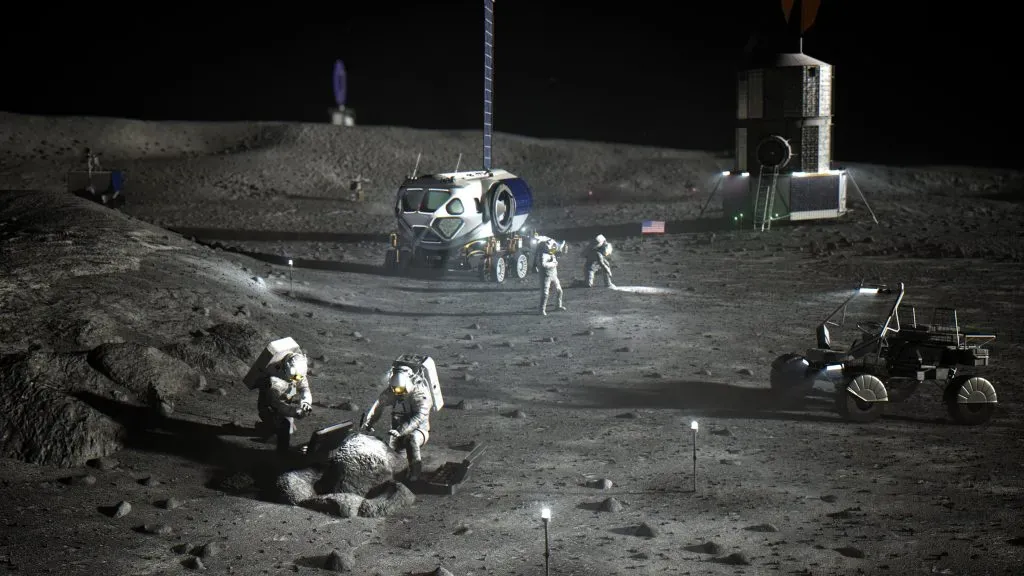
Therefore, what is emerging is not a single “Moon treaty update.” Instead, it is a network of competing standards and data-sharing practices. Whoever sets those norms may determine who operates safely in cislunar space — and who is treated as a threat.
That is the deeper analytical tension. A sensor network that prevents collisions also improves military warning. A navigation service that guides cargo also guides manoeuvre. Meanwhile, a shared object catalogue can reduce risk, but it can also confer strategic insight on whoever sets the data standard. One plausible inference is that the next stage of Militarization of the Moon may happen through infrastructure governance, not through an illegal military base.
For readers tracking aerospace policy, see our Fliegerfaust analysis of F-35 data sovereignty for a case study on how standards control shapes strategic outcomes.
The Modern Pivot: Cislunar Security as an Organising Mission
The declassified Cold War files are not merely historical curiosities. Their significance lies in the continuity between what planners wanted then and what policymakers are building now. Specifically, the language has shifted from “military lunar base” to “cislunar domain awareness.” However, the enabling infrastructure looks remarkably similar.
Militarization of the Moon in Executive Policy
On December 18, 2025, President Donald Trump signed Executive Order 14369, “Ensuring American Space Superiority”. The order directs the return of Americans to the Moon by 2028. Moreover, it mandates establishing initial elements of a permanent lunar outpost by 2030. It also requires the U.S. military to develop capabilities to detect, characterise, and counter threats through cislunar space.
Notably, the order was published in the Federal Register on December 23, 2025. It directs deploying nuclear reactors on the Moon and in orbit. A lunar surface reactor must be ready for launch by 2030. Additionally, agencies must prepare a responsive national security space architecture within 180 days.
Lunar Outpost Strategy: Space Force Moves from Theory to Planning
On March 17, 2026, Thomas Ainsworth, performing the duties of Assistant Secretary of the Air Force for Space Acquisition and Integration, confirmed at the McAleese Defense Programs Conference that the Space Force is actively integrating cislunar operations (Air & Space Forces Magazine, 2026).
The service is creating dedicated leadership positions for cislunar capability. This represents a shift from scattered research pockets to institutional commitment. Moreover, as Breaking Defense reported, the Space Force has also established new acquisition portfolios covering space control and orbital warfare.
Meanwhile, Chief of Space Operations General Chance Saltzman has described the executive order’s cislunar mention as significant for resources. He argued that the U.S. will need to protect and defend its interests further into space. Furthermore, Vice Chief of Space Operations General Shawn Bratton said in January 2026 that cislunar operations must be part of the service’s “objective force” roadmap through 2040 (Air & Space Forces Magazine, January 2026).
Cislunar Space Domain Awareness: Oracle, the Cislunar Eye
The hardware is following the rhetoric. The Air Force Research Laboratory (AFRL) and Space Systems Command (SSC) have built Oracle-M. This pathfinder satellite is designed to provide persistent awareness in cislunar space. Specifically, it completed a hot fire test at Edwards Air Force Base (AFB) in March 2025 (Space Systems Command, 2025).
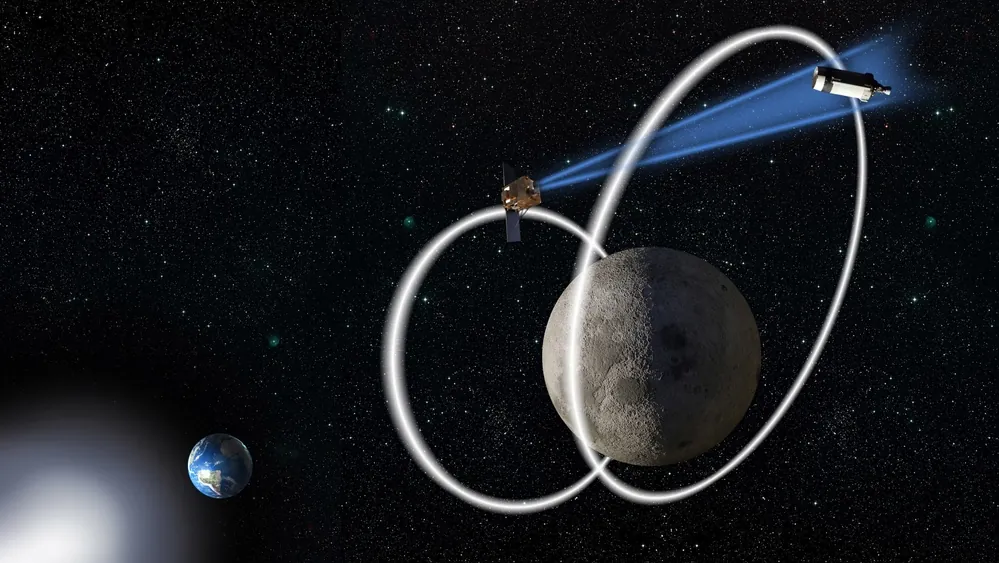
However, the launch timeline faces uncertainty. Oracle-M was scheduled to fly on a United Launch Alliance (ULA) Vulcan rocket. Yet the Space Force grounded all Vulcan national security launches after a February 12, 2026 solid rocket motor anomaly. Consequently, the satellite is currently in storage at Kirtland AFB, New Mexico (Aviation Week, February 2026). For context on contested communications architectures, see our Fliegerfaust report on BACN airborne relay delivery.
China, Russia, and the Rival Lunar Station
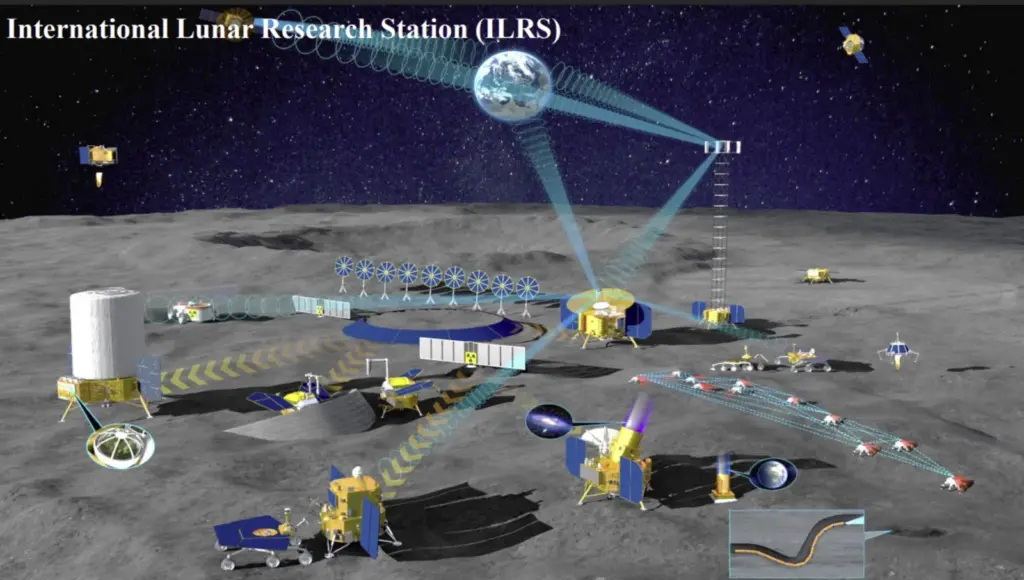
The U.S. pivot to cislunar security does not occur in a vacuum. China and Russia formally signed a memorandum of understanding in March 2021 to build the ILRS (The Diplomat, 2021). This comprehensive research station will sit on the lunar surface and in lunar orbit.
Lunar Military Base Implications: A Dual-Use Infrastructure Challenge
The ILRS roadmap envisions a basic facility at the lunar south pole by 2035. Moreover, it plans a multi-site network connecting the south pole, equator, and far side by 2050. Construction missions are expected to begin after China’s Chang’e 8 mission in 2028. Furthermore, more than 40 institutions worldwide have signed cooperation documents with the China National Space Administration (CNSA).
However, security analysts view ILRS through a dual-use lens. A March 2024 analysis by the Royal United Services Institute (RUSI) examined White House concerns about Chinese and Russian lunar activity (RUSI, 2024). Notably, the cislunar communications and surveillance infrastructure that supports a “science station” is inherently identical to the infrastructure that supports military awareness.
Additionally, China tested communications and navigation satellites in specialised cislunar orbits in 2024. Russia has launched experimental sensors into what General Saltzman described as orbits that blur the lines between military and civil space activities. Both countries are miniaturising their satellites to reduce vulnerability.
Militarization of the Moon: No Weapons Required
The pattern implies that a credible path to militarization of the Moon does not require a declared weapons base. Instead, it can arise from competitive deployment of cislunar navigation and surveillance infrastructure. Whoever controls the standards and access norms shapes the strategic environment. For additional context, see our Fliegerfaust briefing on Chinese space threats.
Militarization of the Moon: The Continuity Map
The most revealing way to read the declassified record is not as a collection of abandoned fantasies. Instead, it is a continuity map. Specifically, the Cold War military lunar studies specified three prerequisites for any meaningful lunar presence: persistent communications, position-navigation-timing (PNT), and surveillance of Earth-Moon space. Those are precisely the capabilities that today’s cislunar policy documents prioritise.
Cislunar Security: From S.R. 183 to the National Cislunar Strategy
The Biden administration’s National Cislunar Science and Technology Strategy of November 2022 and its December 2024 Action Plan both assert alignment with the Outer Space Treaty. They prioritise growth, cislunar space situational awareness (SSA), and communications and PNT. Moreover, the Trump administration’s executive order builds on that foundation while adding explicit national security language.
Meanwhile, Space Force Doctrine Document 1 (SFDD-1), published April 3, 2025, formally defines a “cislunar regime.” It extends from geosynchronous orbit to the second Earth-Moon Lagrange point (L2). Notably, an AFRL primer reports that cislunar space is 1,728 times the volume of space within geosynchronous orbit.
Lunar Outpost Strategy: Institutional Momentum
Consequently, what readers should watch is not a single dramatic announcement. Instead, it is steady institutional build-up. When cislunar capability moves from experiments to dedicated acquisition portfolios — as the March 2026 reorganisation signals — it creates momentum that can outlive political administrations. Moreover, budget lines, contractor ecosystems, and force-structure decisions accumulate. A 2024 Mitchell Institute report argued that US$250 million per year over five years, plus 200 dedicated Guardians, could establish a foundational cislunar capability (Air & Space Forces Magazine, 2024). That is modest in Pentagon terms. However, once the infrastructure exists, its applications tend to expand.
For aerospace firms, this is not abstract. Companies that build relay payloads, antennas, tracking software, propulsion buses and timing systems could end up inside a dual-use ecosystem long before politicians admit that a security race has begun.
Conclusion: The Moon Has Never Been Neutral
The declassified record demonstrates that the militarization of the Moon was never a fringe concept. It was studied with engineering rigour and costed with procurement discipline. Moreover, it was operationalised through signals intelligence well before the Outer Space Treaty constrained the most overt plans. The Moon served American intelligence collection for years before any astronaut set foot on it.
Today, the legal guardrails remain in place. The Outer Space Treaty prohibits military bases and WMD on the Moon’s surface. However, the treaty was written before cislunar space became a zone of active commercial and strategic competition. Specifically, it does not address surveillance constellations in lunar orbit. Nor does it cover navigation infrastructure that shapes access or communications architectures that provide strategic advantage.
What remains uncertain is where the boundary will settle between legitimate protection and a quiet return to “high ground” logic. The declassified files show that earlier planners framed the Moon in explicitly military terms — surveillance, deterrence, concealment. Today’s officials frame it as “protect and defend.” The enabling stack is remarkably similar. However, the legal language is different. Ultimately, the question is whether the outcome will be any different.
Therefore, readers — whether investors tracking lunar-economy equities, taxpayers funding Space Force growth, defence professionals building the architecture, or policymakers writing new rules — should treat the cislunar pivot as one of the decade’s most consequential strategic shifts. The infrastructure decisions being made now will shape who operates safely in Earth-Moon space for a generation.
What do you think?
Overall, the Moon has never been neutral ground. The only honest question is what kind of competition it will host next — and who will write the rules?
Leave your answers and comments below and on our Fliegerfaust Facebook page.
Sources
- U.S. Army Ballistic Missile Agency — Project Horizon: A U.S. Army Study for the Establishment of a Lunar Military Outpost (June 1959).
- U.S. Army Center of Military History — SMDC History: Project Horizon: ABMA Explores a Lunar Outpost (June 2017).
- U.S. Air Force Ballistic Missile Division — Military Lunar Base Program / S.R. 183 Lunar Observatory Study (April 1960).
- U.S. Air Force Special Weapons Center — A Study of Lunar Research Flights (TR 59-39, Vol I) (June 1959).
- National Security Archive — Soldiers, Spies and the Moon: Secret U.S. and Soviet Plans from the 1950s and 1960s (July 2014).
- U.S. Navy Chronicle Excerpt — From the Sea to the Stars: A Chronicle of the U.S. Navy’s Space and Space-Related Activities, 1944-2009 (2010).
- CIA Center for the Study of Intelligence — Moon Bounce ELINT, by Frank Eliot, Studies in Intelligence (Spring 1967).
- CIA FOIA Reading Room — MILITARY THOUGHT: The Role of Space Weapons in a Future War (September 1962).
- UNOOSA — Treaty on Principles Governing the Activities of States in the Exploration and Use of Outer Space (January 1967).
- Nonproliferation Policy Education Center — The Outer Space Treaty and Military Activities (2023).
- NASA — Artemis Accords (October 2020).
- Secure World Foundation — Lunar Space Cooperation Initiatives (January 2026).
- White House — Executive Order: Ensuring American Space Superiority (December 18, 2025).
- Federal Register — Ensuring American Space Superiority (December 23, 2025).
- White House — Fact Sheet: President Donald J. Trump Launches a New Age of American Space Achievement (December 18, 2025).
- OSTP / NSTC — National Cislunar Science and Technology Strategy (November 2022).
- OSTP / NSTC — National Cislunar Science and Technology Action Plan (December 2024).
- Space Training and Readiness Command — Space Force Doctrine Document 1 (SFDD-1) (April 2025).
- AFRL — AFRL’s Oracle Family of Systems Developing Nation’s First Cislunar SSA Capabilities (December 2023).
- Space Systems Command — Oracle-M Hot Fire Test: A Major Milestone in Cislunar Space Situational Awareness (May 2025).
- Air & Space Forces Magazine — Space Force ‘Serious’ About Planning for Cislunar Operations (March 2026).
- Air & Space Forces Magazine — Space Force Vice Chief Says Service Should Be Thinking About Cislunar (January 2026).
- Air & Space Forces Magazine — New Report: Space Force Needs to Plus-Up for Cislunar Competition (January 2024).
- Aviation Week — Pentagon Eyes Cislunar Space As Next Strategic Frontier (March 2026).
- Aviation Week — Space Force Readying Launch of AFRL Cislunar SSA Satellite (February 2026).
- Breaking Defense — New Space Force Acquisition Portfolios to Cover Space Control, Orbital Warfare (March 2026).
- RUSI — Russia and China Reaffirm Their Space Partnership (March 2024).
- The Diplomat — The Strategic Implications of the China-Russia Lunar Base Cooperation Agreement (March 2021).
For full details, please refer to our Disclaimer page.