
Sovereign loyal wingman: Can Canada turn a startup announcement into a real force multiplier for its future Lockheed Martin F-35A fleet?
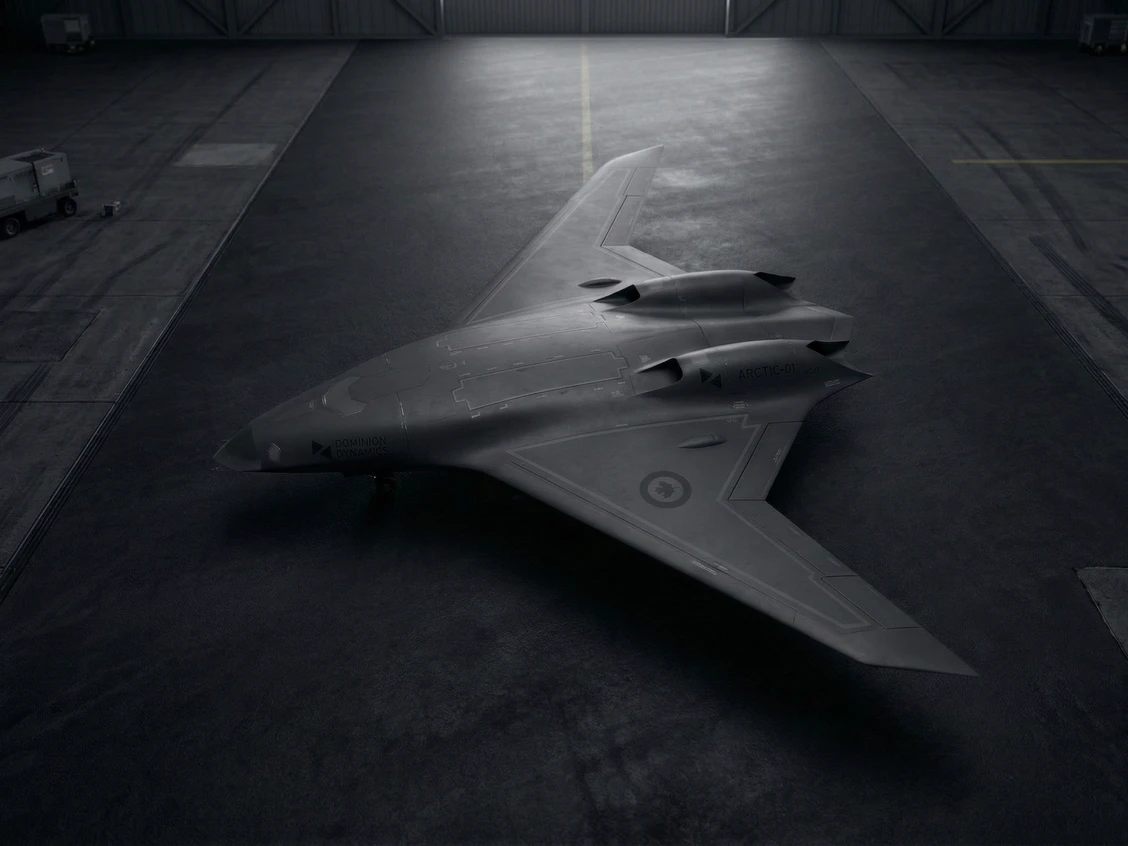
Sovereign loyal wingman: on March 5, 2026, Dominion Dynamics said in a Newswire release that it would invest an initial C$50 million to begin developing Canada’s first Autonomous Collaborative Platform (ACP), an uncrewed aircraft designed to fly beside crewed fighters. Separately, eight days later, Army Recognition framed the move as Canada developing a loyal wingman drone for the F-35. However, the harder question is narrower and more important. Specifically, what did the company actually announce, what has Ottawa already studied, and how far is Canada from fielding anything operational?
Sovereign loyal wingman: What Dominion Dynamics actually announced
Autonomous wingman ambition, not an RCAF order
Specifically, Dominion’s March 5 statement was not a Government of Canada procurement notice. It was not a Royal Canadian Air Force (RCAF) requirement. No one had funded a fleet. Instead, an Ottawa defence startup financed the development push with private capital. Moreover, the company argues that Canada should own more of the software, autonomy, and mission architecture shaping future air combat.
Moreover, the release described the ACP as an uncrewed teammate for crewed fighters. It would extend reach into remote or high-risk environments. It would also support persistent surveillance, electronic warfare, and strike support. “The future of air combat is human-machine teaming and sixth-generation systems. Canada shouldn’t just buy that future from others. We should build it and we will build it.” — Eliot Pence, Chief Executive Officer, Dominion Dynamics
Notably, the sovereign loyal wingman story therefore starts with industrial intent, not with a defence order. Additionally, Dominion says the aircraft would complement allied fighter programmes rather than replace them. However, allied air forces increasingly use the broader label Collaborative Combat Aircraft (CCA), because the air vehicle is only one layer of the concept. The rest is secure networking, mission software, distributed sensing, and command logic. In aerospace, a concept image is still only a painting with ambition.
Ottawa had already begun studying collaborative aircraft
However, the timing was not random. Meanwhile, in July 2025, The Canadian Press, via Global News reported that the Department of National Defence was studying fighter drones that could fly with the F-35. Moreover, the same reporting said an internal preliminary analysis put the potential cost as high as C$16 billion and suggested hundreds of staff could be needed. It also said the preliminary analysis ruled out a fully Canadian-made fleet.
Consequently, Dominion’s announcement landed in a policy space that already existed. Notably, Ottawa had not ordered a Canadian combat drone. Yet it had already begun examining the class of system Dominion wants to build. That matters because the public story is not simply about one startup with one rendering. Instead, it is about whether a company can turn a policy opening into a funded military requirement.
Collaborative combat aircraft timing and the funding reality
Separately, the funding mechanics deserve a sober read. BetaKit reported on March 6, 2026 that the C$50 million is an initial multi-year investment. Dominion expects the money to come from its capital base and planned financing. The same report said additional partners could join later. Pence told the outlet that the goal is a sub-scale prototype within roughly 24 to 36 months.
Meanwhile, Dominion had already signalled a broader industrial plan. On January 19, 2026, a PR Newswire seed-round release said the company had raised C$21 million, or C$26 million since launch. Additionally, the same release said Dominion was building an “Arctic autonomy stack,” had completed field trials in Northern Ontario, had deployed in Yukon, and planned a Toronto development office plus a 25,000-square-foot factory in Kanata, near Ottawa, Ontario.
Therefore, the sovereign loyal wingman case rests on private capital and a prototype timetable, not on a signed RCAF programme. Even so, the effort is bigger than one airframe sketch. Dominion is trying to build a Canadian defence-technology stack around sensors, autonomy, and high-latitude operations. “These systems will allow Canada to operate effectively in the most contested and remote environments, including our own Arctic.” — Eliot Pence, Chief Executive Officer, Dominion Dynamics
Additionally, a sub-scale demonstrator would still leave major hurdles. Canada would still need propulsion decisions, secure datalinks, software assurance, testing, weapons integration, and certification. A prototype schedule is not a squadron, but it is better than a mood board.
Sovereign loyal wingman: Why the F-35 context matters
Loyal wingman drone logic for a small fighter force
For Ottawa, the sovereign loyal wingman argument is easy to grasp. Moreover, Canada is buying a limited number of very capable fighters. Meanwhile, those aircraft must cover a vast territory while supporting North American Aerospace Defense Command (NORAD) and North Atlantic Treaty Organization (NATO) obligations. An uncrewed teammate can add sensors, decoys, jammers, or weapons without putting another pilot at risk.
According to Canada.ca’s Public Accounts summary of the Future Fighter Capability Project, the current budget is C$27.7 billion. That covers 88 Lockheed Martin F-35A aircraft, associated equipment, sustainment set-up, services, and fighter facilities. Additionally, the initial eight aircraft are due in 2026 and 2027 at Luke Air Force Base in Arizona for pilot training. Canada plans to receive the first aircraft at Canadian Forces Base (CFB) Cold Lake in 2028. National Defence plans initial operational capability for 2029, with full operational capability in 2033.
However, the politics around that fleet remain unsettled. Specifically, on March 25, 2025, Reuters reported that Prime Minister Mark Carney said Canada would review how the planned F-35 purchase could be adjusted. The same report said Ottawa remained committed to the first 16 jets but could examine alternatives for the remainder. Even fifth-generation fighters have not solved bilocation.
Moreover, anyone following that larger fighter debate can trace it through existing site coverage. Readers can see our Fliegerfaust analysis of Canada’s F-35 cancellation risks and the Gripen alternative. They can also see our Fliegerfaust update on Gripen deal speculation and the GlobalEye angle.
Training, maintenance, and industrial participation already matter
Moreover, Canada is already building sovereign layers around the future fighter fleet. Specifically, on February 12, 2025, Public Services and Procurement Canada announced that Ottawa had selected CAE as the strategic partner for the Future Fighter Lead-in Training (FFLIT) programme. Ottawa said the programme could contribute C$145 million annually to gross domestic product and create or maintain 1,100 jobs each year over 37 years.
Additionally, on November 25, 2024, another federal announcement on Canada.ca named L3Harris MAS in Mirabel as the strategic partner to investigate an airframe maintenance depot for Canada’s F-35A fleet. Consequently, that matters because the F-35 is not simply an aircraft purchase. It is a training, sustainment, infrastructure, and security ecosystem.
Notably, the Public Accounts summary goes further. It says more than 110 Canadian companies have contributed to the F-35’s development and production. It also says more than 36 Canadian companies currently hold F-35 contracts. Each aircraft in the global programme contains about C$3.6 million in Canadian-made components. The same material says acquisition and initial sustainment could contribute more than C$425 million annually to Canadian gross domestic product while maintaining 3,300 jobs each year.
Therefore, a sovereign loyal wingman effort would not start from zero. It would plug into an air-power ecosystem that already localizes training, maintenance, simulation, facilities, and supply chains. That is the encouraging part of the story. The harder part is that sovereign layers are not yet the same thing as a sovereign combat aircraft.
Sovereign loyal wingman: Global programmes set the benchmark
Collaborative combat aircraft are moving fast in the United States
Canada’s sovereign loyal wingman debate is unfolding in a world that has already moved past theory. Specifically, on March 3, 2025, the U.S. Air Force announced the YFQ-42A from General Atomics and the YFQ-44A from Anduril as the first Mission Design Series aircraft in its CCA effort. “Now we have two prototypes of Collaborative Combat Aircraft. They were only on paper less than a couple of years ago, and they are going to be ready to fly this summer.” — Gen. David W. Allvin, Air Force Chief of Staff, U.S. Air Force
Moreover, Washington is not just building air vehicles. Additionally, on February 12, 2026, the U.S. Air Force said it had validated a government-owned Autonomy Government Reference Architecture across multiple vendor platforms. The service said the work showed mission software can sit apart from specific hardware. That point matters because it reduces lock-in and increases the value of autonomy, interfaces, and payload integration.
Consequently, Canada should study that model with care. A middle power does not need to outspend the United States to contribute meaningfully. It can still compete in mission autonomy, Arctic adaptation, integration, or certification. The rest of the world is not waiting for Ottawa to finish its coffee.
Ghost Bat shows what sovereign scale looks like
Australia offers the clearest benchmark for what a state-backed effort looks like. Specifically, on December 9, 2025, Australia’s Defence Ministers announced about A$1.4 billion to push the MQ-28A Ghost Bat toward a fully operational warfighting asset. The same announcement said the aircraft had used a live AIM-120 Advanced Medium Range Air-to-Air Missile against an aerial target. It also said Ghost Bat operated as a loyal wingman to a Royal Australian Air Force E-7A Wedgetail and an F/A-18F Super Hornet during trials at Woomera in South Australia.
Additionally, Australia’s Defence Ministers said the investment covered six operational Block 2 aircraft and development of an enhanced Block 3 prototype. The same release said those aircraft would lay the foundation for an operational Air Combat Platform capability within the Royal Australian Air Force. It also said the programme supports more than 440 high-skilled jobs, works with more than 200 Australian suppliers, and keeps 70 per cent of programme expenditure inside Australia.
Consequently, the comparison is unforgiving. Australia has a government-backed programme, live-fire evidence, an operational pathway, and a clear sovereign-industry case. “With Ghost Bat, the future of collaborative air combat is right here, right now.” — Pat Conroy, Minister for Defence Industry, Defence Ministers
Training wingmen are not combat wingmen
There is also a Canadian-adjacent example that clarifies what Dominion is, and is not, trying to do. Specifically, on March 3, 2025, Top Aces announced an artificial-intelligence-driven autonomous constructive wingman for adversary air training. Top Aces built the effort with EpiSci, Coherent Technical Services Inc., and Seger Aviation. It adds mass and complexity to live-virtual-constructive training for fighter crews.
Specifically, that matters because training wingmen and combat wingmen are not the same thing. A constructive wingman helps pilots learn. A combat wingman must survive real weather, real communications gaps, real electronic attack, and real release authority. Therefore, a sovereign loyal wingman must do far more than make a syllabus harder. It has to join an operational kill chain without becoming its weakest link.
Canada’s drone industrial strategy
Canadian combat drone policy now exists on paper
The political backdrop has moved in Dominion’s favour. Specifically, in April 2024, Ottawa’s defence policy update, Our North, Strong and Free committed Canada to exploring a suite of surveillance and strike drones and counter-drone capabilities. However, that was not a loyal-wingman procurement announcement. Instead, it was a formal signal that uncrewed systems had moved into the core modernization conversation.
Additionally, on February 17, 2026, Prime Minister Carney’s Defence Industrial Strategy launch said Ottawa would raise the share of defence acquisitions awarded to Canadian firms to 70 per cent and increase defence exports by 50 per cent. Moreover, the same official statement said the strategy aims to grow Canadian defence industry revenues by 240 per cent and create 125,000 high-paying careers. Separately, Reuters reported on the same day that Ottawa also plans to lift government investment in defence-related research and development by 85 per cent over the next decade.
Therefore, that climate gives the sovereign loyal wingman concept political oxygen. Ottawa wants greater industrial control, more domestic output, and less dependence on U.S. suppliers. Strategy papers, for all their charm, do not taxi. Yet they do influence who gets programme access, procurement attention, and export support.
Moreover, readers interested in how that broader drone ecosystem may develop beyond Ottawa can see our Fliegerfaust coverage of Volatus Aerospace’s Mirabel drone hub. That post shows how manufacturing, integration, and NATO-facing compliance are beginning to cluster around Canadian sites.
Arctic autonomous wingman design is a different problem
However, Canada’s air-power modernization does not begin or end with fighters. Specifically, on December 19, 2023, National Defence announced a C$2.49 billion acquisition of 11 long-range Remotely Piloted Aircraft System (RPAS) aircraft from General Atomics. The package also included six ground control stations, a ground control centre, infrastructure, weapons, training, and sustainment. National Defence expects the first delivery in 2028, with full operational capability in 2033.
Meanwhile, the same release said those aircraft would be operated from a Forward Operating Location when supporting missions in northern Canada. That point is important because it shows how geography drives the design problem. Instead, RPAS serves long-endurance surveillance, domestic support, and wide-area intelligence, surveillance and reconnaissance (ISR). A loyal wingman has a different job. It has to move with fighters, accept higher risk, and add tactical mass closer to contested airspace.
Notably, Ottawa’s northern urgency is rising. Meanwhile, on March 12, 2026, Reuters reported that Carney had unveiled a C$35 billion Arctic defence plan. Consequently, a sovereign loyal wingman designed for Canadian conditions could become attractive precisely because it sits between exquisite fighters and broad-area surveillance assets. The Arctic is not empty space. It is an unforgiving systems test.
What Canada would still need to make it real
Loyal wingman drone hurdles: data, weapons, and certification
A Canadian wingman concept becomes useful only when it survives contact with engineering. The air vehicle is only the start. Moreover, Canada would need resilient datalinks, secure mission autonomy, trusted navigation at high latitude, and clear human control logic. It would also need sensor fusion that talks cleanly to allied systems and command arrangements that satisfy domestic law and alliance practice.
Any serious programme would have to answer basic design questions early. Does the aircraft need low observability, or only enough survivability to be risk-worthy? Should it carry sensors, weapons, communications payloads, or some mix of all three? Should it be optimized first for Arctic sovereignty, for expeditionary NATO use, or for export? Consequently, those choices drive price, certification, and production complexity.
Notably, the U.S. open-architecture model points to one useful lesson. Canada may not need to own every nut, bolt, and turbine blade to own meaningful sovereignty. It may gain more leverage by controlling mission software, high-latitude integration, modular payloads, or secure autonomy layers. The Arctic, alas, does not grade on participation.
Who buys first, and what sovereignty really means
The hardest question is not aerodynamic. It is institutional. Who becomes the launch customer? Moreover, private capital can fund simulation, prototype work, and perhaps an early demonstrator. It rarely funds full-rate production, weapons integration, sustainment, testing infrastructure, and conversion training on its own.
Consequently, a realistic near-term path may be narrower than the headline suggests and more valuable than critics admit. Dominion could prove autonomy, mission software, sensor networking, or Arctic operating concepts that feed a later allied partnership. It could also position itself as a Canadian mission-systems and integration house for a future multinational aircraft.
Additionally, the public record points in that direction. Moreover, the 2025 preliminary analysis reported by The Canadian Press said the government had ruled out a fully domestic fleet. Ottawa’s industrial strategy, meanwhile, is about building, partnering, and buying with greater Canadian control. Therefore, the sovereign loyal wingman may emerge first as software, integration, and mission architecture rather than as a completely domestic airframe. That would still matter strategically, because control over the valuable layers often determines who captures the long-term value.
Conclusion: A credible idea still waiting for a programme
Dominion Dynamics deserves serious attention because it has identified a genuine gap in Canada’s future air-power architecture. The RCAF will soon operate a scarce fleet of high-end fighters across immense territory. At the same time, allies are normalizing human-machine teaming as a routine feature of modern air combat. On those facts alone, the strategic case is real.
However, the headline should not outrun the evidence. Instead, Canada has not launched a sovereign loyal wingman procurement. It has a startup with capital, ambition, Arctic positioning, and unusually good political timing. That is promising. It may prove important. It is not yet combat capability.
Overall, Canada should pursue the sovereign loyal wingman with discipline rather than romance. Moreover, Ottawa needs requirements, range access, testing money, integration plans, and a realistic view of what sovereignty means in a deeply allied aerospace market. Headlines are cheap; frozen software bugs are not.
What do you think?
If Canada wants more than imported airpower with local decals, will it fund the hard systems work needed to turn this idea into a programme that can survive its own first winter?
Leave your answers and comments below and on our Fliegerfaust Facebook page.
Sovereign loyal wingman: Sources
- Army Recognition — Canada develops sovereign loyal wingman drone to boost F-35’s combat capabilities (March 13, 2026).
- Newswire — Dominion Dynamics makes initial $50-million investment to build a sovereign autonomous wingman (March 5, 2026).
- BetaKit — Dominion Dynamics says it will invest $50 million to build a “sovereign autonomous wingman” (March 6, 2026).
- PR Newswire — Dominion Dynamics Raises $21M CAD Seed Round Led by Georgian to Build Interoperable, Attritable Systems for the Arctic and Allied Defence (January 19, 2026).
- Global News — National Defence considering purchase of fighter drones that could fly with F-35 (July 12, 2025).
- Canada.ca — House Committee on Public Accounts (PACP): Office of the Auditor General: Report 2, Delivering Canada’s Future Fighter Jet Capability, October 7, 2025 (February 4, 2026).
- Reuters — Carney says Canada’s Lockheed Martin fighter contract could be adjusted (March 25, 2025).
- Public Services and Procurement Canada — Government of Canada announces strategic partner for its Future Fighter Lead-in Training program (February 12, 2025).
- Public Services and Procurement Canada — Government of Canada announces strategic partner for its CF-35A fighter jet airframe maintenance depot (November 25, 2024).
- U.S. Air Force — Air Force designates two Mission Design Series for collaborative combat aircraft (March 3, 2025).
- U.S. Air Force — Air Force validates open architecture, expands Collaborative Combat Aircraft ecosystem (February 12, 2026).
- Defence Ministers — Funding boost for Australian-made Ghost Bat (December 9, 2025).
- Top Aces — Top Aces Unveils AI-Driven Unmanned Wingman for the ADAIR Industry (March 3, 2025).
- Canada.ca — Our North, Strong and Free: A Renewed Vision for Canada’s Defence (April 8, 2024).
- Prime Minister of Canada — Prime Minister Carney launches Canada’s first Defence Industrial Strategy to strengthen security, create prosperity, and reinforce strategic autonomy (February 17, 2026).
- Reuters — Canada, seeking to cut reliance on US arms, plans to boost defense output (February 17, 2026).
- National Defence — Canada acquiring Remotely Piloted Aircraft Systems for the Canadian Armed Forces (December 19, 2023).
- Reuters — Canada to boost Arctic defenses, says it can no longer rely on others (March 12, 2026).
For full details, please refer to our Disclaimer page.