
Canada P-8A Poseidon procurement — why is Ottawa’s most expensive aviation purchase already falling behind schedule while the domestic aerospace firms that could have competed were never invited to bid?
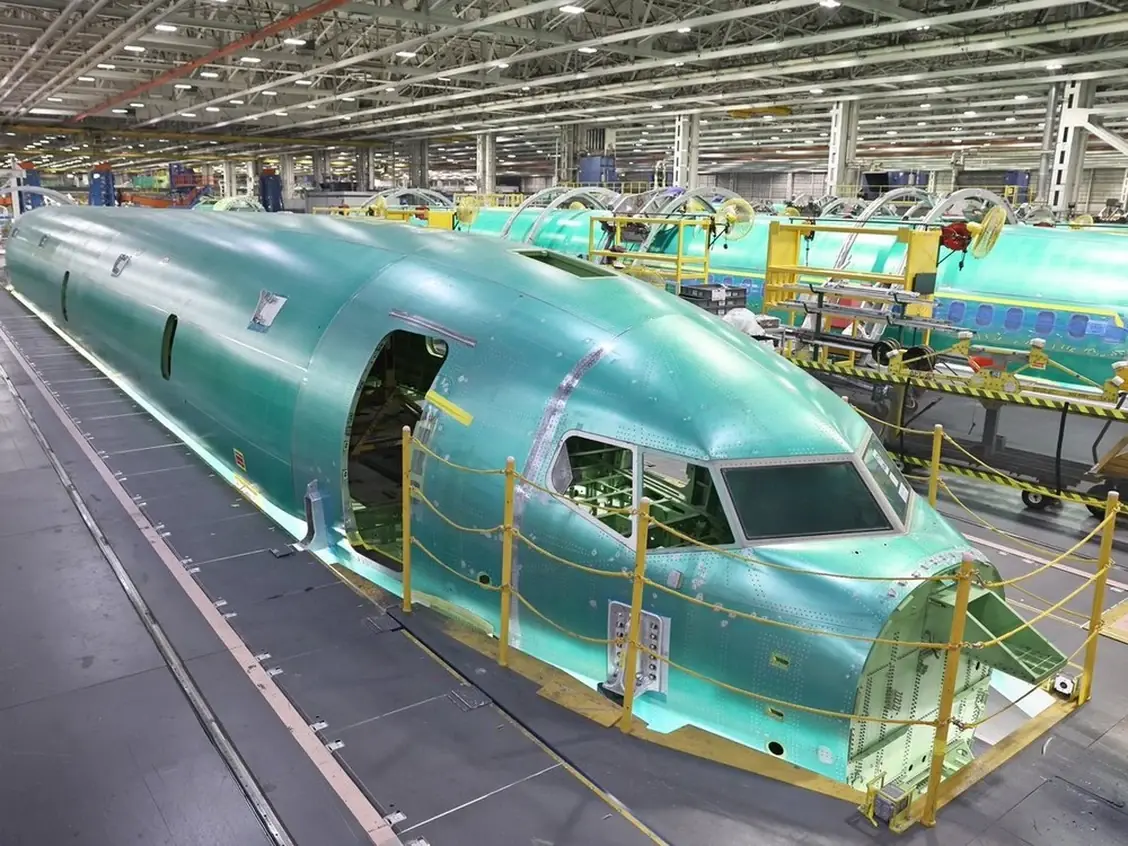
Canada P-8A Poseidon procurement: On February 19, 2026, the Department of National Defence (DND) announced that Boeing had joined the fuselage sections of Canada’s first CP-8A Poseidon at its facility in Wichita, Kansas. The milestone was real. However, the delivery timeline has quietly slipped by roughly a year. Meanwhile, the controversial $10.4-billion sole-source deal that bypassed Canada’s own aerospace industry now looks even more consequential. The CE-145C Vigilance programme — a smaller intelligence, surveillance and reconnaissance (ISR) aircraft procurement routed through the same U.S. Foreign Military Sales (FMS) channel — foreshadowed the pattern. Together, these procurements expose a structural habit of sending billions south of the border while sidelining proven Canadian capability.
Canada P-8A Poseidon Deal: How the Sole-Source Decision Unfolded
How did a programme that was supposed to feature open competition end up as one of the largest sole-source defence contracts in Canadian history? The answer involves years of bureaucratic manoeuvring, diplomatic pressure, and a government that moved faster to approve a purchase than Parliament could move to stop it.
To see how these same industrial-policy pressures are now playing out in Canada’s next submarine decision, read our analysis of the TKMS–CAE teaming move in the Canadian Patrol Submarine Project (CPSP).
The Canadian Poseidon Procurement Competition That Never Happened
Canada’s 2017 defence policy, Strong, Secure, Engaged, committed to acquiring a Canadian Multi-Mission Aircraft (CMMA) to replace the Royal Canadian Air Force’s (RCAF) aging CP-140 Aurora fleet. Originally, the plan called for an open competition beginning around 2024, with bids due in 2027. That timeline would have given multiple manufacturers a chance to propose solutions. Instead, in late March 2023, Public Services and Procurement Canada (PSPC) declared the P-8A was the only aircraft meeting all CMMA requirements (Government of Canada). Subsequently, Canada submitted a formal Letter of Request to the U.S. government.
But… no discussions occurred with firms other than Boeing
Notably, the “only available aircraft” determination rested on a 2021 market analysis by U.S. consulting firm Avascent and a February 2022 Request for Information. Notably, during parliamentary hearings in 2023, government officials acknowledged they did not examine other potential aircraft in depth. Moreover, they confirmed no discussions occurred with firms other than Boeing. The competition was cancelled before it began. One might say Ottawa skipped the test entirely and went straight to grading Boeing an A-plus.
A Committee Overruled in Four Days by the Liberal Government
The House of Commons Standing Committee on National Defence (NDDN) conducted nine meetings between June and November 2023. Members heard 36 witnesses. Consequently, on November 9, 2023, the committee adopted a report recommending a competition for the CP-140 Aurora replacement. It urged the government not to award a sole-source contract to Boeing. The report was presented to the House on November 24 (House of Commons Committee Report). The Liberal government rejected that recommendation.
Moreover, just four days after the report was tabled, on November 28, the Treasury Board approved the purchase at a special meeting. On November 30, 2023, three Liberal ministers announced the deal. Defence Minister Bill Blair joined Procurement Minister Jean-Yves Duclos and Innovation Minister Francois-Philippe Champagne. The estimated total cost reached $10.4 billion. Specifically, that figure included up to US $5.9 billion for 14 Boeing P-8A Poseidon aircraft. These jets carry the CP-8A designation in Canadian service. The price covered associated equipment, training devices, and sustainment. Additionally, the balance covered simulators (CAE), infrastructure, and weapons (Defense News). Canada also retained an option for two additional aircraft, bringing the potential fleet to 16.
The Pressure Campaign Behind Canada P-8A Poseidon Selection
The weeks before the announcement witnessed an extraordinary convergence of lobbying from multiple directions. Indeed, diplomatic pressure, provincial resistance, and industry objections collided in a way rarely seen in Canadian defence procurement.
A U.S. Ambassador Lobbied for the Boeing Surveillance Aircraft
U.S. Ambassador David Cohen sent a letter to federal cabinet ministers urging them to proceed with the Boeing purchase. Notably, recipients included Treasury Board President Anita Anand, whose organisation was examining the funding proposal. The Ottawa Citizen’s David Pugliese broke the story (Ottawa Citizen). Additionally, Cohen wrote to various other ministers involved in the decision.
Importantly, when questioned, Cohen did not deny the correspondence. He cited economic benefits for Canadian small firms. Even when procurement flows through the U.S. Department of Defense, he argued, value reaches Canadian enterprises. Separately, Unifor and the International Association of Machinists and Aerospace Workers rallied on Parliament Hill on November 28, demanding open competition alongside Bloc Quebecois representatives (Skies Magazine).
Provincial Premiers Demanded a Fair Process
Ontario Premier Doug Ford and Quebec Premier Francois Legault issued a joint statement on November 7, 2023, demanding an open and fair procurement process. Additionally, they called on the House of Commons to request a Parliamentary Budget Officer review. Moreover, Ford told reporters the process should determine the best aircraft on merit. Legault pointed to the obvious conflict: a Canadian company existed with a credible offering, yet the government preferred to award the contract to a foreign firm. Nevertheless, their objections changed nothing. The deal proceeded on schedule as decided by the Liberal party.
Bombardier’s Rejected Alternative — Later Validated by Two Militaries
The industrial stakes of the Canada P-8A Poseidon decision were enormous. Bombardier and General Dynamics Mission Systems-Canada (GDMS-C) had formed “Canada’s Multi-Mission Aircraft Team” in May 2023. They proposed a militarised Bombardier Global 6500 business jet equipped with GDMS-C’s proven anti-submarine warfare mission systems, drawn from CP-140 Block IV and CH-148 Cyclone technology (Defense News).
A Domestic Platform with Superior Specs — Rejected for the CP-8A Maritime Patrol Deal
The Bombardier Global 6500 offered compelling numbers: 6,600 nautical miles of range, a top speed of Mach 0.90, and a 51,000-foot service ceiling. All three figures exceeded the P-8A’s specifications. Moreover, a PricewaterhouseCoopers study estimated the Canadian-built alternative would generate $2.8 billion in gross domestic product (GDP) and 22,650 full-time-equivalent jobs over the programme’s life. Consequently, the economic argument for the domestic solution was substantial.
However, the government’s core objection centred on risk. DND noted Boeing had invested roughly US $7 billion over nine years to develop the P-8A from the 737 platform. Furthermore, Blair characterised the Bombardier proposal as a developmental option carrying a high degree of uncertainty. However, subsequent events complicated that narrative considerably. In November 2024, Bombardier delivered the first Global 6500 to the U.S. Army’s High Accuracy Detection and Exploitation System (HADES) programme (GlobeNewswire). In other words, the platform the RCAF rejected as too risky had become an operational U.S. military ISR aircraft. For the broader HADES story, including the Army’s January 2026 RFI seeking up to 11 additional jets, see Fliegerfaust’s detailed HADES analysis.
Did you know? What airframe is the P-8A Poseidon actually built on? It combines the Boeing 737-800 fuselage with the stronger wings of the 737-900 (Naval Technology).
Canada Then Bought Six Global 6500s Anyway
Remarkably, in December 2025, Canada itself purchased six Global 6500 jets for CAD $753 million to replace the RCAF’s CC-144 Challenger fleet under the Airlift Capability Project. Consequently, the aircraft the government rejected as too developmental for the CMMA programme had become, within two years, a platform purchased by both the U.S. Army and the RCAF itself. Bombardier CEO Eric Martel told the NDDN committee in November 2023 that the procurement was deeply flawed and lacking transparency. Consequently, events since then have strengthened his case. For additional context on Bombardier’s growing defence footprint, including Saab’s firm order for two Global 6500 special-mission jets, visit our Bombardier defence coverage.
Construction and Delivery: The Canada P-8A Poseidon Timeline Is Slipping
Specifically, on February 19, 2026, DND posted on social media that the first Canadian Multi-Mission Aircraft had reached its first production milestone. Subsequently, Boeing Defence confirmed the next day that fuselage integration had begun on Canada’s first aircraft (Defence Blog). The milestone was genuine. Even so, the timeline context tells a different story.
From 2026 to 2027: The RCAF Poseidon Fleet Delivery Quietly Revised
Initially, when the deal was announced in November 2023, the government stated first delivery would come in 2026. Moreover, all 14 aircraft were supposed to arrive by fall 2027. According to a March 2024 internal DND briefing note obtained by the Ottawa Citizen through an access-to-information request, the original schedule called for the first plane in 2026. However, by August 2024, the government quietly revised both figures. This appeared in its own announcement of Boeing’s British Columbia investment. The delivery rate changed from one aircraft per month to two every three months. Additionally, full delivery shifted to fall 2028 — a full year later (Government of Canada, 2024).
Given that the first fuselage was joined only in February 2026, Boeing’s typical multi-month production process from fuselage join to delivery makes a calendar-year-2026 handover extremely tight. Therefore, the programme appears to track toward a 2027 first delivery and 2028 completion. That represents one to two years behind the original timeline used to justify urgency. Meanwhile, full operational capability remains projected for 2033.
Ironically, the very urgency argument that killed open competition now looks less credible as deadlines drift.
RCAF Crews Are Training Abroad in the Interim
Meanwhile, RCAF personnel are already training on P-8As at Royal Air Force (RAF) Lossiemouth in Scotland, plus locations in the United States, Australia, and New Zealand (Skies Magazine). Notably, Captain Matthew Bonneville became the first Canadian to fly aboard a P-8A. His observer flight took place on November 26, 2024. Certainly, the training effort is commendable. Still, it underscores how far ahead of actual aircraft deliveries the crew pipeline has moved.
Unfortunately, neither the RCAF nor DND would provide answers on the reason behind the delay. Furthermore, they declined to confirm whether the slippage affects the future delivery schedule for the remaining aircraft. Silence, in procurement, rarely signals good news.
The CE-145C Vigilance: A Cautionary Tale of Canada P-8A Poseidon Patterns
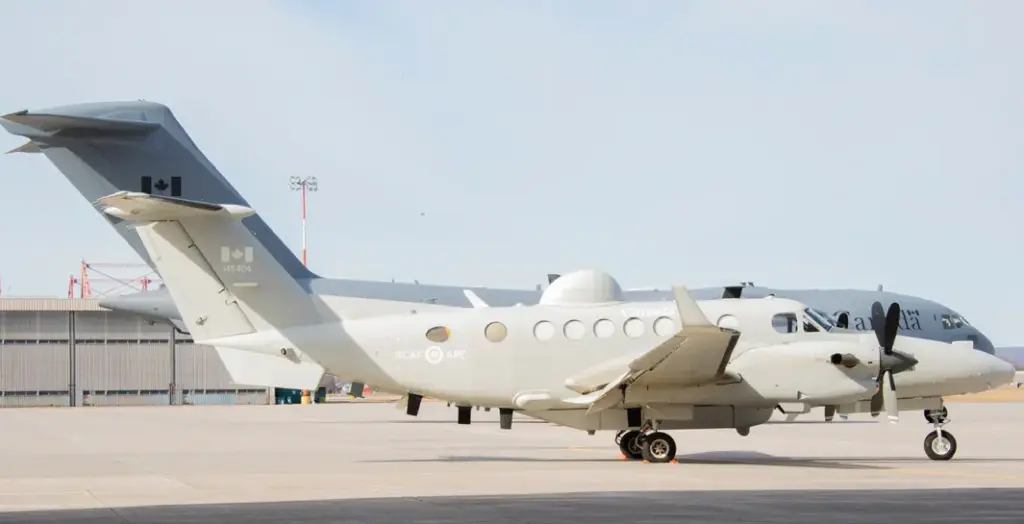
The CE-145C Vigilance programme offers a smaller-scale preview of what happens when Canada routes procurement through U.S. FMS without competitive domestic bidding. Specifically, in April 2019, Canada signed a CAD $246.9-million FMS arrangement for three Beechcraft King Air 350ER aircraft. Subsequently, L3Harris modified them with ISR sensors at its facility in Greenville, Texas, under the Manned Airborne Intelligence Surveillance and Reconnaissance (MAISR) project (Government of Canada).
Canadian Sensors Shipped to Texas: A Canadian Maritime Patrol Aircraft Irony
The aircraft carried L3Harris WESCAM MX-15D electro-optical and infrared sensors. Importantly, these sensors were manufactured in Burlington, Ontario. Yet they were shipped to Texas for installation rather than being integrated at any of Canada’s multiple capable aerospace facilities. Consequently, the work — and the jobs — flowed south of the border. The engines powering all three aircraft come from Pratt & Whitney Canada’s PT6 Centre of Excellence in Lethbridge, Alberta — one of the few Canadian-sourced components in the programme.
Originally, the aircraft were expected by spring 2022. The first CE-145C arrived at Canadian Forces Base (CFB) Trenton on February 23, 2024 — nearly two years late. Subsequently, the final aircraft followed in June 2024. Economic returns were stark. Similarly, at Minister Blair’s March 2024 announcement at CFB Trenton, the government disclosed that the MAISR programme generates approximately 65 jobs annually and contributes $7.5 million annually to Canada’s GDP (Government of Canada, 2024). In contrast, the Airbus CC-330 Husky tanker transport programme announced the same day delivers 1,050 jobs. It contributes $145 million in annual GDP. That is a striking difference from a programme worth nearly a quarter of a billion dollars.
For our full analysis of the CE-145C Vigilance programme — including how a quarter-billion dollars in ISR aircraft work was sent to Texas while qualified Canadian firms like PAL Aerospace and L3Harris MAS Mirabel were never invited to bid, the two-year delivery delay, and the sensor operator exodus — see our detailed Fliegerfaust coverage: Canadian surveillance aircraft worth a quarter-billion dollars are now flying from a base in Ontario — so why were they built in Texas?
What the CE-145C Vigilance Actually Does — and Where
What has received far less public scrutiny is what the CE-145C Vigilance actually does.
The full sensor suite remains classified. Notably, the Department of National Defence (DND) never publicly released the MAISR request for proposal, citing security concerns (FlightGlobal, 2024).
However, the 2018 U.S. Foreign Military Sales (FMS) approval disclosed specifics.
Each aircraft carries L3Harris Wescam MX-15D electro-optical and infrared sensors. Additionally, the package includes VORTEX video downlink transceivers, NSA-certified KG-250X inline network encryptors, and multiple encrypted radio systems (CASPIR, Canadian Warplane Heritage Museum).
The Ottawa Citizen has reported that these modified King Airs carry equipment capable of intercepting cellphone calls, radio transmissions, and other electronic communications. Electro-optical sensors also enable crews to track individuals and vehicles on the ground (FlightGlobal, 2024).
Spying over Canada
The domestic dimension deserves attention. Minister Blair’s March 2024 announcement stated the aircraft will “primarily” support CAF operations — language that implies secondary users exist (Government of Canada, 2024). Indeed, the DND’s own earlier description confirmed the CE-145C would support operations “at home and abroad” (Vanguard Canada). Meanwhile, CANSOFCOM’s published mandate explicitly includes providing security support to operations of other Government of Canada organisations. Which agencies, under what authorities, and with what oversight these aircraft might surveil Canadian soil has not been publicly addressed.
Operator Exodus Before the Aircraft Even Arrived
The delays inflicted operational damage beyond dollars. Indeed, an internal Canadian Forces investigation completed in May 2023 found that four of six sensor operators assigned to 427 Special Operations Aviation Squadron had either left the military or transferred out of special forces before the aircraft arrived (Alert 5). Moreover, those interviewed pointed to leadership hypocrisy. Specifically, personnel had been left without a training programme or overall direction from either Canadian Special Operations Forces Command (CANSOFCOM) headquarters in Ottawa or their home unit in Petawawa. When your spy planes arrive two years late and most of your spies have already left, something has gone seriously wrong.
Meanwhile, several Canadian firms with proven ISR modification capabilities — PAL Aerospace, L3Harris MAS Mirabel (with over 1,100 employees), IMP Aerospace, and Voyageur Aviation — were never invited to compete for the main aircraft contract. Instead, only the in-service support was competitively procured domestically. Team CERTAS, comprising GDMS-C and Voyageur Aviation, won that contract for $72 million over eight years.
Why the CP-140 Aurora Fleet Cannot Wait
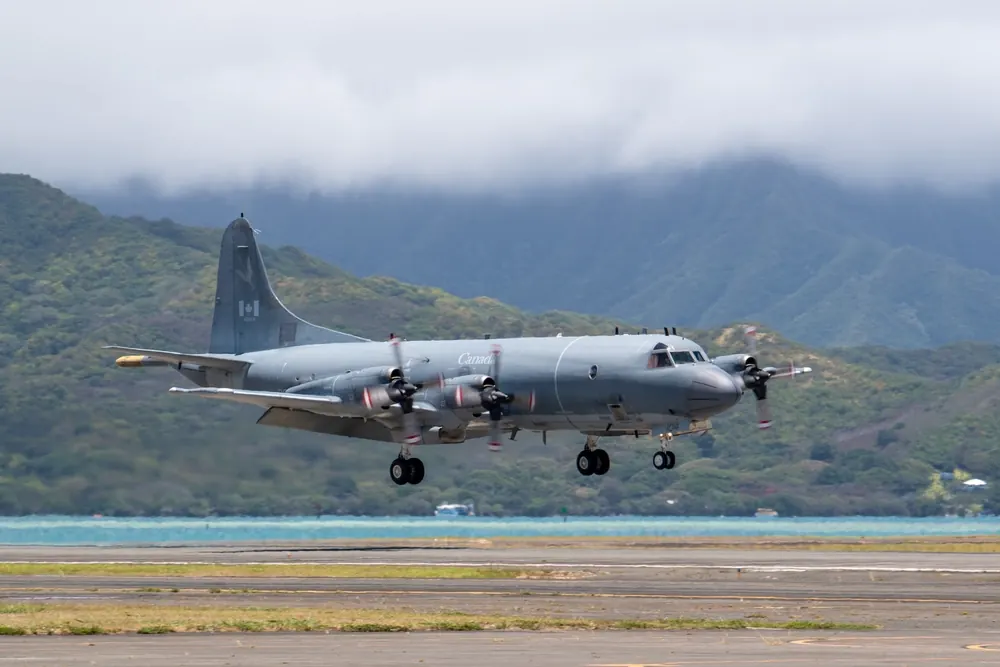
The urgency driving both the CP-8A and CE-145C programmes is real. Historically, Canada’s 14 CP-140M Aurora aircraft entered service between 1980 and 1981. Originally based on the Lockheed P-3C Orion airframe, the Aurora incorporated S-3 Viking electronics. These aircraft patrol Canada’s three-ocean coastline — the longest in the world.
Forty-Five-Year-Old Airframes Pushed Beyond Their Limits
Over the decades, the fleet has undergone extensive modernisation. The Aurora Incremental Modernisation Project delivered four blocks of upgrades: a glass cockpit, new mission computers, radar, electro-optical and infrared sensors, electronic support measures, and acoustic processing systems. Finally, the final block reached full operational capability only in December 2025. It added Link 16 tactical datalinks, beyond-line-of-sight satellite communications, and infrared countermeasures. The Aurora Structural Life Extension Project replaced wings and horizontal stabilisers on 14 aircraft, extending structural life to approximately 2030. Notably, IMP Aerospace in Halifax performed the re-winging work under a $156-million Lockheed Martin contract (Government of Canada).
However, no amount of sensor upgrades overcomes the fundamental limitation. The airframe dates to a 1960s design. Instead, environmental systems, hydraulics, and mechanical subsystems grow increasingly difficult and expensive to maintain. Currently, the fleet sustains only a 45 per cent readiness rate. As Blair stated at the November 2023 announcement that the Aurora is becoming increasingly difficult to support and less suited to operating in today’s threat environment. Therefore, replacement is genuinely urgent. The question was never whether Canada needed new maritime patrol aircraft. It was whether the procurement process served Canada’s broader interests.
The Boeing P-8A Poseidon: A Proven Global Platform
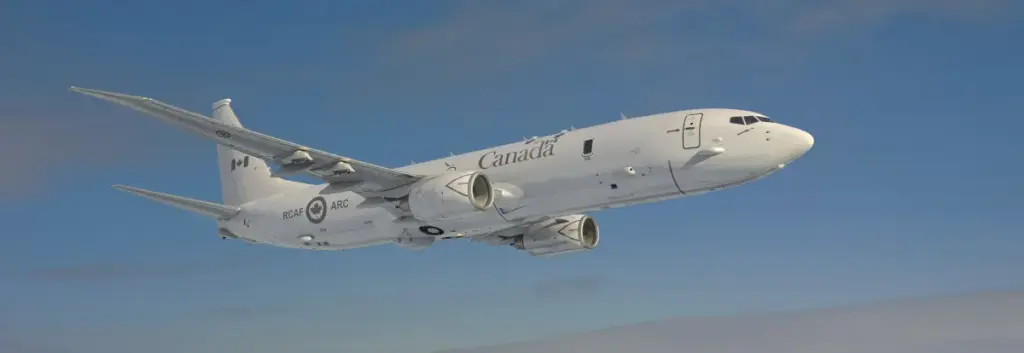
The P-8A Poseidon is indisputably the dominant maritime patrol aircraft of its generation. Built on the Boeing 737-800ERX airframe with 86 per cent commercial parts commonality, it carries a crew of nine. Its sensor suite includes the AN/APY-10 multi-mode radar and electro-optical sensors. Additionally, it carries advanced acoustic processing for over 100 sonobuoys and electronic support measures. The weapons suite covers Mk 54 torpedoes and AGM-84 Harpoon anti-ship missiles (Boeing).
Nine Nations and the Boeing Surveillance Aircraft Track Record
Nine nations now operate or have ordered the type. Specifically, all Five Eyes partners fly or will fly the P-8A. Those nations are the United States, United Kingdom, Australia, New Zealand, and Canada. Additionally, India, Norway, South Korea, and Germany round out the customer list. Furthermore, Singapore confirmed an order in September 2025. Denmark received FMS approval in December 2025 (Wikipedia). Overall, more than 175 aircraft are in service globally, having accumulated over 600,000 flight hours. Meanwhile, Germany took delivery of its first P-8A in October 2025.
Subsequently, on February 29, 2024, the U.S. Navy awarded Boeing a US $3.4-billion contract for 17 P-8As — 14 for Canada and three additional for Germany — under the Foreign Military Sales programme (Boeing Canada). Currently, the production line in Wichita runs at approximately one aircraft per month. Without further orders beyond current commitments, the line would close around 2030. However, Canadian, German, Singaporean, and potential Danish orders extend it. Nobody disputes the P-8A’s operational capability. The controversy lies entirely in how Canada acquired it.
Canada P-8A Poseidon Economics: Offsets Versus Integration
For the Canadian programme, Boeing assembled “Team Poseidon,” including CAE, GE Aviation Canada, IMP Aerospace and Defence, KF Aerospace, Honeywell Aerospace Canada, Raytheon Canada, and StandardAero. The company pledged CAD $5.4 billion in Industrial and Technological Benefits (ITB) over ten years (Skies Magazine). Moreover, Boeing claimed the programme would support 3,000 jobs annually. It projected $358 million in annual GDP across more than 260 Canadian companies.
Offsets Negotiated After the Canadian Poseidon Procurement Decision
However, critics note these commitments were negotiated after the purchase decision, not as part of competitive evaluation. They represent offset investments rather than genuine integration of Canadian industry into core production. Moreover, the Auditor General’s December 2024 report found that out of 60 defence procurements examined, 10 had ITB obligations either not applied or falling below 100 per cent of contract value. Furthermore, the auditor could not demonstrate the ITB policy met its objectives. More than $15 billion in ITB obligations remained unallocated across the federal portfolio (Auditor General of Canada).
Consequently, the FMS route compounds this structural weakness. When Canada purchases through U.S. government-to-government channels, the standard ITB mechanism changes fundamentally. Instead, Boeing negotiates economic benefits separately and after the fact. Therefore, Canadian firms cannot bid alternatives through the FMS channel. Additionally, in February 2025, amendments to the Government Contracts Regulations created a further exception. PSPC no longer needs to provide supporting rationale for sole-source procurement beyond invoking national security. The pattern is clear: expedience trumps competition, and economic returns become afterthoughts.
The Broader Pattern: Canada’s Aerospace Sector Sidelined
Canada’s aerospace industry is substantial. Specifically, it contributes approximately $34.2 billion annually to GDP. It supports 225,000 jobs and ranks seventh globally (Innovation, Science and Economic Development Canada). Indeed, Montreal is the world’s third-largest aerospace hub after Toulouse and Seattle. Therefore, sidelining this sector from the country’s biggest surveillance aircraft purchase is not a minor oversight.
Proven Canadian Firms with Deep Military Experience
For instance, PAL Aerospace, headquartered in St. John’s, Newfoundland, has over 40 years of maritime patrol experience operating surveillance aircraft for Canada, the Netherlands, and the United Arab Emirates. Similarly, IMP Aerospace employs over 2,400 staff and operates Canada’s largest military maintenance, repair, and overhaul facility in Halifax. That facility has maintained CP-140 Auroras for decades. Moreover, L3Harris MAS in Mirabel employs over 1,150 people supporting CF-18 Hornets, CH-148 Cyclones, and other RCAF fleets. Clearly, these are not marginal players. They represent deep, proven capability that the FMS procurement route structurally excludes from primary competition.
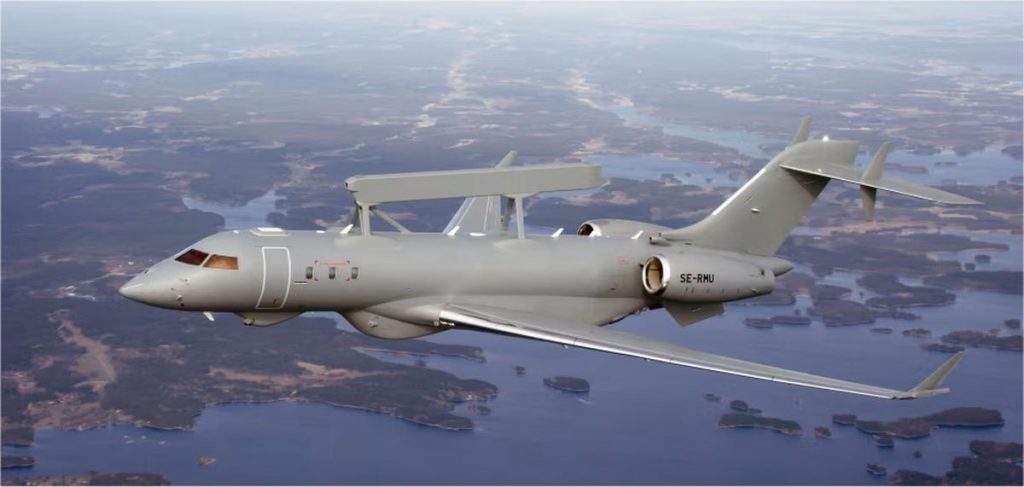
Additionally, Bombardier’s Global 6500 platform now serves defence customers on four continents. South Korea selected an L3Harris-modified Global 6500 for its Phoenix airborne early warning and control programme in September 2025. France ordered two Saab GlobalEye aircraft — also built on the Global 6000/6500 platform — in December 2025. For the full analysis of France’s order and its Canadian angle, see our Fliegerfaust GlobalEye coverage.
A New Defence Industrial Strategy — After the Contracts Were Signed
Canada’s defence procurement landscape shifted dramatically in 2025 and 2026, driven largely by deteriorating relations with the United States. Prime Minister Mark Carney, elected in April 2025, launched two major initiatives. First, in October 2025, he established the Defence Investment Agency (DIA). This special operating agency within PSPC handles procurements over $100 million. Second, on February 17, 2026, Carney launched Canada’s first Defence Industrial Strategy, built on a “Build-Partner-Buy” framework targeting 70 per cent of defence acquisitions from Canadian firms (Prime Minister of Canada).
Canada P-8A Poseidon Procurement Predates the Reform
The irony is acute. The CP-8A Poseidon procurement — signed through FMS before tensions escalated — appears unaffected by the broader “Buy Canadian” pivot. Currently, fuselage integration proceeds in the United States. The aircraft will be assembled with American labour, fitted with American sensors and weapons systems, and delivered to Canadian bases. The programme embodies precisely the dependency the new Defence Industrial Strategy was designed to reduce. Yet it is too far advanced and too operationally critical to reconsider.
Meanwhile, Canada also began re-evaluating its $19-billion F-35 purchase, with Sweden’s Saab aggressively pitching the Gripen E with Canadian production and technology transfer (Breaking Defense). For the full Saab-Bombardier industrial partnership proposal, including GlobalEye and potential Gripen production in Canada, see our Bombardier Gripen Canada analysis. The CP-8A Poseidon deal serves as a cautionary benchmark. It shows what happens when reform arrives after the ink has dried.
Conclusion – Canada P-8A Poseidon procurement: When Urgency Becomes an Excuse
The CP-8A Poseidon will almost certainly prove an excellent maritime patrol aircraft for the RCAF. The platform’s global track record across nine nations leaves little doubt about its operational capability. However, the procurement process that delivered it — and the CE-145C Vigilance programme that foreshadowed its patterns — reveal structural problems that transcend any single aircraft purchase.
A parliamentary committee’s recommendation was overridden in four days. A foreign ambassador lobbied cabinet ministers while two provincial premiers demanded fairness. An entire domestic aerospace ecosystem — seventh-largest in the world — was told it had nothing to offer. Meanwhile, a $247-million ISR programme produced just 65 Canadian jobs and lost most of its operators before the aircraft even arrived. The delivery timeline’s quiet erosion from fall 2027 to fall 2028 for the full fleet is telling. It undermines the urgency argument used to justify bypassing competition. Furthermore, Bombardier’s Global 6500 subsequently found buyers in the U.S. Army, the RCAF, South Korea, and France — raising uncomfortable questions about whether the government’s determination was as definitive as presented.
Canada’s new Defence Industrial Strategy and Defence Investment Agency represent genuine attempts at structural reform. Nonetheless, they arrived after the two largest sole-source aviation procurements were already locked in. The country is building a new framework atop the very foundation it now recognises was flawed. If Ottawa truly intends to route 70 per cent of defence spending through Canadian firms, the CP-8A and CE-145C programmes should serve as the baseline against which every future procurement is measured. Should Canadians accept that $10.4 billion in taxpayer money can flow to a foreign manufacturer without a single competitive bid — or is it time to demand that “Buy Canadian” means more than a slogan announced after the cheques have cleared?
Leave your answers and comments below and on our Fliegerfaust Facebook page.
Canada P-8A Poseidon procurement – Sources
- Ottawa Citizen — Construction underway in U.S. on Canadian surveillance aircraft but delivery slightly delayed (February 26, 2026).
- Government of Canada — Canada purchasing up to 16 P-8A Poseidon Multi Mission Aircraft for the RCAF (November 30, 2023).
- Defense News — Canada to buy Boeing-made Poseidons in $5.9 billion deal (November 30, 2023).
- Defense News — Made-in-Canada advocates rally against Ottawa’s Boeing P-8 preference (July 13, 2023).
- Defense News — Boeing’s P-8 plane had unfair advantage in Canada tender, firms allege (October 30, 2023).
- House of Commons of Canada — Report 7 — Public Procurement of the CP-140 Aurora Replacement, NDDN (November 24, 2023).
- Skies Magazine — Political concerns rise over Canadian Multi-Mission Aircraft procurement process (2023).
- CBC News — Growing threats to Canada’s security drove $10B surveillance plane purchase, minister says (November 30, 2023).
- GlobeNewswire — Bombardier Defense Delivers First Global 6500 Aircraft to the U.S. Army’s HADES Program (November 25, 2024).
- Government of Canada — Canada’s P-8A Poseidon aircraft procurement bringing investment and economic growth to British Columbia (August 7, 2024).
- Defence Blog — Boeing starts assembly of Canada’s CP-8A Poseidon aircraft (February 2026).
- Skies Magazine — RCAF CP-140 crews have begun P-8A operational training at RAF Lossiemouth (2024).
- Government of Canada — Manned Airborne Intelligence, Surveillance and Reconnaissance (2024).
- Government of Canada — Minister Blair announces $850 million investment in CFB Trenton (March 2024).
- Alert 5 — Exodus from Canada’s spy plane unit (December 10, 2024).
- Government of Canada — CP-140 Aurora fleet modernisation and life extension (2024).
- Boeing — P-8 Poseidon (2025).
- Boeing Canada — Boeing Awarded $3.4 Billion Contract for 17 P-8A Poseidon Aircraft (March 2024).
- Skies Magazine — Boeing makes $61M investment in B.C. aerospace through P-8A Poseidon aircraft procurement (2024).
- ISED Canada — State of Canada’s Aerospace Industry (2024).
- Auditor General of Canada — Report 10 — Industrial and Technological Benefits (December 2024).
- Prime Minister of Canada — Prime Minister Carney launches Canada’s first Defence Industrial Strategy (February 17, 2026).
- Breaking Defense — Canada says it’s reconsidering multibillion dollar F-35 buy (March 2025).
- Wikipedia — Boeing P-8 Poseidon (2026).
For full details, please refer to our Disclaimer page.