

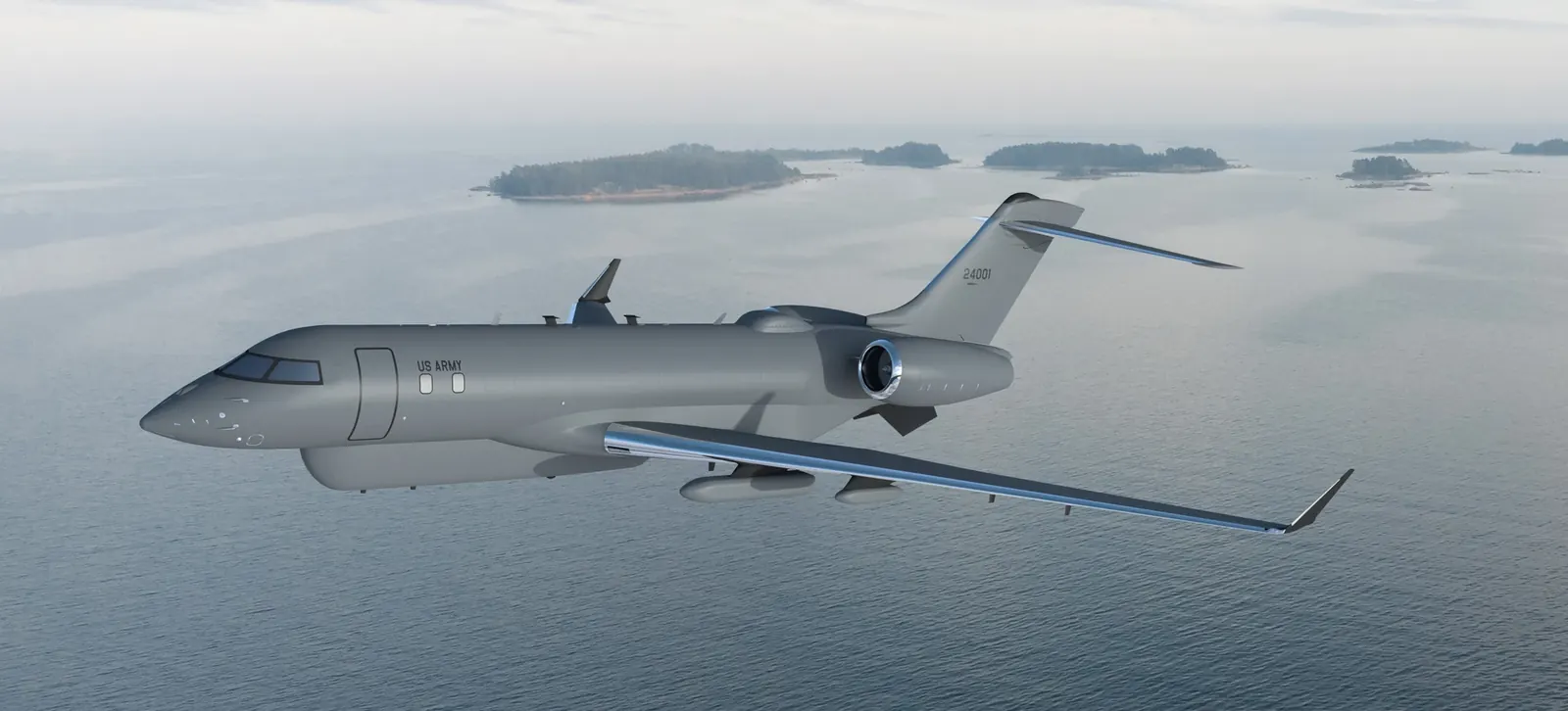
HADES Global 6500: what does the U.S. Army’s January 2026 Request for Information (RFI), seeking industry input on up to 11 new aircraft, mean for survivable standoff intelligence, surveillance and reconnaissance (ISR)?
On January 30, 2026, Aerospace Global News highlighted the Army’s latest market check around the High Accuracy Detection and Exploitation System (HADES). It framed HADES as a jet-based ISR effort built on the Bombardier Global 6500 platform.
Notably, the January 22, 2026 HADES RFI sets the ceiling in plain language. It asks industry to describe how it would deliver aircraft and embedded support at scale.
Additionally, the timing is not subtle. The Army has completed divestment of its legacy turboprop ISR fleets and now relies on jet-based bridge aircraft while prototypes mature. Therefore, this RFI reads like the supply-side handshake for an Army-owned high-altitude sensing fleet.
HADES Global 6500: the RFI that set industry humming
First, the Army is careful about what this notice is and is not. In the January 22, 2026 RFI, it describes the document as market research and says it does not promise a future request for proposals.
Moreover, market research still reveals intent. The RFI identifies the Bombardier Global 6500 as the target airframe. It asks industry to explain pricing, delivery capacity, modification pathways, and embedded support services.
“… up to eleven (11) Bombardier Global 6500 aircraft” — HADES RFI.
Global 6500 ISR jet performance thresholds
From the outset, the RFI prioritises height, distance, and time on station. It requires operations between 41,000 and 51,000 feet (about 12.5 to 15.5 kilometres) above mean sea level. It also requires the aircraft to maintain at least 41,000 feet after integrating 6,500 pounds of mission equipment.
Additionally, the Army asks for a minimum 14,000-pound payload capacity. It also demands at least 12 hours of unrefuelled endurance, plus instrument flight rules (IFR) fuel reserves. Consequently, the aircraft must arrive with enough fuel planning margin for alternates and weather.

Additionally, by folding IFR reserves into the endurance requirement, the Army is signalling that diversions still count against time on station.
Separately, the RFI sets a speed and reach bar that fits theatre-scale operations. It calls for at least 450 knots true airspeed at 51,000 feet, plus a self-deploy range of 6,000 nautical miles (about 11,112 kilometres). Therefore, the platform must move quickly and reposition without a complex staging chain for every deployment.
Army HADES aircraft modification and certification
The RFI also shows where missionisation work concentrates. It asks for rough-order-of-magnitude pricing for a green aircraft and for certification packages that support outer mould line changes.
Moreover, the Army points to the kinds of changes it expects, including wing hardpoints, a belly canoe, and a radome. It also asks vendors to identify existing supplemental type certificates (STCs), or describe foreseeable challenges, for a set of aerial ISR-related modifications.
Consequently, the HADES Global 6500 concept compresses two projects into one. The Army must buy a certified commercial jet and then certify mission changes.
That dual-track reality explains why the RFI repeatedly asks about engineering services and certification steps.
HADES aircraft delivery tempo and support services
Timing, in procurement, is capability. In the January 22, 2026 RFI, the Army set a response deadline of February 12, 2026 at 3:00 p.m. Central Standard Time and limited submissions to 15 pages.
Additionally, it asked industry to explain its ability to deliver up to four aircraft per year. It framed that tempo around an assumed contract award in October 2026. Therefore, vendors must think beyond one-off conversions and plan for sustained throughput.
Importantly, the RFI also requires the aircraft to remain in production through calendar year 2032. Moreover, it asks for embedded services, support equipment, and other sustainment elements. Consequently, the Army is signalling that it wants a fleet that can be refreshed, supported, and modified over time rather than treated as a short-term stopgap.
Meanwhile, the RFI’s embedded-services language signals a practical lesson learned. Even a business jet needs spares, trained maintainers, and structured configuration control once a mission system is installed. Therefore, the delivery discussion is inseparable from sustainment planning.
HADES Global 6500: why the Army is trading turboprops for altitude
Turboprops can loiter beautifully, but they cannot negotiate with gravity or geography.
To understand why the Army is leaning into a large-cabin business jet, it helps to start with what it just closed. On December 11, 2025, the U.S. Army announced it had completed divestment of its aerial ISR turboprop fleet.
Additionally, the Army described the divested fleets by name: Airborne Reconnaissance Low-Multifunction (ARL-M), Guardrail, and the Enhanced Medium Altitude Reconnaissance and Surveillance System (EMARSS). It also stated that the last EMARSS aircraft conducted its final mission in September.
Moreover, the Army connected divestment to a reallocation of funding toward modernisation and deep sensing. It described jet-based bridge aircraft as part of that transition and positioned HADES as the programme that ultimately replaces ARL-M, Guardrail, and EMARSS in the deep-sensing role.
“Deep sensing requires two things: the ability to use more capable sensors and to fly higher.” — U.S. Army.
HADES ISR fleet baseline after divestment
Moreover, it said the legacy turboprops fell short on speed, range, altitude, onboard power, and payload margin—the ingredients deep sensing depends on. Therefore, it described a smaller fleet that can cover larger footprints for longer periods as the way forward.
Consequently, a Bombardier Global 6500 baseline aligns with the Army’s stated target. The jet supports higher-altitude operations than turboprop aircraft. It also supports faster transit to a sensing orbit.
In practical terms, the shift reduces the time spent simply getting to the area of interest. Moreover, the larger airframe also offers more space for mission equipment and crew workstations than smaller aircraft classes.
HADES ISR fleet and standoff logic
Standoff can sound abstract. However, the RFI makes it measurable by defining a mission profile that favours altitude, endurance, and long-range self-deployment.
Additionally, those requirements imply a collection approach built around distance. Consequently, commanders can keep a platform farther from threats while still collecting over broad areas.
Importantly, this is not a claim that altitude alone solves survivability. Instead, it shows that the Army is building its new baseline around reach and persistence first, then pairing that baseline with sensors that exploit it.
HADES ISR fleet continuity and bridge aircraft
The Army also described an interim strategy for jet-based sensing. Additionally, the Army wrote that PD SAI and the Fixed Wing Project Office used contractor-run ARTEMIS and ARES jets to prove out jet-altitude ISR and shape HADES requirements.
Moreover, it stated that Army Theater-level High Altitude Expeditionary Next Aerial ISR Radar/Signals Intelligence aircraft, known as ATHENA-R/S, will serve as a bridging strategy until HADES is fielded. Therefore, ATHENA-R/S helps sustain ISR coverage while ARL-M, Guardrail, and EMARSS leave service.
Consequently, the HADES Global 6500 push is not the first time the Army has leaned on business-jet sensing. Instead, it represents the shift from bridge aircraft such as ATHENA-R/S to an owned, standardised fleet that can be fielded and sustained at scale.
Meanwhile, bridge aircraft also create a feedback loop. They let units refine tactics and data workflows before the programme of record arrives. Therefore, early jet operations can reduce integration surprises once HADES enters operational service.
HADES Global 6500: prototypes, integration, and the industrial lineup
The January 2026 RFI did not appear out of thin air. It sits on top of years of prototype airframes and mission-system integration planning.
On January 3, 2024, the U.S. Army announced it had awarded a firm-fixed-price contract to Bombardier Defense (Learjet, Inc.) on December 12, 2023. That contract procured one Global 6500 aircraft, with options for two additional aircraft over three years, to support HADES prototyping.
Additionally, the Army contract notice stated that the first aircraft had an expected delivery date of October 1, 2024. It also described the prototypes as the first U.S. Army-owned large-cabin business jets used as aerial ISR platforms.
Army HADES aircraft prototypes and milestones
The Army has also described prototype milestones in later public updates. In its December 2025 divestment article, it stated that the first fully developed HADES prototype system is expected in fiscal year 2026. It said a second prototype should follow in fiscal year 2027.
Moreover, the same Army article stated that the first Global 6500 was delivered to the Army Fixed Wing Project Office in the prior year. It added that a second aircraft arrived in July. Therefore, the airframe pipeline is already moving while mission systems mature.
Consequently, the RFI’s emphasis on delivery tempo and embedded services fits the next phase. It asks industry to describe how it would move from prototype pace to repeatable fleet delivery without compromising certification discipline.
Army HADES aircraft integration timeline
The HADES timeline includes mission equipment integration, not only airframe delivery. On November 25, 2024, DefenseScoop reported that Bombardier Defense delivered the first Global 6500 to the Army in Wichita, Kansas. It also noted a protest related to integration.
Additionally, DefenseScoop wrote that Army officials expected mission equipment integration in late 2026 or early 2027. Consequently, schedule risk is tightly coupled to integration and certification cadence rather than to aircraft availability alone.
Moreover, this is where the requirements language matters. The RFI asks for certification support and sustainment elements early. Therefore, it reflects a programme trying to prevent integration churn from turning a business jet into a bespoke science project.
HADES aircraft delivery and the STC pipeline
Industry is also moving money to protect schedule. On January 13, 2026, Sierra Nevada Corporation said it purchased a Bombardier Global 6500 at its own expense for HADES.
In that January 13, 2026 statement, Sierra Nevada Corporation said the first three HADES aircraft currently undergoing modification are prototypes. It also described the Global 6500 it procured at the close of 2025 as the fourth HADES aircraft and the first non‑prototype airframe intended for the programme of record.
Additionally, Defense Daily published an SNC-supplied photo captioned: “The fourth Bombardier Global 6500 jet set to be integrated by SNC for the Army’s HADES A-ISR program. Photo: SNC.” Consequently, SNC’s January 13, 2026 release and the Defense Daily caption align on the same point: SNC has three prototype Global 6500s already in modification and a newly purchased fourth airframe that will be the first non‑prototype HADES aircraft.

Additionally, the press release stated that the purchase would mitigate disruption risk, pull schedules left, and advance STC milestones. It also stated that modification work for the HADES aircraft will occur in Hagerstown, Maryland.
“SNC has unequivocally answered that call.” — Andrew Evans, director of strategy & transformation within the Army G-2, Sierra Nevada Corporation.
Consequently, the supply chain discussion now includes private capital behaviour as well as government contracting. Moreover, the company said it has self-invested nearly half-a-billion dollars across programmes in support of the Army’s shift toward aerial ISR technologies.
HADES Global 6500: the delivery tempo question and contract structure
Procurement headlines tend to focus on the number 11. However, delivery tempo and contract structure often decide whether that number becomes an operational fleet or a planning ceiling.
On January 29, 2026, Breaking Defense described the RFI as a move to increase the aircraft-buy ceiling. It linked the effort to a plan of six production aircraft plus three prototypes.
Separately, on the same day, Defense News also reported on the RFI. It tied the move to the Army’s pivot away from turboprops toward higher-flying business jets for ISR missions.
HADES aircraft delivery ceiling and real decisions
An RFI is not a contract award. Therefore, a ceiling is a planning tool rather than a guaranteed fleet size.
Moreover, ceilings still shape real decisions. They influence how suppliers plan production capacity, how modifiers forecast certification workload, and how sustainment providers size teams.
Consequently, the request for up to four aircraft per year tests scalability. It asks whether conversion and certification can keep pace.
HADES jet sustainment and the IDIQ model
The RFI also speaks to how the Army wants to buy. In the same January 22, 2026 document, it describes a planned sole-source, single-award, indefinite-delivery, indefinite-quantity (IDIQ) contract with a 10-year ordering period.
Additionally, Breaking Defense noted that the RFI is market research rather than a sole-source award notice. Therefore, the document’s language signals contracting intent while still gathering industry input.
Consequently, a single-award IDIQ can simplify programme management and sustainment planning. However, it also concentrates risk in one contract vehicle and one industrial approach.
Importantly, a 10-year ordering period can smooth aircraft buys across budget cycles. It can also absorb pauses if integration or certification needs more time. Consequently, the structure offers flexibility, but it still demands stable requirements and tight governance.
HADES jet sustainment workload behind the aircraft
Because the Global 6500 is a mature, certificated commercial airframe, it brings a predictable baseline for reliability and maintenance—but the HADES mission kit will ultimately determine fleet availability.
That matters because business‑jet utilisation normally looks very different from airline service. Executive jets typically fly longer legs with fewer take‑offs and landings per flight hour. Consequently, they accumulate fewer pressurisation/depressurisation cycles—one of the main drivers of fuselage fatigue—along with fewer engine start/stop and thermal cycles than a short‑haul schedule would impose. By contrast, a military orbit‑and‑relay mission can push a business jet into a tempo it was not primarily designed around.

The U.S. Air Force’s Bombardier Global-based E‑11A Battlefield Airborne Communications Node (BACN) fleet shows how hard that tempo can get. U.S. Air Forces Central wrote that anE‑11A flew BACN’s 10,000th sortie on February 24, 2017 at Kandahar Airfield, eight years after the system arrived in Afghanistan (U.S. Air Forces Central). Additionally, Air & Space Forces Magazine notes the combined Bombardier Global BACN fleet surpassed 100,000 flying hours in 2019 (Air & Space Forces Magazine) and sustained daily utilisation exceeding 18 hours for months at a time.
Those Bombardier Global BACN milestones do not eliminate the need for disciplined fatigue tracking and maintenance planning. Even so, they do demonstrate that the Bombardier Global family has already been operated at demanding sortie and flight‑hour levels in U.S. military service.
Moreover, the RFI asks for embedded services and support equipment alongside the aircraft. Therefore, the Army is signalling that fielding HADES requires an ecosystem, not simply deliveries.
Finally, delivery tempo interacts with workforce reality. Modification and certification work competes for engineers and test specialists, and those labour pools do not expand overnight.
Contested airspace ISR and what the requirements actually reveal
The RFI contains details that point to how the Army expects to operate HADES. Importantly, many of those details are about integration discipline rather than a single sensor.
Army HADES aircraft material choices
One of the most specific requirements involves materials. In the January 22, 2026 RFI, the Army states that fuselage and empennage skin and structural components shall not be composite materials.
Additionally, it allows limited composite use for nose cones, pylons, fairings, and the radome. Therefore, the Army is drawing a boundary around what it wants maintainers to face over decades of service.
Consequently, missionisation will be constrained by the certified structure and by deliberate material choices. That can limit design freedom, but it can also stabilise sustainment and long-term repair approaches.
Global 6500 ISR jet certification and growth margins
The Army also put certification front and centre. It requires vendors to obtain Federal Aviation Administration (FAA) certification, to the maximum extent possible, for design changes during missionisation.
Additionally, the certification path will almost certainly run through STC packages for outer-mould-line changes and antenna installations. Moreover, each STC depends on FAA-approved data, flight-test evidence, and disciplined configuration control. Therefore, even after missionisation, the aircraft must still meet IFR operating assumptions in civil airspace.
Moreover, the RFI asks vendors to describe the mission power distribution system and excess capacity for size, weight, power, and cooling. Consequently, the Army is treating upgrade margin as a first-order requirement.
Finally, this is where the business-jet advantage can show. A large-cabin aircraft offers more room for equipment racks, cabling, and cooling hardware than smaller platforms. That space, if protected through FAA-approved changes, can become the programme’s hedge against sensor growth.
As a side note, the Global 6500’s electrical architecture is one reason it fits power‑hungry special missions. The FAA BD‑700‑1A10/1A11 master minimum equipment list lists an engine generator system with four generators installed, plus an auxiliary power unit (APU) generator system—five aircraft‑generated sources of electrical power available for mission loads (within operating limits) all while in flight.
Additionally, the same FAA document permits dispatch with one generator per engine inoperative when the APU generator operates continuously, which underscores why power—and the cooling it enables—often becomes the decisive constraint for sensor‑heavy missionised aircraft.
On a sensor-heavy platform, that matters because power is everything—both for the mission equipment and for the cooling capacity that keeps those electronics within limits.
Additionally, beyond those five normal generating sources, the aircraft also includes a ram air turbine (RAT) generator for emergency electrical power.
HADES standoff ISR without dwelling on defensive aids
The RFI does not dwell on self-protection systems. Instead, it describes a platform that can fly high, fly far, and remain on station for long periods.
Moreover, those parameters support a standoff approach to collection. Therefore, the aircraft’s survivability story begins with staying out of reach where possible and maximising time on task.
Consequently, the Army’s direction of travel is clear. It is moving toward fewer aircraft that can cover more area, while relying on altitude, range, and sensor performance to stay relevant in contested environments.
Bombardier Global jets in uniform, and why this HADES moment matters
The Global series is starting to look less like a corporate shuttle and more like a flying Swiss Army knife.
Although HADES is the focus, the aircraft choice sits inside a broader pattern. Militaries are increasingly adopting business jets for high-end missions where speed, altitude, and endurance matter.
On Fliegerfaust, we have been tracking that shift across Bombardier platforms. For example, our post on the U.S. Air Force’s E-11A Battlefield Airborne Communications Node (BACN) fleet shows how a Global platform has served as a high-value communications node. Additionally, BACN remains a useful reference point for high cycles, long-duration, high-altitude operations.
Additionally, our analysis of South Korea’s Global 6500-based Phoenix airborne early warning and control aircraft highlights the same underlying attraction: high-altitude coverage paired with long-range reach.
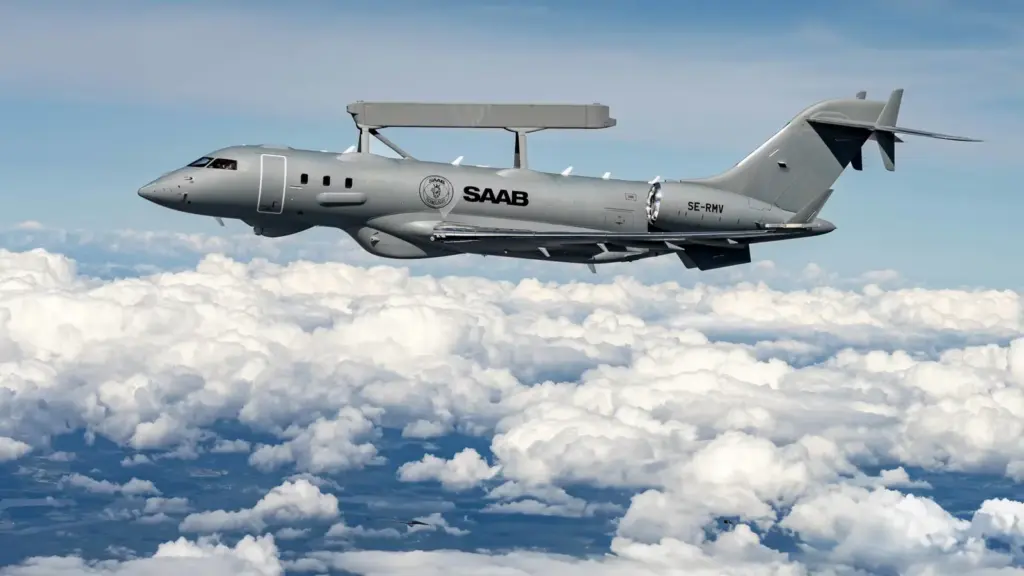
Meanwhile, our report on France’s GlobalEye procurement and the Bombardier story places the Bombardier Global class within a growing ecosystem of special-mission conversions.
Global 6500 ISR jet programmes and scaling pressure
In that context, HADES is not just another special-mission programme. Instead, it is one of the clearest attempts to scale a business-jet ISR fleet inside a major service’s programme of record.
Moreover, the RFI’s delivery-tempo question suggests the Army is thinking beyond boutique conversion. Therefore, the programme becomes a stress test for certification capacity and integration repeatability.
Consequently, the outcome will shape more than Army sensing. It will influence how other services and allies assess business-jet conversions as credible, sustainable military fleets, especially when they compare HADES with other Global-based efforts such as BACN.
Canada’s aerospace thread and missionised business jets
For Canadian industry watchers, the RFI is a reminder that Canadian-built aircraft can become operational capabilities for U.S. forces. That pathway is not glamorous, but it is real.
Additionally, it means the United States would be buying more made‑in‑Canada aerospace products, reinforcing a trade relationship where roughly 75% of Canada’s exports go to its closest neighbour.
Moreover, it creates upside and exposure. It can sustain advanced manufacturing and modification work, but it also ties production rhythm to U.S. budget decisions and shifting threat priorities.
Moreover, business-jet fleets also change how armies think about basing. They benefit from established airfields and predictable support infrastructure. Consequently, performance gains can come with a narrower set of operating locations.
Additionally, data is the other hidden constraint. A deep-sensing jet produces large volumes of information that must be processed, moved, and secured. Therefore, the aircraft buy is only part of the capability.
Importantly, that does not weaken the case for altitude and range. It simply clarifies the real bill of materials behind modern ISR.
HADES Global 6500: Conclusion
Finally, as this procurement accelerates, the best measure of success will be plain. The Army needs an operational fleet that meets its altitude, endurance, and upgrade-margin promises without endless integration churn.
In my view, the Army is right to define its future ISR fleet around altitude, reach, and growth capacity, because those traits endure even as sensors evolve. However, the same documents also show how fragile the transition can be when legacy fleets retire before new systems mature.
Consequently, the HADES Global 6500 effort will succeed only if the Army protects schedule discipline, certification rigour, and stable funding through the build-out. Moreover, the ceiling should be used to build predictable capacity, not to create another round of shifting targets.
So here is the hard question: will the Army align industrial tempo and integration governance tightly enough that HADES Global 6500 arrives before the next crisis demands it?
North America in Crisis
Additionally, “crisis” could arrive as policy rather than missiles: if Washington chose to weaponise certification and restrict approval pathways tied to Canadian-built platforms, a cross-border programme like HADES would feel it immediately. For a closer look at that risk scenario, see our Fliegerfaust analysis of Canadian aircraft decertification and the Gulfstream comparison.
Moreover, that possibility collides with the reality that 75% of Canada’s exports go to the United States. Consequently, Canada has to decide whether it wants to keep managing friction case-by-case, or pursue wider, more predictable North American trade and regulatory alignment that reduces opportunities for protectionism on either side.
Finally, Europe built a single market and even a shared currency to lower barriers and lock in predictability across borders. If that level of integration proved workable there, why does North America still tolerate carve-outs and protectionist clauses that can be pulled in a dispute—especially when Canada depends so heavily on U.S. access?
So when will North America get real free trade—and a common currency?
Leave your answers and comments below and on our Fliegerfaust Facebook page.
HADES Global 6500: Sources
- Aerospace Global News — US Army seeks contractors to deliver 11 Bombardier Global 6500-based spy planes (January 30, 2026).
- GovTribe — HADES RFI.pdf (January 22, 2026).
- U.S. Army — Army completes A-ISR turboprop fleet divestment (December 11, 2025).
- U.S. Army — Army awards contract for HADES prototyping efforts (January 3, 2024).
- DefenseScoop — Bombardier Defense delivers first HADES jet to Army (November 25, 2024).
- Sierra Nevada Corporation — SNC Invests in the Future of the Army, Procures Fourth HADES Aircraft (January 13, 2026).
- Breaking Defense — Army eyes more HADES jets but program isn’t full steam ahead (January 29, 2026).
- Defense News — The US Army wants 11 business jets for ISR missions (January 29, 2026).
For full details, please refer to our Disclaimer page.

“He provided some of the most granular technical and business analysis of the CSeries program during a period of significant financial and political turmoil for Bombardier.”
yes absolutely