

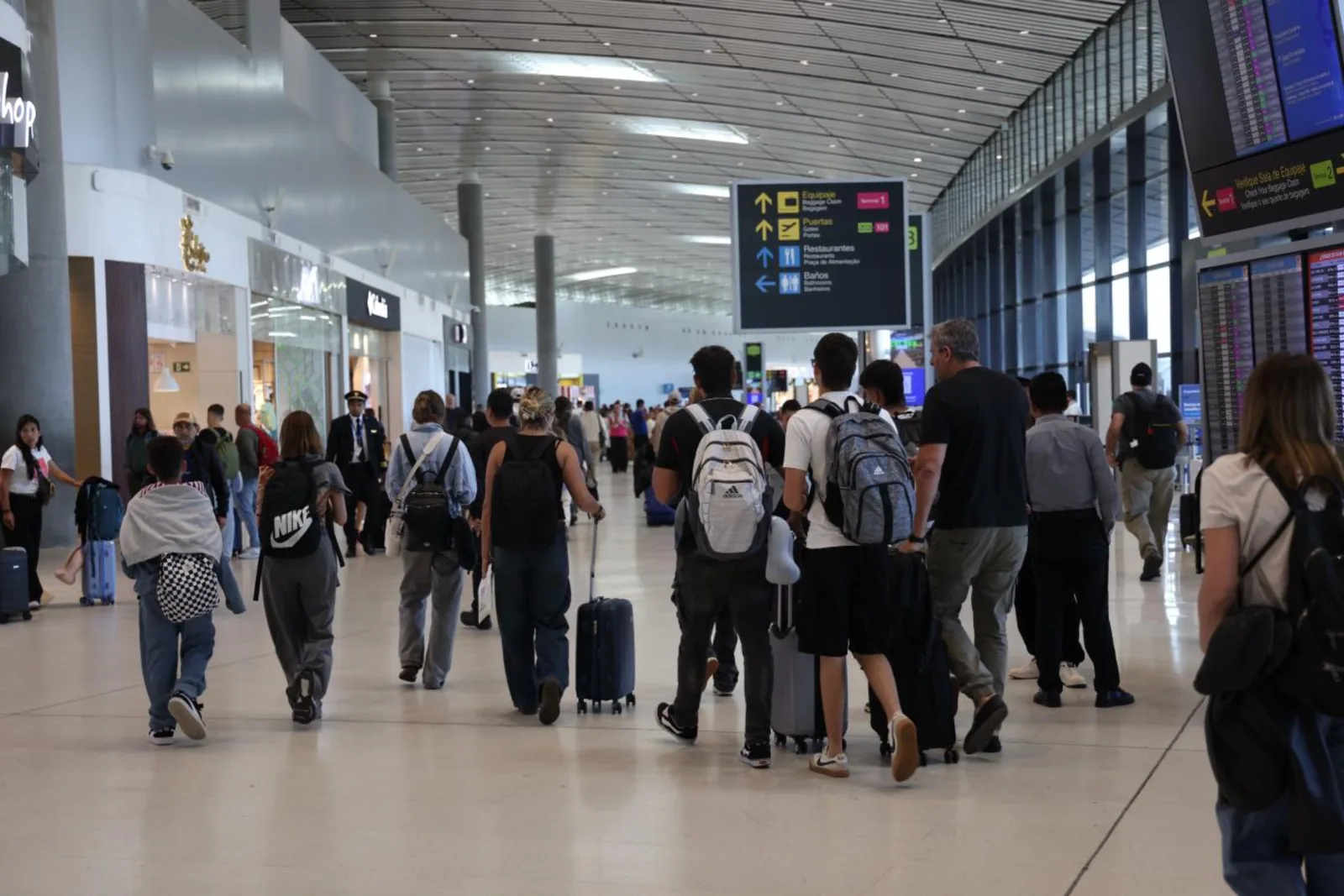
Tocumen Airport expansion: can Panama City’s Aeropuerto Internacional de Tocumen (IATA code: PTY; ICAO code: MPTO) stay ahead of demand as it targets up to 22.6 million passengers in 2026?
First, the numbers look big because they are big. Panama’s main gateway closed 2025 with 20.98 million passengers (+9% vs 2024), then publicly projected 2026 revenues between US$334 million and US$356 million, depending on traffic, with a ceiling of 22.6 million passengers. Presidencia de la República de Panamá framed those figures as part of a wider tourism-and-logistics recovery story.
After building Terminal 2, Tocumen is still adding more gates
More importantly, Tocumen is already preparing another expansion, despite adding a major new terminal less than four years ago. Tocumen, S.A. began processing arriving and departing passengers through Terminal 2 (T2) on June 22, 2022. Tocumen, S.A. That shift effectively brought a separate, modern terminal into full operational use as part of the hub’s capacity build-out. La Prensa reports that the Terminal 2 project ultimately cost about US$917 million after addenda (it began as a US$679 million award).
Even with that new terminal now “baked into” the airport’s baseline, Tocumen has announced it will add 10 more boarding gates, lifting the total to 64. Infobae The implication is hard to miss: Panama’s international connectivity and hub traffic are growing fast enough that PTY is expanding again, even after a near-billion-dollar terminal build.
Why “now”: movements, cargo growth, and punctuality pressure
Meanwhile, Tocumen’s own communications add an operational “why now” layer: the airport says it handled 166,448 movements in 2025 and moved a record 248,455 metric tons of cargo, while also repeating its “most punctual medium airport” positioning via Cirium’s On-Time Performance ranking. Tocumen, S.A. (official news) has linked that performance to discipline, investments, and a forward-looking Master Plan (2030–2050).
So this is not just an “airport story.” It is a Panama story: hub economics, foreign investment confidence, ground transport upgrades, and a country that keeps building infrastructure around connectivity.
Numbers at a glance (for editors and readers):
- 2025 passengers: 20.98 million (+9% vs 2024). La Estrella de Panamá
- 2026 passenger cap (projection): up to 22.6 million. Infobae (Panamá)
- 2026 revenue range (projection): US$334M–US$356M. Swissinfo (EFE dispatch)
- Runway rehab contract: US$56.9M (two runways + taxiways; 2 years works + 2 years maintenance). Tocumen, S.A. (official news)
- Gate expansion plan: +10 gates (to 64 total) referenced in 2026 coverage; earlier 2025 reporting discussed 10–12 new gates and differing cost estimates depending on scope. TVN Noticias
Tocumen Airport expansion: 2025 results and 2026 projections in hard numbers
2025: passenger growth, aircraft movements, and a bigger network
First, Tocumen’s 2025 “volume story” reads like a hub airport playbook done right. The airport reported 20.98 million passengers in 2025, a 9% increase over 2024, alongside 166,448 aircraft movements and a network of 97 international destinations. Presidencia summarized those statistics in its January 23, 2026 release about the sector’s “rendición de cuentas.”
Also, Tocumen’s own releases put structure behind the headline: commercial flights dominated the movement mix, while cargo continued to climb. Tocumen, S.A. said 2025 air cargo reached 248,455 metric tons, up 15% year over year, reinforcing the airport’s logistics role alongside passenger connectivity.
Meanwhile, the “97 destinations” figure matters because it signals network density, not just volume. In hub economics, frequency and onward connections can matter more than raw origin-and-destination demand. That is where PTY has historically punched above Panama’s population size.
2026: the revenue band, the passenger ceiling, and the underlying bet
Next, management’s 2026 guidance lands in a range, not a single number: revenues between US$334 million and US$356 million, and up to 22.6 million passengers, depending on traffic behavior. La Estrella de Panamá published that range in late January 2026, echoing the same figures cited across multiple outlets.
Still, guidance ranges are not fluff. They signal management’s view of risk. A narrow range suggests confidence in demand visibility. A wider range suggests uncertainty in airline schedules, macro conditions, or yields. In Tocumen’s case, the range appears tied to traffic performance rather than a change in business model. Infobae framed the revenue band the same way: upside if traffic stays strong, downside if it softens.
At the same time, the airport’s preliminary 2025 revenues were reported as “over US$315 million,” a roughly 7% increase vs 2024 in several accounts. EFE via Swissinfo specifically described revenues surpassing US$315 million in 2025.
Tocumen Airport expansion: Why this matters beyond aviation nerd circles
So why should non-aviation readers care? Because a hub airport behaves like a high-speed economic multiplier. It does not only move people. It pulls in conferences, logistics operators, and route experimentation. It also makes a country feel “closer” to markets and investors.
In fact, the Presidency’s tourism section explicitly connected aviation performance to tourism receipts, visitor growth, and “stopover” style incentives aimed at converting transit passengers into short-stay visitors. Presidencia reported that 2025 saw a record increase in tourists who chose to stay, surpassing 200,000 visitors, in the context of a transit-to-stay strategy.
Tocumen Airport expansion: a milestone timeline from 1947 to Terminal 2
1947: Tocumen opens as Panama’s aviation front door
First, Tocumen’s origin story predates the “hub of the Americas” branding by decades. The airport traces its formal inauguration to June 1, 1947, when Panama opened what would become its primary international aviation gateway. Tocumen, S.A. (history reference in its news archive) describes that early milestone and frames it as the starting point of the airport’s long expansion cycle.
Next, the physical geography matters. Tocumen sits east of Panama City, close enough to serve the capital, while still offering room (by urban standards) to expand terminals, aprons, and access roads. That placement looks obvious now. In 1947, it was a forward bet.
1978: Terminal 1 and the beginning of “modern Tocumen”
Then came a key passenger-era milestone: Terminal 1 (often called T1) was inaugurated on August 15, 1978. Tocumen, S.A. (Terminal 1 anniversary note) recounts that date and points to later transformations, including a 2006 expansion and renovation program.
Also, this matters because T1 anchored the airport’s first true modern capacity platform. In practical terms, that is when PTY starts to look like the kind of infrastructure that can support connection banks and growth waves.
2003: the corporate operator model takes shape
After that, Panama changed the governance model. Aeropuerto Internacional de Tocumen, S.A. was created under Law 23 of March 20, 2003, according to the company’s financial disclosures to Panama’s securities regulator ecosystem. Superintendencia del Mercado de Valores (issuer report PDF) references the legal creation of Tocumen, S.A. and the shift toward a corporate-style operator structure.
Meanwhile, an official gazette publication later described the company as a 100% state-owned entity (“propiedad del Estado Panameño”), reinforcing its public ownership even as it operates with corporate structures. Gaceta Oficial Digital (PDF) includes language describing Tocumen, S.A. as wholly state-owned.
2019–2022: Terminal 2’s long runway to full operations
Terminal 2 (T2) has a long build story that’s easy to blur if you don’t separate the milestones. The project was awarded in 2012, and that construction began in March 2013, as part of the airport’s capacity expansion plan. The terminal was later inaugurated on April 29, 2019, marking the public launch of the new infrastructure. SERTV
Operationally, the key “go-live” milestone came later: Tocumen began processing arriving and departing passengers through Terminal 2 on June 22, 2022. The airport said Copa Airlines would lead the transition, followed by KLM, United Airlines, and Air France. Tocumen, S.A.
Financially, the scale is just as important: Terminal 2 contract began at US$679 million and rose to about US$917 million after eight addenda—so the new terminal is a near-billion-dollar baseline investment, not a minor upgrade. La Prensa
Tocumen Airport expansion: who owns PTY, and how Tocumen, S.A. operates
A 100% state-owned company, with corporate tools
First, ownership is straightforward: the Panamanian state owns the airport company. That is explicitly described in official publications and repeated across government communications. Gaceta Oficial Digital describes Tocumen, S.A. as a company owned entirely by the state.
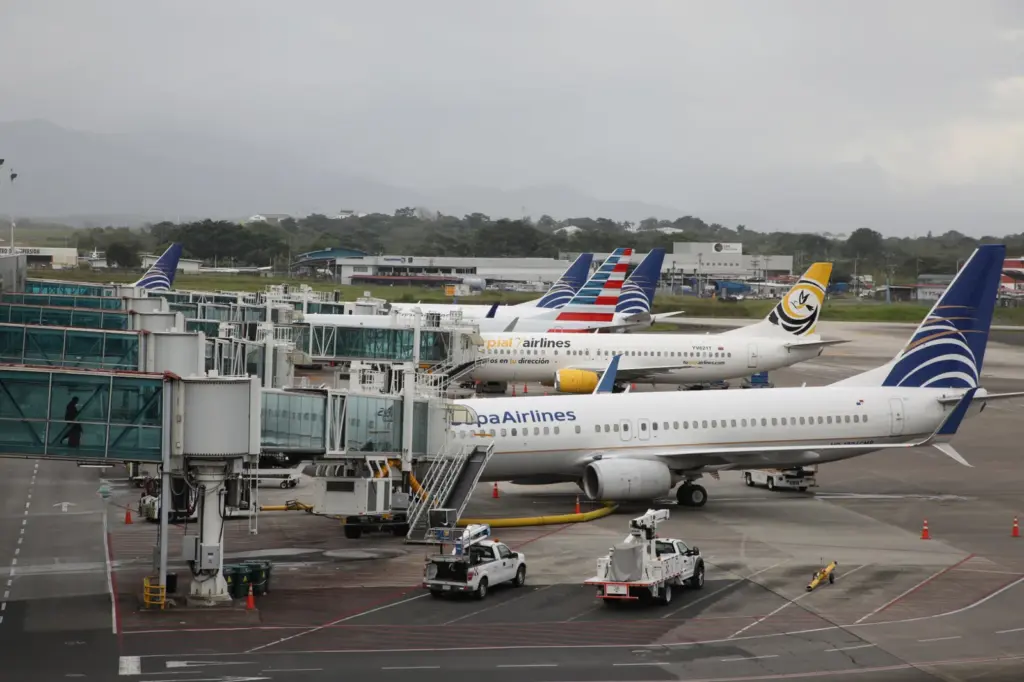
However, management and financing are not “classic ministry operations.” Tocumen, S.A. operates as a corporate entity, publishes financial statements, and (historically) has used capital markets tools. Even in 2025 coverage about future gate additions, management emphasized that it could fund works with internal resources rather than automatically issuing new debt. La Prensa reported that Tocumen’s general manager discussed funding expansion without needing another bond issue, in the context of gate additions.
Why governance matters: reinvestment discipline and long-run planning
Next, the governance model matters because airports are long-cycle assets. A runway rehabilitation today is not a “2026 story.” It is a 2040 story, told in asphalt.
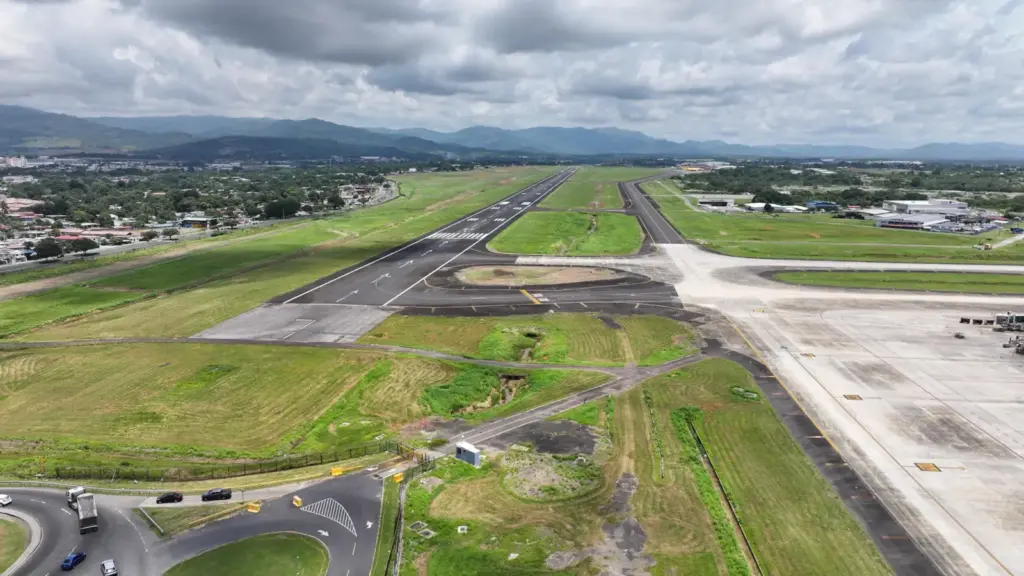
The way the airport is run matters because airports are built to operate for decades. When management reinvests steadily—especially in runways and taxiways—passengers see fewer delays, airlines can keep reliable schedules, and the airport avoids emergency closures. So runway rehabilitation isn’t just a short-term project for a press release; it’s basic maintenance that keeps PTY safe and dependable for years.
So when Tocumen points to a Plan Maestro Tocumen 2030–2050, it is signaling that it wants to keep planning capacity, climate resilience, and operational continuity as core priorities, not optional upgrades. Tocumen, S.A. referenced that Master Plan in its January 2026 communications.
PTY is the flagship, but the company runs a network
Meanwhile, PTY is not the only airport in the corporate portfolio. Tocumen, S.A. says the regional airports it administers moved 781,871 passengers in 2025, alongside 32,036 operations, reflecting domestic connectivity growth. Tocumen, S.A. listed that figure in its January 2026 news compilation, while also naming airports in David (Chiriquí), Panamá Pacífico, Río Hato (Coclé), and Colón as part of the system.
Running one airport is a chess match; running a network is chess on a moving airplane tray table.
Tocumen Airport expansion: Terminal 2, gate capacity, and what “two terminals” really changes
June 22, 2022: the date Terminal 2 becomes operational reality
First, “Terminal 2 opened” can mean three different things: ribbon-cutting, partial use, or full processing. For travelers, the only date that matters is the one where flights actually move.
Accordingly, Tocumen, S.A. stated that from June 22, 2022, adding to Terminal 1, it would begin processing arriving and departing passengers via Terminal 2 (T2) described the rollout and named initial airlines involved in the shift, i.e. Copa Airlines, followed by KLM, United Airlines, and Air France. (Tocumen, S.A.)
Also, 2025 reporting adds context: La Prensa described Terminal 2 as having 20 gates and noted that it became “100% operative” in June 2022, while also referencing earlier phased use. La Prensa included that timeline detail in its June 29, 2025 coverage about additional gates.
Gate math: why 54 gates can still feel like 40 on peak days
Next, let’s talk gate numbers. 54 contact gates sounds comfortable. Yet hub peaks compress demand into banks. That is when an airport can “run out” of capacity even with a decent gate count.
In practice, Tocumen’s own reporting makes the operational intensity obvious. It says more than 450 large passenger and cargo aircraft land and depart every day on average. Tocumen, S.A. used that daily figure while explaining why it must rehabilitate runways and taxiways without stopping operations.
Meanwhile, Panama’s hub model depends on fast airside connections. For most international-to-international transfers, passengers remain in transit (no Panama immigration or customs) and go straight to the next gate; Terminals 1 and 2 are connected and passengers can walk; Tocumen also lists an optional interterminal shuttle service between gate areas 104–105 (T1) and 209 (T2). The practical bottlenecks are gate availability, walking/transfer time between piers, and—on U.S. and Canada-bound departures—an additional security screening at the boarding gate that applies regardless of where the journey began.
Cargo: the connectivity story that doesn’t show up in Instagram reels
Also, Tocumen’s cargo numbers matter because they show the airport is not only a passenger connector. It is a logistics platform. In 2025, the airport reported a cargo record of 248,455 metric tons, up 15%. Presidencia included the cargo figure in its January 23, 2026 release.
So when readers see “more flights,” they should also see “more time-sensitive trade,” especially in a country that already plays a global role in logistics via the Canal and related services.
Tocumen Airport expansion: the 10 new gates plan and what’s really being funded
What’s being reported now: 10 new gates to reach 64
First, the current cycle of reporting points to a clear deliverable: 10 additional boarding gates, raising the total gate count to 64, aligned with Tocumen’s ambition to handle 30 million passengers by the end of the decade.
Next, earlier coverage in mid-2025 already pointed in the same direction. It described a planned Terminal 2 expansion beginning in 2026, adding 10 to 12 gates, with tendering expected in 2026. La Prensa and TVN Noticias both discussed that planned gate growth.
Investment ranges: why one outlet says $40M+ and another says $250M–$300M
La Prensa reported the Terminal 2 expansion as a gates-focused add-on: adding new boarding gates (without adding new commercial areas) with a preliminary estimate of more than US$40 million. La Prensa
TVN, by contrast, reported a broader investment range of US$250 million to US$300 million, tied to an expansion/improvement package developed after a CAF (Development Bank of Latin America and the Caribbean) technical-assistance study. Also TVN added that Tocumen still needed to define whether the works would be bid as a single tender or split into separate tenders for structural works and pavement-related works. TVN Noticias
In short: the US$40M+ figure is being reported for a gates-only Terminal 2 add-on, while the US$250M–$300M figure is being reported for a wider package that explicitly includes structural and pavement-related components.
Tocumen Airport expansion: What “licitation in 2026” implies for timelines
Next, tendering in 2026 implies a multi-year delivery timeline. In public procurement, the critical path often includes: design finalization, tender documents, bid periods, protests or clarifications, award, then construction phasing around operational windows.
Importantly, Tocumen’s own messaging about runway works emphasizes night-only windows to protect continuity. Tocumen, S.A. describes that same logic for airfield rehabilitation. Gate construction tends to face the same reality: you build around live operations. It is also important to note that Tocumen Airport has two runways, so even if one is temporarily closed, at least one runway remains available for operations.
- Runway 03R/21L – 10,006 feet long (main runway, concrete surface)
- Runway 03L/21R – 8,800 feet long (secondary runway, asphalt surface)
Tocumen Airport expansion: the runway rehabilitation and the operational tightrope
The contract: who, what, and when
First, the runway program is not a vague promise. Tocumen says it awarded a contract for US$56.9 million to the PYCRAT consortium, which it describes as integrated by Mota-Engil (Portugal) and Constructora MECO (Costa Rica).
Next, the scope includes rehabilitation and integral maintenance of runways 03L–21R and 03R–21L, plus adjacent taxiways, including design, inspections, preventive and corrective maintenance tasks, rubber removal, repainting markings, and pavement evaluations. Tocumen, S.A. listed those elements explicitly.
How an airport rebuilds two runways without closing
However, the most telling detail is not the price. It is the scheduling method. Tocumen states that works will take place at night so normal passenger and aircraft traffic can continue. Tocumen, S.A. emphasized night work windows as a continuity measure.
In practice, that means slower progress per calendar day, but less systemic disruption. It also means the airport is betting that operational discipline plus construction discipline can coexist—an underestimated skill in infrastructure projects.
Why runways are the “non-negotiable” foundation of hub credibility
Also, runway rehabilitation is a credibility investment. A hub cannot afford reliability shocks. Airlines schedule banks around connection windows. If runway condition reduces capacity or triggers closures, the network effect turns negative fast.
To put it plainly: new gates help you board more flights; healthy runways help you actually fly them.
“Esta rehabilitación es fundamental para consolidar la posición de Panamá como líder en conectividad aérea en la región.” — Tocumen, S.A. (official news) (Jan 21, 2026)
A runway is the one “road” in Panama where nobody complains about potholes—because pilots have a microphone.
Tocumen Airport expansion: Metro connectivity—the “subway-to-the-airport” moment
The Line 2 branch: Corredor Sur, ITSE, and Aeropuerto
First, Tocumen’s growth story is not only about aircraft. Ground access matters, especially for local passengers and airport workers.
Accordingly, Metro de Panamá’s Line 2 includes a branch (“ramal”) that connects to the airport directly, adding stations for ITSE (Instituto Técnico Superior Especializado) and Aeropuerto.
Next, the operational reality is visible in daily commuting patterns: the metro link gives Tocumen an urban-transit anchor, not only roads and taxis.
Why this matters for a hub airport
Meanwhile, hubs compete on “total journey time,” not just flying time. A metro link reduces variability. It also supports airport staffing reliability, which affects punctuality.
So when Tocumen pushes a punctuality narrative (and cites Cirium), the metro connection forms part of the background infrastructure that makes punctuality easier to sustain. Tocumen, S.A. explicitly tied punctuality to process and coordination, which ground access indirectly supports.
What to watch next on the ground side
Also, the next “ground story” for Panama City includes more than the airport branch. Panama’s metro network continues to build Line 3. Phase 1 is about 24.5 km long. It runs from Panama City (Albrook) to “Future City” (Ciudad del Futuro, Arraiján) in the Panamá Oeste province. Line 3 will link Panama City to the west side of the Panama Canal. The crossing will use a tunnel built under the Canal. The tunnel is financed through Japanese cooperation and lending arrangements, as reported in specialized infrastructure coverage.
Tocumen Airport expansion: Panama’s bigger infrastructure story—tourism, policy, and the Panama–David–border railway
Stopover logic: converting transit into tourism
First, Panama’s strategy is increasingly visible: keep the hub strong, then monetize it with tourism and services.
For example, the Presidency’s January 23, 2026 release described incentives aimed at encouraging travelers in transit to make a stop in Panama, reporting that 2025 marked a “record” with more than 200,000 visitors deciding to stay. Presidencia positioned that as a tangible outcome of the transit-to-stay strategy.
Also, this is where PTY’s connectivity becomes an economic lever, not a vanity metric. A stopover passenger spends in hotels, restaurants, and tours. That turns “connection volume” into local jobs.
The rail ambition: Panama–David–Frontera and the Costa Rica link
Next, let’s zoom out to another major connectivity narrative: the proposed Panama–David–Frontera railway, envisioned to connect Panama City with David (Chiriquí) and potentially continue to the Costa Rica border (“frontera”).
Importantly, Panama’s government has publicly discussed the project’s design and presented it to international partners. In July 2025, the Secretary of the Railway presented aspects of the project to the U.S. ambassador, including the possibility of connecting to the Costa Rica border. Presidencia (Secretaría del Ferrocarril) describes that meeting and the project’s broader regional concept. I personally reviewed the plans. They showed where the line is expected to be built. They also identified the location of all the railway stations, projected to be completed in 2029.
US and Japan: be precise—“financed” vs “financing interest”
However, it is crucial to state this carefully. Public reporting shows interest and exploratory financing discussions, not a final signed “full project financing package” that guarantees construction from end to end.
On the Japan side, the Panamanian Presidency reported that Mizuho Bank expressed interest in offering financing solutions for flagship infrastructure projects, explicitly naming the Panama–David–Frontera train. Presidencia (Mizuho Bank meeting) framed it as financing opportunities under exploration.
Meanwhile, Panamanian media reporting also described U.S. engagement and Japanese interest as part of a broader competition among countries to finance the railway. En Segundos and La Estrella de Panamá both discussed multi-country interest.
So yes, the “US + Japan” angle is real. Yet readers should interpret it as a strong signal of strategic interest, not as a final “shovel-in-ground” certainty for the entire corridor. More news are to be expected soon.
Panama exits China’s Belt and Road memorandum
In February 2025, President José Raúl Mulino confirmed Panama would withdraw from China’s Belt and Road Initiative (BRI) by not renewing the 2017 memorandum of understanding. Panama’s ambassador in Beijing delivered the formal notice required under the memorandum’s terms, ahead of the next renewal window in 2026. Anadolu Agency
The decision was announced immediately after Mulino met U.S. Secretary of State Marco Rubio in Panama City, and it coincided with heightened scrutiny of Chinese-linked logistics concessions around the Panama Canal, including an ongoing audit of the port concession held by Hong Kong–based Hutchison Ports. El País AP News
Why this belongs in a PTY story
Finally, why mention rail in an airport article? Because Panama is selling connectivity as a national product. The Panama Canal already connects oceans; airports connect continents. Rail connects regions. Together, they make a country like Panama feel investable.
For readers tracking Panama’s geopolitical and investment positioning, this links directly to Fliegerfaust’s previous analysis of capital flows and policy signals. See US foreign investments: Panama and Africa signal a shift and US Foreign Policy Reset for the broader context that makes infrastructure announcements matter.
Tocumen Airport expansion: how PTY stacks up against Latin America’s busiest hubs
Bogotá (BOG): big volumes and heavy cargo
First, PTY competes in a region where multiple hubs run large networks. Bogotá’s El Dorado (BOG) is one of the region’s clear volume leaders.
According to El Dorado’s own communications, the airport welcomed over 45 million passengers in 2024 (up 16% vs the prior year) and handled 809,021 tons of cargo. El Dorado Airport (official communiqué) presented those figures while positioning the airport as a regional leader.
Meanwhile, Airports Council International – Latin America and the Caribbean (ACI-LAC) highlighted El Dorado’s 2024 passenger and cargo leadership while also noting strong growth in other markets like Lima and Santiago. ACI-LAC offered additional context on regional traffic growth.
Mexico City (AICM): high demand meets structural limits
Next, Mexico City’s AICM demonstrates the opposite problem: demand outgrows physical and airspace constraints, triggering slot and operational restrictions.
One public accounting notes that AICM’s passenger traffic decreased in 2024 to 45,359,485 passengers, citing Mexico’s Federal Civil Aviation Agency (AFAC). Bogotá city government portal (English) referenced that AFAC data while comparing Latin American hubs.
Meanwhile, legal commentary and media coverage also describe slot caps as a factor in AICM’s operational strategy, including a reduction in allowed operations per hour in early 2024. Chambers (aviation law overview) discussed that cap and its impact on passenger totals.
So for PTY, the Mexico City case is instructive: when capacity hits a ceiling, growth either relocates to secondary airports or becomes politically managed. PTY is trying to avoid that “hard ceiling moment” by expanding earlier.
Lima (LIM): a new terminal narrative very similar to PTY
Also, Lima’s Jorge Chávez (LIM) shows a similar “build for hub status” storyline. The German airport operator Fraport (a shareholder in Lima’s airport concession) reports 12,247,908 passengers in 2024 and describes major terminal-area expansion through the end of 2025. Fraport (Lima International Airport) provides those achievement figures.
Meanwhile, Lima Airport Partners has described a new terminal as a capacity-doubling step, moving from 15 to 30 million passengers per year, to strengthen Peru’s competitiveness as a hub. Lima Airport Partners (press release) stated that capacity expansion intent in 2025 communications.
So PTY’s 10 new gates and runway rehabilitation sit inside a regional race: build capacity, then compete on reliability and connectivity.
On-time performance: PTY’s strategic differentiator (and why Cirium matters)
Finally, punctuality has become a competitive weapon. Tocumen has leaned into that narrative aggressively. In January 2026, Tocumen stated it ranked, for the second consecutive year, as Cirium’s “Most Punctual Medium Airport in the World,” with an on-time performance rate of 93.34% in 2025. Tocumen, S.A. cited Cirium’s methodology and peer comparisons (including Brasília and O.R. Tambo).
In other words, PTY wants to win not only on geography, but on execution. That is hard to copy.
In Latin America, “hub competition” is real—because airports don’t just compete with airports; they compete with missed connections.
Tocumen Airport expansion: what to watch next—and a critical view
The upside case: disciplined expansion that protects hub advantage
First, the upside case is clear. PTY expands gates in step with demand, maintains runway integrity through the US$56.9M rehabilitation program, and adds more “invisible capacity” via taxiway and process modernization. Tocumen, S.A. has already signaled biometrics and automation as part of its modernization priorities.
Meanwhile, the metro link and broader infrastructure projects deepen the “Panama as a platform” story that investors can understand.
The risk case: construction complexity and the bottleneck problem
However, hub airports fail in predictable ways. They fail at peaks. They fail at security. They fail at immigration. They fail when gates don’t match aircraft banks. They fail when airfield works collide with operational reality.
So the biggest risk is not that PTY cannot build. The biggest risk is that PTY builds while staying busy. Night windows help. Yet they also stretch timelines.
My take: PTY’s growth is real, but it should protect “experience” as hard as it protects “capacity”
Here is the opinion grounded in the reporting: Tocumen’s leadership is doing the right strategic move—investing before the ceiling hits. The numbers and the tender timelines suggest an airport that wants to stay ahead of the curve, not chase it.
Still, PTY’s next challenge is not only to add gates and asphalt. It is to defend the passenger experience during construction and growth. Hub airports can absorb disruptions, but they cannot absorb a reputational shift. If connections feel stressful, airlines quietly re-bank schedules elsewhere.
So the key question for 2026–2028 is simple: will Tocumen Airport expansion deliver “more capacity” without sacrificing the one thing that makes a hub work—confidence?
Leave your answers and comments below and on our Fliegerfaust Facebook page.
Tocumen Airport expansion: Sources
- Presidencia de la República de Panamá — “Auge del turismo y crecimiento de pasajeros en el Aeropuerto Internacional de Tocumen dinamiza la economía del país” (Jan 23, 2026)
- La Estrella de Panamá — “Aeropuerto de Tocumen consolida su liderazgo y apunta a ingresos de hasta $356 millones en 2026” (Jan 24, 2026)
- La Estrella de Panamá — “Tocumen proyecta hasta $356 millones en ingresos para 2026” (Jan 2026)
- Infobae (Panamá) — “Principal terminal aérea de Panamá proyecta ingresos de hasta $356 millones en 2026” (Jan 23, 2026)
- Swissinfo (EFE) — “Los ingresos del principal aeropuerto de Panamá crecen un 7 % en el 2025” (Jan 23, 2026)
- Tocumen, S.A. (official news) — News compilation page containing January 2026 releases (accessed Jan 2026)
- Tocumen, S.A. — “Inicia procesamiento de pasajeros en Terminal 2…” (Jun 2022)
- Tocumen, S.A. — “46 de aniversario de la terminal 1 del Aeropuerto de Tocumen” (Aug 2024)
- Superintendencia del Mercado de Valores (Panamá) — Aeropuerto Internacional de Tocumen, S.A. annual issuer report (PDF)
- Gaceta Oficial Digital (Panamá) — PDF referencing Tocumen, S.A. as 100% state-owned
- La Prensa — “Tocumen ampliará terminal de pasajeros con 12 nuevas puertas; inversión superará los $40 millones” (Jun 29, 2025)
- TVN Noticias — “Aeropuerto de Tocumen ampliará terminal de pasajeros…” (Jul 10, 2025)
- Presidencia (Secretaría del Ferrocarril) — Presentation of Panama railway project to U.S. ambassador (Jul 21, 2025)
- Presidencia — Mizuho Bank interest in financing Panama infrastructure projects including the train (Aug 11, 2025)
- En Segundos — “Cinco países compiten por financiar el tren Panamá–Paso Canoas” (Aug 12, 2025)
- La Estrella de Panamá — “Tren Panamá–David: los países que compiten por financiar el megaproyecto” (Aug 12, 2025)
- El Dorado Airport (Bogotá) — Official communiqué on 2024 passenger/cargo leadership (Jun 10, 2025)
- ACI-LAC — News post summarizing leading airports in Latin America & Caribbean (Apr 16, 2025)
- Bogotá.gov.co — Article referencing AFAC data on AICM 2024 passengers (2025)
- Chambers — “MEXICO: An Introduction to Aviation Law” (slot cap reference)
- Fraport — Lima International Airport achievements (passengers in 2024)
- Lima Airport Partners — Press release on new terminal capacity expansion (May 16, 2025)
- BNamericas — Panama and Japan formalize financing for Metro Line 3 (Aug 8, 2025)
- CAPA – Centre for Aviation — GRU Airport confirms record 43.6m passengers for 2024 (Jan 6, 2025)
- Wikipedia — Línea 2 (Metro de Panamá) (branch to airport summary)
For full details, please refer to our Disclaimer page.