UAP transparency hearing: What did witnesses actually say under oath? What did Congress put on the screen, and why does it matter for aviation safety? (video of the complete hearing lower)
The UAP Witness That Didn’t Testify Congress? See what he has to say!
On September 9, 2025, the US House Oversight Committee’s Task Force on the Declassification of Federal Secrets held a hearing that was anything but routine. Witnesses—current and former service members, a veteran investigative journalist, and a government‑oversight lawyer—delivered detailed accounts of unidentified anomalous phenomena (UAP mainly covering UFO). Moreover, members played a short video from October 30, 2024. It showed a Hellfire apparently striking a glowing orb off Yemen, yet the object kept moving.
Consequently, the UFO topic often buried by stigma and noise landed back on the flight deck of aerospace professionals: How do we document, preserve, and evaluate what our sensors and crews see? (House Oversight Committee)
UAP transparency hearing: What was shown—“the Yemen orb” video
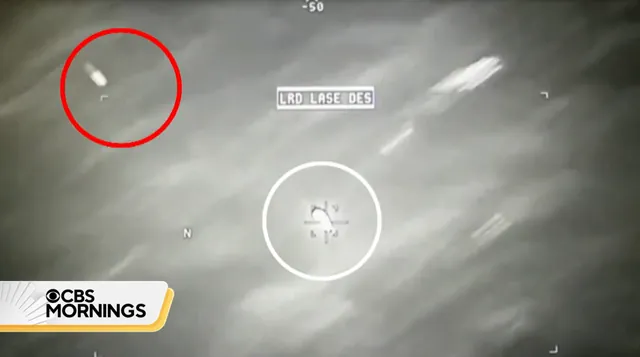
The centrepiece moment arrived when Rep. Eric Burlison introduced a video clip he said was captured by MQ‑9 Reaper drones during maritime overwatch near Yemen on October 30, 2024. The infrared video shows a UFO described as an “orb” moving above the sea. The American drone launches what Burlison described as a Hellfire missile. The missile appears to meet the object; the object continues. “I’m not going to explain it to you, you’ll see exactly what it does,” Burlison told the room.
Additionally, news network recaps and raw feeds circulated within hours. CBS News ran a 2:58 slab that most readers have now seen: “Newly released video at House UFO hearing appears to show U.S. missile striking and bouncing off orb”
Source: CBS News
Notably, The War Zone covered a different angle with an aviation‑operations lens: The outlet noted that the video—shown at the hearing—suggested MQ‑9 Reapers are now engaging aerial targets, something long discussed, but seldom seen. The piece emphasised that the clip’s provenance and interpretation remain unconfirmed, while flagging that MQ‑9s can carry AIM‑9X for counter‑UAS missions, even though AGM‑114 Hellfire is fundamentally designed for air‑to‑ground use. This represents an operational development of interest to any aerospace professional tracking ROE, fuze settings, and ISR/strike TTPs. — The War Zone: (The War Zone)
UAP transparency hearing: Who testified—four perspectives, one through‑line
The task force called five witnesses. Four told first‑person stories of encounters or long‑running reporting on UFO. One urged stronger protections so people can report without career retaliation.
Jeffrey Nuccetelli — Vandenberg’s “Red Square” and multiple incursions
Jeffrey Nuccetelli, a former U.S. Air Force military police officer, testified that five UAP incidents occurred in the 2003–2005 period at Vandenberg (now Vandenberg Space Force Base). “The incursions began on October 14, 2003, when Boeing contractors reported a massive, glowing red square silently hovering over two missile defense sites.” — Jeffrey Nuccetelli, written testimony.
Moreover, he told members that multiple witnesses, documentation, and internal reporting existed at the time. “Each incident was witnessed by multiple personnel, documented, investigated, and reported up the chain of command… We sent information up, but no guidance came down.” — Jeffrey Nuccetelli, written testimony.
Later that same night in 2003, he responded to an active situation at a launch site. According to Nuccetelli, guards described either a triangular or rectangular craft “larger than a football field” hovering silently for roughly 45 seconds before accelerating away at high apparent speed. — Jeffrey Nuccetelli, written testimony.
Additionally, Nuccetelli stated that Air Force law‑enforcement records were later destroyed according to retention schedules, complicating reconstruction of events. He said AARO informed him it could not locate relevant records. — House hearing page (witness roster and materials): (House Oversight Committee)
Aside: In base security, the only thing scarier than an unknown over the wire is a paper trail set to auto‑shred?
Senior Chief Alexandro C. Wiggins — USS Jackson (LCS‑6) and W‑291
Alexandro C. Wiggins, an active‑duty U.S. Navy Senior Chief (Operations Specialist), gave the most procedural account. He placed his observation at 19:15 PST, February 15, 2023, in warning area W‑291 off Southern California while serving aboard USS Jackson (LCS‑6). In his executive summary: “A self‑luminous, ‘Tic‑Tac’‑shaped object was observed emerging from the ocean (transmedium), then linking up with three similar objects. All four departed simultaneously in a highly synchronized, near‑instantaneous manner. No sonic boom or conventional propulsion signatures were observed.” — Alexandro C. Wiggins, written statement.
Crucially, Wiggins emphasised multi‑sensor data. He said radar tracked the objects and that video “was recorded inside CIC using a Star SAFIRE multi‑spectral EO/IR system; location and time stamps are visible in the source video frames published by journalists.” — Alexandro C. Wiggins, written statement. (more information regarding the Star SAFIRE made by Teledyne)
When asked what the public should take away from the Yemen clip and his own experience, Wiggins kept it pragmatic. The crews need to report without stigma, safeguard data, and keep the chain of custody intact from the first frame.
Dylan Borland — a 2012 Langley triangle and a decade of reprisals
Dylan Borland, a former 1N1 geospatial intelligence specialist who later analysed EO/IR and radar for defence contractors BAE Systems, described a 2012 encounter at Langley Air Force Base. “I saw an approximately 100‑foot equilateral triangle take off from near the NASA hangar on the base… It had no sound, and the material appeared fluid or dynamic.” — Dylan Borland.
Borland also alleged a long tail of career reprisals after he raised concerns and later spoke with the Intelligence Community Inspector General and AARO. He told the task force that AARO’s public stance amounted to “a misrepresentation of the truth” and a “manipulation of the public perception” when compared with what insiders had encountered and reported. — House hearing coverage and written testimony: (House Oversight Committee)
Aside: In intelligence work, “need‑to‑know” is vital; it becomes a problem when nobody seems to need to know.
George Knapp — who he is, and why he matters to this story
George Knapp is not a random commentator. He is the KLAS‑TV (Las Vegas) I‑Team reporter who, in 1989, brought Bob Lazar into public view and, for better or worse, etched Area 51 and S‑4 into popular culture. “Back in 1989, I was not aware that I was diving into the deep end of the pool when I reported about Bob Lazar and S‑4… KLAS News Director Robert Stoldal and I knew this investigation was risky… we approached it cautiously.” — George Knapp, written testimony.
Additionally, Knapp’s decades of UFO reporting sit alongside mainstream investigative work that earned Edward R. Murrow and Peabody awards. Knapp is among the best‑known UFO reporters, and the Bob Lazar specials he fronted at KLAS remain some of the most cited segments in UFO media history. — KLAS retrospective video (1989 Lazar interview), Simon & Schuster author page.
A look back at 1989 Bob Lazar interview; it started new UFO conversations (video below)
At this hearing, Knapp pressed three points. First, he argued that a paper trail extracted through FOIA ( Freedom of Information Act) shows officials privately acknowledging that some “craft” exhibit performance beyond known aeronautics.
Second, he said multiple crash‑retrieval and reverse‑engineering claims have circulated inside government and industry for decades.
Third, he accused government channels that interface with witnesses of dismissing or discrediting them. — George Knapp, written testimony and Military Veterans Testify on Witnessing Unidentified Anomalous Phenomena.
Aside: In journalism, your beat often becomes your biography; in Knapp’s case, he didn’t just cover the story—he helped create the modern conversation.
Joe Spielberger (POGO) — whistleblower protection is aviation safety
Finally, Joe Spielberger, Senior Policy Counsel at the Project On Government Oversight (POGO), brought the hearing back to process. “Whistleblowers are often unjustly smeared… Targeting whistleblowers instead of the corruption they expose wastes agency resources and further allows that corruption to continue unaddressed”.
Moreover, Spielberger argued that national‑security whistleblowers face fewer safe channels and greater retaliation risk than civilian employees. Consequently, they need stronger legal routes and independent enforcement. For aviation, the point is obvious: if reporting carries career threat, data disappears. — Joe Spielberger, written testimony.
UAP transparency hearing: What the Yemen clip does—and does not—tell us
Technically, the clip offers several operational signals without settling the ontology debate.
First, we see MQ‑9 EO/IR tracking an object over water, followed by what is presented as an AGM‑114 engagement by a separate Reaper. There is no audio, no displayed fuze setting, and no telemetry, but the visual suggests a proximity event or a near‑miss that the room interpreted as a direct strike. The object’s apparent trajectory and speed do not show obvious post‑event deviation in the released video segment.
Second, the clip’s provenance matters as much as the pixels. Burlison introduced it as material he had been given; journalists and outlets then mirrored it. Without sensor metadata, weapon logs, and chain‑of‑custody documentation, no one outside the cleared community can authenticate the geometry, range, fuze, or aimpoint. That is why Wiggins and others focused on metadata preservation.
Third, several analysts have offered kinematics and fuze‑behaviour hypotheses in open media. Those readings differ in tone but converge on a principle: moving‑platform imagery can mislead human pattern recognition, especially when the line‑of‑sight and weapon trajectories intersect at range. None of that erases what the hearing presented; it frames what the public can infer until metadata and long‑form IR are released.
UAP transparency hearing: Limits of a short IR clip
Popular Mechanics argues the “Yemen orb” clip likely shows a balloon torn by a Hellfire (probably a non‑explosive R9X variant), with camera parallax creating the illusion of a missile “bouncing off,” and notes the U.S. Army hasn’t authenticated the video. Popular Mechanics says the most likely target was a balloon, with parallax making a non‑explosive Hellfire hit look like a bounce. Physicist Fred Lamb, PhD (University of Illinois; chaired an American Physical Society ballistic‑missile study) points to the R9X Hellfire possibility: blades tear a soft target, debris drifts, and no fireball appears. — Popular Mechanics: Science reveals how we see the world differently through a moving camera – A Missile Mysteriously Collided with a UFO. An Expert Finally Reveals the Truth About What Happened That Day.
Aside: It’s amazing how often the fog of war is really the fog of frame rate.
Witnesses’ AARO critiques—verbatim and on the record
Although the hearing’s heart was first‑person testimony and a public clip, multiple participants criticised AARO (the Pentagon’s All‑domain Anomaly Resolution Office) from the dais.
“I had reservations with [AARO] due to assessments they were reporting publicly at the time as a misrepresentation of the truth.” — Dylan Borland
“AARO’s public framing is… a manipulation of the public perception.” said Dylan Borland.
“It almost looks like AARO operated as a counterintelligence operation to get people to come in, tell their stories, and then discredit all of them… I can’t imagine that any whistleblower or witness will ever go to AARO again because of what happened under the first director.” — George Knapp.
“Last year, we were blocked by someone in House Administration from being able to receive a full briefing from AARO.” — Rep. Eric Burlison.
Context: AARO’s published baseline—outside the hearing—states that, to date, it has found no verifiable evidence of extraterrestrial beings, activity, or technology. This article centres the hearing, but readers may wish to consult AARO’s official documents listed in Sources.
Aside: In air safety, “trust but verify” only works when someone lets you verify.
Technical context for aerospace readers (why this isn’t just cable‑news fodder)
Aviation professionals don’t need persuading that sensor discipline and data custody matter. However, this hearing placed those basics on the public record in a way that general readers can follow.
Sensors and settings. Witnesses stressed the importance of capturing IR settings, slant‑range estimates, and bearing/range/altitude snapshots. Wiggins specifically referenced Star SAFIRE EO/IR capture in CIC with time/location overlays. For any future public release, those fields—and the fuze program on any weapon—are what let analysts run meaningful tests rather than argue about compression artefacts.
Chain of custody. Several witnesses asked for immediate chain‑of‑custody transfer when crews capture anomalous data. That one step prevents disputes about edits, copies, and selection. In safety work, a clean chain is not a luxury; it is the only path to credible analysis.
Stigma‑free reporting. Wiggins asked for reporting without stigma, protection without retribution. Spielberger argued for stronger legal protection. Nuccetelli described how retention schedules and a lack of guidance downstream made reconstruction difficult years later. The aviation analogue is obvious: if a FOQA‑class dataset dies in a drawer, the next crew inherits the risk.
Aside: Pilots don’t fear the unknown; they fear bad data about the unknown.
UAP transparency hearing: What witnesses asked Congress to do (action items, not absolutisms)
Beyond the Yemen clip, each witness offered practical steps.
Fund independent research. Nuccetelli urged Congress to “fund independent research and treat UAP study with the same seriousness as we would any other scientific field.”
End over‑classification and protect witnesses. Multiple witnesses called for reduced over‑classification and stronger witness protections. Spielberger outlined concrete legal fixes to strengthen whistleblower channels and independent enforcement—particularly for those with clearances.
Declassify where possible. Wiggins asked for declassification of sensor excerpts and technical summaries where OPSEC permits, so outside scientists can test claims. That recommendation is compatible with standard defence practice: redact sources and methods, release bounded metadata.
Why Bob Lazar still shows up
Readers newer to UAP reporting sometimes ask why Bob Lazar resurfaces in modern hearings. The short answer is history. In 1989, Knapp aired Lazar’s allegations of working on captured craft at a site he called S‑4 near Area 51, first anonymously, then on camera under his name. The segments became a cultural inflection point that helped define today’s UFO conversation. (see higher the KLAS retrospective; George Knapp and Bob Lazar – video)
Whether one accepts Lazar’s claims or not, three things are true. First, Knapp is a household name in UFO journalism. Second, the Bob Lazar specials he fronted at KLAS remain widely cited. Third, supporters point out that in the 36 years since Lazar’s 1989 interview, none of his core claims has been conclusively disproved in open sources. One early detail—the bone‑length Identimat 2000 hand‑scanner he described, a device developed since the early ‘70s for high security access control—has since surfaced on the internet in period photos and reporting about security devices in used in the military, matching his description and the image shown to him in Jeremy Corbell’s 2018 film. (references in Sources below)
Aside: In aerospace, legends fly fast; the trick is figuring out which ones leave contrails.
How aviation should read the hearing
First, take the sensor message seriously. Witnesses with watchstanding and analysis backgrounds aren’t asking for belief; they are asking for quality control: capture full IR settings, estimate range and altitude, and secure chain‑of‑custody at the moment of observation.
Second, recognise the reporting message. If crews perceive a career penalty for reporting anomalies, the industry loses data that could improve air‑space deconfliction, range safety, and flight planning near dynamic military areas such as W‑291.
Third, understand the policy message. The most combustible claims will always grab headlines. However, the durable takeaway is procedural: records policies, retention schedules, and classification decisions can make or break event reconstruction.
Aside: The difference between mystery and myth is often a timestamp and a lat/long.
UAP transparency hearing: Conclusion
Overall, the UAP transparency hearing pressed two messages at once. First, witnesses said they saw what they saw—or in the case of the Yemen clip, that we all saw what we saw. Second, they argued for standardised capture, protection for reporters, and bounded declassification, so experts can test claims instead of trading screenshots on social media. Consequently, the debate is no longer just about belief; it is about process.
In my view, the aviation community has been here before. Flight safety matured when we learned to treat data with discipline and crews with dignity. The same approach fits this file. If Congress can deliver cleaner channels and agencies can deliver cleaner datasets, we will all get closer to the truth—whatever it turns out to be.
So, will we design a system that captures the next Yemen‑class event with enough fidelity to end the argument—or will we let the pixels win again?
UFOs don’t have ADS-B, yet.
US House hearing (video/coverage)
Further reading from Fliegerfaust
- Boeing F-47: America’s Next-Generation Air Dominance Fighter
- Bombardier BACN delivery: 9th Global Jet Strengthens USAF’s ‘Wi‑Fi In The Sky’ Network
- South Korea Global 6500: Inside Seoul’s Phoenix AEW&C Decision
- Bombardier Defence News: Global 6500 and Challenger 3500
The UAP Witness That Didn’t Testify – Congress Wanted You To Hear This
UAP transparency hearing: Sources
- House Oversight Committee — Restoring Public Trust Through UAP Transparency and Whistleblower Protection (September 9, 2025).
- C‑SPAN — Military Veterans Testify on Witnessing Unidentified Anomalous Phenomena (September 9, 2025).
- CBS News — Video raises questions at House hearing on UFOs (September 10, 2025).
- ABC News — Congressman shows never‑before‑seen video at military UFO hearing (September 9, 2025).
- The War Zone — Revelation That MQ‑9 Reapers Are Now Engaging Aerial Targets Comes From UAP Hearing (September 9, 2025).
- Popular Mechanics — A Missile Mysteriously Collided with a UFO. An Expert Finally Reveals the Truth (October 3, 2025).
- KLAS‑TV (8 News Now) — I‑Team: A look back at the 1989 Bob Lazar interview (video).
- Simon & Schuster — George Knapp: Official Author Page.
- Project On Government Oversight — Joe Spielberger Written Testimony (September 9, 2025).
- The War Zone — F‑117 Program Used These Futuristic Hand Scanners While Highly Classified in the ’80s (Feb. 5, 2018).
- U.S. Air Force — Base accessed by hand scanner (June 24, 2003).
- People — The Storming of Area 51: A Covert Journey… (Jan. 13, 2020) — notes Corbell presenting Lazar with a period photo of the same model.
For full details, please refer to our Disclaimer page
Hearings like this are fascinating, arent they? All that technical jargon about sensor settings and chain of custody, mixed with tales of triangular craft and career reprisals. It’s like a modern-day flying saucer version of Who’s Afraid of Virginia Woolf?. But seriously, the emphasis on metadata and proper data handling is spot on – sounds like basic aerospace hygiene, yet it seems to be the cosmic equivalent of losing the flight logs. And lets not forget poor Bob Lazar; hes the UFO communitys own enduring urban legend, resurfacing like a persistent sonar ping. It’s a reminder that while the truth might be out there, getting a clear, authenticated signal can be its own frustrating mission.
Great take. I’m with you on the ‘aerospace hygiene’ piece: without sensor settings and clean chain-of-custody, we’re just arguing over compressed pixels. On Bob Lazar, I agree he’s become an enduring reference point in this topic, whether one takes his claims literally or sees them as cautionary lore, he still frames the conversation. And George Knapp’s role matters here: his investigative work is a big reason Lazar’s story entered the public record in the first place, and he’s continued to push for documentable evidence over anecdotes. If we want real clarity going forward, it’s exactly what you highlight, capture the metadata, protect witnesses, and release verifiable records, so we can trade legends for data.
Thanks for reading and for the thoughtful comment!
SF
Since the introduction of the iPhone almost 20 years ago most people are now walking around day and night with a camera capable of photographing and filming a UFO, if such a thing exists. Yet, we did not notice a notable increase in sightings since that time, and if anything probably less than we did in the previous century, particularly the second half. I am not expressing an opinion here, only showing that there is not as much evidence as one would expect if this phenomenon is real.
Fair point. I’ve been thinking along those lines too: with cameras in every pocket, why do we still rarely get anything truly clear? The Navy ‘Tic Tac’ footage, for example, doesn’t show the extreme G-forces or abrupt direction changes often discussed, those come from pilot/radar accounts, not the public video itself. That gap between expectation and evidence is exactly why I keep pushing for better data capture (metadata, multi-sensor corroboration, clean chain of custody). Thanks for laying it out so clearly, and thanks for reading.
Hey I am so excited I found your website, I really found
you by mistake, while I was looking on Digg for something else, Nonetheless I am here now and would just like
to say thank you for a fantastic post and a all round exciting blog (I also love the theme/design), I don’t have time to browse it all at the minute but I have book-marked it and also included your RSS feeds,
so when I have time I will be back to read a lot more, Please do keep up the superb work.
Way cool! Some very valid points! I appreciate you penning this post
and also the rest of the site is extremely good.
I like it when people come together and share opinions.
Great site, continue the good work!
I’ve been browsing on-line more than three hours today,
yet I by no means discovered any interesting article like yours.
It’s lovely worth enough for me. In my view, if all website
owners and bloggers made excellent content as you did, the internet will likely be a
lot more useful than ever before.
I’d like to thank you for the efforts you’ve put in penning this website.
I’m hoping to check out the same high-grade content by you in the future as well.
In truth, your creative writing abilities has inspired
me to get my own site now 😉