


Volatus Mirabel hub: what, exactly, has changed since our October 22, 2025 report on the drone project at Montréal–Mirabel International Airport (YMX)? Since then, the public record has become much richer.
Volatus Mirabel hub: On October 21, 2025, Volatus Aerospace announced a 200,000-square-foot secure innovation centre and manufacturing hub at Mirabel. The project targeted Canadian production and allied demand, according to Volatus Aerospace’s October 21, 2025 GlobeNewswire announcement. Since that day, the story has shifted from a promising headline to a test of capital, policy alignment, and industrial execution.
Moreover, the wider environment has changed just as quickly. Ottawa has launched the Defence Investment Agency, published Canada’s first Defence Industrial Strategy, and pushed harder on sovereign production, supply-chain resilience, and faster procurement, as shown by Public Services and Procurement Canada’s Defence Investment Agency backgrounder and National Defence’s Defence Industrial Strategy page. Meanwhile, demand from the North Atlantic Treaty Organization (NATO), Ukraine’s battlefield lessons, and Canada’s renewed interest in domestic aerospace capacity have all sharpened the Mirabel question. Instead, the issue is no longer whether the concept sounded attractive in October 2025. The issue is whether the Volatus Mirabel hub now looks materially more real.
Overall, the answer is yes, but with limits. Specifically, the project has advanced through acquired aircraft technology, fresh financing, engineering relocation, NATO-linked business, and policy tailwinds. However, the public record still stops short of proving full-rate production at Mirabel. Aerospace likes ambition. It prefers invoices, tooling, and delivery slots.
Volatus Mirabel hub: from launch claim to funded programme
Mirabel manufacturing hub moved from concept to product transfer
Initially, Volatus described Mirabel as a made-in-Canada hub for serial production, rapid integration, export compliance, and quality control. That was important, but it was still an announcement.
Readers can compare that first framing with our earlier Fliegerfaust analysis of the original Volatus Mirabel announcement.
However, the first substantive development arrived on October 27, 2025. Volatus said it had acquired a suite of remotely piloted aircraft system technologies from United Kingdom-based Caliburn Holdings LLP. The company also said the aircraft family would be manufactured and integrated in Canada, according to Volatus Aerospace’s October 27, 2025 GlobeNewswire release.
Notably, the acquisition added more than a product line. Volatus said the package included three modular uncrewed aircraft systems with maximum takeoff weights from 100 kilograms to 265 kilograms. Payload capacity ranged from 15 kilograms to 50 kilograms. Endurance ranged from 12 hours to seven days. That gave Mirabel a much firmer industrial purpose.
Additionally, the same release tied Mirabel to engineering records, test data, documentation, and certification work. It also said the original United Kingdom engineering team would relocate to Mirabel for production, testing, and certification. “This acquisition represents more than just new aircraft, it’s about building sovereign capability.” — Glen Lynch, Chief Executive Officer of Volatus Aerospace
Meanwhile, that relocation language mattered more than the headline did. It suggested that Mirabel would not merely receive crates and instructions. It would receive design authority, engineering continuity, and certification responsibility. In aerospace, that is the difference between assembling furniture and building a factory.
Moreover, the original October 21 release had already pointed in that direction. It described Mirabel as the anchor for Canadian-made, defence-grade drones and rapid integration of payloads and mission kits.
“By combining an Innovation Centre for rapid integration and qualification with a dedicated Manufacturing Hub for serial production, Mirabel will become our anchor for Canadian-made, defence-grade drones.” — Glen Lynch, CEO of Volatus Aerospace Inc.
Mirabel drone hub then got real financing
Moreover, factory stories become more credible when the capital stack begins to match the rhetoric. Therefore, the next important development was financing. On November 10, 2025, Volatus said it was arranging additional financing that would bring combined proceeds to more than C$24.6 million. The Mirabel Manufacturing Hub appeared explicitly among the intended uses, according to Volatus Aerospace’s November 10, 2025 GlobeNewswire corporate update.
Additionally, on November 26, 2025, the company closed the bought deal public offering and private placement. Gross proceeds reached C$26,391,500. Volatus said the funds would support Mirabel hub development, defence-oriented drone research and development, acquisitions, capital expenditures, and working capital, according to Volatus Aerospace’s November 26, 2025 GlobeNewswire financing close.
Consequently, the project stopped looking like a headline in search of a budget. It still had to prove execution. Yet it now had identified capital attached to identified industrial work. Aerospace rarely fails from lack of adjectives. It usually fails from lack of cash, customers, or certification discipline.
Separately, the company’s December 1, 2025 financial results helped explain why the financing landed at all. Volatus reported year-to-date revenue of C$26,905,671 and quarterly revenue of C$10,605,438. Equipment sales rose 427 percent in the quarter because of defence demand. Cash climbed to about C$40 million after later financing events, according to Volatus Aerospace’s December 1, 2025 GlobeNewswire financial results.
Notably, those numbers do not prove that Mirabel is already operating at scale. However, they do show that the company entered 2026 with more liquidity, more revenue, and a clearer defence sales story than it had on October 21, 2025. That matters because industrial credibility is easier to fund than industrial fiction.
Volatus Mirabel hub and Ottawa’s new defence math
Mirabel innovation centre meets the Defence Investment Agency
Meanwhile, the company story explains only half of the shift. The other half is policy. On October 2, 2025, Canada formally created the Defence Investment Agency inside Public Services and Procurement Canada. The agency was designed to centralize expertise, cut duplicative steps, and speed defence procurement, according to Public Services and Procurement Canada’s October 2, 2025 backgrounder on the Defence Investment Agency.
Notably, that move arrived before the industrial strategy. Even so, it sent a signal to suppliers. Ottawa wanted speed, readiness, and deliverable capacity, not just policy theatre. Ottawa finally seems to prefer delivery schedules to ribbon-cutting schedules. Companies with secure facilities, accredited processes, and real products suddenly looked better positioned than companies still selling concept slides.
Moreover, on February 17, 2026, the Government of Canada published its first Defence Industrial Strategy. The framework was built around “Build-Partner-Buy.” It called for stronger domestic output, more resilient supply chains, and closer alignment between procurement and Canadian industrial capability, according to Canada’s Defence Industrial Strategy page.
Additionally, the same day, the Prime Minister’s office added numerical weight to that policy change. Ottawa said the strategy is meant to position Canadian industry for C$180 billion in defence procurement opportunities over the next decade. It also pointed to C$290 billion in defence-related capital investment opportunities. It also targeted 70 percent of defence acquisitions for Canadian firms and 125,000 high-paying careers, according to the Prime Minister of Canada’s February 17, 2026 announcement.
Meanwhile, Reuters supplied the sharper interpretation. Ottawa is trying to reduce reliance on the United States defence industry and push more work toward Canadian firms, as reported by Reuters on February 17, 2026. That makes the timing of Mirabel harder to dismiss as coincidence. Canada’s new procurement language now sounds a lot like Volatus’s October talking points.
Volatus Mirabel hub aligns with Build-Partner-Buy
Consequently, Volatus moved quickly to frame Mirabel as part of Ottawa’s new industrial push. On February 17, 2026, the company said Mirabel had become its Québec base for expanding manufacturing and integration work in a more secure operating environment. It also said it had lined up a separate Québec facility and expected to spend more than C$10 million in the near term to increase production and integration capacity, according to Volatus Aerospace’s February 17, 2026 GlobeNewswire policy response.
However, the most revealing part of that release was its tone. Volatus did not speak only about aircraft. It emphasized regulated aerospace operations, remote command-and-control capability, secure environments, governance, compliance, and funding readiness. In other words, it was pitching Mirabel as industrial infrastructure, not as a drone showroom.
Moreover, two days later, Volatus repeated that same argument in an investor briefing notice. It said sovereign capability would favour firms with approvals, secure infrastructure, operating history, and capital readiness, according to Volatus Aerospace’s February 19, 2026 GlobeNewswire investor briefing notice.
Accordingly, the Volatus Mirabel hub now sits in a friendlier policy climate than it did in October 2025. The project was initially framed as sovereign, domestic, and NATO-aligned. By February 2026, Ottawa had elevated those same themes into formal industrial policy. That does not guarantee orders. Yet it does narrow the gap between what Volatus wants to build and what Canada now says it wants to buy.
Even so, policy tailwinds are not purchase orders. Canada’s procurement record remains full of brave words and slow delivery. For context on how Ottawa’s aerospace choices can sideline domestic industry, see our Fliegerfaust analysis of Canada’s P-8A Poseidon sole-source procurement. Strategy is valuable. Signed work orders are better.
Volatus Mirabel hub and the NATO demand signal
Mirabel manufacturing hub sits behind two NATO-linked contracts
Meanwhile, policy explains the backdrop, but demand explains the business case. On December 15, 2025, Volatus announced a defence contract worth up to C$9 million to deliver a next-generation interim training system for intelligence, surveillance and reconnaissance operations to an allied defence organization. The first tranche, worth about C$4.5 million, was scheduled for first-quarter 2026 delivery, according to Volatus Aerospace’s December 15, 2025 GlobeNewswire contract announcement.
Notably, that was not a Mirabel production order. However, it did strengthen the logic for Mirabel. It showed actual allied demand for training systems, documentation, support, and unmanned capability that can work inside NATO expectations. “Uncrewed ISR capability is now fundamental to modern defence readiness.” — Glen Lynch, Chief Executive Officer, Volatus Aerospace
Additionally, on February 9, 2026, Volatus announced a second NATO-linked contract. This one covered advanced drone-operations training tailored to austere and remote operating conditions. Fulfilment was expected during fiscal 2026, according to Volatus Aerospace’s February 9, 2026 GlobeNewswire training contract release.
Consequently, the pattern deserves attention even if the contracts are not Mirabel-specific. They place Volatus more deeply inside NATO-oriented readiness, training, and operational support. Once a company starts winning that kind of work, the case for domestic integration, production control, and configuration management gets much stronger.
Moreover, the governance story widened as well. On December 4, 2025, Volatus appointed retired Lieutenant-General Christopher J. Coates to its board of advisors, according to Volatus Aerospace’s December 4, 2025 GlobeNewswire advisory board announcement. That move did not manufacture a drone. Yet it did help the company look more legible to defence audiences. Alliances admire interoperability. Invoices remain wonderfully national.
Mirabel drone hub, Ukraine and the supply-chain lesson
Moreover, the NATO angle matters because Ukraine has forced the alliance to rethink drone warfare, survivability, and production scale. On November 26, 2025, NATO and Ukraine launched UNITE – Brave NATO, a joint innovation effort meant to move promising defence technologies closer to operational use. Its first call centred on anti-drone tools, air-defence reinforcement, and protected frontline communications. NATO and Ukraine said the opening round would distribute EUR 10 million in combined grants, with later phases potentially rising to EUR 50 million in 2026, according to NATO’s November 26, 2025 UNITE – Brave NATO announcement.
Accordingly, Ukraine is not just background scenery in this story. It is one of the reasons NATO now thinks differently about scale, adaptation, repair cycles, and component vulnerability. Ottawa’s own Defence Industrial Strategy connects industrial reform to a harsher security environment and more fragile supply chains, according to the National Defence strategy page.
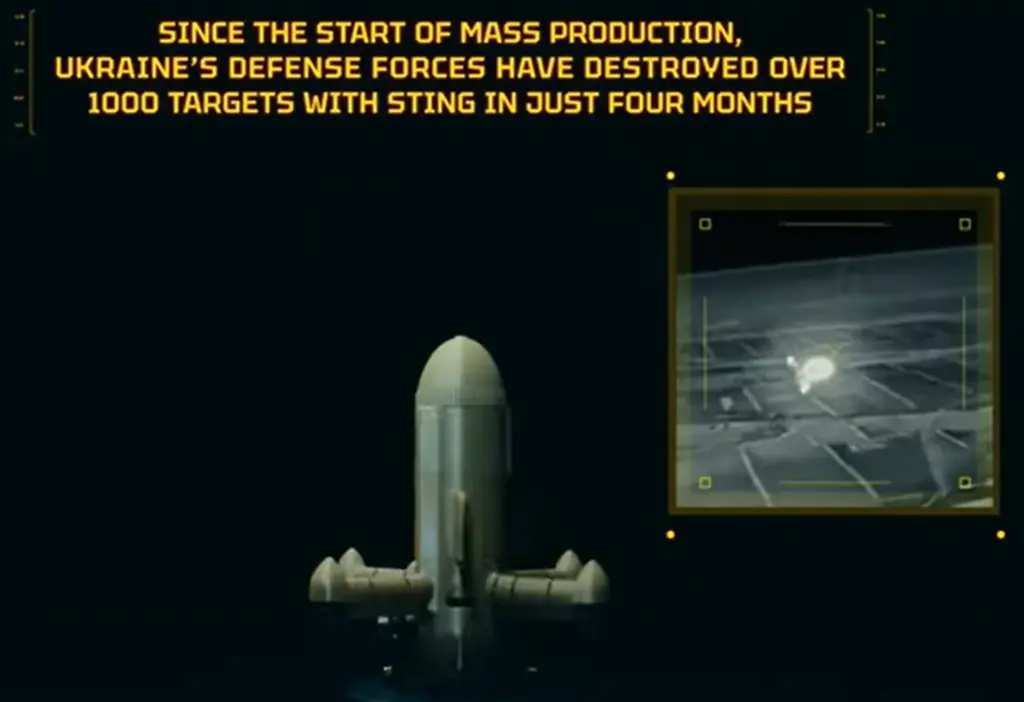
Notably, that shift is now visible in procurement discussions outside Europe as well. On March 5, 2026, Reuters reported that the United States and Qatar were exploring with Kyiv whether Ukrainian interceptor drones and related anti-drone tools could offer a lower-cost response to Iranian-designed Shahed drones attacks after the United States and its Gulf partners had used large numbers of expensive air-defence missiles. That does not place Volatus or Mirabel inside those talks. However, it does strengthen the case for Canada to build affordable, scalable uncrewed and counter-uncrewed capability at home.
Additionally, outside analysis points in the same direction. In a December 17, 2025 commentary, the Royal United Services Institute argued that Ukraine’s drone war shows why component supply, not just platform design, determines battlefield resilience, according to the Royal United Services Institute’s December 17, 2025 commentary.
Therefore, the industrial case for Mirabel is not only about airframes. It is also about who controls the documentation, the software loads, the integration sequence, the export compliance record, and the supply chain for high-value subsystems. Those are exactly the questions Ukraine has forced NATO to ask with new urgency.
Even so, discipline matters here. A Canadian plant is not automatically a sovereign supply chain. Batteries, avionics, sensors, links, propulsion units, and software modules can still come from foreign suppliers. Therefore, the real test for the Volatus Mirabel hub is not whether it invokes Ukraine and NATO. It is whether it steadily localises higher-value work instead of merely assembling imported content under a Canadian roof.
Volatus Mirabel hub inside Mirabel’s wider aerospace cluster
Mirabel innovation centre has an address, not just a slogan
One reason this story deserves serious attention is geography. Mirabel is not a random industrial park. In May 2024, Québec launched Espace Aéro, its fourth innovation zone, spanning Longueuil, Mirabel, and Montréal. The plan carried total announced investment of C$415 million, including C$85 million from the provincial government. The Mirabel pole was explicitly defined around autonomy, testing, experimentation, simulation, and aircraft activity, according to Québec’s May 21, 2024 Espace Aéro announcement.
Consequently, Volatus did not invent the Mirabel drone narrative out of thin air. It inserted itself into a provincial industrial geography that was already built around aerospace concentration, testing space, and supply-chain depth. In aviation, the shortest distance between two suppliers is often a taxiway.
Meanwhile, the City of Mirabel reinforced that point on October 24, 2025. The municipality said Volatus would establish itself inside the airport’s innovation centre and support serial production for Canadian and NATO requirements, according to the City of Mirabel’s October 24, 2025 announcement.
Moreover, Mirabel already sits inside a dense aerospace ecosystem. Airbus Canada assembles the A220 there. Bell has a major helicopter campus there. L3Harris MAS, MHI RJ Aviation, and Pratt & Whitney Canada also give the airport region a strong industrial identity. That cluster does not guarantee success. It does mean Mirabel already has the workforce, infrastructure, and regulatory habits that complex aerospace projects need.
Why the Mirabel manufacturing hub matters for certification and scale
Additionally, the Mirabel location matters for practical reasons. The airport offers industrial space, operational separation from heavy passenger traffic, a local talent pool, and neighbours that understand aerospace compliance. Those conditions are hard to replicate in a generic business park.
Moreover, Mirabel’s role inside Québec’s wider aerospace story is already well established. For broader context on the airport’s advanced aeronautical ecosystem, see our Fliegerfaust report on Airbus’s Mirabel-based non-CO2 emissions study. The point is not that a drone hub equals an airliner programme. The point is that Mirabel already provides the testing, certification culture, and industrial habits that advanced aerospace work demands.
However, a strong postal code is not the same as a moat. Execution still depends on accreditation, workforce transfer, engineering maturity, supplier management, and customer conversion. The October 27 acquisition helped because it brought actual aircraft designs and engineers. The February 23, 2026 chief technology officer announcement helped because it tied Mirabel to unified engineering leadership across Canada, the United States, and the United Kingdom, according to Volatus Aerospace’s February 23, 2026 GlobeNewswire chief technology officer announcement.
Notably, that February 23 release used careful language. It said Volatus had “initiated plans” to launch manufacturing, assembly, and integration activity in Mirabel. That phrase signals movement. However, it does not read like a formal declaration that full-rate production is already under way. Aerospace grammar can be almost as revealing as aerospace hardware.
Volatus Mirabel hub beyond one factory story
Volatus drone project is now also software, cargo and integration
Therefore, another change since October 2025 is breadth. Volatus is no longer telling only a factory story. On January 27, 2026, the company said it was advancing its partnership with Dufour Aerospace to develop runway-independent cargo capability for Arctic, defence, and commercial operations. It also said a dedicated simulator had been installed in Toronto, according to Volatus Aerospace’s January 27, 2026 GlobeNewswire Dufour update.
Consequently, the company’s defence proposition now reaches beyond fixed-wing drones. It also touches logistics, Arctic support, and training. That wider capability set could make Mirabel more valuable as an integration point across several product families, not one single-purpose line.
Moreover, on March 2, 2026, Volatus launched SKYDRA, described as its first software-as-a-service platform for counter-drone planning and simulation. The company said the system supports structured planning, simulation, and readiness exercises in a secure virtual environment, according to Volatus Aerospace’s March 2, 2026 GlobeNewswire SKYDRA announcement.
Accordingly, Mirabel may become more than a manufacturing site. It may become one node inside a vertically integrated defence aviation business that combines hardware, software, training, simulation, and operations. A modern defence company no longer lives on aluminium alone.
Separately, on March 4, 2026, Volatus said it would acquire the remaining minority interest in Synergy Aviation. The company said full ownership would tighten coordination across crewed aircraft, remotely piloted systems, training, engineering, and manufacturing, according to Volatus Aerospace’s March 4, 2026 GlobeNewswire Synergy transaction announcement.
Additionally, that broader integration story matters for Canada. For context on how Bombardier’s Global 6500 platform has become central to allied surveillance and special-mission fleets, see our Fliegerfaust report on the HADES Global 6500 programme. Mirabel does not have to copy that model to learn from it. However, it does need to show that Canadian aerospace can connect platforms, data, training, and sustainment into one disciplined proposition.
Volatus Mirabel hub also needs management and capital-market proof
Accordingly, corporate structure matters almost as much as engineering. On February 23, 2026, Volatus appointed Krish Srinivasan as chief technology officer and tied the role to sovereign autonomy, counter-drone capability, and production readiness, according to that February 23 chief technology officer announcement.
Additionally, on February 26, 2026, the Toronto Stock Exchange conditionally approved Volatus’s graduation from the TSX Venture Exchange to the senior Toronto Stock Exchange, according to Volatus Aerospace’s February 26, 2026 GlobeNewswire Toronto Stock Exchange announcement. The move remained subject to standard remaining conditions.
Notably, that milestone was still conditional as of March 6, 2026. Even so, it suggested that Volatus wants to be seen less as a speculative drone name and more as an institutional aerospace company. Defence customers care about durability, governance, and balance-sheet resilience almost as much as they care about payload capacity.
However, the gap in the public record remains important. As of March 6, 2026, Volatus had announced financing, acquired designs, relocated engineering talent, added NATO-linked business, widened into software, and initiated Mirabel manufacturing plans. What it had not yet publicly announced was equally revealing: a named Mirabel production contract, a formal opening event proving full industrial operation, or public evidence that serial production from Mirabel was already running at meaningful scale.
Therefore, the Volatus Mirabel hub is easier to take seriously than it was in October 2025. Yet it is still a project in execution, not a project already proven by high-volume output. That distinction is not hostile. It is simply adult aerospace reporting.
Conclusion: Volatus Mirabel hub now faces the test that matters
Canada does not need another elegant aerospace announcement. It needs proof that a domestic uncrewed aircraft programme can move from strategy, financing, and policy alignment into repeatable industrial output. On that measure, the Volatus Mirabel hub now deserves serious attention. It is no longer just a speculative concept. It sits at the intersection of NATO demand, Ukraine’s harsh industrial lessons, Québec’s aerospace depth, and Ottawa’s new language about sovereign capability.
However, the real issue is no longer whether Mirabel sounds strategic. It does. The real issue is whether Canada is finally prepared to back that strategy with procurement discipline, supply-chain localisation, certification speed, and sustained orders. If Mirabel becomes mainly an assembly point for imported subsystems, the sovereignty argument will look thinner than the rhetoric. If it becomes a true centre of design authority, integration, testing, support, and production, then this project could mark a meaningful shift in Canadian aerospace policy.
That is why the next questions matter more than the next press release.
- Will Ottawa actually buy at home when the political and procurement pressure arrives?
- Will Volatus show evidence of real production tempo, not just infrastructure and intent?
- Will Mirabel control the high-value parts of the chain, or mostly package work designed elsewhere?
- And in a market shaped by NATO urgency and Ukraine’s battlefield realities, can Canada build a drone ecosystem that is operationally relevant, exportable, and durable?
Mirabel may yet become a serious test case for whether Canada wants aerospace sovereignty in practice or only in headlines. The opportunity is real. The timing is favourable. The language is finally aligned. But will this be the moment Canada builds a true domestic drone capability, or merely another moment when policy ambition lands well before industrial proof?
Leave your answers and comments below and on our Fliegerfaust Facebook page.
Sources
- GlobeNewswire — Volatus Aerospace to Launch Innovation Centre and Drone Manufacturing Hub at Mirabel to Strengthen Canada’s Defence Readiness and Support NATO Allies (October 21, 2025).
- GlobeNewswire — Volatus Aerospace Acquires Strategic Dual-Use UAS Technology to Support Canada’s Sovereign Capability and Allied Defense Requirements Worldwide (October 27, 2025).
- GlobeNewswire — Volatus Aerospace Inc. Announces Non-Brokered Private Placement of Up to $4.66 Million, Bringing Total Financing to Over $24.6 Million & Provides Corporate Update (November 10, 2025).
- GlobeNewswire — Volatus Aerospace Closes $26,391,500 Bought Deal Public Offering and Non-Brokered Private Placement (November 26, 2025).
- GlobeNewswire — Volatus Aerospace Releases Record Third Quarter Financial Results (December 1, 2025).
- GlobeNewswire — Volatus Aerospace Appoints Lieutenant-General (Ret’d) Christopher J. Coates to Board of Advisors (December 4, 2025).
- GlobeNewswire — Volatus Aerospace Awarded $9M Defence Contract from NATO Partner, Accelerating Growth in Uncrewed Systems (December 15, 2025).
- GlobeNewswire — Volatus Advances Dufour Aerospace Partnership to Develop Runway-Independent Cargo Capabilities for Arctic, Defence, and Commercial Operations (January 27, 2026).
- GlobeNewswire — Volatus Secures Drone Training Contract with NATO Defence Partner (February 9, 2026).
- GlobeNewswire — Volatus Aerospace Inc. Highlights Established Infrastructure, Financial Readiness, and Operational Execution Following Canada’s Defence Industrial Strategy (February 17, 2026).
- GlobeNewswire — Volatus Aerospace Inc. Announces Investor Briefing on Canada’s Defence Industrial Strategy and Operational Readiness in Sovereign Uncrewed Systems and Provides Corporate Update (February 19, 2026).
- GlobeNewswire — Volatus Aerospace Appoints CTO to Accelerate Sovereign Autonomy and Defence Capabilities (February 23, 2026).
- GlobeNewswire — Volatus Aerospace Receives Conditional Approval to Graduate to the Toronto Stock Exchange (February 26, 2026).
- GlobeNewswire — Volatus Aerospace Launches SKYDRA™, a Counter-Drone Platform (March 2, 2026).
- GlobeNewswire — Volatus Aerospace to Achieve Full Ownership of Synergy Aviation and Consolidate Commercial Aircraft Operations (March 4, 2026).
- Government of Canada — Backgrounder: Defence Investment Agency (October 2, 2025).
- Government of Canada — Security, Sovereignty and Prosperity (February 17, 2026).
- Prime Minister of Canada — Prime Minister Carney launches Canada’s first Defence Industrial Strategy to strengthen security, create prosperity, and reinforce strategic autonomy (February 17, 2026).
- Reuters — Canada, seeking to cut reliance on US arms, plans to boost defense output (February 17, 2026).
- NATO — NATO and Ukraine announce new joint-initiative to accelerate defence innovation: UNITE – Brave NATO (November 26, 2025).
- Royal United Services Institute — Drones Win Battles, Components Win Wars (December 17, 2025).
- Gouvernement du Québec — Lancement de la 4e Zone d’innovation Québec – Création d’une zone d’innovation en aérospatiale à Longueuil, Mirabel et Montréal (May 21, 2024).
- Ville de Mirabel — Mirabel accueille le nouveau Centre d’innovation et le pôle de fabrication de drones (October 24, 2025).
For full details, please refer to our Disclaimer page.