


Volatus Mirabel innovation centre—what does a 200,000‑square‑foot manufacturing push mean for Quebec’s aerospace ambitions and for NATO‑aligned drone supply chains?
Montréal–Mirabel International Airport (YMX) has spent two decades reinventing itself as a production, MRO, and cargo platform for Greater Montreal. Now, a new piece snaps into place.
Volatus Aerospace has announced plans to establish an innovation centre and a serial‑production drone manufacturing hub at YMX, with a secure domestic supply chain and NATO‑aligned compliance. Moreover, the move plugs directly into the province’s designated innovation zone and into an airport that already houses Airbus A220 assembly, Bell’s commercial helicopter complex, L3Harris MAS, MHIRJ’s CRJ engineering and support, and Pratt & Whitney Canada’s Mirabel Aerospace Centre. Additionally, it signals that Canada intends to move faster on defence‑grade uncrewed systems, and to build them closer to home.
Notably, Volatus framed Mirabel as its anchor for Canadian‑made drones. “Mirabel will become our anchor for Canadian‑made, defence‑grade drones.” — Glen Lynch, CEO, Volatus Aerospace.
Consequently, a question arises for Quebec and Canada alike: How far can Mirabel’s cluster stretch to support a sovereign, defence‑grade drone capability at scale?
Mirabel was built for jumbo jets; it turns out jumbo ideas fit the ramps even better.
Why the Volatus Mirabel innovation centre matters now
Canada’s aerial robotics sector has matured through services, niche manufacturing, and public‑safety operations. However, serial, defence‑grade production—underpinned by configuration control, export compliance, and secure supply chains—has usually lived abroad. Volatus says it will change that at Mirabel by colocating rapid integration and qualification capabilities with a dedicated production floor inside a 200,000‑square‑foot secure facility. Moreover, the company ties this to Canada’s broader defence posture, including NATO interoperability and a move toward higher defence spending.
Additionally, the Volatus Mirabel innovation centre locates inside an innovation zone that ADM Aéroports de Montréal is building out on the YMX campus. Notably, ADM has positioned YMX as “International Aerocity of Mirabel,” with the airport re‑branded for cargo, industrial, test, and advanced air mobility activity rather than passenger flows. Therefore, Volatus becomes part of a strategy that connects runways, airspace, supply chains, and a critical mass of aerospace employers in one geography.
About ADM: “Aéroports de Montréal” (ADM) is a private, financially independent, not-for-profit corporation responsible for the management, operation and development of the YUL and YMX facilities.
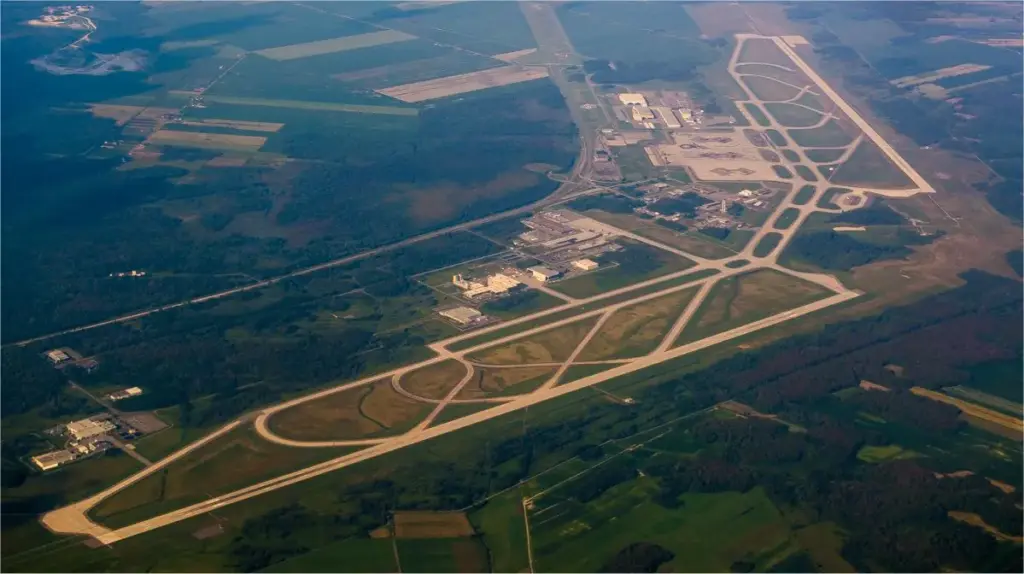
Specifically, this timing aligns with Ottawa’s push to streamline defence procurement and to localise more capacity. North Atlantic Treaty Organization (NATO) partners want more Intelligence, Surveillance, and Reconnaissance (ISR) capabilities, as well as stronger counter-Uncrewed Aerial Systems (counter-UAS) measures, and logistics drones delivered predictably. Consequently, Mirabel offers the space, the airfield access, and—crucially—the neighbours.
In Mirabel, the shortest commute between suppliers is often a taxiway!
Inside the Volatus Mirabel innovation centre: footprint, focus, and flow
Volatus’ plan calls for two tightly linked functions. First, an innovation centre will manage rapid integration and qualification, so payloads, software, and mission kits get proven fast. Second, an adjacent manufacturing hub will execute serial production of proprietary and licensed systems that meet Canadian end‑use needs and NATO‑aligned requirements. Moreover, the company emphasises a secure, domestic supply chain with full configuration control, quality assurance, and export compliance.
“By combining an Innovation Centre for rapid integration and qualification with a dedicated manufacturing hub for serial production, Mirabel will become our anchor for Canadian‑made, defence‑grade drones.” — Glen Lynch, CEO, Volatus Aerospace.
Additionally, the Volatus Mirabel innovation centre will support licensed production of partner platforms to meet Canadian Armed Forces (CAF) and allied requirements, enabling scale beyond a single product family. Notably, Volatus has highlighted mission sets such as ISR, maritime, Arctic, base security, and logistics—missions where endurance, ruggedness, and autonomy matter as much as speed. Consequently, building tests, qualification, and serial production into one Mirabel address reduces friction across these phases.
Moreover, Investissement Québec International has publicly backed the logic of siting in Mirabel’s ecosystem. “Investissement Québec International is proud to support Volatus in establishing its innovation center in Mirabel, at the heart of Québec’s aerospace ecosystem.” — Hubert Bolduc, President, Investissement Québec International.
Finally, the Volatus Mirabel innovation centre sits on an airfield with two 12,000‑foot runways and the infrastructure that attracts heavy industry. Therefore, moving large crates, test articles, and flight test assets is as unremarkable as taxiing to a stand.
Wry aside: When your runway is longer than the production line, logistics rarely gets the last word.
How the Volatus Mirabel innovation centre fits the YMX innovation zone
ADM’s YMX Innovation Centre is designed as a shared lab and sandbox for the future of air transport. Moreover, the Mirabel hub is now a pillar of Espace Aéro, Quebec’s aerospace innovation zone. “The YMX site boasts an impressive concentration of expertise….” — Yves Beauchamp, President and CEO, ADM Aéroports de Montréal. ADM says the innovation centre will act as an engine for aeronautical innovation at Mirabel, bringing manufacturers, researchers and training partners together.
Additionally, the Mirabel hub of Espace Aéro was formalised in 2024, with ADM acquiring a building to transform into a dedicated aerospace innovation centre. Consequently, companies like Volatus now have a front door into a cluster programme that explicitly connects suppliers, integrators, universities, and test infrastructure around YMX.
Notably, the Volatus Mirabel innovation centre benefits from this shared purpose. Specifically, a Mirabel address helps the company recruit talent, invite partners onto runways and into labs, and ship finished systems through a cargo‑first airport.
Mirabel’s cluster: Airbus, Bell, L3Harris, MHIRJ, Pratt & Whitney—and why it matters
Mirabel is not just an airport; it is a campus. Moreover, it is home to a concentration of OEM and Tier‑1 anchors rarely matched in North America outside Seattle and Dallas–Fort Worth.
Airbus Canada (A220) and Airbus Atlantic Canada
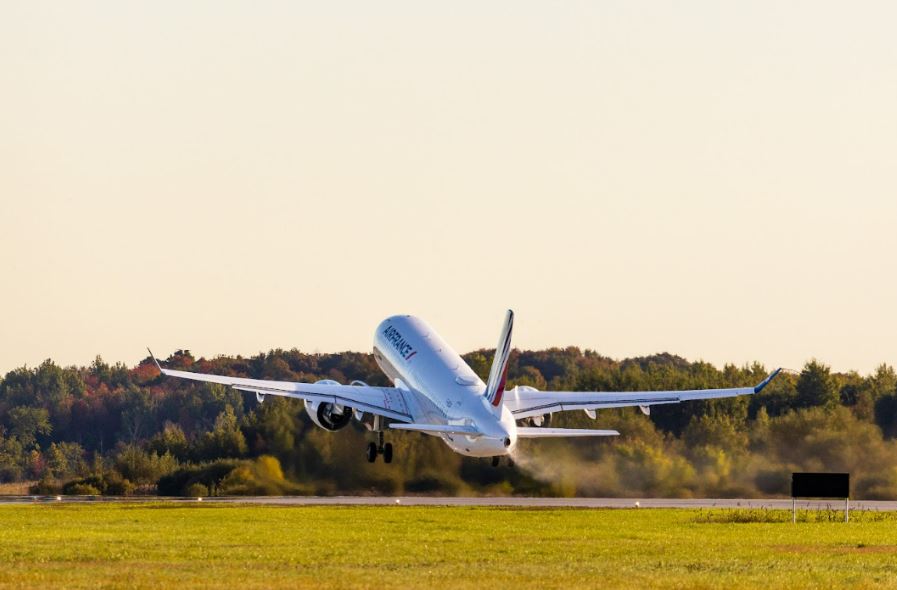
Airbus Canada’s A220 programme is headquartered at Mirabel, with final assembly lines and flight and integration test operations on site. Additionally, Airbus Atlantic Canada (rebranded from Stelia Aerospace Canada) manages the A220’s front and aft fuselage manufacture in Mirabel and supports Global 7500 centre fuselage work. Notably, Airbus has continued to invest in Mirabel production, including a 125,000‑square‑foot sub‑assembly area and, more recently, a new A220 Delivery Centre in 2025 to streamline handovers. Moreover, Airbus has articulated plans to push A220 output toward the mid‑2020s targets, navigating supply chain and labour cycles along the way.
Bell Textron Canada (Commercial Centre of Excellence)
Bell’s Mirabel site has, for decades, been the company’s commercial helicopter assembly, delivery, and service anchor. Moreover, Bell’s 505th Bell 505 delivery was celebrated here in 2023, with the company noting “more than 1,400 highly skilled employees” at the Mirabel campus. “More than 1,400 highly skilled employees are responsible for Bell’s current commercial production line.” — Bell Textron Canada, Consequently, Mirabel is where global customers regularly collect Bell 505s, 407GXi, 429s, and SUBARU Bell 412EPX helicopters.
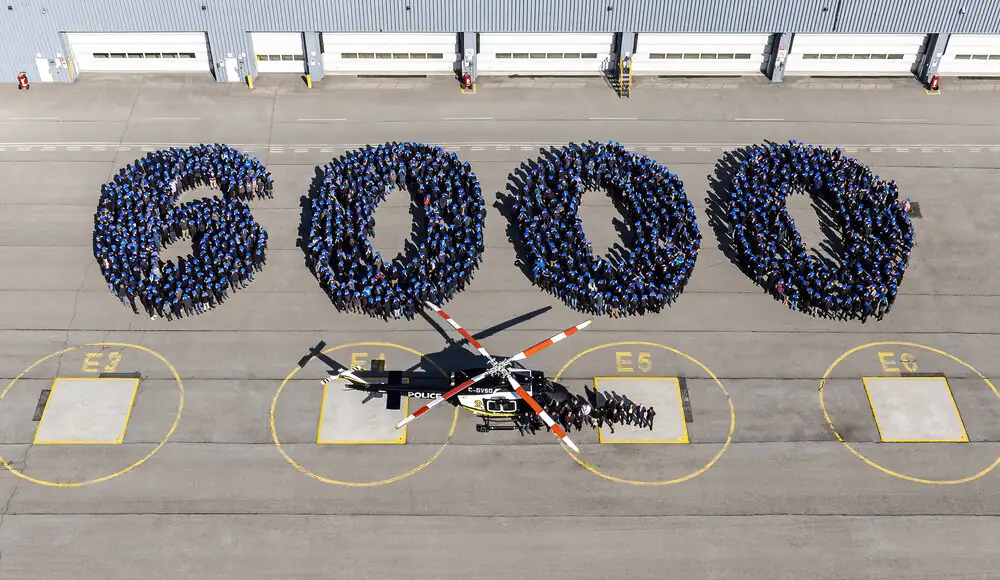
Credit: © Bell Textron Canada
L3Harris MAS (Mirabel Aviation Centre)
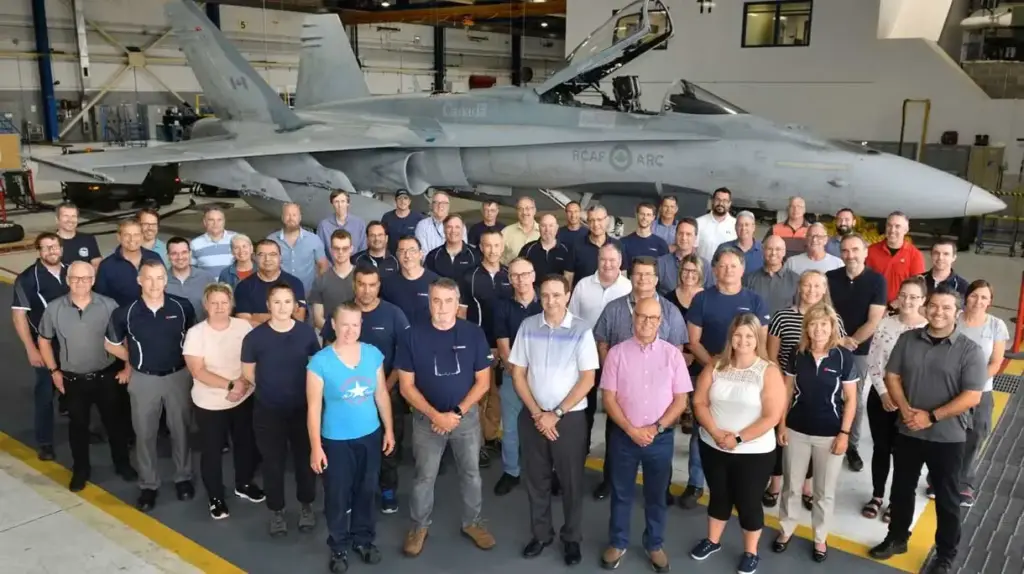
L3Harris MAS operates a major site on Helen‑Bristol Street at YMX, focused on modifications, maintenance, and upgrades. Moreover, in October 2025 the company announced a collaboration with MHIRJ to perform base maintenance on CRJ700 and CRJ900 aircraft in Mirabel. “L3Harris will carry out nose‑to‑tail modifications… at the Mirabel facility.” — L3Harris.
MHIRJ (formerly CRJ programme support)
MHIRJ provides engineering, support, and maintenance for the global CRJ fleet. Additionally, its Mirabel presence leverages the legacy Bombardier site footprint and the ongoing need for regional jet sustainment across North America and beyond. Notably, the proximity to L3Harris and to a dense supplier base makes Mirabel an ideal place to keep aging, but essential, regional assets flying.
Pratt & Whitney Canada (Mirabel Aerospace Centre)
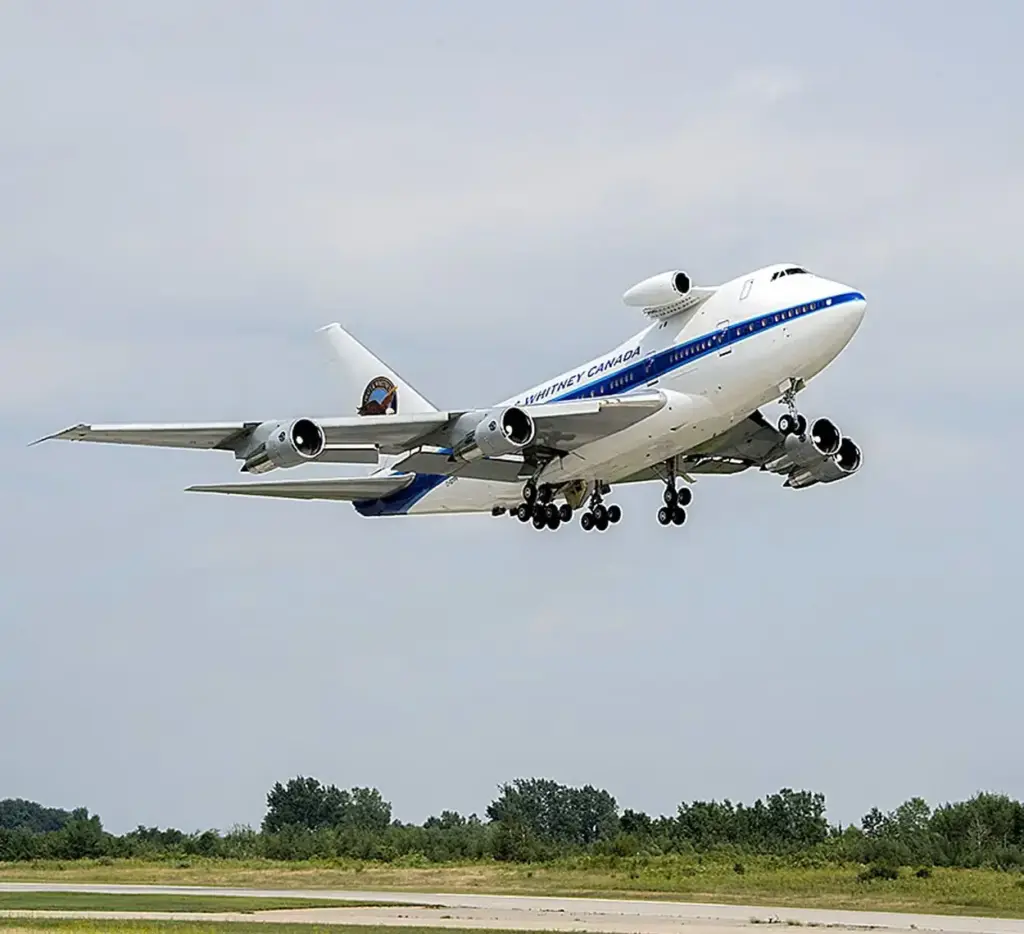
Pratt & Whitney Canada’s Mirabel Aerospace Centre (MAC) opened more than a decade ago to house flight test operations and to assemble and test PW1500G engines for the A220 as well as the PW800 for long‑range business jets. Moreover, MAC’s test and assembly footprint gives Mirabel deep propulsion expertise within walking distance of A220 and business‑jet fuselage work.
Bombardier Defense (Greater Montreal; special‑mission jets)
Bombardier no longer builds airliners at Mirabel after divesting the CRJ programme to MHIRJ in 2020 and transferring the CSeries to Airbus in 2018 (now the A220). Even so, the company remains a short drive from YMX with a Montreal headquarters and a defence unit built around Global 6500/7500 and Challenger special‑mission platforms.
Moreover, Bombardier Defense has partnered with Canadian and international primes to turn those long‑range business jets into ISR, ASW, AEW&C, and multi‑mission aircraft. Notably, it teamed with General Dynamics Mission Systems–Canada for the Canadian Multi‑Mission Aircraft (CMMA) concept; Saab’s GlobalEye leverages the Global 6000/6500 airframe; and L3Harris has been missionizing Global 6500 aircraft for allied customers—most recently as the lead integrator on Republic of Korea AEW&C based on the Global 6500. Consequently, even if Bombardier is not on the Mirabel field, it is firmly inside the Greater Montreal ecosystem that YMX anchors.
Also read: October 4, 2025 South Korea Bombardier Global 6500: Inside Seoul’s Phoenix AEW&C Decision
Additionally, the policy wind has shifted. Ottawa has chosen foreign, off‑the‑shelf platforms for several marquee buys in recent years—the Boeing P‑8A Poseidon to replace the old CP‑140 Aurora, and the Airbus CC‑295 Kingfisher for fixed‑wing Search And Recue (SAR) Buffalo CC-115—decisions that limited immediate room for a Canadian airframe‑led solution.
At the time Canada replaced the CC‑115 Buffalo, the SAR requirement explicitly demanded a rear ramp. That specification favoured proven ramp aircraft such as the Airbus C‑295 and the C‑27J. Bombardier’s Q400, which the company still owned in 2016, did not have a ramp. Converting it into a rear‑ramp SAR variant would have required a deep redesign of the aft fuselage, a reinforced floor, systems changes, and recertification. Ottawa chose an off‑the‑shelf import instead of financing that redesign—foregoing the chance to create a Canadian SAR airframe with export potential.
That decision carried costs beyond the sticker price. Canada lost an opportunity to anchor high‑value engineering and missionisation work in Greater Montreal and to offer allies a cold‑weather, short‑field SAR platform built here.
Will Ottawa shop at home for its Canadian military?
Looking ahead, with defence spending now rising, Ottawa has a second chance to prioritise sovereignty where feasible: back a Canadian‑built platform—e.g., a Bombardier Global 6500—for the RCAF’s new Airborne Early Warning aircraft, integrate the mission systems in Canada, and then sell that configuration abroad. A rear ramp was a requirement; industrial strategy is a choice.
However, with the Defence Investment Agency (DIA) stood up and defence spending stepping up to 2% of GDP on a path toward NATO’s broader investment pledge, there is a fresh opening to weigh sovereign content more heavily. Specifically, Montreal‑built Globals—already flying worldwide in ISR and AEW&C roles—fit the range, endurance, and crew‑station depth Canada needs for Arctic, maritime, and continental missions. Overall, the opportunity is simple: use Mirabel’s cluster as the integration front porch and give made‑in‑Canada platforms a fair path to compete on capability and schedule. (A rear ramp isn’t a national strategy—but it can be a procurement speed bump.)
Consequently, the cluster provides Volatus with neighbours who know certification, serial production, global logistics, and airfield operations. Additionally, it gives the Volatus Mirabel innovation centre a built‑in audience for partnerships, system integration, and test support. Notably, it also gives procurement officers and international delegations a one‑stop campus to see Canadian aerospace in action—rotorcraft, fixed‑wing, engines, and now uncrewed systems.
If aerospace were speed‑dating, Mirabel might become a very busy café.
The airport itself: cargo first, long runways, and space to grow
Montréal–Mirabel International Airport (YMX) ceased scheduled passenger service in 2004, but it never went quiet. Moreover, two 12,000‑foot concrete runways, ample aprons, and a perimeter that welcomes industrial neighbours have turned YMX into Greater Montreal’s heavy‑cargo, test, and manufacturing airfield. Additionally, the airport’s governance under ADM means strategic alignment with Montréal-Pierre Elliott Trudeau International Airport (YUL) for passengers and YMX for cargo and industry. Notably, ADM reports cargo throughput across both sites in the hundreds of thousands of tonnes annually, and YMX’s role centres on outsized freight, staging, and industrial logistics.
Consequently, the Volatus Mirabel innovation centre inherits a capable backyard: de‑icing, FBO services, ANSP coverage, and a campus that was literally planned for global hub status. Moreover, the rebranding to “International Aerocity of Mirabel” codifies what aerospace firms already use daily: a campus built for large machines and larger ambitions.
Volatus’ product context: ISR, logistics, and a Canadian supply chain
Volatus has emphasized ISR platforms, base security drones, and heavy‑lift logistics systems—including helicopter‑class UAVs designed for long range and heavy payloads. Moreover, the company has pointed to Canadian Armed Forces‑relevant mission sets: maritime domain awareness, Arctic coverage, and base perimeter security. Additionally, the firm’s strategy pairs in‑house platforms with licensed systems to meet NATO interoperability standards, leveraging a domestic supplier base wherever possible.
Notably, the Volatus Mirabel innovation centre will aim to turn that product context into repeatable manufacturing. Consequently, the company can invite local avionics, payload, composite, machining, and software suppliers into a secure assembly line. Moreover, integrating export compliance early helps the firm sell to allies without slowing deliveries.
How Volatus Mirabel innovation centre links to Quebec’s aerospace strategy – new Canadian Defence Investment Agency (DIA)
Quebec’s aerospace sector counts more than 40,000 jobs and a dense R&D footprint. Moreover, Greater Montreal is consistently ranked among the world’s top three aerospace hubs, supported by a robust supplier base and by research institutions that feed engineering talent. Additionally, the province’s Espace Aéro innovation zone formalises how clusters like Mirabel, Saint‑Laurent, and Longueuil can work as a system.
Notably, the Volatus Mirabel innovation centre aligns with provincial goals to move up the value chain in autonomous systems, electrification, and sustainable aviation. Consequently, aerospace policy, ADM’s real estate strategy, and Volatus’ defence‑grade roadmap follow the same vector: build capacity, retain IP, and ship product.
On October 2, 2025, Prime Minister Mark Carney announced the Defence Investment Agency (DIA), a special operating agency within Public Services and Procurement Canada. The DIA centralises procurement expertise, removes duplicative approvals, and accelerates major defence buys. It is led by Chief Executive Officer Doug Guzman and overseen by Secretary of State (Defence Procurement) Stephen Fuhr. The government also reiterated its plan to reach 2% of GDP on defence in 2025–26 and to align with NATO’s 5% Defence Investment Pledge by 2035—a policy shift that favours runway‑adjacent manufacturing plays like Mirabel
Therefore, domestic suppliers positioned to deliver ISR and C‑UAS capabilities can find more receptive home markets and better procurement pathways.
Historically, Canada lagged the NATO defence‑spending benchmark even after Allies agreed in 2014 to move toward 2% of GDP.
By 2018, the issue became a transatlantic flashpoint. U.S. President Donald Trump used the Brussels summit to pressure Allies to pay more, at times floating 4%. “Everyone has agreed to substantially up their commitment.” — Donald Trump, President of the United States, The White House.
Meanwhile, NATO’s leadership reinforced the message. “All Allies have heard President Trump’s message loud and clear.” — Jens Stoltenberg, NATO Secretary General, NATO. (Call it the moment the invoice arrived before the budget.)
At Vilnius on July 11–12, 2023, leaders put the number in writing by making 2% of GDP a minimum for defence outlays. In June 2025 at The Hague, Allies went further, endorsing a new pledge that rises to 5% of GDP by 2035 when broader security spending is included (with 3.5% for core defence and 1.5% for related resilience and industry). Canada’s mid‑2025 plan to reach 2% in 2025–26 reflects that reset, after years near 1.3–1.4% and well behind most NATO peers. Consequently, Ottawa’s step‑up is less a one‑off surge than the product of sustained U.S. pressure, a formalised NATO floor that became a ceiling no longer, and a harsher threat picture from Ukraine to the Arctic.
This is one case where “centre of excellence” might actually mean “centre of factories.”
Workforce and skills: the human layer under the hard‑tech
Aerospace manufacturing succeeds on people first. Moreover, Mirabel’s talent pipeline blends legacy expertise from CRJ, A220, and helicopter assembly with fresh cohorts from Québec’s cégeps, engineering schools, and the MHIRJ Academy model for paid on‑the‑job training. Additionally, Mirabel’s location puts it within commuting range of Montreal’s vast labour pool while keeping industrial land affordable and a better quality of life compared with city‑centre sites.
Notably, recent union‑management cycles at Airbus underscore the pressure of ramp‑ups. Consequently, every OEM that builds in Mirabel must balance rate targets, quality, and workforce stability. Moreover, the Volatus Mirabel innovation centre will compete for composite technicians, avionics integrators, quality inspectors, and software test engineers—the same profiles Airbus Atlantic and Bell also need. Therefore, coordination with colleges and training programmes will matter as much as machine tools.
Robots don’t take coffee breaks—but the people who program them do, and Mirabel has learned to budget for both.
Supply chains and certification: “Made‑in‑Canada” plus NATO‑ready
Serial production for defence markets forces paperwork to keep pace with parts. Moreover, export controls, quality assurance systems, and configuration management are not overhead; they are the product. Additionally, Volatus’ decision to build those systems into the Mirabel facility indicates a commitment to sell beyond Canada without tripping over red tape.
Notably, locating inside YMX’s innovation zone helps here. Consequently, companies can test, iterate, and certify with rapid access to flight lines and secure facilities. Moreover, national regulators and allied customers know Mirabel’s OEMs already meet global certification and quality standards; the postal code itself carries credibility.
Therefore, the Volatus Mirabel innovation centre can focus on building interoperable, upgradable drones that integrate common NATO radios, datalinks, and mission systems. Specifically, the ability to swap payloads for maritime ISR one week and Arctic SAR the next depends on both engineering and documentation.
Short aside: In defence manufacturing, the bill of materials sometimes weighs less than the binder of compliance.
The industrial neighbours in detail: a Mirabel roll‑call
Airbus Canada (A220 Final Assembly Line – FAL)
Airbus’ Mirabel FAL for the A220 is the programme’s beating heart. Moreover, the site hosts the A220 programme headquarters and Flight & Integration Test Centre. Additionally, 2025 saw the opening of a dedicated Delivery Centre in Mirabel to streamline handovers and customer acceptance. Notably, the company continues working toward higher production rates, even as it navigates supply chain complexity and workforce negotiations.
Airbus Atlantic Canada
Formerly Stelia Aerospace Canada, Airbus Atlantic in Mirabel designs and manufactures the A220’s front and aft fuselage, and supports Global 7500 centre fuselage integration. Moreover, this positions Mirabel as an aerostructures hub, with modern composite and systems integration capability a few turns from the A220 FAL.
Bell Textron Canada
Bell’s Mirabel campus is synonymous with commercial helicopter output and lifecycle support. Additionally, the campus integrates design, assembly, delivery, and service, with on‑site product support engineering. Moreover, export deliveries out of Mirabel keep the site plugged into global civil markets.
L3Harris MAS
The Mirabel Aviation Centre delivers nose‑to‑tail upgrades, missionisation, and sustainment for complex platforms. Consequently, it sits at the intersection of military and civil MRO, with recent contracts reinforcing the CRJ sustainment ecosystem.
MHIRJ (MHI RJ Aviation)
From engineering to publications, MHIRJ’s Mirabel footprint supports the world’s CRJ operators. Moreover, its work with L3Harris to stage base maintenance in Mirabel highlights a division of labour: heavy checks and modifications can happen next door to engineering teams.
Pratt & Whitney Canada (Mirabel Aerospace Centre)
P&WC MAC integrates flight test and engine assembly, including PW1500G and PW800 families. Additionally, that concentration of propulsion testing—on a field with vast runways and a culture of heavy‑duty operations—keeps Mirabel central to Canadian engine R&D and production.
And one more neighbour—ADM’s YMX Innovation Centre
ADM’s innovation centre gives the campus a shared R&D living room. Moreover, it is the venue where events like CRIAQ’s RDV Réseau gather researchers and industry to accelerate programs in advanced air mobility and sustainable aviation. Notably, this is the context into which the Volatus Mirabel innovation centre arrives.
Economics and policy: Quebec, Canada, and the NATO lens
Quebec’s aerospace sector exports deeply and reinvests heavily in R&D. Moreover, Greater Montreal remains one of the few places where a complete aircraft can be designed, built, and delivered within a one‑hour drive. Additionally, Canada’s 2024–2025 policy signals include a push toward a NATO‑standard defence spend and the creation of mechanisms to improve procurement.
Notably, this matters beyond headlines. Consequently, if the federal government purchases domestic ISR and logistics drones at speed, industrial partners and investors will commit tooling and long‑lead parts in Canada. Moreover, allied customers tend to buy what a nation fields itself. Therefore, a Canadian‑built, Canadian‑operated platform signals maturity and de‑risks export sales.
Specifically, the Volatus Mirabel innovation centre puts a Canadian address on that proposition. Additionally, the platform mix—ISR and heavy‑lift—fits the geography, from coastal patrols to remote resupply and Arctic surveillance.
Volatus Mirabel innovation centre: Risks and execution, the road between plan and production
Every ramp‑up has bottlenecks. Moreover, drone manufacturing at defence‑grade quality will compete for skilled labour against helicopters, airliners, and engine shops across Mirabel. Additionally, certification timelines, component lead times, and export approvals can stretch plans.
Notably, Mirabel’s own history teaches useful lessons. Consequently, airfields built for passenger superhubs can reinvent as industrial campuses, but they must choreograph tenant growth, road access, and utilities upgrades with precision. Moreover, supply chains in 2025 remain taut, from microelectronics to composites. Therefore, Volatus’ promise of a secure domestic supply chain will require early supplier development and, likely, strategic stocking.
Even so, the Volatus Mirabel innovation centre has advantages most start‑ups envy: a runway‑side site, a supportive airport authority, a provincial innovation zone, and neighbours who can help solve problems over coffee. Additionally, the firm has already signalled intent to deliver NATO‑aligned ISR and logistics systems to existing customers, which implies an order book to support the tooling.
The only thing faster than a drone should be your change‑control process.
What it means for Greater Montreal: jobs, visibility, and supply chain gravity
A new manufacturing line in Mirabel does more than add headcount. Moreover, it reinforces the narrative that Montreal’s aerospace sector is not only surviving but diversifying into uncrewed systems. Additionally, it gives suppliers another pathway to qualify on defence programmes, with documentation and audits that lift their credibility.
Notably, the Volatus Mirabel innovation centre will draw visits from CAF, Transport Canada, and allied procurement teams, which in turn draws more suppliers to open offices nearby. Consequently, cafes in Saint‑Janvier and industrial condo parks on Service A‑4 may see more UID/IUID labels (MIL‑STD‑130) than espresso cups. Moreover, the effect compounds: Airbus’ buyers know Mirabel; Bell’s visitors know Mirabel; defence delegations can now see drones built where airliners, helicopters, and engines already roll out.
The competitive map: where Mirabel sits globally
Globally, drone manufacturing spans the United States, Europe, Israel, Asia and now Ukraine. Moreover, allies now prioritise secure supply chains and software provenance. Additionally, Arctic, maritime, and base‑security missions are no longer “niche”; they are daily requirements.
Notably, Mirabel offers something rare: runway‑adjacent serial production inside a cluster that already serves civil and defence markets. Consequently, the Volatus Mirabel innovation centre can leverage this credibility to compete against established players abroad. Moreover, proximity to North American buyers reduces logistics cost and schedule risk. Therefore, while unit costs must be disciplined, total mission cost can be compelling when delivery timelines are predictable and support is local.
Proximity matters. “We build our own drones, but we also buy drones from others…” — President Donald Trump, Fox News. Consequently, that public signal from Washington underscores the scale of the market immediately next door to the Volatus Mirabel innovation centre—just 73 km (45 miles) from the United States border—and reinforces the logic of building export‑ready drones in Quebec for rapid cross‑border sales and support.
In procurement, “near‑shoring” beats “late‑shipping.”
Hitting the checklist: Volatus Mirabel innovation centre, how to judge progress in year one
- Facility fit‑out — Watch for cleanroom, avionics benches, and secure storage coming online.
- Quality system milestones — Additionally, look for AS9100 updates, export control frameworks, and supplier approvals.
- Pilot lines — Initial builds of ISR and heavy‑lift platforms should move from engineering to line work.
- Test cadence — Ground and flight test scheduling at YMX will indicate real throughput.
- First deliveries — Finally, early customer deliveries—especially to Canadian end users—will validate the model.
If those five items track to plan, the Volatus Mirabel innovation centre will have graduated from announcement to evidence.
Announcements get headlines; deliveries get reorders.
A short tour of Mirabel’s recent milestones
YMX’s innovation hub has hosted events to accelerate advanced air mobility research and has attracted new R&D tenants. Additionally, Airbus opened a new Delivery Centre for the A220 in 2025, solidifying Mirabel’s role from first rivet to final handshake. Notably, ADM continues to position YMX as cargo‑first and innovation‑centric, aligning real estate, utilities, and airfield investments to support the cluster.
Consequently, Volatus arrives in a precinct that already speaks the language of prototypes, rate increases, and safe test flying. Moreover, runways and research are neighbours here by design.
The view from suppliers: composites, avionics, and software
Composite shops near Mirabel can supply airframes and fairings; avionics companies can provide radios, GPS‑denied navigation, and secure datalinks; and software firms can integrate autonomy that respects Canadian and NATO cyber standards. Moreover, the Volatus Mirabel innovation centre can act as an anchor customer for smaller firms ready to jump from prototypes to purchase orders.
Additionally, Volatus’ plan to maintain configuration control internally means suppliers will integrate into a disciplined change‑management system. Consequently, the upside is stability and repeatability; the trade‑off is the paperwork that defence‑grade production demands.
Notably, Mirabel’s supplier base already understands this tempo from Airbus and Bell. Therefore, the drone line can slot into an existing rhythm of audits, FAIs, and traceability.
Light line: The only thing that loves a barcode more than logistics is quality assurance.
Volatus Mirabel innovation centre: What success could look like by late 2026
By the end of 2026, success would look like this? The pilot lines would have transitioned to serial builds; ISR systems would be in service with Canadian agencies; heavy‑lift logistics aircraft would have completed Arctic trials; and at least one NATO partner would have accepted a batch delivery? This could be too much to ask in 14 months. The Volatus Mirabel innovation centre would show a stable trained headcount and a supplier roster with a majority of Quebec‑based firms.
Read our latest update (March 6, 2026) about this subject: Volatus Mirabel hub: what changed after October 2025.
Conclusion: a welcome bet on Mirabel—with homework to do
Volatus’ plan is good for Mirabel and timely for Canada. Moreover, it builds on an airport that has already proven its second act as an industrial campus. It places ISR and heavy‑lift drones in the context of a province that knows serial production and of an alliance that needs credible suppliers.
However, positive headlines do not assemble aircraft. Consequently, Volatus will need to convert innovation‑zone buzz into qualified suppliers, stable teams, and verifiable, defendable quality systems. Moreover, the company will need to lock down components that have been scarce since 2020, and then demonstrate delivery reliability to Canadian end users first.
Overall, the Volatus Mirabel innovation centre looks like one of the smartest bets a Canadian drone company could make in 2025.
Yet the question remains: Will Mirabel’s newest line turn speed to schedule into speed to scale before the window for allied contracts closes?
Leave your comments below or on our Fliegerfaust Facebook page.
Related Fliegerfaust reading
Moreover, readers who follow Mirabel’s airliner cadence and research activity can explore these backgrounders:
- Airbus A220 news: production and programme updates
- Airbus non‑CO₂ emissions study to use A220 testbed at Mirabel
- A220‑500: can the stretch fly without a new wing?
- Croatia Airlines’ first A220‑100 departs Mirabel
Sources
AeroMorning — Volatus Aerospace to launch innovation centre and drone manufacturing hub at Mirabel (October 22, 2025).
GlobeNewswire — Volatus Aerospace to Launch Innovation Centre and Drone Manufacturing Hub at Mirabel… (October 21, 2025).
Aerospace Testing International — Volatus to establish drone manufacturing hub at Mirabel (October 22, 2025).
ADM Aéroports de Montréal — YMX International Aerocity of Mirabel — Overview (Accessed October 22, 2025).
ADM Aéroports de Montréal — YMX Innovation Centre (Accessed October 22, 2025).
City of Mirabel — Doing Business in Mirabel (Economic Profile) (2024).
Airbus — Airbus in Canada (2024/2025 update).
Skies Magazine — Airbus launches new A220 Delivery Centre in Mirabel (June 12, 2025).
Bell Flight — Bell celebrates 505th Bell 505 delivery (November 20, 2023).
L3Harris — L3Harris and MHI RJ Aviation Group collaborate for CRJ aircraft (October 16, 2025).
MHIRJ — About MHIRJ (Accessed October 22, 2025).
Pratt & Whitney Canada — P&WC establishes Mirabel Aerospace Centre (2010).
Wikipedia — Montréal–Mirabel International Airport (Accessed October 22, 2025).
Aéro Montréal — Industry overview (Accessed October 22, 2025).
Québec Ministry of Economy — Aerospace sector profile (June 2025).
Innovation, Science and Economic Development Canada — State of Canada’s Aerospace Industry (August 2025).
ADM Sustainable Development indicators — Freight volume (2024).
Reuters — Airbus seeks mandatory weekend overtime to catch up on delayed A220 production (June 12, 2024).
Airbus Press Room — Stelia Aerospace Canada becomes Airbus Atlantic Canada (March 17, 2023).
For full details, please refer to our Disclaimer page.

When the Quebec aerospace innovation zone was created, Mirabel was designated as the drone testing and certification hub. So they probably already had Volatus on their radar screen at the time Espace Aéro was created. The other two hubs that are part of this innovation zone (Longueuil and Saint-Laurent) having their own specialties. By the way, I would appreciate if you also did a piece like this one specifically on Espace Aéro. For your readers now know much about the Mirabel hub but are probably less cognitive about what is being offered in Longueuil and Saint-Laurent. For instance, Longueuil is where is located the École nationale d’aérotechnique (ÉNA), the largest college-level aerotechnical school in the world. Moreover, starting septembre 2026 the ÉTS (École de technologie supérieure) will join them and offer a bachelor degree in aerospace engineering on the same campus. As for Saint-Laurent, a new aerospace research facility called CCIAM (Collaborative Innovation Centre in Aerospace and Mobility) will be built there that is partially financed by Boeing as part of a compensation package for the acquisition of the P-8A Poseidon aircraft.