

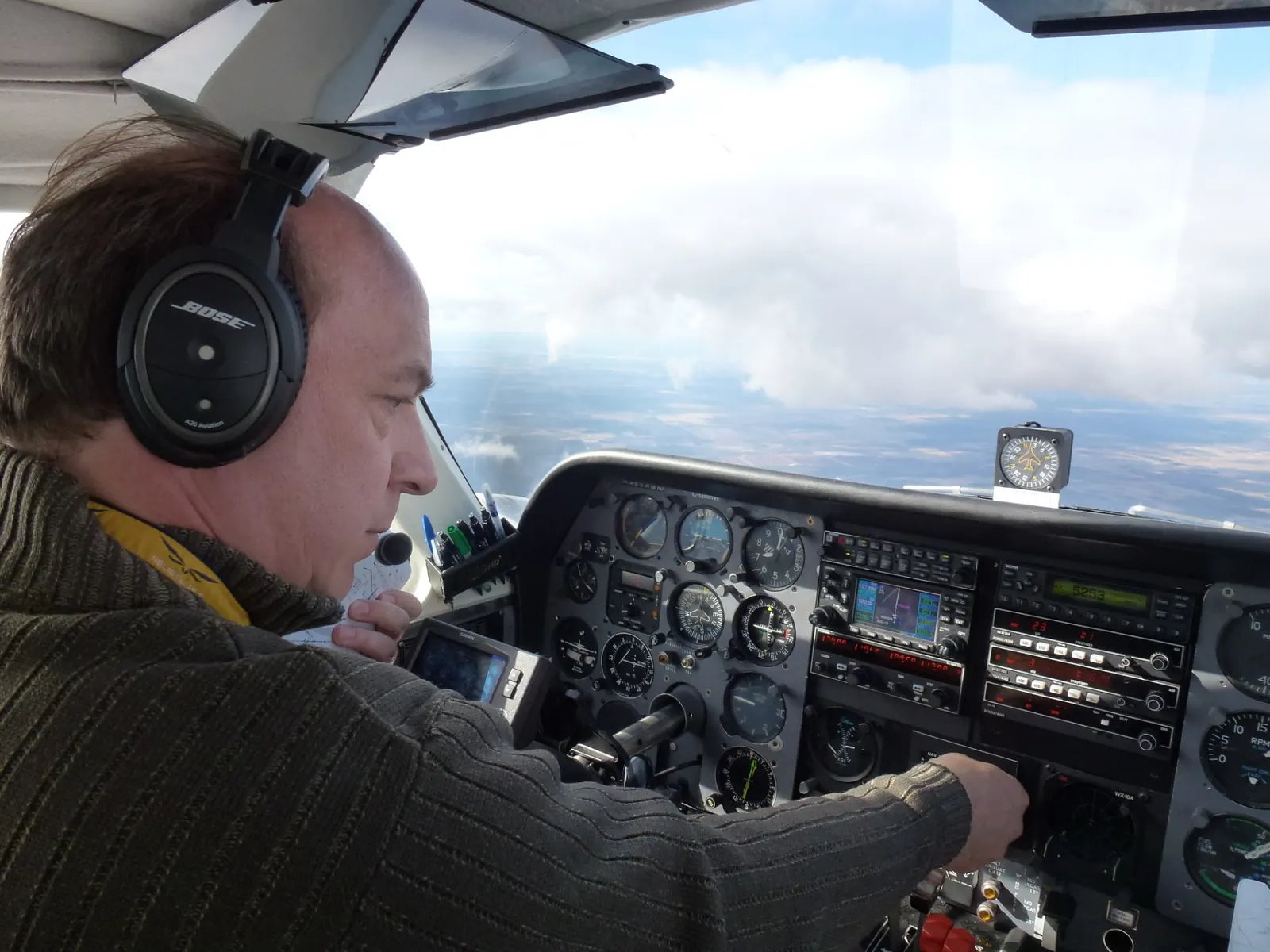
Canada pilot licensing data show how 2025 ended, with stronger aeroplane licence issuance, a younger intake profile, and rising female participation. But those Canada pilot licensing data still do not answer a basic question cleanly: how many active Canadian pilots are there today?
What Canada pilot licensing data show about how 2025 ended
Canadian pilot licences reach a new public high
On April 10, 2026, FLYING’s report on student pilots and a younger pilot population laid out the latest United States picture. Moreover, the story showed how the Federal Aviation Administration (FAA) can track active student pilots, average age, and women pilots in one national view.
Additionally, FLYING’s Pilot Population Dashboard 2025 goes further. It adds checkride pass rates, remote pilots, and pilots by state.
However, Canada’s public picture is built differently. According to Transport Canada’s aviation personnel licensing statistics, Canada issued 3,380 aeroplane private licences in 2025. Additionally, it issued 2,039 aeroplane commercial licences and 985 aeroplane airline transport pilot licences.
Helicopter issuance reached 75 private licences, 335 commercial licences, and 65 airline transport pilot licences. Consequently, the six core pilot-licence categories reached 6,879 issuances in 2025, up from 6,088 in 2019. That works out to roughly 13.0% growth.
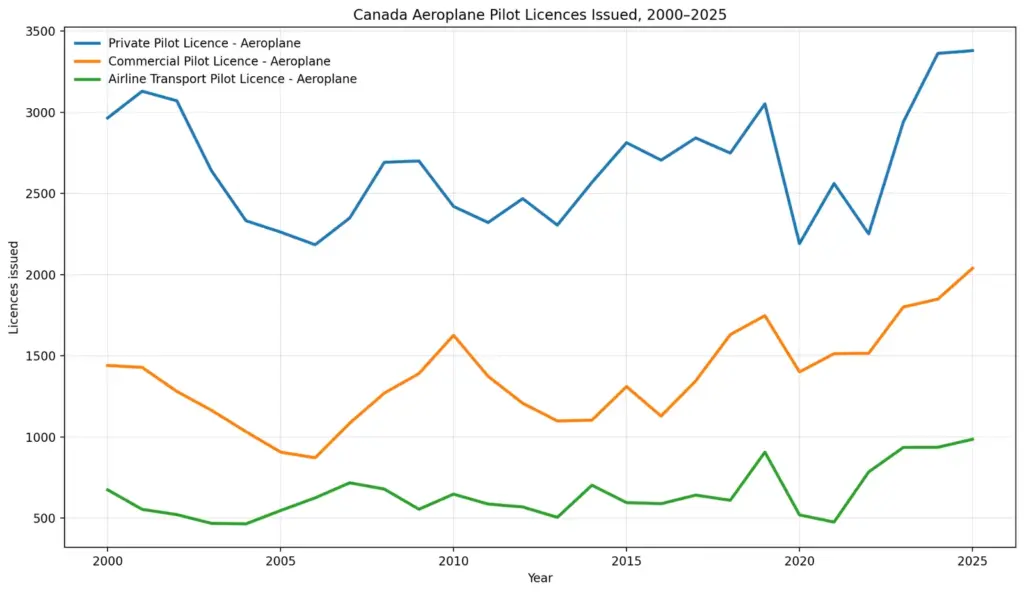
Source: Transport Canada, Aviation personnel licensing statistics, accessed April 12, 2026.
Note: figures show licences issued, not all active Canadian pilots.
Canada pilot data are strong, but not complete
That headline does not mean Canada can publish a clean count of all active pilots. Transport Canada states that its public tables record licences at the time of issuance. They do not reflect ongoing validity.
The department says the 2020 to 2023 period may not show the true number of valid licences. Pandemic-era medical renewals changed how the data were recorded. Therefore, Canada can report a stronger licensing pipeline with confidence.
Even so, Canada cannot yet mirror the FAA dashboard on active student pilots or current average age. Canada also lacks current public series for checkride pass rates and pilots by province. That gap matters, and it should not be hidden under a shiny headline.
How Canada pilot licensing data show younger entrants
Canada pilot data show a younger intake
Specifically, the age tables point to a younger training flow in aeroplanes. In 2025, 532 new aeroplane private licences went to pilots aged 17 to 19. Another 1,841 went to the 20 to 29 group.
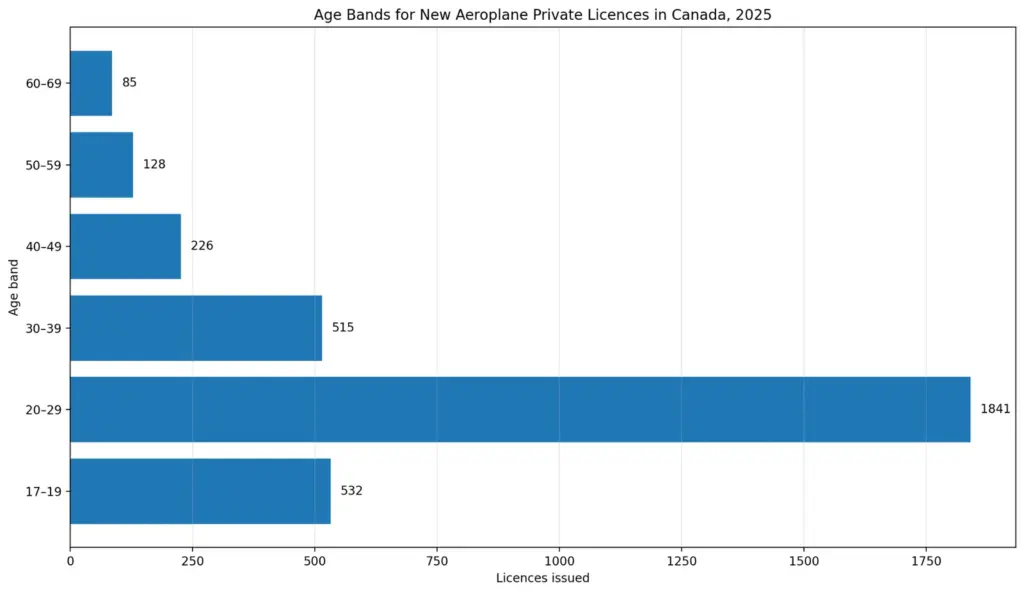
Source: Transport Canada, Aviation personnel licensing statistics, accessed April 12, 2026.
Note: chart uses the visible 2025 age-band counts published by Transport Canada for new aeroplane private licences
Consequently, about 70% of new aeroplane private licences went to pilots under 30. Meanwhile, the commercial stream was even more concentrated. Transport Canada’s age tables show 1,485 new aeroplane commercial licences in the 20 to 29 band. They also show 351 in the 30 to 39 band.
Therefore, about 90% of new aeroplane commercial licences went to pilots aged 20 to 39. Additionally, the airline transport stream also leaned young. In 2025, 420 new aeroplane airline transport pilot (ATP) licences went to the 21 to 29 group. Another 384 went to the 30 to 39 group.
Consequently, about 82% of those issuances landed in the 21 to 39 range. In flight training, younger entry is one gauge worth watching.
Canadian pilot population is younger in issuance, not yet in active-stock data
This is where discipline matters. These are age-at-issuance tables, not the average age of all licensed Canadian pilots. By contrast, FLYING reported that the FAA counted 370,286 active student pilots in 2025. The same report said the average age of active pilots fell to 42.
Meanwhile, Canada cannot show that same active-age series in public form today. Transport Canada also notes that it cannot provide student pilot permit statistics after 2019 until further notice. Consequently, Canada’s public case for a younger pilot base is persuasive at the point of issuance. It remains incomplete at the level of the whole active population.
How Canada pilot licensing data show rising female participation
Canadian pilot licensing shows progress for women
The 2025 sex split shows a higher female share across those licence categories. According to the same licensing tables, women received 534 new aeroplane private licences in 2025. They also received 301 aeroplane commercial licences and 114 aeroplane airline transport pilot licences.
For sex, Transport Canada’s published data use only two sex categories: female and male.
Consequently, women accounted for 15.8% of new aeroplane private licences and 14.8% of new aeroplane commercial licences. The female share for new aeroplane airline transport pilot licences reached 11.6%.
Separately, those shares have improved since 2019. The female share in new aeroplane private licences rose from 11.2% to 15.8%. Likewise, the commercial share rose from 8.3% to 14.8%. The airline transport share rose from 7.6% to 11.6%. It points to growing interest among women in aviation, and what matters is equality of opportunity, not equality of outcome.
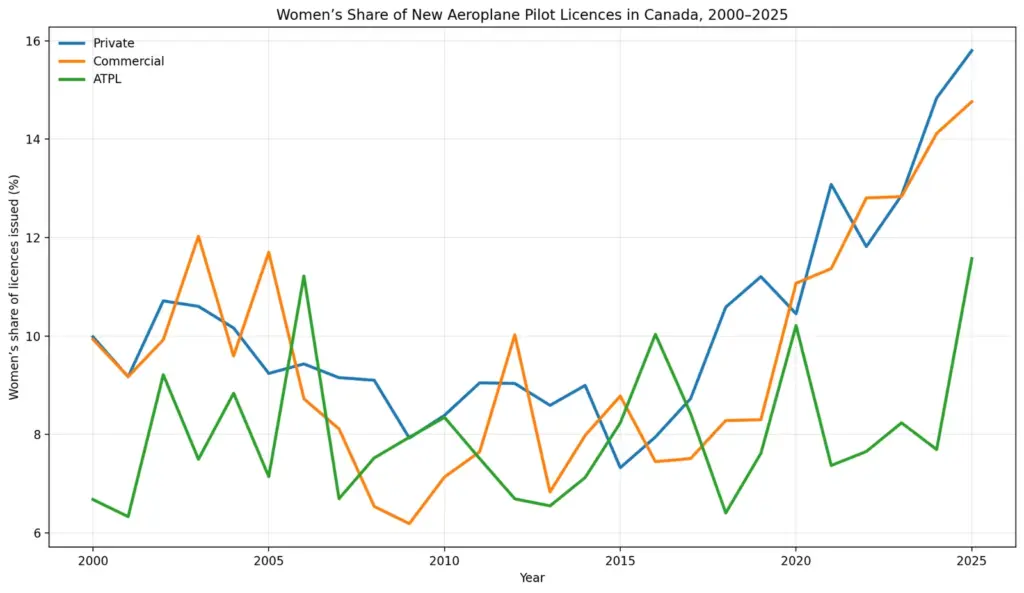
Source: Transport Canada, Aviation personnel licensing statistics, accessed April 12, 2026.
Note: figures show shares of newly issued licences, not shares of all active Canadian pilots.
Canadian pilot training still runs into cost and access limits
The training pipeline still collides with cost, financing, and recruitment. In Transport Canada’s Pilot Shortages briefing note, the department says a 2022 industry survey identified the high cost of training as the main obstacle. The note says that obstacle is keeping students from entering or completing pilot training.
Moreover, the same briefing note states: “Canadian students alone are insufficient to fill pilot shortages.” — Transport Canada, Pilot Shortages briefing note.
International students shape part of the pipeline
Additionally, the citizenship tables show why that sentence matters. In 2025, non-Canadians accounted for about 24.0% of new aeroplane private licences. They also accounted for 34.9% of new aeroplane commercial licences and 24.8% of new aeroplane airline transport pilot licences. Canada is training domestic pilots, but it is also serving a global market.
That international dimension is not abstract. The Air Transport Association of Canada (ATAC) says international students currently comprise 40% of flight-training students in Canada. School-level published material also points to demand from China, India, and parts of Africa: MFC Training says it has graduated students from more than 65 countries and runs a China program, SkyQuest Aviation says it has trained a large number of Indian pilots and students from countries including Nigeria and India, and Spectrum Airways says it has hosted international students from India and East Africa. Even so, public data still do not show how many of the 2025 non-Canadian licences went to foreign students, how many went to new residents already in Canada, and how many reflected conversions from other licensing systems.
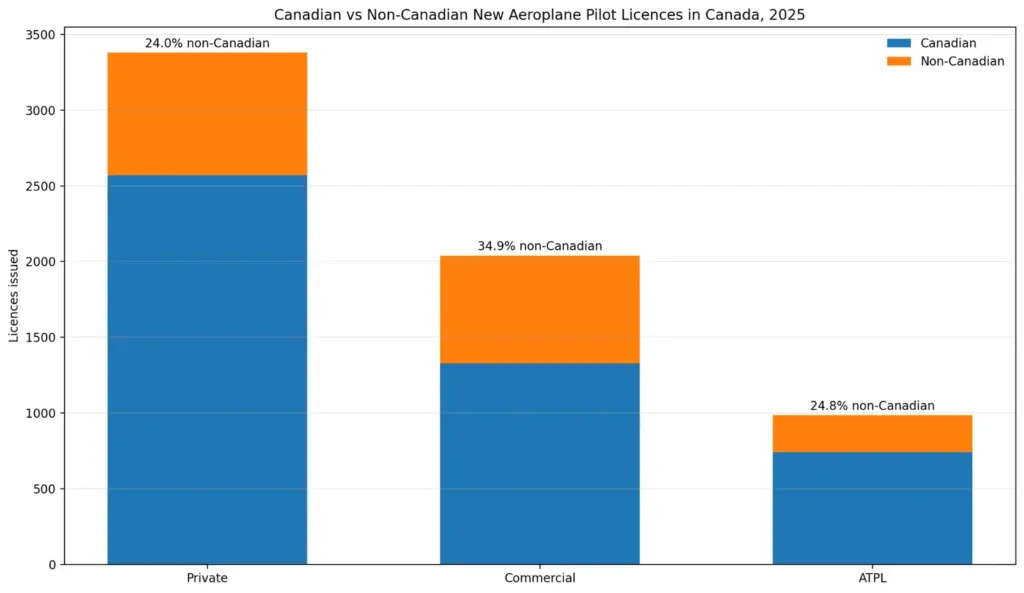
Source: Transport Canada, Aviation personnel licensing statistics, accessed April 12, 2026.
Note: Non-Canadians accounted for a significant share of new Canadian pilot licences in 2025, but public data do not show how many were foreign students, new residents, or conversions from other licensing systems.
Ottawa is backing some training capacity
Meanwhile, Ottawa has started to back some local capacity. In a February 13, 2025 Prairies Economic Development Canada news release, the federal government announced $1.3 million for aviation and aerospace projects in Saskatchewan. The package included support for the Regina Flying Club and Saskatchewan Polytechnic.
Furthermore, the release carried a ministerial line that matched the data trend. “Aviation plays a key role in economic success.” — The Honourable Terry Duguid, Minister for PrairiesCan.
Notably, the same release also carried a practical industry line from the training floor. “… help address the pilot shortage in Canada.” — Drew Hunter, President, Regina Flying Club.
That raises a harder question: when public money supports flight-training capacity, who ultimately benefits most — Canada’s own pilot pipeline or the international training market?
Canada’s drone market and labour demand widen the story
Canada pilot population sits beside a fast-growing Remotely Piloted Aircraft System (RPAS) sector
The manned-pilot story is only part of the national picture. In Transport Canada’s Drone Zone Issue 6, the department said that as of March 31, 2026, Canada had 118,232 registered drones. It also reported 133,505 Basic Pilot Certificates, 20,982 Advanced Pilot Certificates, and 433 Level 1 Complex Pilot Certificates. For a supposedly niche corner, drones are no sideshow anymore.
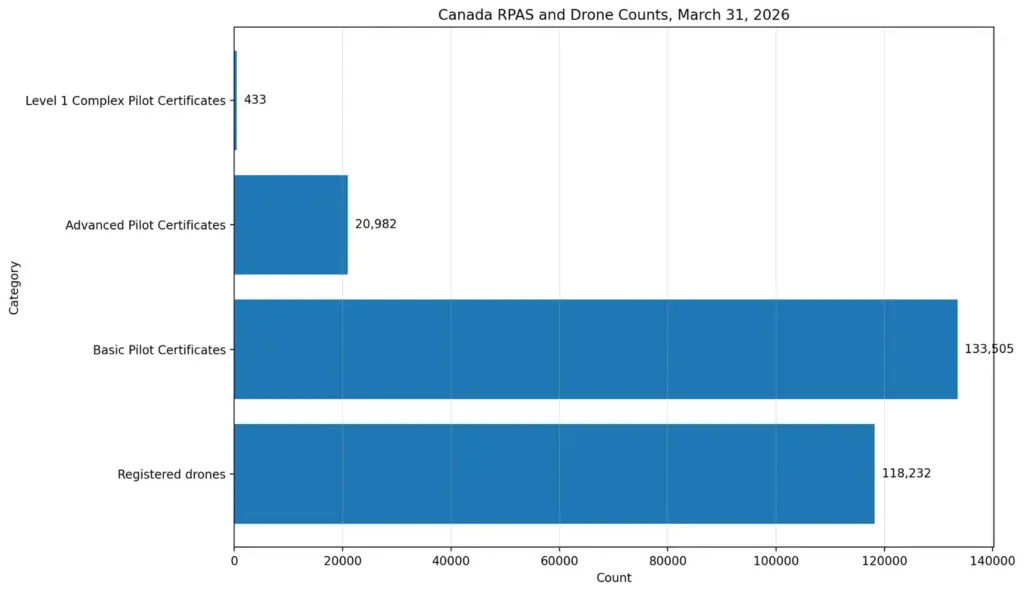
Source: Transport Canada, Drone Zone Issue 6, accessed April 12, 2026.
Note: counts are point-in-time RPAS and drone totals as of March 31, 2026
Moreover, that industrial flank is becoming more visible in Quebec. For more on that shift, see our Fliegerfaust report on Volatus’ Mirabel drone hub. It tracks how manufacturing, defence demand, and training ecosystems can start to reinforce one another.
Canadian aviation demand still supports the case for more pilots
Overall, demand is no longer the weak link in this story. In Statistics Canada’s Annual civil aviation statistics, 2024, Canadian carriers transported 92.7 million passengers in 2024. That total was 98.4% of the 2019 level.
Additionally, operating revenue reached $37.8 billion in 2024. Net operating income, however, fell to $2.1 billion from $3.2 billion a year earlier.
Meanwhile, the labour signal remains firm. Job Bank’s national outlook for air pilots says the occupation faces a strong risk of labour shortage over 2024 to 2033. The same page lists 19,200 workers in 2023. It also says 38% were aged 50 and over, while the median retirement age was 63.
Additionally, pressure is not limited to airline cockpits. For airport-capacity context, see our Fliegerfaust analysis of Billy Bishop expansion in Toronto. For specialised fleet demand, see our Fliegerfaust coverage of Alberta’s DHC-515 order.
Conclusion: Canadian pilot population needs better public data
Canada’s public pilot story is better than many expected in early 2024. The 2025 licensing tables show record aeroplane issuance in the public series. They also show a younger issue-age profile, rising female participation, and clear evidence that commercial training demand remains strong.
Moreover, the wider aviation market, from airlines to drones, still points to durable demand for qualified crews. However, the country still lacks the clean, current public dashboard that the FAA can support and that FLYING has now showcased.
Canada can measure licence issuance well enough to tell a positive story. Yet Canada still cannot show the public a current active-pilot count or an active student. It also cannot show a true average age of active pilots or a full national pass-rate view with the same precision.
What do you think?
The pipeline looks stronger, but the public evidence remains narrower than the market deserves. If Ottawa wants the industry to trust the trend, why not publish the full picture?
Leave your answers and comments below and on our Fliegerfaust Facebook page.
Sources
- FLYING — What FAA Data Shows About Student Pilots and a Younger Pilot Population (April 10, 2026).
- FLYING — Pilot Population Dashboard 2025.
- Transport Canada — Aviation personnel licensing statistics (February 5, 2026).
- Transport Canada — Pilot Shortages (July 12, 2024).
- Prairies Economic Development Canada — Government of Canada invests in aviation and aerospace sectors (February 13, 2025).
- Transport Canada — Drone Zone Issue 6 – April 2026 (April 1, 2026).
- Statistics Canada — Annual civil aviation statistics, 2024 (January 16, 2026).
- Job Bank — Air Pilot in Canada | Job prospects (March 17, 2026).
For full details, please refer to our Disclaimer page