


Magnifica Air A220—can a VIP‑configured narrowbody redefine scheduled luxury travel? The answer begins to take shape in Las Vegas and Mobile. On October 14, 2025 at NBAA‑BACE, Magnifica Air confirmed six Airbus A220‑300s (plus A321neos) on lease from Air Lease. The airline has tapped Comlux to turn them into ultra‑premium cabins. Given the corporate‑jet precedent on the A220 platform, a long‑range fuel package for the ‑300 looks likely; it has not been announced, but it sits squarely within the VIP mission brief.
Meanwhile, in Mobile, Alabama, MAAS Aviation renewed its five‑year agreement with Airbus to paint A220s and A320s, expanding a crucial piece of the U.S. single‑aisle production puzzle. Together, these moves place a spotlight on how cabin completion and exterior finishing capacity can accelerate new airline concepts—and how the Magnifica Air A220 could become the headline act in a growing ecosystem of American A220 know‑how.
Magnifica Air A220 at NBAA‑BACE: what was announced, when, and why it matters
Magnifica Air’s reveal at the National Business Aviation Association’s convention in Las Vegas (October 14–16, 2025) fused leasing, completion, and brand positioning into one clean narrative. According to Air Lease’s same‑day press release, the start‑up signed long‑term leases for four A220‑300s and two A321‑200neos delivering in 2027. “Air Lease is pleased to lease these new Airbus A220s and A321neos to Magnifica Air,” said David Beker, adding that the airline aims to “redefine luxury air travel” with the experience on board. — David Beker, Executive Vice President, Air Lease.


Luxury Beyond Travel See more at https://magnificaair.com/
Moreover, Magnifica’s founder and CEO Wade Black framed the transaction as a signal of intent. “This partnership with Air Lease marks a defining moment for luxury aviation,” he said, promising a passenger journey elevated well beyond today’s premium cabins. — Wade Black, CEO, Magnifica Air.
Notably, Comlux America—already a reference name for ACJ TwoTwenty completions—will tailor each Magnifica Air A220 for a low‑density layout of roughly 45–54 seats, including two private suites on the Airbus A220 and up to four on the Airbus A321neo. Aviation International News reported that Comlux will outfit six leased A220s and a pair of A321s, underscoring the scale of the workstream running into 2027. — AIN.
Additionally, the start‑up’s public materials and multiple trade outlets line up on the core launch proposition: a by‑the‑seat “private class” experience operated on scheduled routes in the United States. Aviation Week captured the operational ambition succinctly, quoting Wade Black that the company “plans to operate Part 121 scheduled service with a fleet of 54‑seat Airbus A220‑300s and 44–46‑seat A321neos.” — Aviation Week.
Magnifica Air is a Florida‑based ultra‑premium airline venture that aims to blend private‑jet exclusivity with scheduled reliability. The company is led by CEO Wade Black, whose 35‑plus years in aviation anchor the service ethos. Chairman and Co‑Founder Charles Carey adds luxury real‑estate and sustainability expertise to the strategy. Day‑to‑day operations fall to Brad Lambert as COO, while Sean McGeough drives fleet acquisitions and partnerships as Chief Development Officer.
Customer experience and safety are handled by a specialised bench. Doreen DePastino leads Cabin Experience and Station Operations; Sean Mulholland oversees Safety and SMS; and Kevin Ketterer runs Technical Operations with a reliability focus. Quality and fleet standards are managed by Rich Fetro, and security is led by Dr. Frederick Reitz. Together, this leadership team frames Magnifica’s plan to deliver concierge‑level travel on narrowbody aircraft. (Magnifica Air)
Inside the Magnifica Air A220: what Comlux brings from ACJ TwoTwenty to a scheduled cabin
Comlux is not arriving cold. The Indianapolis completion centre has already delivered ACJ TwoTwenty interiors and honed processes for the A220 platform. Airbus chose Comlux as the exclusive partner for the first 15 ACJ TwoTwenty cabins when the corporate variant launched in 2020, a decision that concentrated early VIP know‑how in one shop. — Airbus Press Office.

Consequently, Comlux can adapt lessons from all‑VIP layouts to the realities of scheduled service durability. Cabin monument design, galley workflow, and maintenance‑friendly materials become decisive when an aircraft turns several times per day. The Magnifica Air A220 therefore benefits from an unusually short learning curve: the completion house already knows where the A220 tolerances sit, which finishes resist scuffing, and which integration pathways behave well during heavy cycles.
Moreover, ultra‑premium density changes the mass‑balance and utility planning. Fewer seats free space for social zones, but they also enable larger, more complex galleys and bars. According to Magnifica’s public statements and coverage across trade media, the A220’s mid‑haul role with two suites complements the A321neo’s long‑haul four‑suite layout. The blend avoids over‑stretching a single cabin concept to two very different missions. — Wallpaper*.
Also, the Airbus ACJ TwoTwenty (modified A220) has a larger fuel capacity of 7,550 US gallons (28,570 liters). This is achieved through the addition of five auxiliary fuel tanks that are fitted to the aft belly cargo compartment, which expands its range.
Additionally, a scheduled premium product demands robust seats that can handle short‑haul cycles. Design must strike a balance: tactile materials that photograph well, yet survive coffee spills, roller‑bags, and frequent cleaning. The Magnifica Air A220 will live or die by how these choices age at 18 months in service, not on day one.
Why the Magnifica Air A220 and A321neo pairing matters for mission, range, and utilisation
Airbus positions the A220‑300 as the larger member of the A220 family, tailored for the 120–160‑seat market in standard airline service. That baseline matters because Magnifica plans to fit fewer than half the typical seats, trading density for comfort. Airbus data cites A220 family range up to roughly 3,400–3,600 nautical miles depending on variant and spec, providing ample headroom for U.S. transcon and deep transcontinental missions in a low‑density fit. — Airbus; Airbus A220 Family, A220 Facts & Figures (Oct 2024)
Moreover, Airbus has already shown how much extra endurance the platform can unlock. The ACJ TwoTwenty—built on the A220‑100—adds five auxiliary fuel tanks in the aft belly hold, taking total capacity to about 7,550 US gallons (28,570 litres) and trading some lower‑hold volume for range. That package proves the plumbing, structural provisions, and systems integration for long‑leg missions already exist on the A220 family, not as a clean‑sheet experiment but as a certified path on a closely related variant.
Consequently, it is reasonable to expect a VIP‑configured A220‑300 to adopt a similar auxiliary‑tank architecture when the mission set calls for deeper transcontinental legs and stronger winter headwind margins. In practice, that would be an evolutionary step: Comlux’s TwoTwenty experience shortens the learning curve, while a -300 kit would follow the same basic trade‑offs—less cargo space, a modest weight increase, and the need for an STC with updated performance and weight‑and‑balance data. The result is straightforward for the Magnifica Air A220 concept: more fuel in the hull, more route flexibility on the network, and greater dispatch confidence on long sectors.
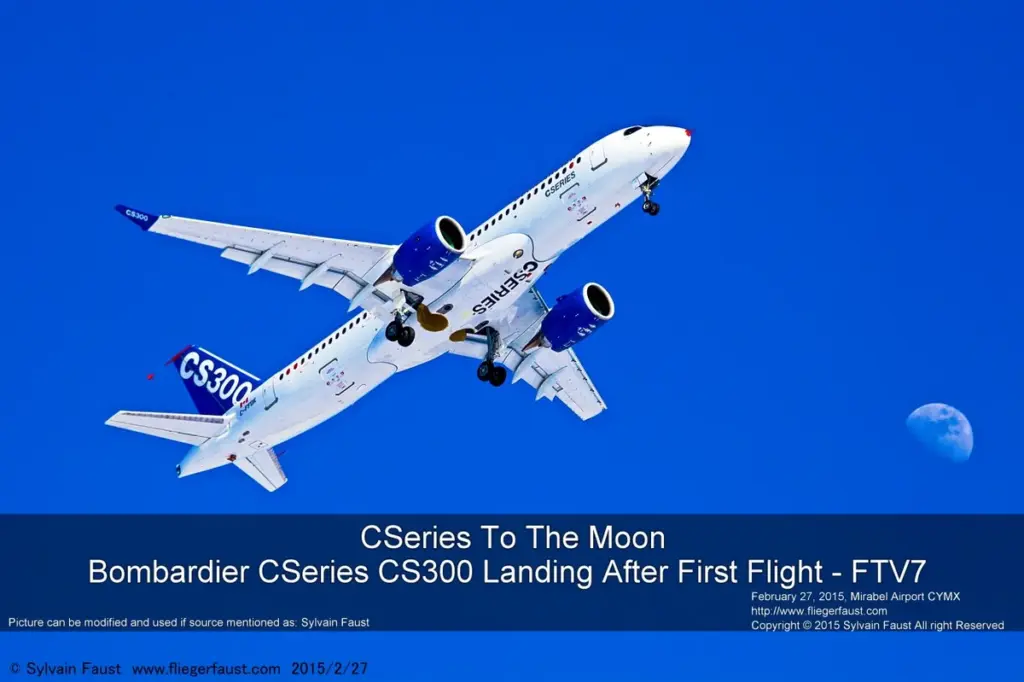
Therefore, the Magnifica Air A220 looks purpose‑built for mid‑haul and premium short‑haul sectors—a sweet spot for linking coastal city pairs, seasonal leisure centres, and high‑yield business corridors. The A321neo, by contrast, becomes the long‑leg partner for deeper missions. That pairing mirrors wider industry dynamics in which the A321neo takes the upper end of single‑aisle range, while the A220 fills the right‑sized niche below.
Moreover, this narrowbody duo plays well with constrained airport slots. If a carrier can unlock transcon comfort without a widebody, it gains scheduling agility and better day‑of‑operations resilience. A low‑density A220 can board and deplane faster, especially when paired with private‑terminal concepts and curated ground handling. Aviation Week’s note about Part 121 operations signals an intent to marry premium touches to the rigour of airline reliability. — Aviation Week.
Magnifica Air A220: the road from lease signing to first passenger flights
Leases, completions, and certifications must interlock to meet a 2027 debut. Air Lease has the metal assigned; Comlux must slot the jets into completion bays; Magnifica must finalise certification, staffing, and station set‑ups. FlightGlobal’s reporting outlines the start‑up’s broader scale ambitions beyond day one, suggesting a rapid ramp after launch. — FlightGlobal.
Additionally, the Magnifica Air A220 programme will pass through an intensive supplier crawl. Seats, monuments, lighting, galleys, and connectivity systems need alignment on lead times and change‑control. Any late cabin engineering change can cascade into requalification work, test flights, and revised interiors documentation. Comlux’s experience on the A220 platform should mitigate schedule risk, yet the integration timeline still deserves respect.
Notably, the airline’s public‑facing materials point to a curated end‑to‑end experience: private terminals, 30‑minute check‑in targets, white‑glove baggage handling, and black‑car transfers. Those promises must be operationalised with airport partners, ground handlers, and catering kitchens across multiple cities. — Magnifica Air site.
Furthermore, if the product leans on exclusive terminals for privacy and speed, real estate becomes a gating item. The right lease on a private facility at each launch airport—plus approvals for security screening and baggage systems—will shape the launch network as much as aircraft deliveries do.
The Magnifica Air A220 cabin in context: ergonomics, durability, and service choreography
Cabin layout is never just about seats. Galley design dictates service tempo; aisle width influences crew choreography; and storage volume governs how much the culinary team can attempt at altitude. A 45–54‑seat A220 allows for ambitious menus and plated service without triggering service bottlenecks—if work‑flows match cart staging and warming capacity.
Additionally, the Magnifica Air A220 will likely stress test new hospitality rituals for a single‑aisle. Bars or social alcoves create brand theatre, but they also invite crowding risks during turbulence or taxi. Crews need clear SOPs, stowage rules, and predictable handoffs from cabin to cockpit and back. The best luxury cabins hide discipline behind ease.
Moreover, materials matter. Textures that welcome fingertips must resist disinfectants. Stitching that looks couture must avoid fray under constant abrasion. Comlux’s catalogue of ACJ TwoTwenty materials provides a trove of data on how surfaces behave after several seasons. — Comlux ACJ TwoTwenty program.
Every “wow” moment needs a maintenance manual.
Network and demand: where the Magnifica Air A220 could fly, and why
Route rumours often get ahead of clearances, but the contours are visible. Multiple reports point to an initial map linking Miami, New York, Los Angeles, the San Francisco Bay Area, Dallas, and Houston, with seasonal leisure flying to Napa and the Caribbean. That pattern matches a by‑the‑seat private class model: thick premium demand, short‑to‑mid‑haul sectors, and affluent O&D pairs for weekday business and weekend leisure. — Private Jet Card Comparisons.
Consequently, the Magnifica Air A220 becomes the instrument for frequency and flexibility. The aircraft’s economics reward high‑yield sectors under roughly five hours, where travellers pay for time saved and a quieter, better‑spaced cabin. Airbus’ A220 marketing leans on low fuel burn, modern aerodynamics, and PW1500G engines to deliver efficiency and reduced noise footprints—factors that resonate in noise‑sensitive airports and high‑end markets. — Airbus.
Additionally, the private‑terminal promise pairs best with airports offering suitable FBO footprints. That infrastructure can swing network choices as much as pure demand metrics do.
The best route map in luxury aviation starts with valet parking.
Supply‑chain and completion capacity: how Indianapolis and Mobile coordinate the pipeline
Completion capacity and paint capacity must both be in the right place at the right time. Comlux’s Indianapolis base focuses on cabin completions and bespoke interior installations. Mobile, Alabama, houses Airbus’s U.S. A220 and A320 family final assembly for the US market and—critically for exteriors—MAAS Aviation’s expanded painting complex. On October 13, 2025, MAAS extended its contract with Airbus for five years, confirming the Mobile site’s role in painting A220 and A320 aircraft at industrial scale. — MAAS Aviation. The A220 assembled in Mirabel, Quebec are painted at the Airbus Mirabel facility.
Moreover, MAAS detailed that the Mobile footprint reached five dedicated paint bays in 2024 and can process up to 200 aircraft per year. That scale creates a reliable scheduling backbone for Airbus’s U.S. single‑aisle ramp‑up and, by extension, for lessors and start‑ups that rely on predictable delivery slots. — AviTrader; MRO Business Today.
Notably, the Mobile campus itself is expanding. Airbus inaugurated a additional A320 Family final assembly line in mid‑October, reinforcing Mobile’s status as a multi‑line narrowbody hub in the U.S. South and signalling long‑term investment in American single‑aisle output. — Made in Alabama.
Therefore, the Magnifica Air A220 programme sits inside a maturing ecosystem: U.S. assembly, U.S. paint, and U.S. cabin completion. That triangulation reduces logistics friction, limits ferry costs, and shortens the distance between green aircraft, painted exteriors, and bespoke interiors.
MAAS Aviation extends Airbus A220/A320 painting contract: what the renewal signals
On October 13, 2025, MAAS Aviation announced a five‑year extension to its Airbus painting agreement in Mobile. The company highlighted its growth from a single paint shop in 2015 to five bays by 2024, with capacity for up to 200 aircraft annually. The Mobile headcount stands near 100, with expectations to reach 150‑plus within three years. That workforce development story mirrors Airbus’s own U.S. narrowbody expansion.
Moreover, the renewal came with a clear statement of standards. “Our team in Mobile sets superlative standards in aircraft painting…. This underpins our enduring relationship as a trusted partner to Airbus.” — Geoff Myrick, EVP OEM, MAAS Aviation.
Additionally, industry publications echoed the scale and significance of the extension. Reports emphasised Mobile’s role in supporting Airbus’s single‑aisle ramp‑up and the facility’s ability to handle complex liveries as well as high‑volume airline paintwork. — AviTrader; MRO Business Today.
Consequently, for a start‑up like Magnifica, the practical upshot is simple: predictable exterior finishing in the same region where Airbus builds and hands over aircraft. The Magnifica Air A220 will rely on such predictability to sync paint schedules with cabin slotting and proving flights.
Fresh paint dries faster when the schedule cooperates.
Product and industrial context: how the A220’s evolution influences the Magnifica proposition
Airbus has steadily broadened the A220’s appeal. Range, noise, and cabin cross‑section give it strong passenger appeal. Airlines like Air Canada and Air France tout quiet cabins, large windows, and competitive economics. Those fundamentals carry over to a premium fit, where noise and space per passenger are disproportionately valuable. — Air Canada A220 page.
Furthermore, A220 technical documentation and published materials position the type with up to 3,400–3,600 nm range and modern PW1500G engines. In a 45–54‑seat cabin, reserves and performance weights should be generous even on weather days. That margin supports on‑time performance in a high‑service environment. — Airbus: A220 Facts & Figures (Oct 2024 PDF). These numbers increased as the additional fuel tanks are added.
Additionally, the broader industry has been debating a potential A220‑500 stretch combined with the recent certification of the 160‑seat A220‑300 configuration for mainstream carriers (read more). While those variants target volume markets, they also underscore Airbus’s confidence in the platform’s headroom. For Magnifica’s niche, that confidence translates to supplier commitment and residual value underpinnings—important for any lessor‑backed fleet plan. For more A220 programme context, see our recent analysis on stretch economics and seat‑count certification moves: A220 160‑seat certification and Airbus‑Spirit A220 industrial alignment.
Therefore, the Magnifica Air A220 enters the stage with a tailwind from the airframe’s broader market validation, even as today’s premium fit departs from the mass‑market playbook.
Pricing power and service design: where the Magnifica Air A220 must deliver
Premium airline experiments live or die on repeat business. A high‑price schedule demands an experience that trims journey time and elevates in‑flight calm. The A220’s low cabin noise helps; so do wider seats at low density. Yet the real differentiator will be frictionless ground handling: private terminals, streamlined security, rapid baggage return, and curb‑to‑curb service.
Moreover, Magnifica’s stated plan for two to four private suites per aircraft creates yield peaks on each flight. Those suites must sell predictably to keep unit revenue stable. Dynamic pricing tailored to a small inventory may be necessary, especially on shoulder days.
Additionally, culinary ambition has to match galley geometry. Plated entrées, mocktail or wine pairings, and bar service all increase equipment loads. Crew staffing levels and training must scale accordingly. A luxury brand that promises “orchestrated” travel will be judged on whether the service beat lands consistently from gate to gate. — Magnifica Air site.
Risk ledger: engines, certification, schedules, and the market’s memory
No business plan survives first contact with reality. The PW1500G has delivered strong performance for many operators, yet the broader Pratt & Whitney GTF family encountered powder‑metal and durability issues across 2023–2025, forcing accelerated inspections and shop visits on other variants. While the A220’s engine line has been comparatively resilient, start‑ups should still plan contingency for spares pools and shop visit turn‑times during the mid‑decade. (Industry context on GTF issues appears across OEM and news filings over 2023–2024.)
Moreover, a Part 121 launch adds layers of regulatory and safety rigour. Manuals, training curricula, MELs, and ETOPS/LROPS where relevant demand time and specialist talent. Start‑ups often under‑budget the documentation phase. Aviation Week’s note that Magnifica aims for Part 121 suggests the airline understands the scale of that commitment. — Aviation Week.
Additionally, delivery schedules across Airbus single‑aisles remain tight. Mobile’s new final assembly line helps, and MAAS’s five‑year painting extension adds slack to exterior finishing capacity. Even so, any slips at the airframer or the cabin shop can ripple downstream. — Made in Alabama; MAAS Aviation.
Finally, premium airline history carries cautionary tales. Products that wowed on day one faltered when costs outran yield or when schedule integrity lagged. The Magnifica Air A220 can break that pattern by pairing tight operations with service theatre that never becomes operational baggage.
Competitive frame: what incumbents can and cannot copy
Incumbent carriers can copy seats and wine lists. They struggle to copy attention. A small fleet with bespoke terminals can track individual guest preferences better than a mega‑carrier can. That advantage compounds when crews have time to execute rituals rather than sprint them.
Moreover, the Magnifica Air A220 leverages an airframe passengers already like. Window size and low noise matter on long days. A quiet cabin reduces fatigue and makes service feel calmer. That ambience is hard to reproduce in high‑density cabins even with good soft product.
Additionally, the airline’s ground‑to‑air branding can integrate across residences and resorts if Magnifica’s broader lifestyle platform comes online in step with the airline. A cross‑vertical brand—resorts, real estate, air—can sell a journey, not a seat. — Magnifica.
Anyone can pour champagne. Not everyone can pour time.
Ecosystem dividends: why Mobile’s paint bays and Alabama’s assembly matter to a Florida‑based start‑up
The U.S. Gulf Coast aerospace corridor quietly built the scaffolding that start‑ups need. Airbus’s Mobile expansion and MAAS’s renewed five‑year pact signal durable capacity for American‑delivered A220s and A320s. For Magnifica, that proximity reduces ferry time, coordination complexity, and weather exposure when moving green and freshly painted airframes to the interior shop in Indianapolis and onward to proving runs. — MAAS Aviation; Made in Alabama.
Furthermore, a thicker Mobile, Alabama ecosystem attracts specialised labour. Painters, quality inspectors, and process engineers gravitate to growing clusters. That pipeline stabilises throughput and helps sustain on‑time deliveries for lessors like Air Lease, which in turn want certainty for lessee launch plans.
Consequently, the Magnifica Air A220 will benefit from a network effect it did not have to build. It arrives just as Mobile’s third A320 line goes hot and MAAS scales its bays.
Technology and connectivity: making a small cabin feel like a large promise
Today’s premium traveller expects gate‑to‑gate connectivity, stable power, and seamless device handoffs. The A220’s electrical architecture and modern avionics support state‑of‑the‑art IFC and cabin systems without legacy compromises. That base makes it easier to deliver quiet cabins with smart lighting and reliable Wi‑Fi.
Moreover, connectivity enables personalisation. A concierge app that remembers preferences can pre‑stage meals and temps. A suite that recognises a returning guest’s lighting scene feels like magic. The Magnifica Air A220 can turn a small cabin into a large promise if data and design interlock.
Additionally, robustness beats novelty. Timeless textures, reliable IFE, and service items that withstand cycles will keep NPS high long after the first Instagram posts fade.
Internal programme milestones to watch between now and 2027
Firstly, watch for cabin mock‑ups and a first flight‑ready interior reveal. That deliverable signals that suppliers locked specs and that test articles are underway. Secondly, look for airport partner announcements where private‑terminal access aligns with the product promise. Thirdly, track proving flights and training fleet arrivals in 2027 as the Magnifica Air A220 nears revenue service.
Additionally, keep an eye on aviation workforce hiring in Florida and partner cities. Crew recruitment and training cycles should scale well before launch if Magnifica wants a smooth start.
Finally, note how the brand sequences its A220 and A321neo entries. A measured ramp that starts with the A220 and adds the A321neo where long‑haul demand is firm could preserve capital and keep the experience consistent.
How this fits the aerospace business: lessors, completions, and specialised MROs share the stage
This story is not only about a new airline. It is about the orchestration of specialisations. Air Lease deploys capital and delivery slots; Comlux transforms green aircraft into a brand experience; MAAS paints and protects the exterior; Airbus’s Mobile campus and supply base keep the pipeline moving.
Moreover, these roles cross‑pollinate. A paint shop that delivers a flawless pearlescent or deep metallic for a new brand becomes a marketing asset. A completion centre that nails galley flow reduces crew workload and increases on‑time performance. A lessor that aligns aircraft induction with marketing windows can compress time‑to‑cash for a start‑up.
Additionally, the Magnifica Air A220 illustrates a broader trend: narrowbodies have become canvases for premium experimentation. The economics of modern single‑aisles invite concepts that once required widebodies, shifting the competitive frontier in North American premium travel.
In 2025, the narrowbody is not “narrow”—it’s nimble.
A note on realism: what Magnifica must prove to outlast the news cycle
However compelling the renderings, 2027 success will hinge on five proofs. First, schedule integrity that rivals the best business‑heavy incumbents. Second, a reliable premium ground experience that can scale. Third, cabin durability that still looks sharp after a few hundred cycles. Fourth, yield management that fills suites and seats without discounting the brand. Fifth, an operation that absorbs maintenance surprises without cancelling core departures.
Moreover, if Magnifica threads those needles, it could carve out durable market share in a space where private aviation, high‑end corporate travel, and boutique leisure blur together. The Magnifica Air A220 is the vehicle for that bet.
Beautiful cabins sell tickets. Bulletproof operations sell renewals.
Conclusion: a pragmatic vote of confidence—with a test ahead
Overall, the pairing of Air Lease’s delivery pipeline, Comlux’s A220‑native completion capability, and MAAS Aviation’s extended painting capacity in Mobile sets a credible foundation for launch. The Magnifica Air A220 brings a platform passengers already praise, a cabin programme run by a shop with direct A220 VIP experience, and a U.S. industrial backbone that should keep aircraft flowing to spec. However, the proof will rest on schedule discipline and service choreography under real‑world strain.
Can Magnifica sustain boutique‑hotel intimacy at airline scale, flight after flight, quarter after quarter?
Leave your comments below or on our Fliegerfaust Facebook page
Related Fliegerfaust reading
To deepen the A220 context, see our recent coverage:
- Airbus vs Boeing: A321neo backlog and slot scarcity
- Airbus–Spirit AeroSystems: A220’s North American footprint
- A220 160‑seat certification and programme momentum
- Airbus New A220 Production Challenge – The Raccoons!
Sources
- Air Lease — “Air Lease Announces Lease Placement of Six New Airbus Aircraft with Magnifica Air” (October 14, 2025).
- Aviation International News — “Magnifica Air Turns to Comlux for VIP Airbuses” (October 14, 2025).
- Aviation Week — “Magnifica Air To Launch ‘Private Class’ Service With Airbus Fleet” (October 14, 2025).
- FlightGlobal — “US luxury start‑up Magnifica Air targets ultra‑premium market with A220 and A321neo fleet” (October 15, 2025).
- Magnifica Air — “The Experience” (accessed October 15, 2025).
- Wallpaper* — “A new American airline hopes to bridge the worlds of private aviation and business class” (October 11, 2025).
- MAAS Aviation — “MAAS Aviation extends contract with Airbus for the painting of A320 and A220 aircraft in Mobile, Alabama” (October 13, 2025).
- AviTrader — “MAAS Aviation extends Airbus partnership in Mobile, Alabama” (October 13, 2025).
- MRO Business Today — “MAAS Aviation Secures Five‑Year Extension with Airbus for A320 and A220 Painting in Mobile” (October 15, 2025).
- Airbus — A220‑300 product page (accessed October 15, 2025).
- Airbus — A220 family overview (accessed October 15, 2025).
- Airbus — “A220 Facts and Figures” (October 2024).
- Airbus — “Airbus Corporate Jets launches ACJ TwoTwenty business jet” (October 6, 2020).
- Comlux — ACJ TwoTwenty completion program (accessed October 15, 2025).
- Made in Alabama — “Airbus inaugurates new A320 Final Assembly Line at Mobile facility” (October 13, 2025).
- Private Jet Card Comparisons — “By‑the‑seat Magnifica Air sets launch cities for 2027 debut” (October 9, 2025).
For full details, please refer to our Disclaimer page.

whoah this blog is fantastic i like reading your articles.
Stay up the great work! You realize, many people are searching around for
this info, you can help them greatly.