

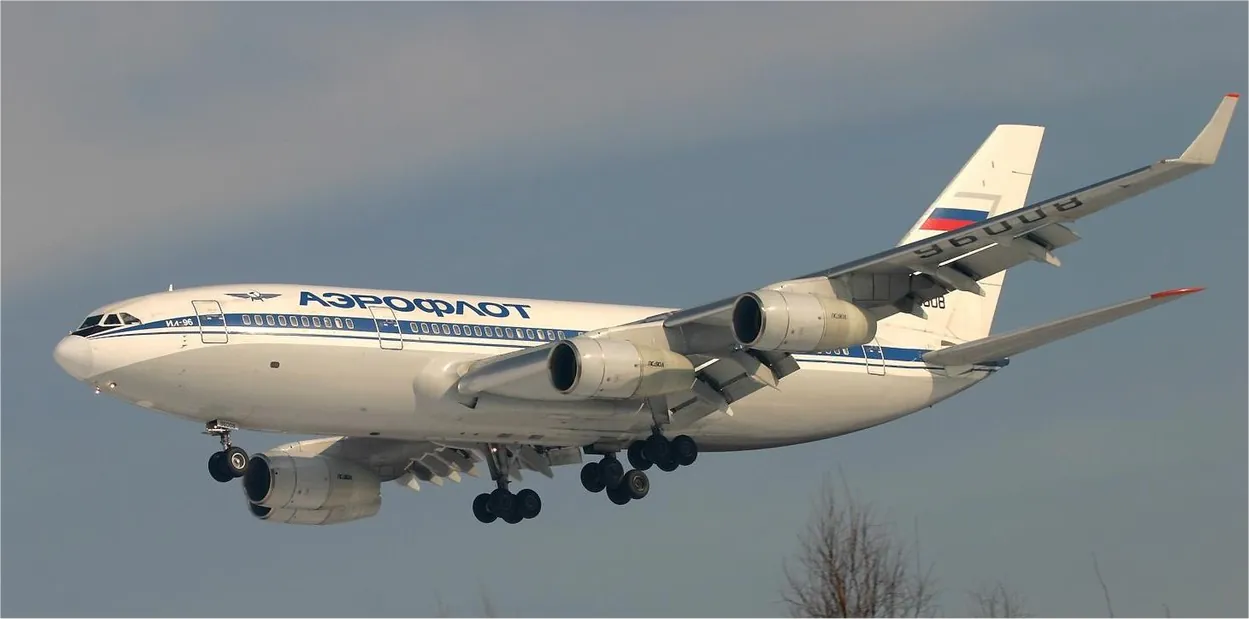
Russia revives retired aircraft: what is forcing airlines to pull Tu-204s, Il-96s and Boeing 747s out of storage in 2026?
First, the demand picture is not a collapse. Russia is still moving large passenger volumes across a vast domestic network.
The fleet picture is tightening. Age, sanctions, and delayed domestic production are converging on the same constraint: usable aircraft.
Meanwhile, Russia’s transport minister framed the bottleneck as capacity, not demand. In a January 16, 2026 interview, TASS quoted Andrey Nikitin saying airlines carried about 108.5 million passengers in 2025. He also said 2026 traffic should stay near that level because the fleet is not expanding.
Three days later, on January 19, 2026, The Moscow Times, citing Rostec-linked reporting, said the restoration list includes nine Tu-204/214s, one Antonov An-148, and two Il-96 widebodies. It added that ten aircraft had already returned to service, with the remainder expected in 2026–2027.
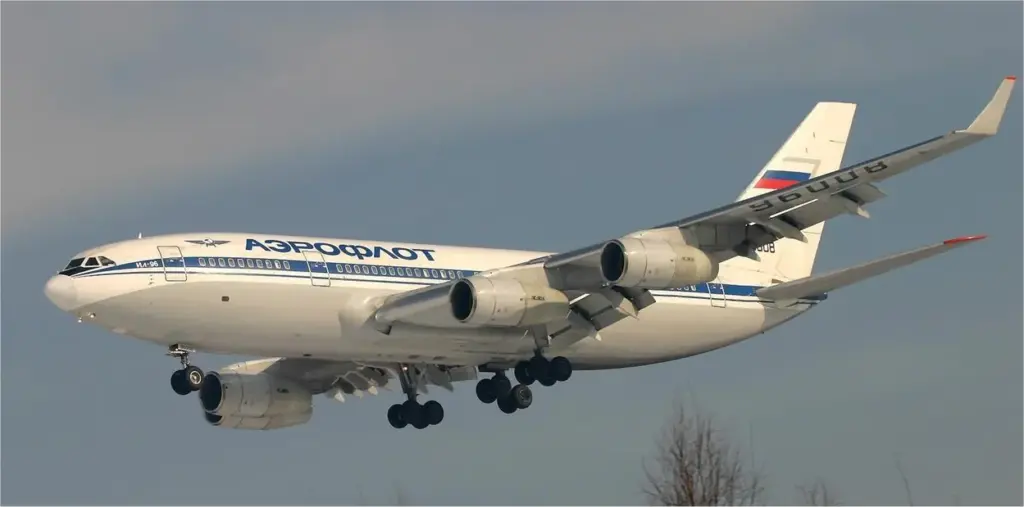
Source: Dmitriy Pichugin – Russian AviaPhoto Team (GFDL 1.2 http://www.gnu.org/licenses/old-licenses/fdl-1.2.html), via Wikimedia Commons
On January 20, 2026, Aerospace Global News reported that Russia is reactivating retired aircraft types. It cited the Tupolev Tu-204/Tu-214 family, the Ilyushin Il-96, and stored Boeing 747-400s.
So the question is operational. How does an airline system stay reliable when the normal original equipment manufacturer (OEM) pipeline disappears?
In short, Russia revives retired aircraft because the math is unforgiving. Aircraft wear out every day, while replacements arrive slowly.
Russia revives retired aircraft: the sanctions squeeze behind the fleet crisis
However, the first shock was parts—and it arrived before the aircraft ran out of runway
First, sanctions hit the maintenance supply chain. Western restrictions after February 24, 2022 disrupted access to approved spares, software updates, and manufacturer-backed technical support.
Meanwhile, the market learned quickly that “support” is not just shipping boxes. It is also about documentation, traceability, and approvals that keep aircraft compliant.
China says no to Russia
Next, early warning signs appeared within weeks. On March 10, 2022, Reuters reported comments from a Russian aviation authority official. He said China refused to supply aircraft parts after Boeing and Airbus halted components.
Still, fleets did not ground overnight. Operators had inventory buffers and could lean on existing overhaul schedules for a time.
However, the maintenance clock kept ticking. Every airframe cycles toward inspections and life-limited replacements that cannot be postponed indefinitely.
In maintenance, repair and overhaul (MRO) terms, hours and cycles keep accumulating. So compliance pressure rises even when aircraft keep flying.
Meanwhile, sanctions policy kept tightening, and that pressure reshaped how parts move
First, sanctions did not erase demand for parts. Instead, they pushed procurement into longer routes and third-country intermediaries.
At the same time, the European Union (EU) kept closing gaps. In a February 24, 2025 summary of the EU’s 16th sanctions package, the European Commission’s finance directorate described transport measures linked to aviation goods and services. It said third-country carriers conducting domestic flights in Russia could be listed and barred from flying to the EU.
Meanwhile, investigators tracked that trade. On June 26, 2025, Yle published an investigation based on customs data. It said Airbus and Boeing parts continued reaching Russia despite sanctions.
Still, aerospace supply chains resist clean separation. Parts can move through distributors, brokers, and maintenance channels that are hard to police.
Moreover, governments sometimes carve out exceptions for industrial reasons. Fliegerfaust previously covered a titanium-related case in Canada’s Airbus waiver. That episode showed how sanctions can collide with global aerospace dependencies.
Still, cannibalization became the blunt instrument when supply chains failed to match schedules
First, airlines can swap parts between aircraft when shortages bite. That practice is common in aviation, but sanctions changed its scale.
Next, reporting described a turn toward “donor” airframes. On August 8, 2022, Reuters reported that Russia had started stripping some passenger jets for parts.
Meanwhile, analysts warned that cannibalization buys time, not stability. On August 9, 2022, ABC News reported that Russian airlines were stripping jetliners for spare parts because sanctions blocked access to repairs and spares.
Consequently, the incentives shifted. Stored aircraft became a buffer stock for both capacity and spares.
So Russia revives retired aircraft that it can support domestically. It is not elegant, but it is available.
Russia revives retired aircraft: inside the 12-aircraft restoration program
When the fleet can’t grow, the easiest “new” airplane is the one that already exists—somewhere under a tarp.
Notably, the restoration list mixes narrowbodies, widebodies, and a Ukrainian-designed type
First, multiple reports converge on the same list. It includes nine Tu-204/214 aircraft, one Antonov An-148, and two Il-96 widebodies.
Next, the plan targets near-term lift. It aims to preserve capacity while domestic production programmes struggle to ramp.
Meanwhile, the most politically sensitive item is the An-148. The type is Ukrainian-designed, and it carries a difficult safety history in Russia.
On January 21, 2026, Radio Free Europe/Radio Liberty (RFE/RL) said pro-Kremlin outlet Izvestia reported a 12-aircraft reactivation plan for 2026. It also said ten aircraft had already been sent to airlines to offset inventory decline.
Moreover, RFE/RL explained why the An-148 re-entry is unusual. It said Russia grounded the aircraft type after a February 2018 crash that killed all 71 people aboard.
So reactivation is not only a storage story. It is also a compliance and risk-management story.
Meanwhile, “reactivation” is a heavy-check problem as much as it is a fleet-plan problem
First, a stored aircraft does not return to service by itself. Preservation must be reversed, and critical systems must be inspected.
Next, structure and corrosion risks need attention. Storage environments vary, and aircraft age even when they do not fly.
At the same time, engines and avionics often set the pace. They can require overhaul, re-certification, and new spares to clear release-to-service checks.
Still, the work can be straightforward when parts and documentation exist. The trouble is that sanctions often turn “straightforward” into “slow.”
Consequently, the restoration plan does two things at once. It adds airframes, and it forces an expansion of domestic support for older types.
As a result, earlier reporting shows restoration planning began in 2022, before the squeeze peaked
First, the stopgap logic appeared early in the war. Operators and state industry started building buffers while inventories still existed.
On May 9, 2022, AeroTime reported that United Aircraft Corporation (UAC) received subsidies to restore stored aircraft. It listed Il-96s and Tu-204/214s. It also mentioned An-124 heavy freighters.
Meanwhile, that An-124 detail broadens the story. Heavy-lift cargo is strategic, and sanctions did not hit only passenger traffic.
Still, the restoration effort also reflects geography. Russia spans 11 time zones, and air travel functions like infrastructure.
So even modest fleet attrition can have outsized regional effects. That reality pushes policy toward reactivation rather than retreat.
Russia revives retired aircraft: Rosaviatsia’s fleet-loss warning and the triage toolkit
When the toolbox runs out of new parts, the next best tool is a longer calendar.
First, Rosaviatsia has described a pessimistic scenario where retirements outpace replacements
First, regulators have warned about the scale of potential fleet attrition. The risk is not a single grounding event. The risk is a slow withdrawal wave that erodes capacity year by year.
On October 8, 2025, FlightGlobal reported comments by Rosaviatsia chief Dmitry Yadrov. It said he warned a “pessimistic scenario” could withdraw 339 aircraft from Russian operators by 2030. It also said that equates to around 30% of the current civil fleet.
Meanwhile, that is not a small haircut. It is a structural contraction unless production replaces the loss.
So the reactivation push makes sense as a hedge. It buys time against that forecast.
Next, Rosaviatsia’s mitigation toolkit expands life limits and widens acceptable parts pathways
First, a regulator can extend service life limits for certain aircraft types. That approach keeps metal in the air, but it also increases inspection burdens.
At the same time, FlightGlobal reported that Rosaviatsia discussed life extensions for Antonov An-24/An-26 and Yakovlev Yak-40 aircraft. Those are older regional platforms, but they still serve remote routes.
Meanwhile, the parts strategy matters too. FlightGlobal also reported legislative changes to allow Parts Manufacturer Approval (PMA) components. PMA is a parts-approval pathway used in aviation to widen sourcing beyond original manufacturers.
Still, PMA does not solve every shortage. It mainly helps for certain parts categories, and it still depends on oversight and traceability.
Consequently, reactivation of stored aircraft becomes one piece of a larger triage system. It sits alongside life extensions, alternate parts pathways, and expanded domestic maintenance.
Finally, the triage toolkit reflects a shift from growth planning to capacity preservation
First, Russia’s civil aviation policy before 2022 assumed fleet renewal through global supply chains. That assumption no longer holds.
Meanwhile, passenger demand has remained substantial. So capacity preservation becomes politically and economically important.
In practice, that means hard trade-offs. Older aircraft cost more to operate, but they keep routes alive.
So Russia revives retired aircraft because the alternative is retreat. It would mean fewer flights, fewer routes, and higher prices.
Russia revives retired aircraft: Tu-204 and Tu-214 as the narrowbody stopgap
In a pinch, “new deliveries” can mean rolling a 1990s design out of a 2020s hangar.
First, the Tu-214 is positioned as a domestic mainline workhorse
First, the Tu-214 sits in the narrowbody category. That is the workhorse segment for domestic networks.
Meanwhile, the advantage under sanctions is control. A domestically supported aircraft can be prioritised for parts, upgrades, and approvals.
On its aircraft lineup page, United Aircraft Corporation describes the Tu-214 as a twin-engine narrowbody. Its maiden flight was on March 21, 1996.
Still, airlines care about unit cost and dispatch reliability. So the decisive question is scale and consistency of deliveries.
Next, certification of “import-substituted” systems is a prerequisite for any meaningful ramp-up
First, import substitution aims to remove Western dependencies. It focuses on avionics, safety systems, and other components that became hard to source after 2022.
In this context, “import substitution” means swapping foreign-made systems for Russian-made ones and certifying the change. The Tu-214 airframe first flew in 1996, so the design is not new. What is new is the post-2022 configuration built around domestically made avionics and safety equipment. It is being proven through flight tests and approved as a major modification before serial deliveries can ramp. That is why a 1990s first-flight date can coexist with 2025–2027 production targets.
Meanwhile, official industry messaging framed the same milestone as a manufacturing unlock. On December 27, 2025, Rostec said the import-substituted Tu-214 opens the way to commercial production. It also said the Tu-214 flying laboratory made a first flight after modification in November 2024. It added that additional certification testing started in February 2025.
On December 29, 2025, FlightGlobal reported that Rosaviatsia approved a “major change” to the Tu-214 design. It said the ramp target is up to 20 aircraft per year by the end of 2027. It also said the modified aircraft uses domestically built avionics and safety equipment, including collision-avoidance and ground-proximity warning systems.
Still, a target is not a delivered aircraft. So operators keep looking for bridges that cover the gap.
Consequently, Russia revives retired aircraft that can be returned faster than a new programme can ramp.
Finally, the production gap keeps stored Tu-204s in the picture
First, domestic replacement programmes include the Yakovlev MC-21 and the SJ-100, a Russified Superjet 100 derivative. They also include the Tu-214 ramp.
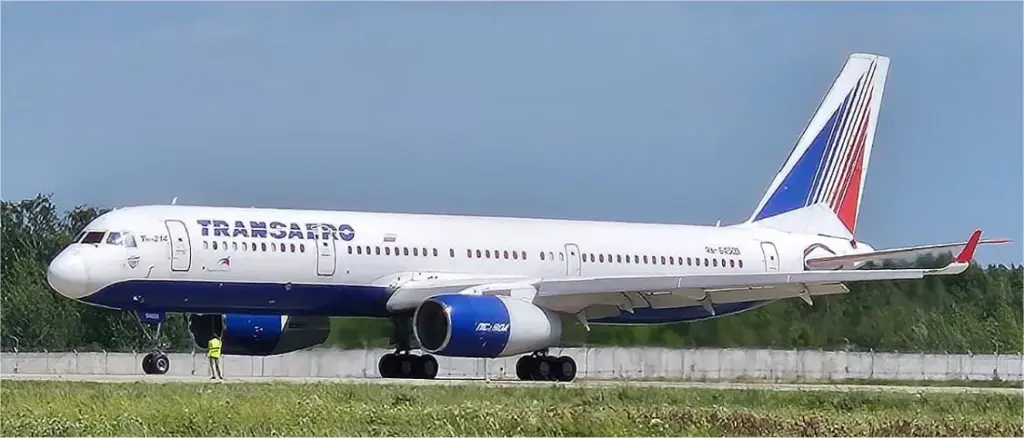
Meanwhile, those programmes have faced delays as imported systems are replaced. So the fleet renewal schedule keeps sliding.
On August 8, 2025, Reuters reported that Russian aircraft makers delivered only one of 15 planned commercial jets that year. It also said only 13 new commercial planes had been added since 2021. Those were 12 Superjets and one Tu-214.
Still, airlines need seats now. So restoration of Tu-204-family airframes becomes a time-buying tool.
In short, Russia revives retired aircraft for near-term lift. The long-term fix still depends on serial production.
Russia revives retired aircraft: the Il-96 widebody dilemma
Four engines can look like overkill—until politics turns “overkill” into “available.”
To start, Russia’s widebody problem is structural
First, widebodies matter for high-density routes and long-range missions. They also matter when international route options are limited.
Meanwhile, Russia does not have a mass-produced domestic long-haul twinjet. So the Il-96 becomes the domestic widebody option.
On its civil lineup page, United Aircraft Corporation describes the Il-96-300 as a wide-body long-haul aircraft designed to carry up to 300 passengers. It also notes automatic landing capability to International Civil Aviation Organization (ICAO) Category IIIA and IIIB standards.
Still, the Il-96 has four engines. That is not the efficiency trend the global market chose. So any return is a trade: higher operating costs for availability under domestic control.
Then, the Il-96-400M development track shows progress, but cadence matters more than a single milestone
First, Russia has worked on an updated Il-96-400M variant. The programme aims to modernise systems and expand capacity.
On November 2, 2023, AeroTime reported that a new Il-96-400M made its maiden flight.
Meanwhile, widebody production is complex even for mature aerospace powers. So airlines care about serial output, spares, and a predictable delivery pipeline.
On April 11, 2024, FlightGlobal reported that Voronezh Aircraft Production Association (VASO) received fuselage and wing sections for the latest Il-96-300. It said those sections will be assembled at the plant.
Still, low-rate work can keep a programme alive. Yet it may not transform fleet structure without scale.
So, the Il-96 return also carries strategic signalling for state transport and special roles
First, widebodies are not only about airline economics. They also support government transport and special missions.
Meanwhile, RFE/RL’s January 2026 reporting on mothballed aircraft noted that a version of the Il-96 serves as Vladimir Putin’s presidential aircraft. That detail highlights the type’s dual role in Russia.
Still, the airline case remains narrow. The aircraft works best on trunk routes with consistent demand. It also needs a support ecosystem for four engines and older systems.
Ultimately, the Il-96 story points to a constraint. Without a new-generation widebody programme in serial production, widebody capacity remains limited.
Russia revives retired aircraft: Boeing 747s return for high-density domestic flying
Nothing says “capacity crunch” like dusting off a jumbo that the world retired for fuel burn.
Notably, the Boeing 747 return is about peak capacity, not prestige
First, seat count matters when fleets are tight. A single widebody flight can replace multiple narrowbody departures.
Meanwhile, Aeroflot subsidiary Rossiya Airlines stored part of its Boeing 747-400 fleet during the pandemic. Rossiya inherited many of these jumbos after Transaero collapsed in 2015–2016. Now, the aircraft’s density can look attractive on long domestic stages.
On January 10, 2025, Aviacionline reported that Rossiya planned Boeing 747-400 operations from March 30 to October 25, 2025. It listed routes from Moscow Sheremetyevo to Anadyr, Magadan, and Khabarovsk. It also cited a 522-seat configuration.
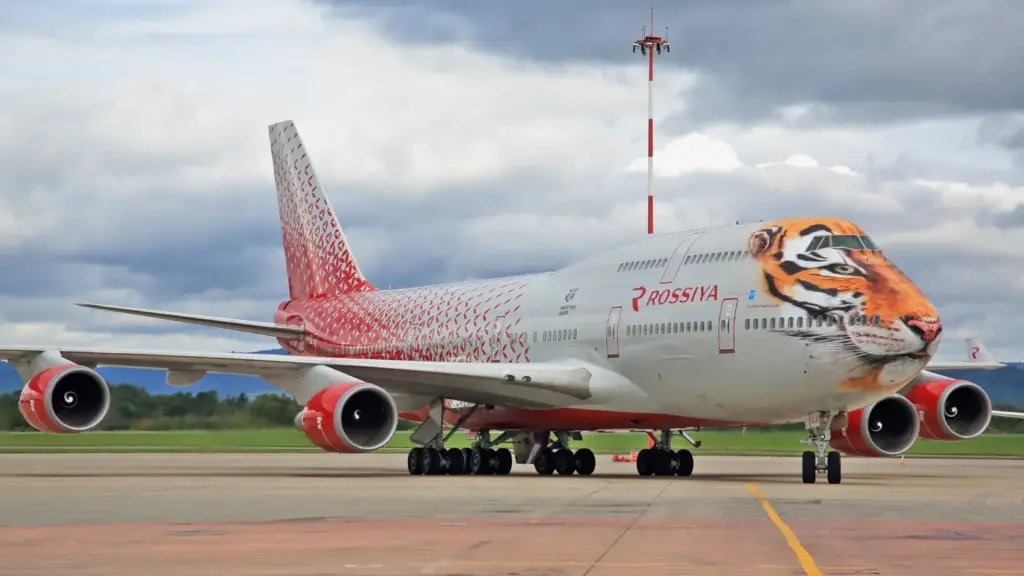
Still, a 747 schedule is not just a timetable choice. It is also a maintenance and utilisation bet.
Meanwhile, 747 operations often depend on parts donors and training assets
First, mature aircraft types survive on ecosystem depth. That includes parts pools, training pipelines, and overhaul capacity.
Fliegerfaust previously covered a different 747 case in government aviation. It examined how U.S. Boeing 747-8 acquisitions were framed around training and spares in coverage of the Air Force One 747-8 training and spares plan. Those two VC-25B presidential aircraft airframes were originally built for Transaero but were never delivered.
Meanwhile, that same logic applies to commercial use. The airplane is only as useful as the support chain behind it.
Still, the Russian support chain carries sanctions risk. Even when parts exist globally, approvals and traceability can slow procurement.
Consequently, the 747 return underlines why Russia revives retired aircraft that move the most people per rotation
First, high-density aircraft protect network coverage. They also reduce the number of aircraft rotations needed for the same passenger throughput.
Meanwhile, the strategy has limits. Only certain airports can handle the type, and only certain routes can fill it consistently.
In short, the 747 revival reads like a targeted instrument. It buys lift where demand is strongest and alternatives are scarce.
Russia revives retired aircraft: the economics of keeping older metal in the air
Airliners do not age like wine; they age like machinery—expensively and on schedule.
First, reactivation trades capital cost for operating cost
First, a stored aircraft can look cheap compared with buying a new one that cannot be imported. Yet older aircraft often burn more fuel and need more labour per flight hour.
Meanwhile, older types can also generate more unscheduled maintenance. That reduces dispatch reliability and drives up reserve requirements.
Still, airlines accept those costs when the alternative is lost capacity. So reactivation becomes a rational, if expensive, bridge.
Consequently, Russia revives retired aircraft even when they are inefficient. Availability can outweigh perfect economics in a constrained system.
Next, crew training and utilisation create a second bottleneck that hangar work cannot fix
First, airworthiness is only one side of capacity. Crews, simulators, and training pipelines also matter.
On August 25, 2024, RFE/RL reported on operational strain at Aeroflot. It said Rosaviatsia’s maximum flying-time limit for crews was 90 hours per month. It also described challenges in finding adequately serviced aircraft under sanctions.
Meanwhile, fleet diversification makes training harder. More aircraft types can mean more simulator hours and more recurrent checks.
Still, reactivation adds tail numbers, not instructors. So the capacity gain can be smaller than the number of restored airframes suggests.
Finally, scarcity tends to surface in fares, frequencies, and route choice
First, constrained supply changes route economics. Airlines tend to protect high-demand trunk routes first.
Meanwhile, thinner markets can lose frequency. They can also lose aircraft size, forcing more connections and longer trip times.
Reuters, in its August 2025 reporting on Russia’s aircraft industry, noted that reduced aircraft supply while demand remains high pushes prices up. It cited Rosstat data showing ticket prices rising in 2023 and 2024.
In practice, reactivation is not only engineering. It is network policy by other means.
Russia revives retired aircraft: safety signals, certification risk, and fleet math
The toughest part of aviation is not getting a plane airborne; it is keeping it boring for 10,000 cycles.
First, incidents and maintenance stress are now part of the public record
First, an ageing fleet under spares pressure will face stress. That does not prove the system is unsafe, but it increases risk sensitivity.
On December 6, 2024, Novaya Gazeta Europe reported that safety incidents involving passenger planes in Russia reached 208 in January–November 2024, up from 161 over the same period in 2023.
Meanwhile, Rosaviatsia has argued safety indicators improved in 2025. FlightGlobal reported that the agency cited a nearly 39% fall in civil aviation accidents versus the same period a year earlier.
Still, outside verification is limited under sanctions. So narratives compete, and trust becomes part of the system’s operating environment.
Next, international oversight remains constrained, and Russia has asked ICAO to ease sanctions
First, international aviation governance depends on shared standards and mutual recognition. Sanctions stress that model by restricting parts, insurance, and certification channels.
On September 22, 2025, Reuters reported that Russia asked the United Nations (UN) aviation agency ICAO to ease sanctions. It said Russia framed the restrictions as a safety issue because they limit access to parts and related support.
Meanwhile, certification disputes can cascade. Fliegerfaust previously examined that dynamic in coverage of a Canadian decertification fight involving business aircraft.
Still, aviation paperwork is not abstract. It decides what can fly, where, and under which liability regime.
Finally, fleet math explains why Russia revives retired aircraft even if passenger traffic holds flat
First, Nikitin’s TASS remarks suggest a capped-growth environment. Traffic can stay stable, but only because the system reallocates scarce capacity.
Meanwhile, Rosaviatsia’s pessimistic scenario implies a slow-burning squeeze. Retirements can outpace deliveries for years.
Consequently, every restored Tu-204 or Il-96 becomes a hedge. It delays route cuts, frequency reductions, and scarcity-driven price spikes.
In short, Russia revives retired aircraft because capacity is the scarce resource. The system cannot grow by wishful thinking.
Russia revives retired aircraft: timeline from sanctions shock to 2027 deliveries
In aviation, “next year” is a moving target; in sanctions, it often becomes a permanent one.
2022: the maintenance clock starts running under sanctions
- Feb. 24, 2022: full-scale invasion of Ukraine; sweeping sanctions disrupt aviation support
- Mar. 10, 2022: Reuters reports Russia says China refused to supply parts after sanctions
- May 9, 2022: AeroTime reports UAC subsidies to restore Il-96 and Tu-204/214 aircraft; An-124 also mentioned
- Aug. 8–9, 2022: Reuters reports cannibalization; ABC News warns longer-term spares pressure
2023–2024: domestic milestones arrive, but the ramp stays slow
- Nov. 2, 2023: AeroTime reports Il-96-400M maiden flight
- Apr. 11, 2024: FlightGlobal reports VASO receives major Il-96 aerostructures
- Aug. 25, 2024: RFE/RL reports Aeroflot strain; pilot utilisation limits and servicing issues
2025–2027: capacity management turns into fleet strategy
- Jan. 10, 2025: Aviacionline reports Rossiya’s summer 2025 Boeing 747-400 plan on domestic routes
- Feb. 24, 2025: European Commission summarizes sanctions; transport measures target third-country carriers and aviation goods
- Oct. 8, 2025: FlightGlobal reports Rosaviatsia warns 339 aircraft could be withdrawn by 2030
- Dec. 27–29, 2025: Rostec and FlightGlobal report Tu-214 approval; output ambition up to 20 per year by end-2027
- Jan. 16–21, 2026: TASS forecasts flat 2026 traffic; RFE/RL reports aircraft reactivation programme
- 2026–2027: remaining restored aircraft deliveries described in Rostec-linked reporting
Russia revives retired aircraft: conclusion
First, the timeline shows why the restoration story is not a one-off headline. It is a policy response to a multi-year mismatch between wear-out and replacement production.
Meanwhile, the timeline shows the limit of stopgaps. Every delivery slip makes the next restoration plan more attractive.
Still, each reactivation cycle increases the maintenance burden that rolls forward. That burden can show up as costs, delays, and more operational strain.
In the end, Russia revives retired aircraft because it can and because the fleet math is unforgiving. Yet the reporting also suggests a risk: a “temporary” strategy can harden into a permanent operating model. If domestic production remains slow and sanctions remain durable, will reactivation become the normal path for airline capacity—and what does that mean for safety culture and transparency?
One unknown could still rewrite the fleet math: how quickly aviation restrictions unwind if the war ends. Even with a ceasefire or treaty, parts access, MRO approvals, leasing and insurance, and airspace rights may not return at the same speed. If a settlement ever includes aviation, which restrictions get lifted first?
Leave your answers and comments below and on our Fliegerfaust Facebook page.
Russia revives retired aircraft: Sources
Even aviation stories need a parts list—these links are the paper trail.
- Tu-204, Il-96 and Boeing 747: Russia revives retired aircraft amid airline fleet crisis (Aerospace Global News, Jan. 20, 2026)
- Russia Restores Old Planes to Address Growing Airline Fleet Shortages (The Moscow Times, Jan. 19, 2026)
- Passenger air traffic in 2026 to remain at 2025 level, though growth not ruled out (TASS, Jan. 16, 2026)
- Russia says China refuses to supply aircraft parts after sanctions (Reuters, Mar. 10, 2022)
- Russia still getting spare parts for Airbus, Boeing aircraft despite sanctions (Yle, Jun. 26, 2025)
- EU adopts 16th package of sanctions against Russia (European Commission, Feb. 24, 2025)
- Exclusive: Russia starts stripping jetliners for parts as sanctions bite (Reuters, Aug. 8, 2022)
- Ukraine war sanctions force Russian airlines to strip jetliners for parts (ABC News, Aug. 9, 2022)
- Russia Dusts Off Ukrainian-Designed, Soviet-Era Passenger Jets As Sanctions Bite (RFE/RL, Jan. 21, 2026)
- Russia’s UAC to begin restoration work on Il-96, Tu-204 and An-124 aircraft (AeroTime, May 9, 2022)
- ‘Pessimistic’ scenario could see 30% of Russian civil fleet withdrawn by decade-end (FlightGlobal, Oct. 8, 2025)
- Tu-214 aircraft overview (United Aircraft Corporation)
- Approval of substituted Tu-214 clears path to serial production (FlightGlobal, Dec. 29, 2025)
- The Tu-214 with Domestically Made Systems Received the Approval of a Major Modification (Rostec, Dec. 27, 2025)
- Russia’s struggle to build commercial jets reflects deeper industrial malaise (Reuters, Aug. 8, 2025)
- Il-96-300 / Il-96-400M aircraft overview (United Aircraft Corporation)
- Extra-long Russian Il-96-400M makes maiden flight (AeroTime, Nov. 2, 2023)
- VASO assembly line receives aerostructures for latest Il-96 (FlightGlobal, Apr. 11, 2024)
- Aeroflot confirms Boeing 747-400 flights for summer 2025 across key Russian destinations (Aviacionline, Jan. 10, 2025)
- Overworked Pilots With ‘Nothing To Fly’: How War In Ukraine Is Crippling Russia’s Aeroflot (RFE/RL, Aug. 25, 2024)
- Winging it. The number of safety incidents recorded by Russian airlines in 2024 has already reached a record high (Novaya Gazeta Europe, Dec. 6, 2024)
- Russia asks UN aviation agency ICAO to ease sanctions over safety concerns (Reuters, Sept. 22, 2025)
For full details, please refer to our Disclaimer page.