

Batik Air seat collapse: how does a three-seat row end up sliding backward during takeoff without anyone getting hurt?
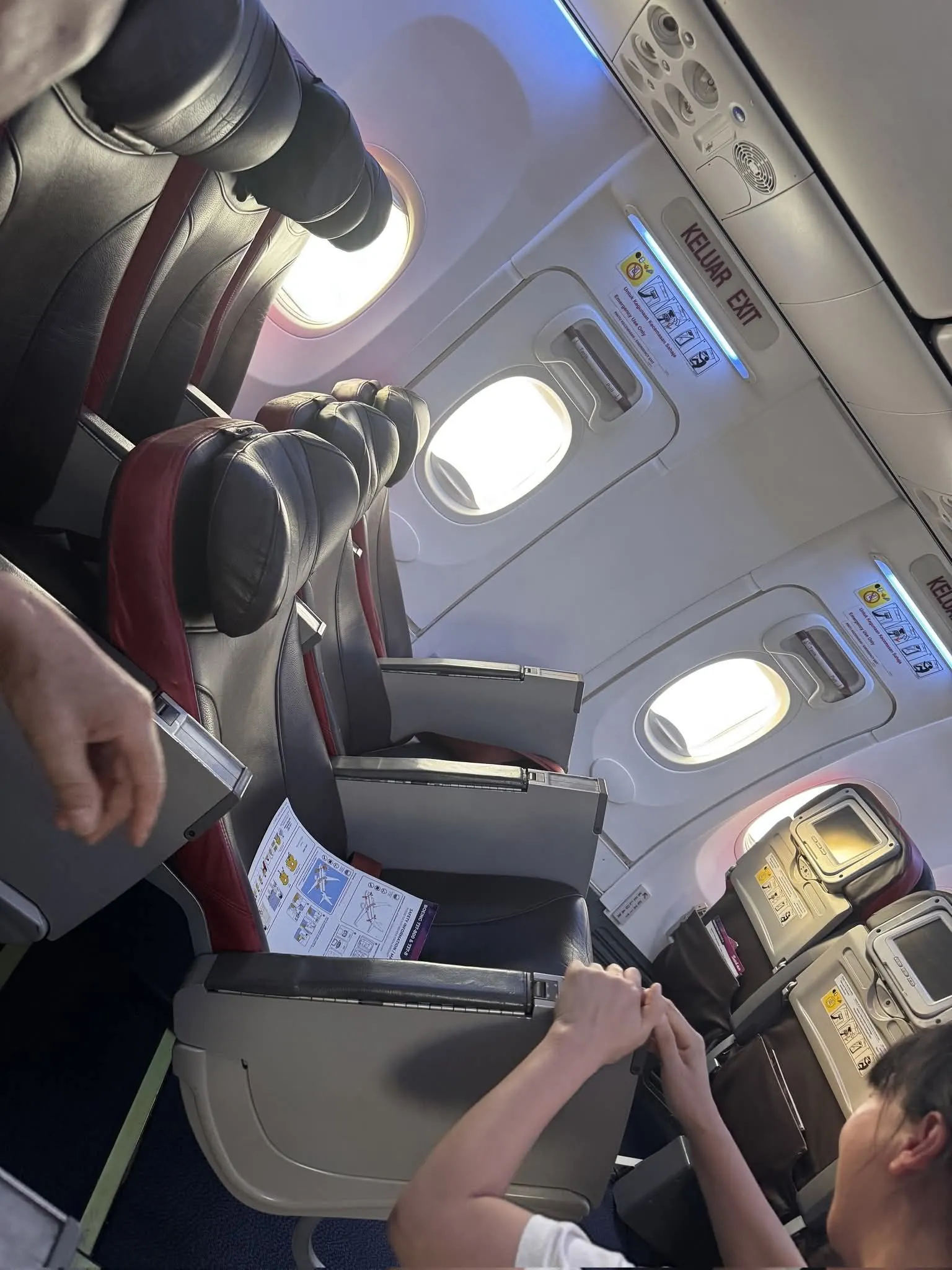
Batik Air seat collapse: On February 25, 2026, multiple aviation outlets reported that a passenger seat row shifted during departure on a Boeing 737 Batik Air flight. The sector linked Sultan Mahmud Badaruddin II International Airport, Palembang (PLM) with Soekarno-Hatta International Airport, Jakarta (CGK). Together, the reports raised pointed questions about seat-track integrity and maintenance oversight (Aviation A2Z).
Batik Air seat collapse: What is known so far
First, the seat row detachment reports
First, the core claim is simple and unsettling. A row of three passenger seats shifted backward just after takeoff (see on image above). Moreover, several reports describe the row as coming loose from its floor-mounted seat track, rather than suffering a normal recline failure (Paddle Your Own Kanoo).
Notably, View from the Wing framed the event as an exit-row problem. It described seats collapsing backward during initial climb and said the seats slammed into the row behind (View from the Wing).
Still, the public evidence remains thin. None of the public reports reviewed on February 25, 2026 includes a maintenance finding, an engineering write-up, or a regulator’s inspection result. Notably, none includes an on-the-record statement from Batik Air or Indonesia’s Directorate General of Civil Aviation. In cabin safety terms, that is the difference between a dramatic story and a reportable event with a root cause.
Light aside: in airline cabins, seats are meant to recline—never re-locate.
Meanwhile, the cabin seat detachment outcome
Meanwhile, the same reporting converges on a practical outcome. Cabin crew moved the affected passenger to another seat. Additionally, the flight continued and landed without reported injuries (Aviation A2Z).
Consequently, the Batik Air seat collapse story sits in an awkward middle ground. It produced no casualties and no diversion. However, it touched a part of the aircraft interior that certification treats as a safety structure, not a convenience feature.
Separately, the seat track issue: what remains unconfirmed
Separately, key identifiers are missing from public reporting. No outlet has published a flight number, aircraft registration, or airframe serial. Moreover, none has named the seat manufacturer or the cabin modifier.
Therefore, readers should treat the aircraft type as provisional. Several outlets call the aircraft a Boeing 737 (Paddle Your Own Kanoo). However, the early Turkish-language coverage focused on the seat’s sudden rearward movement without clearly identifying the aircraft model (Herdem Aviation).
Even so, the safety question does not depend on a logo. If a seat row truly disengaged from its attachments, investigators will want the same basics: the loads at the moment of failure, the condition of the track and fittings, and the maintenance history.
Batik Air seat collapse: Timeline, route, and reporting gaps
Notably, exit-row seat collapse reports spread across languages
Notably, the first widely circulated write-up appears to be Turkish. On February 22, 2026, Herdem Aviation described a passenger seat that collapsed and moved rearward shortly after takeoff (Herdem Aviation).
Meanwhile, English-language travel and aviation blogs amplified the incident the next day. On February 23, 2026, View from the Wing and Paddle Your Own Kanoo both ran pieces describing an exit-row seat row collapsing during takeoff (View from the Wing).
Finally, on February 25, 2026, Aviation A2Z published a more explicitly technical version, describing a three-seat row separating from the seat-track system on a Palembang–Jakarta sector (Aviation A2Z).
Even so, the reporting chain itself creates a risk. Each retelling can harden assumptions—aircraft type, airline entity, and severity—before primary facts arrive.
Light aside: when a story “tracks” across the internet, the hardware should not.
Specifically, the seat row shift on a short, high-cycle route
Specifically, Palembang to Jakarta is roughly 420 kilometres as the crow flies. In practice, that puts it in the high-cycle, short-haul category.
Additionally, short sectors create a particular maintenance rhythm. Seats see frequent use, quick turns, and repeated “slam” loads as passengers sit, stand, and stow. Meanwhile, takeoff and landing loads repeat several times a day, year after year, on the same fittings.
Consequently, cabin integrity becomes a reliability problem long before it becomes a headline. A single loose fitting can sit unnoticed for weeks. Then, it can become obvious in one second, at rotation, when inertia pulls on everything at once.
However, the seat track issue still lacks an aircraft identity
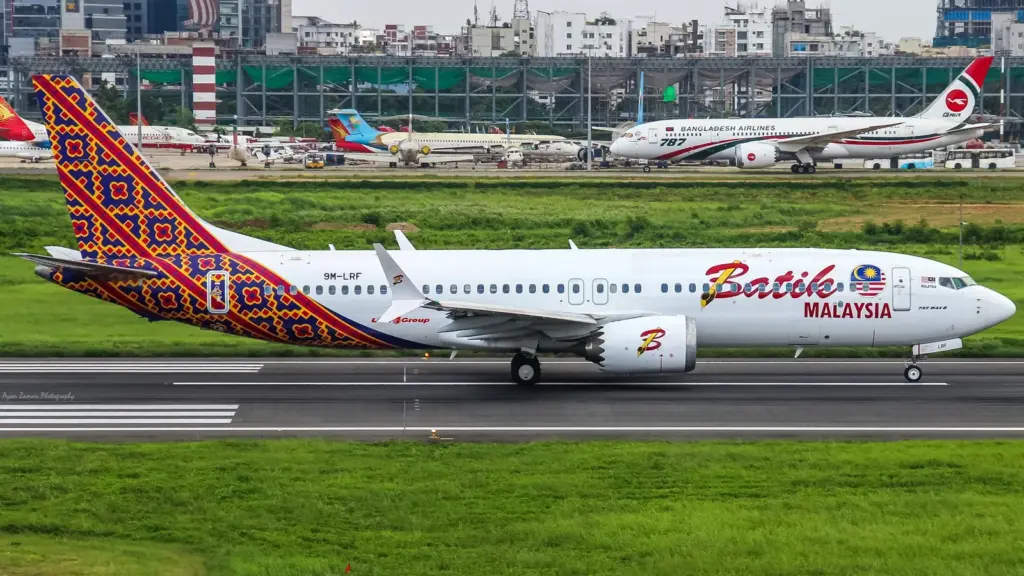
However, some coverage described the operator as “the Malaysian airline Batik Air” (Paddle Your Own Kanoo).
Yet the route cited—Palembang to Jakarta—suggests an Indonesian domestic service. Notably, several write-ups also describe Batik Air as part of the Lion Air Group (View from the Wing). Moreover, Batik branding exists in both Indonesia and Malaysia. Batik Air Malaysia, for example, is described as “formerly known as Malindo Air” by seat-map references (SeatMaps).
Therefore, the safest way to frame Batik Air seat collapse is by route and date, not by assumptions about the operating certificate. If an official statement later confirms the exact operator, aircraft registration, and maintenance provider, this story becomes much sharper.
Batik Air seat collapse: Why seat tracks are a certified safety structure
First, how seat tracks prevent seat track failure
First, airline seats do not bolt directly to a bare floor. Instead, manufacturers install seat tracks—floor rails—into the cabin structure. Seat legs attach to those rails using approved fittings and fasteners.
Moreover, the track system is part of the aircraft’s crashworthiness design. It must transmit passenger and seat loads into the airframe during hard landings, turbulence, and emergency decelerations. In other words, seat tracks are more like structural plumbing than interior furniture.
Light aside: a seat track should behave like a rail line—predictable, aligned, and boring.
Additionally, certification assumes seats resist seat track failure
Additionally, transport-category standards make the attachment requirement explicit. In U.S. Federal Aviation Administration (FAA) rules for emergency landing dynamic conditions, one line is blunt: “The seat must remain attached at all points of attachment, although the structure may have yielded.” — 14 CFR § 25.562, Cornell Legal Information Institute
Consequently, a seat row that genuinely detaches is not a nuisance defect. It is a failure against the fundamental assumption that the restraint system and the airframe stay coupled under load.
Meanwhile, ‘collapse’ can be a seat track issue—or something else
Meanwhile, the word “collapse” needs care. In everyday travel writing, it can describe a recline mechanism that slips. In maintenance terms, it can describe a seat back that fails to lock.
However, the most serious scenario is a loss of attachment at the seat base. That would allow the entire seat assembly to translate or rotate relative to the floor. Notably, Aviation A2Z described a complete seat row detachment and treated it as distinct from a routine recline malfunction (Aviation A2Z).
Therefore, investigators will likely separate three questions. Did the seat back recline unexpectedly? Did the seat base shift on the track? Or did the track or its fittings fail structurally? The answers drive different corrective actions, from replacing a recline unit to inspecting floor-rail fasteners.
Seat row detachment context: what regulators already watch
Notably, seat track failure has triggered Boeing 737 directives before
Regulators have treated seat-track integrity as a known risk pathway on Boeing 737 fleets. In November 2013, the FAA issued an Airworthiness Directive (AD) after identifying titanium seat-track bolts with severed heads due to fatigue. The Federal Register summary warned that the condition “could cause the seats to detach from the seat track.” — U.S. Department of Transportation
Additionally, the European Union Aviation Safety Agency (EASA) posted the directive text as FAA AD 2013-23-04. It covers certain Boeing 737-600/-700/-800/-900/-900ER aircraft with passenger seats installed (EASA).
Consequently, the Batik Air seat collapse narrative fits into a wider truth. Seats are certified systems, yet they also live in the high-wear zone of airline operation.
Moreover, exit-row seat collapse creates an evacuation hazard
Moreover, the immediate risk is not always structural collapse. A mispositioned seat can defeat the lap belt geometry. It can also create secondary injuries when one row strikes another.
Additionally, the evacuation angle matters. When reports place the affected seats near an emergency exit, the stakes rise. A seat row that blocks a path in an exit row creates a hazard precisely where evacuation capacity is supposed to be highest (View from the Wing).
Therefore, even if no one was injured this time, the scenario deserves a hard technical look. Airlines do not get many “free” warnings in service.
Separately, seat track issue lessons from cockpit-seat events
Separately, aviation history shows that even a seat can become a flight-safety issue. In August 2024, Reuters reported that the FAA required inspections on Boeing 787 aircraft after a LATAM Airlines flight experienced a sudden mid-air dive. The report pointed to uncommanded movement of the captain’s seat as a trigger. It also said the movement led to autopilot disconnection, according to the same report (Reuters).
However, passenger seat tracks and cockpit seat mechanisms are not identical systems. Even so, the lesson transfers. Small mechanical interfaces can drive big outcomes when they fail under operational loads.
What comes next after a Batik Air seat collapse report
First, the maintenance response to a seat track issue
First, any airline facing a reported seat-track event will isolate the aircraft for inspection. Technicians will verify seat-track fasteners, fittings, and attachment points. They will also inspect the surrounding floor structure for elongation, cracking, or deformation.
Moreover, maintenance teams will typically check adjacent rows. A single loose component can signal a pattern, not a one-off. Additionally, they will review recent cabin work orders, deep cleans, and seat swaps. Those activities can disturb fittings if procedures slip.
Meanwhile, confirming the seat row detachment details
Meanwhile, a few specific data points would turn Batik Air seat collapse from viral clip to technical case study. A flight number, date and time of departure, and aircraft registration would allow independent tracking to cross-check the airframe’s recent utilization.
Additionally, confirmation of aircraft type would resolve the present ambiguity. Aviation A2Z framed the aircraft as a Boeing 737 on the PLM–CGK route (Aviation A2Z). However, early reporting did not clearly establish the model (Herdem Aviation).
Consequently, official disclosure matters. Without it, the public fills gaps with assumptions, and those assumptions stick.
Finally, why Batik Air seat collapse fits a wider reliability debate
Finally, the Batik Air seat collapse story lands at a moment when public trust in manufacturing and maintenance systems remains sensitive. Fliegerfaust has covered how safety oversight can become a public issue in the Boeing ecosystem. It has also tracked congressional pressure following 737 MAX events (Boeing 737 MAX safety oversight and the Senate hearing).
Moreover, fleet competition also shapes maintenance behaviour. When capacity is tight, operators stretch utilisation, and interiors age faster than most passengers notice. For broader narrowbody context, see Fliegerfaust’s analysis of how Airbus’s A320 family surpassed Boeing’s 737 in cumulative deliveries in October 2025 (Airbus vs Boeing: A320 tops 737).
Additionally, the long arc of safety improvement often comes from unglamorous engineering. Better tracks, better inspections, and better documentation rarely go viral. Yet they are exactly what prevents the next cabin surprise.
Aviation safety is a long-haul business, even when the flight is 420 kilometres.
Batik Air seat collapse – Conclusion
Overall, the most striking part of Batik Air seat collapse coverage is not the drama. It is the absence of confirmable detail. A seat-row shift during takeoff is either a simple mechanism failure or a deeper attachment problem. That distinction matters to engineers, regulators, and every passenger sitting behind an exit row.
However, the public record cannot improve without specific facts. Airlines and regulators can close the credibility gap quickly by publishing the flight number, aircraft registration, and the corrective action taken. Until then, Batik Air seat collapse remains a cautionary headline with a technical question mark.
Consequently, the critical point is this: cabin safety depends on rigorous, routine work that the public never sees. When that routine work slips, even briefly, the cabin can remind everyone how much energy lives in a takeoff roll.
If a certified seat system can move when it should not, what other “small” interfaces deserve harder attention?
Leave your answers and comments below and on our Fliegerfaust Facebook page.
Batik Air seat collapse – Sources
- Aviation A2Z — Batik Air Boeing 737 Seat Row Detaches During Takeoff (February 25, 2026).
- Paddle Your Own Kanoo — Passenger Narrowly Escapes Injury After Seats Suddenly ‘Collapse’ As Boeing 737 is Still Taking Off (February 23, 2026).
- View from the Wing — Exit Row Seats Collapse Into Row Behind During Takeoff—Latest Safety Scare For Troubled Airline (February 23, 2026).
- Herdem Aviation — Batik Air Uçağında Şok Olay: Kalkış Sonrası Yolcu Koltuğu Yerinden Çıktı (February 22, 2026).
- Cornell Legal Information Institute — 14 CFR § 25.562 – Emergency landing dynamic conditions (accessed February 25, 2026).
- U.S. Department of Transportation — Airworthiness Directives; The Boeing Company Airplanes (November 15, 2013).
- European Union Aviation Safety Agency — FAA AD 2013-23-04 (Boeing 737 seat track bolts) (December 20, 2013).
- Reuters — US FAA requires inspections of Boeing 787 planes following mid-air dive (August 20, 2024).
- SeatMaps — Batik Air Malaysia Boeing 737-800 aircraft seat map (accessed February 25, 2026).
For full details, please refer to our Disclaimer page.