
Twin Otter milestone: why does the 1,000th delivery matter to Colombia, to De Havilland Canada, and to the future of aviation in hard-to-reach regions?
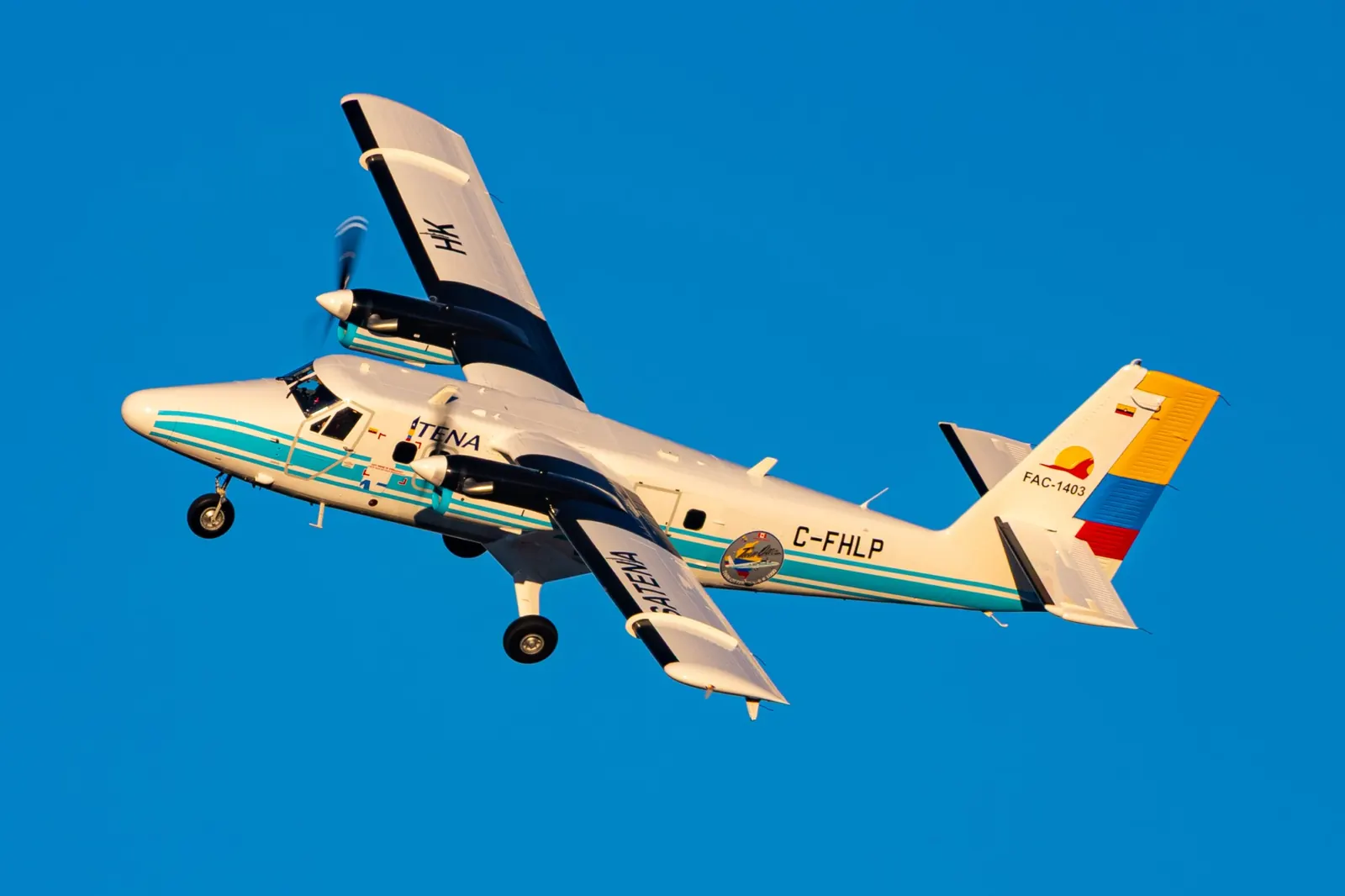
Twin Otter milestone: On March 20, 2026, De Havilland Canada’s milestone release said the 999th and 1,000th de Havilland Canada DHC-6 Twin Otters were going to SATENA, Colombia’s state-owned regional airline. Meanwhile, on March 26, 2026, Vanguard’s follow-up report put that handover in broader context. However, this story is bigger than a round number. It links a classic Canadian short takeoff and landing aircraft to Colombia’s present-day need for public-service connectivity. It also links De Havilland Canada’s long history, its Bombardier chapter, and its current industrial reset.
Twin Otter milestone lands in Colombia
SATENA Twin Otter fleet and the route logic behind the order
Notably, the March 20, 2026 release said the two latest aircraft would become SATENA’s third and fourth De Havilland Canada aircraft. Moreover, the company said the pair would support operations across mountains, jungles, coastlines, and rural regions. In regional aviation, runway length still wins arguments.
Brian Chafe marked the moment with a short line. “Delivering our 1000th Twin Otter is a proud milestone for De Havilland Canada.” — Brian Chafe, CEO, De Havilland Canada
However, the value of the aircraft lies beyond symbolism. The same release said the type was built to connect people in the world’s most challenging environments. Consequently, that point explains why the Twin Otter still sells. Specifically, airlines buy it for jobs that larger aircraft often handle poorly.
SATENA framed the delivery in similar terms. “We are honoured to receive the 1,000th Twin Otter.” — Major General Óscar Zuluaga, President, SATENA
Moreover, Zuluaga said the aircraft would strengthen connectivity throughout Colombia. Specifically, that statement was not ceremonial decoration. Moreover, it described a route system where air service can be a state function before it becomes a commercial luxury.
DHC-6 landmark delivery from contract to handover
However, the milestone began with a firm order. On July 23, 2024, De Havilland Canada’s SATENA agreement announcement confirmed a purchase of eight new DHC-6 Twin Otters. Moreover, it also said deliveries would start later in 2024.
The operator’s reasoning was already visible. “The De Havilland Canada Twin Otter … is the right addition to our fleet.” — Major General Óscar Zuluaga Castaño, President, SATENA
Additionally, Zuluaga said the aircraft would support route growth and reach Colombia’s most remote regions. Ryan DeBrusk made the same commercial point from the manufacturer side. “We are excited and proud that SATENA has chosen the Twin Otter …” — Ryan DeBrusk, Vice-President of Sales and Marketing, De Havilland Canada
Then the deliveries started. On October 31, 2024, a statement from Colombia’s presidency said the first of eight Canadian-built Twin Otters had been handed over for SATENA service. Consequently, Bogotá presented the aircraft as a tool for national connectivity in remote zones.
Meanwhile, SATENA’s growth plan kept expanding. On January 27, 2026, another statement from Colombia’s presidency said the airline aimed to carry more than 1.8 million passengers in 2026. Additionally, it also said SATENA planned to operate 230 routes, up from 172 in 2025. Consequently, it said the carrier would end 2026 with 25 active aircraft, including six new Twin Otters. The Twin Otter milestone therefore landed inside a live expansion plan, not a commemorative brochure.
Twin Otter milestone explains why the DHC-6 still matters
Canadian STOL workhorse by design, not by mythology
Notably, the de Havilland Canada DHC-6 Twin Otter remains a short takeoff and landing (STOL) success because its design brief never became obsolete. De Havilland Canada’s history page shows a company shaped by remote access, harsh conditions, and practical transport problems. The Twin Otter fits that lineage exactly.
Moreover, De Havilland Canada’s 60th-anniversary release says the aircraft first flew on May 20, 1965. The same source says it was designed for Canada’s rugged North and now serves operators in more than 100 countries. Overall, that is longevity with a purpose.
Brian Chafe summed up the reputation neatly. “The Twin Otter is more than a machine; it’s a lifeline, a workhorse …” — Brian Chafe, CEO, De Havilland Canada
However, the phrase works because the performance still backs it. According to De Havilland Canada’s current Twin Otter Classic 300-G page, the standard wheel configuration has a maximum take-off weight of 5,670 kilograms. The same page lists a take-off distance of 366 metres and a landing distance of 320 metres. Additionally, it also lists a maximum cruise speed of 182 knots true airspeed at 10,000 feet and a maximum zero-payload range of 1,613 kilometres. Marketing slides are common. Useful runway numbers are rarer.
1,000th Twin Otter and the modern evolution of the type
Meanwhile, the airframe has changed with the market. On July 23, 2024, De Havilland Canada’s Classic 300-G programme update said the first aircraft in that configuration was on schedule for certification. Moreover, it also said the 1,000th Twin Otter would follow shortly after.
Then, on June 17, 2025, the company’s Paris Air Show statement said the display aircraft was number 998. Additionally, it also said the 1,000th Twin Otter was slated for SATENA.
Additionally, those updates showed that De Havilland Canada was not simply polishing an old design. The company highlighted a Garmin G1000 avionics suite, a redesigned cabin, lower basic empty weight, and stronger economics for the Classic 300-G. Consequently, the programme was evolving while keeping its core mission.
Consequently, that matters because utility aviation rewards disciplined improvement. Operators do not need a fashionable aircraft. They need an aircraft that solves weather, runway, payload, and cost problems every day. The Twin Otter milestone says the DHC-6 still does that.
Moreover, the mission spread remains wide. De Havilland Canada markets the aircraft for passenger service, cargo, medevac, paratroop, VIP transport, and special missions. That breadth helps explain the type’s unusual staying power. Accordingly, it can carry people in the morning, freight at noon, and urgency all day.
Twin Otter milestone sits inside De Havilland Canada’s history
De Havilland utility icon from Downsview to the North
Notably, the company behind the Twin Otter began in 1928. De Havilland Canada’s history page says the company produced its first aircraft in 1928, delivering a DH.60 Moth to the Toronto Flying Club. (see and read more about the Moth) Meanwhile, the same source says the company solidified its manufacturing facility north of Toronto at Downsview. Meanwhile, it also says the company later built the Canadian DH.82 Tiger Moth and became a major wartime manufacturer.
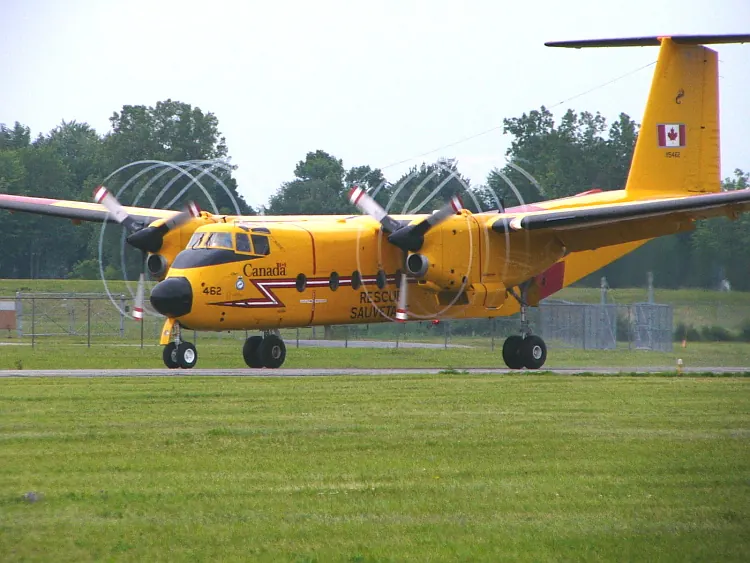
The post-war era then gave the firm its enduring identity. The same official history says the DHC-2 Beaver first flew on August 16, 1947. Meanwhile, the DHC-3 Otter first flew on December 12, 1951. The DHC-4 Caribou followed on July 30, 1958. The DHC-5 Buffalo then expanded that short-field logic into a heavier tactical transport, with nearly twice the payload of the Caribou and improved short takeoff and landing performance. Later, many Buffalo aircraft also served in Canadian search and rescue operations, which gave the type a long second life beyond its original military role. The DHC-6 Twin Otter then extended that remote-service philosophy into a twin-engine platform.
That sequence matters because it reveals a coherent design culture. De Havilland Canada kept answering the same basic question. How do you move people and goods where infrastructure is thin and conditions are harsh? Some companies build around hubs. De Havilland often built for the places beyond them.
Bombardier ownership, Boeing, and Longview’s reconstruction
However, the corporate history became far less stable. The Canadian Encyclopedia’s history of the company says Ottawa bought De Havilland from Hawker Siddeley in 1974. Moreover, it also says the federal government sold the company to Boeing in 1986.
That sale price still stands out. The Los Angeles Times report on the deal said Boeing would pay C$155 million. Then, on March 10, 1992, United Press International reported that Boeing’s sale of De Havilland to Bombardier and the Province of Ontario had formally closed.
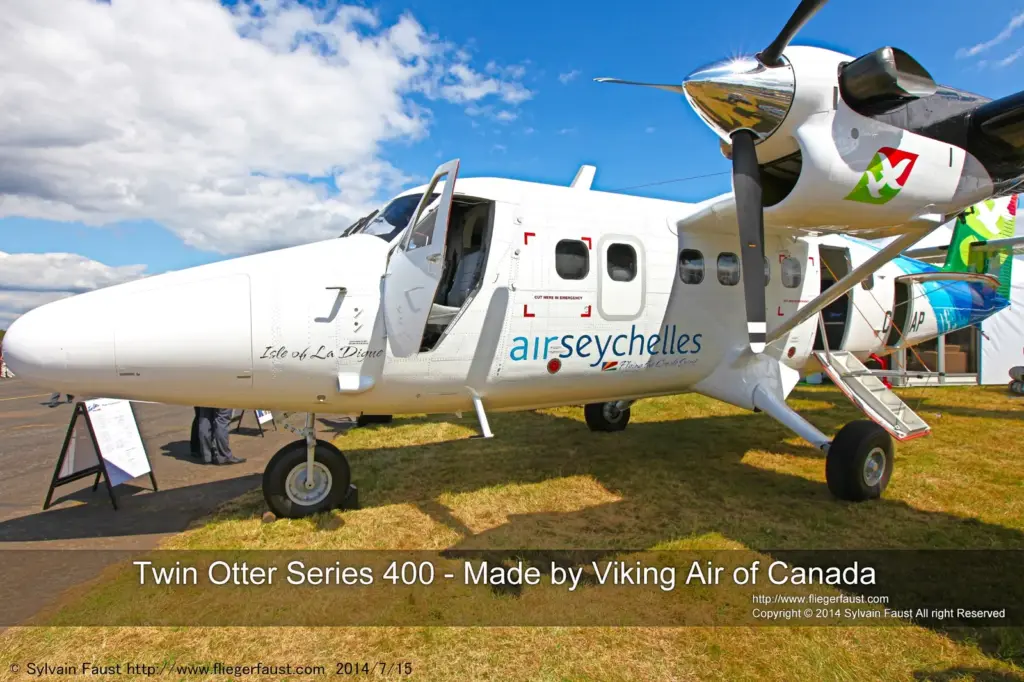
Bombardier kept the Dash 8 (DHC-8/Q400) alive and turned it into one of Canada’s strongest regional aircraft lines. Yet the older utility types moved onto a different path. According to a 2016 PR Newswire release from Viking Air, Viking acquired the original type certificates for all out-of-production De Havilland aircraft in 2006. Viking launched the Series 400 Twin Otter production programme in 2007.
Then another reset arrived. On November 8, 2018, Longview Aviation Capital announced its Dash 8 acquisition from Bombardier, including the de Havilland name and trademark. On June 3, 2019, De Havilland Canada’s relaunch statement said the programme had formally returned under the De Havilland Aircraft of Canada banner. Corporate genealogy can make even aircraft spotters reach for coffee.
Moreover, the consolidation continued. On February 2, 2022, a Longview announcement said De Havilland Aircraft of Canada Limited would become the operating brand for several group companies. Then, on August 1, 2024, the company’s amalgamation notice said those Canadian aviation corporations would merge into one entity under the De Havilland Aircraft of Canada name.
Twin Otter milestone and the De Havilland family tree
De Havilland utility icon from trainer to bush aircraft
Notably, the Twin Otter sits inside one of Canada’s clearest aircraft lineages. De Havilland Canada’s legacy aircraft page lists the DHC-1 Chipmunk, the DHC-2 Beaver, the DHC-2T Turbo Beaver, the DHC-3 Otter, the DHC-4 Caribou, the DHC-5 Buffalo, the DHC-7 Dash 7, and the DHC-8 Dash 8-100, -200, and -300.
The DHC-1 Chipmunk was the first post-war aircraft and a military trainer that later gained long civil life. Meanwhile, the DHC-2 Beaver became the bush-plane benchmark. Additionally, the DHC-2T Turbo Beaver added more power and payload. The DHC-3 Otter then carried that same logic into a larger single-engine platform.
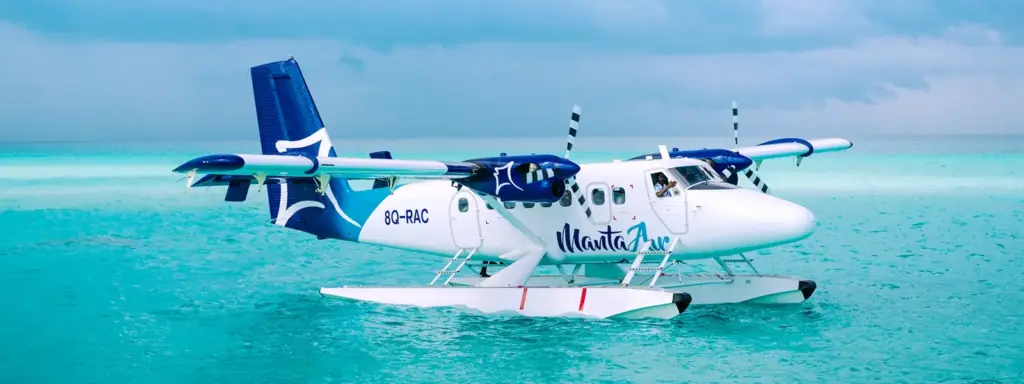
Later, the DHC-6 Twin Otter turned the idea into a twin-engine transport with even broader reach. Its applications still include passenger service, cargo, medevac work, and special missions.
Paul Todkill
Accordingly, its story still feels current in Canada’s North, Colombia’s interior, and other demanding regions around the world, from the Caribbean to the Himalayas, where the Twin Otter has long been associated with operations into Nepal’s Tenzing–Hillary Airport, Lukla (LUA/VNLK), a mountain airfield at 2,846 metres (9,337 feet) with a 527-metre (1,729-foot) runway and a reputation as one of aviation’s most demanding destinations.
DHC-6 landmark delivery in a line of military and regional transports
Meanwhile, the family widened beyond bush work. The DHC-4 Caribou and DHC-5 Buffalo pushed De Havilland deep into tactical transport and short-field military lift. Both types also built reputations in rough-field cargo work and, in Buffalo’s case, later search and rescue service.
Then the DHC-7 Dash 7 translated short-field expertise into a four-engine regional airliner. After that, the Dash 8-100, -200, and -300 turned the idea into a more economical twin-engine commuter family. Today, the Dash 8-400 remains the active regional-airliner line under the De Havilland banner, while special-mission versions keep the platform relevant for state operators.
Accordingly, the product family reads less like a museum list than a long argument about difficult geography. De Havilland aircraft usually matter most when runway limits, climate, or public-service obligations push harder than prestige. Fashion changes quickly. Airfield geometry does not.
Canadian STOL workhorse beyond the classic DHC line
Additionally, the current company supports aircraft outside the original DHC design line. The same legacy page lists the Shorts SC.7 Skyvan, SD330, SD360, and Sherpa. Those types serve short-field freight, para-drop, and rugged transport roles.
De Havilland Canada also carries the firefighting lineage. For readers tracking the industrial side of that effort, see our Fliegerfaust report on Alberta’s DHC-515 waterbomber order. The DHC-515 programme page presents the aircraft as a new-production amphibious firefighter derived from the CL-415 line. Then, on March 10, 2026, a De Havilland production update said the company was building 22 aircraft for European customers and had recently signed contracts with Manitoba, Ontario, and Alberta.
Also see our Fliegerfaust analysis of the Airbus–Spirit AeroSystems deal and the A220 supply chain.
In addition, see our Fliegerfaust coverage of Bombardier’s potential role in Canadian fighter production. Different programmes, certainly.
The same national question keeps returning: what aerospace capabilities does Canada intend to keep?
In the meantime, from the Canadian government in Ottawa, read our Fliegerfaust analysis: Canada P-8A Poseidon: A $10.4 Billion Gamble on U.S. Industry.
Twin Otter milestone points to Canada’s next industrial test
1,000th Twin Otter and the manufacturing reset in Alberta
Notably, the 1,000th delivery also matters because De Havilland Canada is trying to rebuild industrial depth. On September 21, 2022, the company announced Wheatland County, Alberta, as the site of De Havilland Field. That release said final assembly there would cover the DHC-515 Firefighter, the DHC-6 Twin Otter, and the Dash 8-400.
That point turns the export story into something larger. The Twin Otter milestone now sits inside a Canadian manufacturing project that aims to add final assembly, parts production, distribution, training, and maintenance at one site. That is not a small ambition.
Moreover, the company has kept broadening its capabilities around that plan through acquisitions and partnerships in avionics, parts, and aerostructures. The pattern matters more than any single announcement. Consequently, it suggests a firm that wants to control more of its value chain. Supply chains rarely heal because press releases sound optimistic.
SATENA Twin Otter fleet as an export lesson for Canada
Finally, Colombia’s role deserves more weight in Canadian coverage. SATENA is not buying a ceremonial aircraft. It is deploying a platform that fits public-service routes, short runways, thin demand, and difficult terrain. In other words, it is validating the same operating logic that first made the type famous in Canada.
That matters for Canadian aerospace because it points to a durable export niche. Canada does not need to dominate every aircraft segment. It does, however, benefit from holding strong positions in utility turboprops, regional aircraft, and specialist platforms that solve hard operational problems better than larger rivals.
Overall, the Twin Otter milestone should encourage Canadian readers. Overall, it shows that a Canadian design still travels well when the mission is serious enough. However, it also raises a harder question. Can De Havilland Canada now turn legacy, product fit, and national goodwill into a stable long-term industrial strategy, or will Canada once again admire the aircraft more than it supports the factory that builds it?
Conclusion: Twin Otter milestone deserves applause, but not complacency
Overall, this story deserves a positive reading. A Canadian aircraft built for difficult territory has reached a 1,000-unit milestone. Moreover, it has also gone to an operator whose mission still resembles the original logic of bush and regional aviation.
However, sentiment should not replace scrutiny. De Havilland Canada now carries a demanding mix of tasks. Specifically, it must revive production, grow exports, support legacy fleets, build De Havilland Field, and prove that the Twin Otter, Dash 8, and DHC-515 fit inside one coherent industrial future.
Finally, my judgement is favourable but guarded. The milestone airframe went to a carrier that genuinely needs it, which is the best possible destination for such an aircraft.
Notably, that execution test reaches beyond one factory gate. It touches supplier discipline, certification timing, aftermarket support, and Ottawa’s willingness to treat utility aerospace as strategic capacity rather than sentimental heritage. Moreover, Colombia’s order shows that export demand exists when the aircraft meets a real public need. Canada should read that signal carefully. A country that can still design, assemble, support, and export aircraft for the hardest missions is holding a serious national asset.
What do you think?
Yet the next chapter will depend less on history than on execution. Canada knows how to celebrate an icon; does it know how to back one for the long haul?
Leave your answers and comments below and on our Fliegerfaust Facebook page.
Sources
Corporate and programme sources
- De Havilland Canada — De Havilland Canada Celebrates 1000th Twin Otter Delivery with SATENA (March 20, 2026).
- Vanguard — A Thousand Flights Forward: Twin Otter Milestone Connects Canada’s Legacy to Colombia’s Future (March 26, 2026).
- De Havilland Canada — De Havilland Canada and SATENA Finalize a Purchase Agreement for Eight New DHC-6 Twin Otter Aircraft (July 23, 2024).
Government sources
- Presidency of Colombia — Gobierno nacional mejora conectividad en zonas apartadas con aeronaves tipo twin otter canadienses que integrarán la flota de la aerolínea Satena (October 31, 2024).
- Presidency of Colombia — Satena proyecta movilizar más de 1,8 millones de pasajeros y operar 230 rutas en 2026 (January 27, 2026).
- De Havilland Canada — De Havilland Canada Celebrates 60th Anniversary of Iconic Twin Otter Aircraft (April 20, 2025).
- De Havilland Canada — Twin Otter Classic 300-G (accessed March 29, 2026).
- De Havilland Canada — De Havilland Canada DHC-6 Twin Otter Classic 300-G Schedule and Supplier Update (July 23, 2024).
- De Havilland Canada — De Havilland Canada Unveils Twin Otter Classic 300-G at the Paris Air Show (June 17, 2025).
- De Havilland Canada — About (accessed March 29, 2026).
Historical and industry sources
- The Canadian Encyclopedia — De Havilland Aircraft of Canada Limited (updated January 6, 2022).
- Los Angeles Times — Canada Sells de Havilland to Boeing Co. (December 3, 1985).
- United Press International — De Havilland sale closed, Boeing says (March 10, 1992).
- PR Newswire — Viking Air Limited Acquires Worldwide CL-415 Waterbomber Program from Bombardier (June 20, 2016).
- PR Newswire — Longview Aviation Capital Corp. Acquires Dash 8 Program from Bombardier Inc. (November 8, 2018).
- De Havilland Canada — De Havilland Aircraft of Canada Returns to the Skies (June 3, 2019).
- De Havilland Canada — Longview Aviation Capital Announces Consolidation of Companies under De Havilland Aircraft of Canada Limited and Appoints Brian Chafe Chief Executive Officer (February 2, 2022).
- De Havilland Canada — De Havilland Canada Amalgamation (accessed March 29, 2026).
- De Havilland Canada — Legacy Aircraft (accessed March 29, 2026).
- De Havilland Canada — De Havilland Canada Announces Site of New Alberta Aircraft Manufacturing Facility (September 21, 2022).
- De Havilland Canada — De Havilland Canadair 515 (accessed March 29, 2026).
- De Havilland Canada — De Havilland Canada Provides Production Update on De Havilland Canadair 515 Aircraft (March 10, 2026).
For full details, please refer to our Disclaimer page.